
Executive Overview
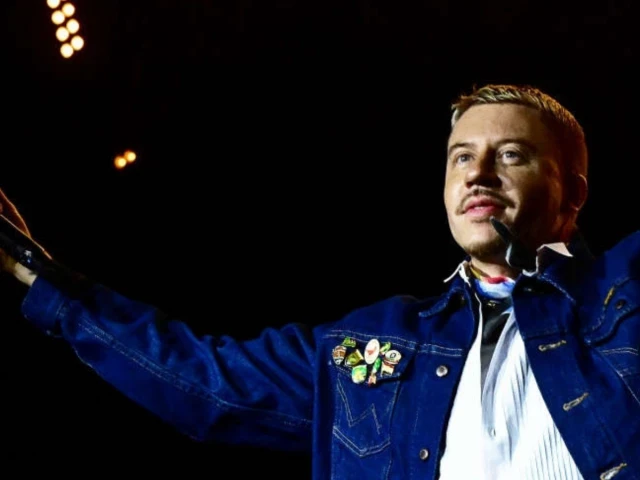
Grammy-winning American rapper and activist Macklemore has officially announced his upcoming international concert series, titled the "Free Palestine" tour. The announcement follows a turbulent period for the artist, marked by his controversial removal from the remaining dates of Ed Sheeran’s expansive US stadium run—a decision directly tied to Macklemore’s outspoken onstage advocacy for Palestinian rights and his performance of politically charged protest music.
Demonstrating an unwavering commitment to his cause, Macklemore has pledged that 100% of ticket proceeds from the newly minted tour will be donated directly to a carefully curated coalition of twelve humanitarian, medical, and grassroots organizations supporting Palestinian communities.
The initial leg of the tour features three high-profile European arena dates, kicking off in Dublin, Ireland, on October 26, before moving to Paris, France, on October 29, and culminating at London’s prestigious OVO Arena Wembley on October 30. Furthermore, the artist has confirmed that additional international dates—including a comprehensive US leg—will be announced in the near future, alongside a roster of supporting artists who share his willingness to leverage artistic platforms for geopolitical accountability.
Read Also
This comprehensive report examines the chain of events leading to Macklemore’s departure from the Loop Tour, the structural and financial details of the upcoming "Free Palestine" initiative, the specific charities benefiting from the concerts, and the broader implications this controversy holds for free expression, corporate risk management, and political activism within the contemporary live-music industry.
Detailed Chronology: From MetLife Stadium to the ‘Free Palestine’ Tour
The Catalyst: Performances at MetLife Stadium
The seeds for the current controversy and subsequent tour announcement were planted in mid-September 2024. During his guest appearances on Ed Sheeran’s Loop Tour at New Jersey’s MetLife Stadium, Macklemore used his designated stage time not only to perform his mainstream catalog but to address the devastating humanitarian crisis unfolding in Gaza and the occupied West Bank.
Amidst flashing lights and overwhelming crowd engagement, the rapper led tens of thousands of concertgoers in chanting "Free Palestine." The peak of the performance arrived when Macklemore delivered his poignant, viral protest anthem, "Hind’s Hall." Named in honor of Hind Rajab—a six-year-old Palestinian girl tragically killed in Gaza—the song serves as a scathing critique of institutional complicity, modern warfare, and the silencing of civilian suffering. The live performance was underscored by striking visual media depicting the widespread destruction and human toll in the Gaza Strip.
The Backlash and Removal from the Loop Tour
While the stadium crowds responded with resounding applause, the political gravity of the performance triggered immediate logistical and corporate fallout. Within days of the MetLife Stadium shows, tour promoter Messina Touring Group informed Macklemore that he was being cut from the remaining dates of Ed Sheeran’s US stadium tour.
According to statements released by the promoter and industry insiders, the decision was precipitated by pushback from various venue operators and stadium management teams. Several venues explicitly indicated that they would bar concerts featuring Macklemore if he continued his political demonstrations. Promoters concluded that keeping the rapper on the bill posed an unacceptable risk of mass event cancellations, forcing his removal to preserve the integrity of the remaining tour dates for the headliner.
The Immediate Financial Response
Rather than retreating from the public eye or toning down his rhetoric, Macklemore doubled down on his convictions. Shortly after his removal from the Loop Tour was finalized, the rapper announced that he would donate his entire $1 million in net earnings derived from his work on Sheeran’s tour to Palestinian support organizations. In a pointed public challenge, he also called upon prominent billionaire and New England Patriots owner Robert Kraft to match his seven-figure donation, drawing even greater media attention to the financial and moral dimensions of the dispute.
The Announcement of the ‘Free Palestine’ Tour
On September 24, just days after the fallout from the Loop Tour solidified, Macklemore officially announced the "Free Palestine" tour. In unveiling the project, the rapper revealed that he had spent the preceding week in deep communication with fellow artists who had previously expressed public support for Palestine and were willing to risk industry-wide blacklisting to use their platforms.
General ticket sales for the initial European dates—Dublin (October 26), Paris (October 29), and London (October 30)—are scheduled to launch on September 30, with exclusive presales opening days prior. Industry analysts anticipate high demand, driven by both Macklemore’s dedicated fan base and a mobilized coalition of human rights advocates.
Supporting Context & Metrics: Beneficiary Organizations and Financial Commitments
A defining characteristic of the "Free Palestine" tour is its absolute commitment to philanthropy. Macklemore has bypassed traditional commercial tour structures by tying every ticket sold directly to humanitarian relief. The artist has selected a diverse portfolio of 12 distinct organizations to receive the proceeds, ensuring that funds are distributed across emergency medical response, grassroots organizing, education, and legal and human rights advocacy.
Breakdown of Beneficiary Organizations
- Anera (American Near East Refugee Aid): Focused on providing health, education, and development services to refugees and vulnerable communities in Palestine, Lebanon, and Jordan.
- Glia: A volunteer-run, open-source organization dedicated to providing life-saving medical technology and equipment (such as open-source ultrasound devices and telemedicine tools) to under-resourced healthcare workers in Gaza.
- Gaza Soup Kitchen: A vital ground-level initiative providing daily hot meals and sustenance to displaced families struggling with acute food insecurity in the enclave.
- Taawon (The Welfare Association): A leading non-profit organization dedicated to empowering Palestinians through sustainable development, education, youth empowerment, and cultural preservation.
- HEAL Palestine: A humanitarian NGO specializing in providing critical medical care, mental health support, and healing initiatives to injured and traumatized children from conflict zones.
- Palestinian Youth Movement (PYM): A transnational, independent grassroots movement of young Palestinians dedicated to the liberation of their homeland and the self-determination of their people.
- Middle East Children’s Alliance (MECA): An organization focused on protecting the rights and well-being of children in the Middle East, with extensive programming providing psychosocial support, food, and medical aid in Palestine.
- Jewish Voice for Peace (JVP): A prominent grassroots anti-zionist Jewish organization in the United States working in solidarity with the Palestinian freedom struggle.
- Medical Aid for Palestinians (MAP): A specialized medical charity that delivers health and medical care to Palestinians living under occupation and as refugees, ensuring long-term healthcare capacity.
- Institute for Middle East Understanding (IMEU): An independent, non-profit organization providing journalists and the public with rapid access to expert resources, statistics, data, and visual assets concerning Palestine.
- Palestine Children’s Relief Fund (PCRF): The primary humanitarian organization providing free specialized pediatric medical care to thousands of injured and ill Palestinian children who lack local access to treatment.
- UNRWA USA: The American support arm for the United Nations Relief and Works Agency, which provides critical education, health, relief, and social services to millions of registered Palestine refugees across the Middle East.
Scope of Aid
These organizations collectively operate across a wide spectrum of humanitarian need. By distributing funds evenly or strategically among them, Macklemore ensures that the tour’s financial impact addresses both the immediate, acute crisis—such as starvation, lack of surgical supplies, and pediatric trauma—and the long-term structural needs of Palestinian advocacy, education, and community resilience.
Official Statements and Industry Perspectives
The clash between artistic freedom and corporate risk management has ignited intense debate across the global music industry, with key stakeholders offering starkly contrasting viewpoints.
Macklemore’s Position
In statements accompanying the tour announcement, Macklemore reflected on the profound personal and professional lessons of the past month. He asserted that the events of September reinforced his belief that artists are increasingly being pressured to remain apolitical, transforming stages into sanitization chambers designed strictly for escapist entertainment.
"The events of the past few weeks have made it crystal clear," Macklemore noted. "We are living in a moment where artists are being asked to check their humanity at the door. But when children are starving, when entire populations are displaced, silence is not neutrality—it is complicity. This tour is about reclaiming our platforms, refusing to be intimidated by corporate censorship, and turning music into a vehicle for direct, material aid."
Furthermore, the rapper emphasized that the controversy surrounding his removal from Ed Sheeran’s tour is merely a symptom of a larger, systemic conversation regarding who is permitted to speak on major international concert stages, and whose suffering is deemed acceptable to ignore.
Promoter and Venue Perspectives
Conversely, representatives for the live-entertainment industry have defended their decisions through the lens of operational security, commercial viability, and risk mitigation.
When Messina Touring Group dropped Macklemore from the Loop Tour, the underlying rationale communicated to stakeholders was rooted in the fragility of modern stadium logistics. Major multi-city tours require seamless cooperation among dozens of corporate sponsors, municipal authorities, private venue owners, and local law enforcement agencies. When venue operators signaled that politically charged performances could trigger unauthorized protests, security breaches, or outright facility lockouts, promoters faced a stark choice: remove the volatile element or risk the cancellation of multi-million-dollar events affecting thousands of fans and dozens of other workers.
Industry analysts point out that commercial music venues are increasingly risk-averse in an era of heightened geopolitical polarization. Promoters argue that stadiums are designed to be neutral civic spaces, and that introducing highly charged international conflicts into the live performance environment creates insurmountable liability concerns.
Future Outlook: The Intersection of Music, Politics, and Commerce
The launch of the "Free Palestine" tour serves as a watershed moment for the intersection of pop culture, political activism, and corporate music management. As the tour prepares to launch in Dublin on October 26, several key questions remain regarding its trajectory and broader impact:
- Expansion of the Tour: While only three European dates have been officially locked in for late October, industry insiders anticipate that the "Free Palestine" tour will rapidly expand into a multi-continent itinerary, with extensive dates across North America and potentially the Middle East, depending on venue availability and artist participation.
- The Lineup of Supporting Artists: Macklemore’s outreach to fellow musicians who are willing to risk their commercial standing for political advocacy will be closely watched. The identity of these co-performing artists could signal a growing willingness among mainstream musicians to challenge traditional industry boundaries.
- Precedent for Future Activism: The fallout from the Loop Tour and the subsequent creation of a dedicated benefit tour may establish a new template for how artists respond to censorship. Rather than absorbing professional losses quietly, high-profile musicians may increasingly utilize independent, direct-action concert tours to bypass traditional gatekeepers and funnel funds directly to conflict zones.
As ticket sales commence on September 30, the "Free Palestine" tour will test whether dedicated fanbases and conscientious consumers can successfully sustain a major international tour driven entirely by political solidarity and humanitarian aid. Regardless of its box-office metrics, Macklemore’s initiative has already permanently altered the conversation surrounding the responsibilities—and risks—of holding a microphone on the global stage.


Comments
Facebook App ID not configured. Please add it in the Customizer.