
In an era defined by hyper-globalization, digital assimilation, and the rapid erosion of ancestral tongues, the mechanics of literary translation are frequently viewed as solitary, clinical endeavors—a mechanical transposing of signifiers from one linguistic system to another. However, a profound cultural and personal transformation unfolds away from the sterile environment of the corporate publishing house, deep within the domestic sphere.
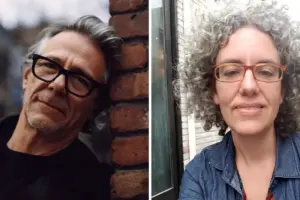
Playwright and author Amanda L. Andrei’s collaborative translation of Tatiana Niculescu’s Brâncuși v. SUA (Brancusi v. United States) alongside her aging Romanian-born father offers a striking counter-narrative. What began as an experimental post-pandemic creative exercise evolved into a multi-year archaeological excavation of memory, trauma, exile, and familial reconciliation.
This journalistic inquiry examines the sociolinguistic dimensions of "kitchen table translation." It explores how cooperative linguistic labor serves as an effective, albeit unconventional, methodology for recovering suppressed heritage languages, bridging intergenerational divides, and reclaiming histories scarred by political displacement. Through the prism of Andrei’s work, translation transcends its traditional utilitarian boundaries to become an act of somatic healing, a stealth oral history project, and a defiant reclamation of identity against the homogenizing forces of exile.
Read Also
Detailed Chronology: The Genesis and Evolution of a Shared Lexicon
The collaborative partnership between Amanda L. Andrei and her father did not emerge from a grand academic design; rather, it arose organically in the wake of global isolation.
Phase 1: The Post-Pandemic Catalyst
In the year following the COVID-19 pandemic, Andrei enrolled in an online literary translation course. Seeking relief from a specific strain of creative and linguistic anxiety that standard creative writing could not soothe, she began casually asking her father—who emigrated from communist Romania to the United States in 1980, years before her birth—to verify her English-to-Romanian translation of a children’s poem.
What started as brief consultations quickly expanded into hours-long sessions at the family kitchen table. Surrounded by the domestic rituals of percolating coffee, boiling eggs, and simmering corn, father and daughter established a rigorous routine. They would draft a literal translation, pause to debate cultural nuances and historical connotations, and negotiate the boundaries of meaning.
Phase 2: Transitioning to Dramatic Literature
Recognizing the conversational and gestural vitality inherent in dramatic texts, Andrei pivoted the collaboration toward plays. This transition culminated in their joint translation of Tatiana Niculescu’s Brâncuși v. SUA. The play chronicles the journey of John, an American with a French mother, who travels to Romania in search of his family origins and the legacy of his father, the pioneering modernist sculptor Constantin Brâncuși.
For Andrei, the protagonist’s quest mirrored her own artistic and personal preoccupations—echoing themes from her early play Lena Passes By, in which a Filipina Romanian American healer journeys to Romania to cure her ailing father. As father and daughter translated the script, the text functioned as a mirror for their own relationship, transforming abstract linguistic labor into a tangible bridge across a generational chasm.
Phase 3: Public Presentation and Asynchronous Realities
By 2023, the English translation of Brâncuși v. SUA was realized as a staged reading in Los Angeles. While the play found a public theatrical life, the physical realities of the collaboration shifted. Andrei’s father, approaching his seventies and contending with declining mobility, remained at home, preferring to avoid crowds. The collaborative locus shifted once more—from the sunlit kitchen table to the confined interior of a car during transit to medical appointments. Despite these physical limitations, the translation project left an indelible imprint on both participants, redefining their relationship outside the clinical confines of medical caregiving.
Supporting Context & Metrics: Exile, Silence, and Sociolinguistic Theory
To fully comprehend the gravity of Andrei and her father’s kitchen table translations, one must examine the broader sociolinguistic framework of exile. In his foundational essay "Advantages of Exile," philosopher Emil Cioran observed:
“[A] man who repudiates his language for another changes his identity, even his disappointments. Heroic apostate, he breaks with his memories, and, to a certain point, with himself.”
The Politics of Parental Silence
For Andrei’s father, emigration functioned as an absolute rupture. Fleeing a repressive communist regime in 1980, he deliberately severed ties with his native tongue. While he retained a sophisticated command of French literature from his youth, his domestic life in the United States was deliberately constructed around English and silence. He shielded his family from the unhealed wounds of his past by refusing to indulge in nostalgic retrospection. Conversations about Romania were strictly filtered through the lens of world politics and economic critique—safe subjects that mirrored his daily consumption of news and financial markets.
Except for tender telephone calls to his mother in Romania or sudden bursts of frustration in traffic, his native language was effectively locked away. This calculated linguistic erasure created a profound psychological distance. While Andrei’s maternal Filipino heritage was actively sustained through community and culture, her paternal Romanian roots remained an enigma, shrouded in cigarette smoke and reticence.
The Methodology of "Roughness"
In contemporary literary translation theory, the prevailing commercial standard often demands absolute "smoothness"—rendering a foreign text into fluid, domestic idioms so seamless that it reads as though it were originally written in English. However, Andrei’s methodology directly challenges this assimilationist pressure, aligning closely with performance artist Eiko Otake’s approach to the ethics of translation. Otake famously declared a willingness to "risk awkwardness in English," refusing to flatten a foreign author’s voice into conventional American prose.
In Andrei’s translations, this philosophy manifests as a deliberate "roughness." She deliberately retains Romanian terms, proper names, and syntactic structures, sprinkling them through the text like pepper in a dish. This stylistic choice serves a dual purpose:
- Personal Reclamation: It honors Andrei’s own evolving, imperfect grasp of her heritage language—leaving authentic traces of her own identity within the translated architecture.
- Cultural Resonance: It preserves the vibrational frequency of Romanian culture beneath the English surface, trusting that future theatrical directors, actors, and designers will utilize the script as a blueprint rather than a rigid instruction manual.
Official Statements & Analytical Perspectives
The dynamics observed within Andrei’s collaborative translation sessions reflect broader intellectual conversations surrounding heritage languages, familial trauma, and transnational identity.
Navigating Generational Trauma Through Indirection
Direct interviews and oral history methodologies often falter when applied to individuals who have survived political trauma or repression. Direct lines of inquiry can trigger defensive mechanisms, melancholy silences, or explicit requests to bury the past.
Andrei bypassed these psychological roadblocks by adopting a circuitous, text-based methodology. By feigning uncertainty over specific vocabulary—such as debating whether to translate cornulețe as "crescent," "little horn," or leaving the term untranslated—she transformed the translation process into a stealth oral history archive.
A single lexical debate regarding cornulețe or domestic architectural terms like laviță (a peasant’s wooden bench) and sobă (an earthen stove serving as the hearth of a home) unlocked a cascade of vivid memories. Her father moved away from defensive silence, describing:
- The precise butter-stretching techniques of their family cook in Bucharest.
- The spatial dynamics of his childhood kitchen.
- The sensory warmth of the sobă during harsh winters.
Through these linguistic negotiations, the translation process dismantled the emotional barriers of exile. As cultural theorist Madhu Kaza notes in the editor’s note to Kitchen Table Translation, such practices offer a vital space where participants can "leave the shame outside" and actively multiply their linguistic worlds.
Future Outlook: The Sustainability of Transnational Intimacy
As the literary landscape continues to grapple with issues of representation, diaspora, and translation ethics, models like the Andrei family collaboration offer a compelling blueprint for intergenerational healing.
The Fragility and Regeneration of Memory
The reality of aging transnational families introduces an urgent temporal dimension to translation studies. As first-generation immigrants age, the living archives of their memories face the imminent threat of biological erasure. For Andrei, the translation sessions served as a temporary suspension of both her father’s physical decline and her own linguistic insecurities.
While they could not remain suspended indefinitely in "translation world," the psychological and somatic dividends of the practice are profound. The collaboration repositioned her father from a fragile, aging patriarch whose medical status required constant monitoring into an active intellectual peer—a fellow detective solving the puzzle of a complex text.
Implications for Contemporary Literature and Performance
Moving forward, the normalization of "rough," non-assimilated translations in theater and literature signals a maturing multicultural literary ecosystem. By refusing to sand down the cultural edges of immigrant narratives, translators like Andrei validate the lived experiences of diasporic communities.
Ultimately, kitchen table translation demonstrates that the work of bridging languages is fundamentally an act of radical intimacy. It proves that when families gather to knead words, negotiate idioms, and rescue forgotten lexicons from the margins, they do more than simply produce a script; they reclaim their histories, honor their ancestors, and construct a durable sanctuary against the quiet violence of exile.

Comments
Facebook App ID not configured. Please add it in the Customizer.