
Executive Overview
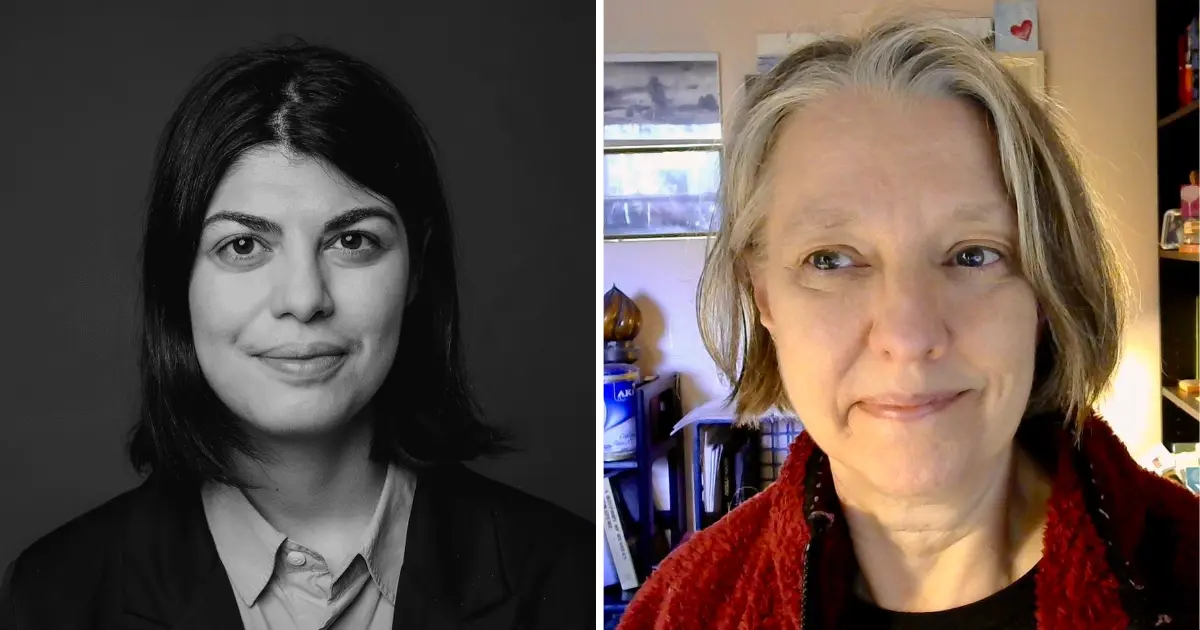
In the contemporary landscape of global literature, few works bridge the fraught chasms of geopolitical displacement, somatic vulnerability, and linguistic hybridity quite as powerfully as Egana Djabbarova’s debut novel, My Dreadful Body. Originally written in Russian between 2022 and 2023 while Djabbarova was teaching in Taipei, Taiwan, the book has recently been brought to English-language readers through a remarkable translation by acclaimed literary translator Lisa Hayden, published by New Vessel Press.
The book’s genesis is inseparable from the harrowing personal and political realities of its author. Born into an Azerbaijani family in Yekaterinburg, Russia, Djabbarova is a poet, essayist, and scholar who was ultimately forced to flee Russia in 2024 due to her outspoken LGBTQ+ activism and unwavering opposition to the war in Ukraine. Now based in Hamburg, Germany, Djabbarova infuses her prose with the painful lived experiences of xenophobia, patriarchal oppression, and chronic illness.
My Dreadful Body approaches these monumental themes through a deeply physical lens. By anchoring her narrative in the human body, Djabbarova constructs an undeniable testament to her own agency, pushing back against the systemic erasure of ethnic minorities, diasporic communities, and political dissidents within post-Soviet spaces.
Read Also
Bringing this densely poetic, multilingual work into English was no small feat. In a comprehensive joint interview, Djabbarova and Hayden open up about the intricate mechanics of their collaboration. They discuss the transnational origins of the text, the treacherous minefield of translating post-Soviet ethnic slurs into an American socio-cultural context, the delicate balance of maintaining a poetic register across languages, and the profound metaphorical resonance of a book that functions simultaneously as a woven carpet, a tangled root system, and a tightly coiled spring.
Detailed Chronology: From Taipei Drafts to New Vessel Press
The life cycle of My Dreadful Body is marked by a series of deliberate geographic, somatic, and linguistic displacements that ultimately shaped its narrative structure.
2022–2023: The Dual Distance of Taipei
The primary drafting phase of the novel took place far away from the author’s cultural roots, in Taipei, Taiwan, where Djabbarova was employed as a teacher of Russian as a foreign language. This environment provided what the author describes as a "dual distance"—both temporal and geographical. This separation allowed Djabbarova to step back from the acute traumas of her everyday life, viewing her personal history as a cohesive narrative and transmuting it into a work of fiction.
However, the conceptual roots of the book stretch back much further, originating in Djabbarova’s teenage years. Throughout her youth, she grappled with a persistent crisis of identity and belonging, questioning why she never felt entirely at home in any of the cultural worlds she inhabited. Early encounters with racism and xenophobia, followed later by severe illness and rigid patriarchal expectations, laid the groundwork for the book’s core exploration of subjecthood.
The Catalyzing Diagnosis
A pivotal turning point in the conceptualization of My Dreadful Body was a medical diagnosis that triggered an acute sense of embodiment in the author. Rather than treating the body merely as a passive vessel, Djabbarova experienced a profound realization of how deeply interconnected human subjecthood and the physical body truly are.
Drawing upon decolonial thinker Nelson Maldonado-Torres and his concept of the "coloniality of being"—which details how the agency and humanity of colonized and marginalized individuals are perpetually called into question—Djabbarova recognized a striking parallel within Russia. There, the humanity of ethnic minorities, diaspora communities, and marginalized "tricksters" is systematically denied. To counter this erasure, she made the conscious artistic decision to construct her narrative entirely through the body: making marginalization visible, inescapable, and undeniably real.
Acquisition and the Translation Process
The English-language edition of the novel was set into motion by Michael Wise, publisher and editor at New Vessel Press. Recognizing the extraordinary merit of Djabbarova’s manuscript, Wise brought the text to Lisa Hayden, offering her the translation assignment. Hayden accepted immediately, drawn to the exceptional quality of the writing and the opportunity to collaborate with an editor she had long admired.
What followed was an intensive, highly communicative translation partnership. Hayden and Djabbarova stayed in constant contact throughout the process. Hayden navigated the rich, texturing layers of the novel while relying on Djabbarova to untangle the dense semantic webs of a text written with a distinctly poetic cadence.
Supporting Context & Metrics: Navigating Language, Culture, and Politics
Translating My Dreadful Body required confronting deep-seated linguistic and cultural translation challenges, particularly regarding the politics of language and post-Soviet identity.
The Multilingual and Poetic Framework
Djabbarova’s prose is far from conventional. Written in a deeply poetic register, every sentence is tightly compressed, packed with heavy metaphorical weight, emotional intensity, and linguistic density. Furthermore, the novel is inherently multilingual, naturally incorporating Azerbaijani and Turkish phrases alongside Russian.
This poetic compression meant that Hayden could not rely solely on literal translations. She had to tune her ear to the internal music of Djabbarova’s Russian sentences, ensuring that the rhythm, imagery, and emotional resonance carried over into English without losing their punch.
The Minefield of Xenophobic Slurs
One of the most complex translation hurdles arose in Chapter VII, titled "TONGUE." In this section, the protagonist lists the verbal assaults hurled against her:
"I’m black, blackie, black-ass, alien, monster, foreigner, foreign-born . . ."
Translating this passage demanded immense sensitivity and cultural negotiation. In Russian, terms like chernaya or chernozhopaya function as specific xenophobic slurs designed to degrade and dehumanize people from the Caucasus, Muslim-majority countries of the former Soviet Union, and anyone with darker skin or features. However, translating these terms directly into American English risks immediately invoking the distinct historical and socio-cultural frameworks of anti-Black racism in the United States.
Djabbarova and Hayden had to exercise extreme care to convey the specific, biting weight of post-Soviet ethnic discrimination, colorism, and xenophobia. They needed to ensure Western readers understood the precise nature of the protagonist’s marginalization without inappropriately conflating it with American racial dynamics.
Formal Constraints and Scholarly Apparatus
Beyond cultural semantics, Hayden faced strict formal challenges. For instance, the original Russian text featured a long, cascading string of abusive terms all beginning with the Cyrillic equivalent of the "ch-" sound—a sonic barrage that is impossible to replicate identically in English.
Additionally, the novel is populated by unfamiliar flora—such as the plant Peganum harmala, transliterated as uzerlik—and numerous culturally specific foods. To avoid weighing down the narrative with heavy-handed exposition within the main text, Hayden and Djabbarova opted to incorporate a carefully curated selection of explanatory footnotes, striking a delicate balance between accessibility and authenticity.
Official Statements & Insights: In Their Own Words
The collaborative dynamic between author and translator highlights a shared intellectual and emotional commitment to the material.
Egana Djabbarova on Trust and Poetic Compression
Reflecting on her partnership with Hayden, Djabbarova expresses unreserved admiration:
"The process of translating the novel together with Lisa Hayden was an incredible journey. We stayed in constant contact throughout, and Lisa’s approach to the work absolutely amazed me with its profound responsibility, sensitivity, and tenderness. I trusted her one hundred percent, and I still do!"
Addressing the technical challenges of her writing style, Djabbarova notes:
"A central challenge of this process was the fact that the novel is written in a deeply poetic register. It was a conscious aesthetic choice on my part to approach prose through the lens of poetry, utilizing its inherent metaphoric weight, emotional intensity, and linguistic density."
Lisa Hayden on Intuition, Resonance, and Metaphor
For Hayden, translating My Dreadful Body transcended a standard professional assignment, transforming into a deeply personal literary milestone. She explains:
"I didn’t realize at the time that My Dreadful Body would become such an important book for me. I love first readings, but it’s subsequent readings (and drafts of translations, if I’m translating) that open up a book’s depths and dimensions, turning them into permanent parts of my life."
Hayden describes her translation process as deeply intuitive, requiring her to inhabit the author’s voice while tapping out the English equivalent:
"Since the translator’s job involves both reading and somehow hearing the voice(s) in a text, I’ve always felt that the author is involved in my entire translation process. Even if I’ve never met them, they’ve always been with me as I’ve typed, looked up words, and, yes, stared out the window."
When asked to describe the book through a metaphor, Djabbarova and Hayden offered striking, complementary images. Djabbarova suggested:
"The metaphor of a woven carpet or the tangled roots in a garden. In a way, a traditional carpet is a garden in its own right…"
Expanding upon this, Hayden added her own dynamic mechanical and natural metaphors:
"Like a spring, Egana’s text is very compact, but it stores lots of power, tremendous energy… I realized the kind of spring that contains water makes sense, too. Like Egana’s text, that spring is fluid, sparkly, and tremendously fresh, rising out of a deep source."
Future Outlook: The Global Resonance of My Dreadful Body
The publication of My Dreadful Body in English arrives at a critical juncture in contemporary global politics and literature. As authoritarian regimes continue to crack down on dissenting voices, ethnic minorities, and LGBTQ+ communities—exemplified by Djabbarova’s forced exile from Russia in 2024—literature born from displacement assumes an urgent, testifying role.
The book demonstrates the vital importance of transnational literary exchange. By pairing Djabbarova’s unflinching, somatic prose with Hayden’s sensitive, rigorous translation, New Vessel Press has introduced an essential voice to the Anglophone literary sphere.
Looking forward, My Dreadful Body is poised to spark crucial conversations surrounding post-Soviet identity, intersectional feminism, the politics of translation, and the ways in which marginalized individuals reclaim bodily agency in the face of systemic erasure. As readers around the world continue to engage with Djabbarova’s poetic narrative, the book stands as an enduring testament to the resilience of the human spirit—proving that even when languages shift and borders are violently redrawn, the truth inscribed upon the body remains unmistakable and unbreakable.





Comments
Facebook App ID not configured. Please add it in the Customizer.