At the fragile dawn of August 1914, Europe stood on the precipice of an unprecedented catastrophe. As imperial alliances snapped into place and millions of conscripts flooded mobilization depots, a hyper-exclusive cadre of British motorists—aristocrats, Olympic athletes, big-game hunters, and daredevil racers belonging to London’s Royal Automobile Club (RAC)—volunteered their personal roadsters and racing machines to the Allied cause.
Steering open-seat Hudsons, Rolls-Royce Silver Ghosts, and Italian Diattos across the pulverized cobblestones of France and Belgium, these 25 civilian drivers expected a swift, romantic campaign of high-speed scouting and courier dashes. Instead, they found themselves hurled directly into the grim, terrifying crucible of modern, mechanized warfare. Operating as chauffeurs, scouts, ambulance drivers, and inadvertent combatants, these men bore witness to the dying breaths of 19th-century chivalry—typified by thunderous cavalry charges—and the bloody, smoke-choked birth of 20th-century industrial slaughter. Their vehicles provided critical mobility that bridged dangerous communication gaps between frantic Allied commanders during the harrowing retreat to Paris, the historic Battle of the Marne, and the apocalyptic carnages of Antwerp and Ypres. Though largely lost to historical obscurity, their exploits permanently altered the mechanics of combat and set the stage for total war.
Detailed Chronology: From Pall Mall to the Killing Fields of Flanders
August 1914: The Rush to the Continent
Following Britain’s declaration of war on August 4, 1914, the British War Office faced a crippling logistics crisis. While infantry and heavy supplies moved sluggishly by rail, the burgeoning command structures of the British Expeditionary Force (BEF) desperately required speed, agility, and redundant communication lines. Through informal channels, the Royal Automobile Club assembled an independent unit of 25 motoring enthusiasts.
On August 21, 1914, these men loaded their high-performance private vehicles aboard the troopship Gloucester Castle at Southampton. Among them was Alfred "Toby" Rawlinson, a 47-year-old former 17th Lancers officer, Olympic polo gold medalist, and veteran aviator. Clad in improvised khaki, leather jackets, and RAC armbands, the volunteers docked at Le Havre on August 22 and sped inland toward Amiens. As Rawlinson led the convoy in his silver Hudson roadster—flying a Union Jack from the hood—crowds of French civilians showered the vehicles with flowers, fruit, and unchecked adulation, cementing an early symbol of British solidarity.
[August 21, 1914] ── Embarkation at Southampton aboard Gloucester Castle
       │
[August 22, 1914] ── Arrival at Le Havre & Convoy Push to Amiens
       │
[August 25, 1914] ── The Skirmish at Landrecies (Rawlinson's Hudson disabled)
       │
[Sept. 6-9, 1914] ── Intelligence & Evacuation runs during the Battle of the Marne
       │
[Oct - Nov 1914]  ── Antwerp Siege & The First Battle of Ypres (Trench Warfare)
Baptism by Fire: Landrecies and the Retreat
The romantic facade of the motoring adventure evaporated almost overnight. On August 25, 1914, Rawlinson navigated his Hudson into the French border town of Landrecies, watching for enemy patrols. Forced off the road by a galloping battery of British horses, his car struck a curb, smashing its carburetor and rendering it "hopelessly out of action."
As Rawlinson searched for repairs, a column of spike-helmeted German infantry burst from an adjacent forest. Caught entirely in the open amid flying shrapnel and shattering roof tiles, Rawlinson watched as British machine guns opened fire at point-blank range, instantly choking the narrow street with enemy dead and wounded. The incident underscored the brutal reality: civilian volunteers were now operating inside active combat zones. Over the subsequent weeks of the Great Retreat, drivers like Frederic Coleman (driving a White Model 30) and Christopher Baker-Carr (chauffeur to high-ranking staff officers) navigated treacherous, unpaved roads clogged with exhausted infantry, fleeing refugees, and panicked sentries, frequently dodging friendly fire and enemy ambushes.
September 1914: The Miracle of the Marne
By early September, the German Schlieffen Plan pushed invaders to within 25 miles of Paris, sparking panic across the capital. As the French government fled to Bordeaux and millions of refugees jammed rail terminals, RAC drivers worked frantically around the clock. Operating between French General Joseph-Simon Gallieni’s headquarters and BEF positions, drivers mapped enemy movements across a 160-mile front.
During the Battle of the Marne (September 6–9, 1914), these motorists executed high-risk intelligence runs through active no-man’s-lands. Coleman famously pressed his luxury roadster into service as an improvised ambulance, hauling bleeding soldiers out from under singing sniper fire. The successful exploitation of a 30-mile gap in the German lines—bolstered by Gallieni’s famous requisition of Paris taxicabs to transport reserves—halted the German advance, forcing the enemy to retreat north to the Aisne River and entrench.
October to November 1914: Antwerp, Ypres, and Mechanized Evolution
As the conflict bogged down into static trench systems, the nature of the drivers’ missions shifted. In October, Rawlinson joined his brother, General Henry Rawlinson, in an effort to stave off the German siege of Antwerp and protect vital English Channel ports. Rawlinson went so far as to mount a machine gun onto his Hudson roadster, hunting enemy patrols and killing a German officer and motorcycle courier near Ypres.
By November 1914, the First Battle of Ypres cemented the era of industrial slaughter. The RAC volunteers, realizing their informal unit had been outpaced by total militarization, returned their battle-scarred vehicles to England or transitioned into formal military roles.
Supporting Context & Metrics: The Automotive Landscape of 1914
To understand the audacity of the RAC Volunteer Force, one must examine the technological maturity of the automobile at the outbreak of World War I.
The Fleet: In 1913, the United Kingdom registered approximately 140,000 cars and 180,000 motorcycles. London retired its final horse-drawn bus in 1913, replacing it with motorized alternatives.
Industrial Output: In North America, Henry Ford’s assembly lines were turning out a Model T every 90 minutes—an industrial pace that European manufacturers could not match until wartime mobilization forced a systemic overhaul.
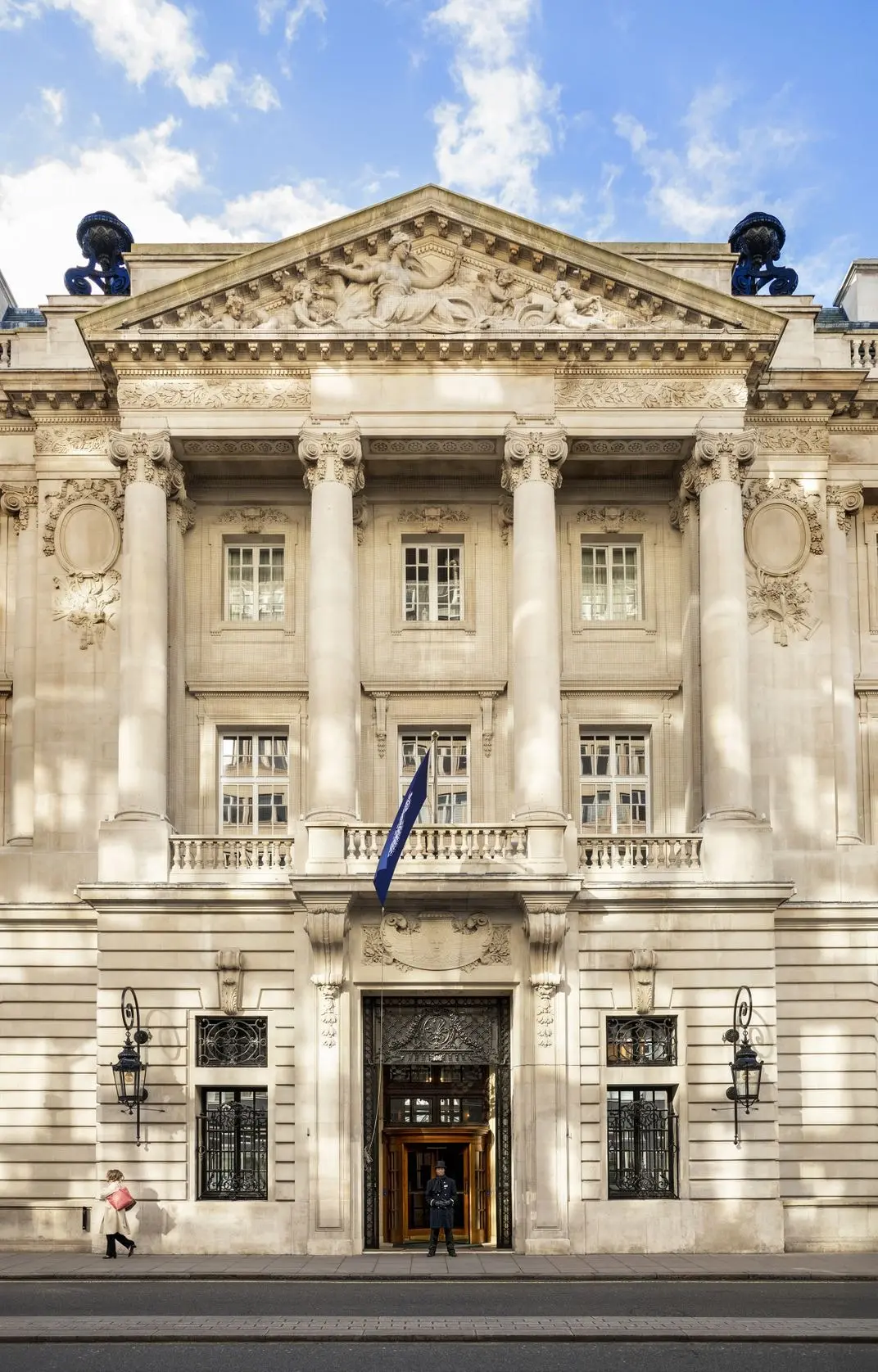
The RAC Clubhouse: Opened in 1911 on Pall Mall, the Royal Automobile Club headquarters featured a domed atrium, Turkish baths, and a heated indoor swimming pool built by the architects of the Ritz hotels. Its members represented the apex of Edwardian wealth and technological curiosity.
Human Cost of the Opening Phase: The fast-moving mobile phase of 1914 inflicted staggering casualties. The Battle of the Marne cost upwards of 500,000 combined casualties, while the First Battle of Ypres claimed roughly 260,000 lives, permanently ending the era of cavalry charges and transforming warfare into an automated, chemical-industrial enterprise.
Official Statements and Contemporary Perspectives
The historical significance of the RAC Volunteer Force lies not only in logistics, but in civil-military relations and the psychological reassurance they provided to a fracturing French alliance.
Dr. Christopher Phillips, a historian of warfare at Aberystwyth University, notes the vital psychological weight carried by the civilian motorists during the darkest weeks of the BEF’s retreat:
"The French military had a lot of questions about what the British commitment was going to be. The cars charging through villages gave a sense of presence. They announced that ‘the British are here.’ These guys conveyed real purpose… Communication between command structures was critical during the early phase of the war. They solidified the relationship between the two partners."
Reflecting on the shocking transformation from 19th-century sportsmanship to industrial butchery, volunteer James Armand de Rothschild wrote to his wife in September 1914:
"Modern warfare… has become largely a question of machinery and chemistry. Explosives, airplanes… wireless and motor transport."
Similarly, Brigadier General Christopher Baker-Carr, looking back on his days racing a Mercedes through France before developing Britain’s first Machine Gun Corps and early tanks, remarked:
"Little did we dream that we had before us more than four years of misery, mud and slaughter."
Future Outlook: Legacy, Memory, and Historical Preservation
Today, the memory of the Royal Automobile Club Volunteer Force survives primarily through family archives, private memorabilia, and specialized military histories. While the RAC remains a premier private institution with its Pall Mall clubhouse and a 350-acre country estate in Surrey, the names of Toby Rawlinson, Frederic Coleman, and Jimmy Rothschild have faded from mainstream historical discourse.
Efforts by descendants—such as Andrew "Puddy" Rawlinson in Norfolk, who preserves the remaining photographs, aviator certificates, and memoirs of his grandfather—keep these individual accounts alive. Yet, physical artifacts from the unit have largely vanished to time: the tattered Union Jacks flown over battlefields, the captured German Pickelhauben helmets, and Toby Rawlinson’s bullet-riddled Hudson roadster were discarded decades ago as everyday objects of a forgotten era rather than preserved museum pieces.
Ultimately, the gentlemen drivers of 1914 stand as tragic, fascinating transitional figures. They stepped out of an Edwardian golden age of leisure, sport, and aristocratic privilege, pressed their personal luxury roadsters into the service of an empire, and inadvertently drove humanity across the threshold into the terrifying, mechanized reality of modern total war.

/https://tf-cmsv2-smithsonianmag-media.s3.amazonaws.com/filer_public/eb/d3/ebd30cee-30cc-48d1-ad21-bc873dda36fd/opener1_-_sepoct2026_d15_royalautoclub.jpg)
:focal(414x275:415x276)/https://tf-cmsv2-smithsonianmag-media.s3.amazonaws.com/filer_public/eb/d3/ebd30cee-30cc-48d1-ad21-bc873dda36fd/opener1_-_sepoct2026_d15_royalautoclub.jpg)
/https://tf-cmsv2-smithsonianmag-media.s3.amazonaws.com/filer_public/35/48/35489bf6-eff4-4de1-906e-60996f79b10c/20260326_royalautomobileclub19_copy.jpg)
/https://tf-cmsv2-smithsonianmag-media.s3.amazonaws.com/filer_public/cf/28/cf286f90-d279-4803-9ef1-618c9c09152a/sepoct2026_d16_royalautoclub.jpg)
/https://tf-cmsv2-smithsonianmag-media.s3.amazonaws.com/filer_public/95/d5/95d56bbb-2a4f-4499-8902-1f2927f6ac40/pic.jpg)
/https://tf-cmsv2-smithsonianmag-media.s3.amazonaws.com/filer_public/0c/c8/0cc89476-19b3-4557-988d-b484acf3e4ab/img_6075.jpeg)
/https://tf-cmsv2-smithsonianmag-media.s3.amazonaws.com/filer_public/68/98/6898f8df-b9f5-4622-aa28-dfbf415c27c4/20260326_royalautomobileclub3_copy.jpg)
/https://tf-cmsv2-smithsonianmag-media.s3.amazonaws.com/filer_public/e7/38/e738fb19-ba52-49ac-8d9f-bc8e09bafe30/sepoct2026_d06_royalautoclub.jpg)
/https://tf-cmsv2-smithsonianmag-media.s3.amazonaws.com/filer_public/55/dc/55dcd6c7-6620-4f7a-a92c-5e181313ad07/28_6_25_vincennes_i_e_longchamp_agence_rol_btv1b53149291r.jpg)
/https://tf-cmsv2-smithsonianmag-media.s3.amazonaws.com/filer_public/ff/de/ffde1c9a-e1da-49d9-9f3d-afd9c8133f87/cavalry_-_gettyimages-591949596.jpg)



Comments
Facebook App ID not configured. Please add it in the Customizer.