
Executive Overview
In the bustling, hyper-competitive culinary landscape of New York City, standing out requires more than just good food—it demands a distinct identity, a narrative, and a bridge connecting disparate cultures. Enter BK Jani, a modest yet culturally seismic restaurant located in Brooklyn. Founded by Lahore native Sibte Hassan, BK Jani has successfully carved out a unique niche by fusing the rich, robust, and unapologetically spicy flavors of Pakistan with the universally beloved, casual format of the American burger.
Far from being a mere novelty, BK Jani represents a broader shift in contemporary gastronomy: the democratization and cross-pollination of immigrant foodways within Western metropolitan centers. By swapping out standard condiments like ketchup and mayonnaise for vibrant mint chutneys, cooling raitas, and slow-cooked nihari, Hassan has not only challenged conventional definitions of what a burger can be, but has also created a vibrant community hub.
This article explores the anatomy of BK Jani’s success. We will examine the cultural synthesis embedded in its menu, trace the origins and operational philosophy of the restaurant, analyze the demographic and sociological impact of its Brooklyn setting, and evaluate how spaces like BK Jani are reshaping the future of immigrant entrepreneurship and fusion cuisine in the United States.
Read Also
Detailed Chronology and Origin Story
The Genesis of a Culinary Vision
The story of BK Jani begins long before its doors opened in Brooklyn. It starts in the historical, food-obsessed metropolis of Lahore, Pakistan—a city renowned for its vibrant street food culture, late-night paya and nihari feasts, and a deep-seated appreciation for communal eating. Sibte Hassan grew up immersed in these sensory experiences, developing an intimate understanding of how spices balance, how herbs elevate heavy meats, and how food serves as the ultimate social glue.
When Hassan immigrated to the United States, he carried these culinary memories with him. However, the initial phase of conceptualizing BK Jani was not born out of a desire to open a white-tablecloth, high-end establishment serving "authentic" Pakistani cuisine in the traditional sense. Instead, Hassan recognized a gap in the American culinary lexicon. While American fast-casual dining was saturated with gourmet smash burgers, artisanal patties, and various iterations of French and Italian-inspired toppings, the vast and complex flavor profiles of South Asia remained largely segregated to traditional curry houses and buffet lines.
Establishing the Brooklyn Footprint
Hassan chose Brooklyn not just as a location, but as a co-creator of the restaurant’s identity. Known globally as a melting pot of artistic subcultures, hipster aesthetics, and immigrant communities, Brooklyn provided the ideal canvas for a concept as daring as a nihari sandwich or a mint-chutney-laced beef burger.
In its early days, accounts of BK Jani highlighted a deeply hands-on operation. Hassan could frequently be found personally managing the grill, engaging directly with curious customers, and explaining the philosophy behind his creations. Crucially, he championed a dining style deeply ingrained in South Asian culture: eating with your hands. By encouraging diners to bypass cutlery and physically interact with their food, Hassan stripped away the formalities often associated with "ethnic" dining, presenting Pakistani flavors with an unpretentious, street-food sensibility.
Over time, the restaurant evolved from a local secret whispered about among food bloggers into a destination spot. Yet, despite its growing acclaim, BK Jani has fiercely maintained its intimate, casual charm, resisting the urge to corporatize or dilute its bold culinary identity for mainstream palates.
Supporting Context & Culinary Metrics: Anatomy of a Fusion Menu
To truly understand the success of BK Jani, one must deconstruct its menu. The restaurant’s offerings are a masterclass in culinary translation—taking familiar American formats and infusing them with deeply historical South Asian techniques.
The Condiment Revolution: Chutney vs. Mayo
In a conventional American burger joint, the flavor profile is dictated by the holy trinity of condiments: ketchup, mustard, and mayonnaise (or specialized variations like "special sauce" and barbecue sauce). These ingredients rely heavily on sweetness, vinegar, and heavy fat content to complement beef patties.
BK Jani flips this dynamic entirely through the introduction of mint chutney and raita.
- Mint Chutney: Far from being a passive dipping sauce, BK Jani’s mint chutney injects a potent combination of heat, herbaceous freshness, and sharp acidity. The natural cooling and digestive properties of mint and cilantro cut through the rich, savory fat of the beef patty, creating a palate balance that standard condiments simply cannot achieve.
- Raita: Acting as a stabilizing element, the mild yogurt-based raita bridges the gap between fiery spice and creamy texture, echoing the traditional function of yogurt dishes in South Asian feasts designed to temper heavy spices.
Signature Offerings: From Jani Burgers to Nihari Sandwiches
- The Signature Jani Burger: Built around a premium beef patty, this flagship item integrates mint chutney, grilled tomatoes, and a touch of raita. It redefines the classic cheeseburger experience by substituting heavy, processed toppings with bright, garden-fresh aromatics.
- The Lahori Burger: Pushing the envelope further, the Lahori burger features spicy ground beef balanced with mild raita and fresh, crisp cucumber. This construction intentionally places opposing forces—intense, warming spices and refreshing, aqueous crunch—within the same handheld format.
- The Nihari Sandwich: Perhaps the most audacious item on the menu, this creation takes nihari—a slow-cooked, richly spiced beef stew traditionally simmered overnight and eaten with naan—and reconstructs it into a sandwich. By transforming a dish steeped in royal Mughal history and weekend breakfast traditions into a portable, modern format, BK Jani bridges centuries of heritage with contemporary Brooklyn convenience.
The Sociological and Demographic Impact
The clientele of BK Jani tells a compelling story about modern urban demographics. On any given evening, the seating area resembles a sociological cross-section of New York City:
- South Asian Diaspora: Second-generation Pakistani and Indian Americans who find immediate comfort and cultural validation in the flavors, music, and linguistic references.
- Gen Z Foodies: Young, trend-conscious diners drawn in by social media algorithms, aesthetic interiors, and the craving for authentic multicultural experiences.
- Culinary Explorers: Mainstream New Yorkers and international tourists seeking to understand why a humble Brooklyn burger joint has generated such fervent word-of-mouth buzz.
This diverse gathering is enveloped in a carefully curated auditory and visual environment. The restaurant’s soundtrack shifts fluidly between contemporary South Asian artists like Ali Sethi, Samar Jafri, and Arijit Singh. This musical backdrop serves as a nostalgic anchor for expatriates while introducing newcomers to the vibrant contemporary culture of the subcontinent.
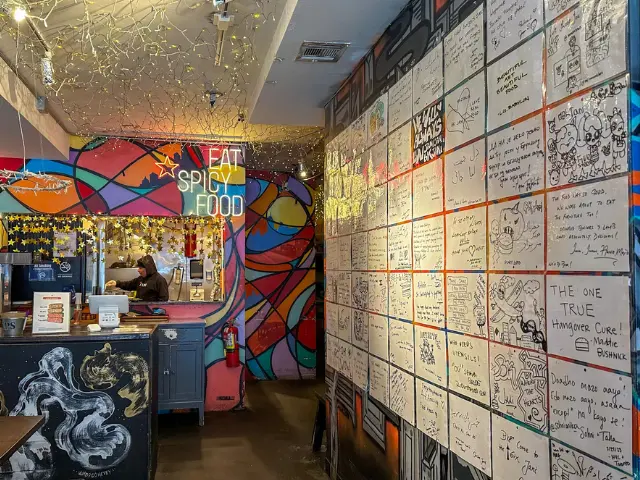
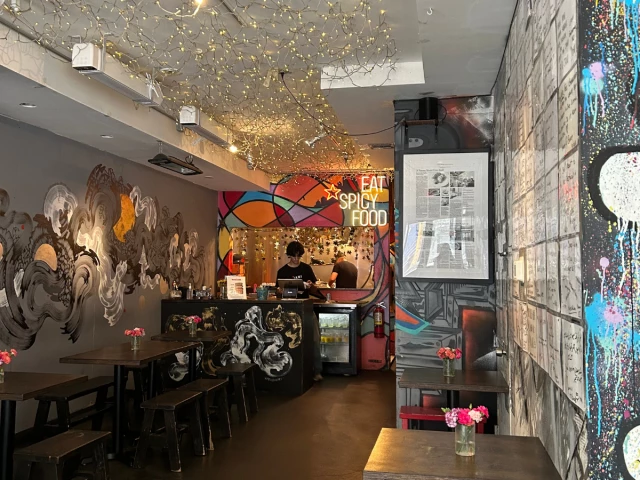
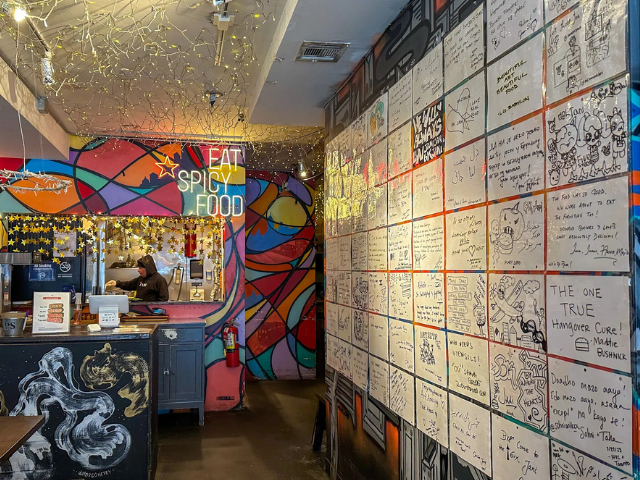
Furthermore, the physical space itself acts as a living document. The walls of BK Jani are not decorated with corporate art; instead, they are covered in handwritten notes, customer testimonials, and humorous desi references. Diners frequently leave behind pieces of their experience, with phrases like "Itni khawari ke baad maza aaya" (The pain was worth the wait), "Dil jeetliya bhai" (You won my heart, brother), and "Pakistan Zindabad!!" scrawled across the surfaces. This participatory art form transforms the restaurant into a communal guestbook of shared food memories.
Official Statements and Cultural Commentary
While BK Jani operates primarily as an independent culinary project, its cultural resonance has been documented extensively by food critics, urban historians, and lifestyle publications such as The Express Tribune, The New York Daily News, and The Hugh.
In early interviews and profile pieces, founder Sibte Hassan emphasized that BK Jani was never intended to be a sterile exercise in fusion for fusion’s sake. Rather, it was an organic expression of his dual identity. As Hassan noted in conceptualizing the restaurant, the goal was to honor the ingredients and flavor profiles of his homeland without bowing to the pressures of Americanizing or diluting ethnic food to make it palatable to risk-averse diners.
Culinary commentators have frequently pointed to BK Jani as a prime example of the "third-culture" dining movement. In this space, chefs do not feel bound by the rigid constraints of traditional authenticity. Instead, they leverage their heritage as a living, evolving toolkit. By embracing the burger—an undisputed icon of American working-class food culture—Hassan subverts expectations, proving that immigrant cuisine does not need to be confined to white-tablecloth fine dining or hidden away in ethnic enclaves to be respected.
Social media metrics and digital word-of-mouth have further amplified this narrative. The restaurant’s Instagram presence leans heavily into its namesake—Jani, a term of endearment in Urdu and Punjabi meaning "dear" or "beloved"—establishing an immediate, intimate rapport with its audience before they even step through the front door.
Future Outlook: The Evolution of South Asian Street Food in the West
As BK Jani continues to anchor itself as a staple of the Brooklyn food scene, its trajectory offers valuable insights into the future of immigrant entrepreneurship and culinary innovation in Western metropolitan hubs.
1. Moving Beyond the "Ethnic Niche"
For decades, South Asian cuisine in Western countries was largely categorized into two extremes: inexpensive, utilitarian takeout curry houses or high-end, formal dining experiences meant for special occasions. Concepts like BK Jani demonstrate that there is a massive, highly lucrative middle ground: casual, high-quality, identity-driven fast-casual dining. By anchoring traditional flavors in globally recognized formats like burgers and sandwiches, establishments like BK Jani lower the barrier to entry for mainstream consumers while maintaining deep authenticity for the diaspora.
2. The Scalability of Cultural Storytelling
The success of BK Jani relies heavily on narrative architecture—the handwritten walls, the curated South Asian soundtracks, and the explicit celebration of Pakistani roots. As the restaurant looks toward the future, the challenge and opportunity will lie in scaling this hyper-local, deeply personal atmosphere without losing the soul that made it a sensation in the first place. Food entrepreneurs watching BK Jani’s ascent are learning that modern consumers—particularly Gen Z and millennial diners—do not just buy food; they buy stories, cultural fluency, and authentic human connection.
3. Broadening the Horizons of Fusion Cuisine
Fusion cuisine has historically suffered from a mixed reputation, often associated with gimmicky, ill-conceived combinations that disrespect both culinary traditions. BK Jani succeeds because its fusion is rooted in a deep, respectful understanding of both worlds. The rich, slow-simmered spices of Lahore pair logically with the heavy, savory profile of ground beef. The cooling relief of mint chutney and raita functions identically to how toppings operate in any great sandwich. By treating South Asian ingredients not as exotic novelties, but as legitimate, highly functional culinary components, BK Jani paves the way for a new wave of chefs to experiment boldly with their heritage.
Conclusion
BK Jani is much more than a burger joint; it is a cultural embassy operating out of a storefront in Brooklyn. It proves that culinary boundaries are porous and that the best food often happens at the intersection of different histories, migration stories, and shared human experiences.
From the mint chutney that punches through the richness of a grilled beef patty to the handwritten messages of love, humor, and nostalgia plastered across its walls, BK Jani captures the essence of what it means to bring home across oceans. As long as people gather to break bread—or in this case, to eat messy, chutney-drenched burgers with their bare hands—establishments like BK Jani will continue to expand our palates, enrich our neighborhoods, and remind us that culture tastes best when it is shared.





Comments
Facebook App ID not configured. Please add it in the Customizer.