
Published: September 25, 2026
Author: Art Market Desk
Category: Fine Art Criticism & Market Analysis
Executive Overview
It is a foundational truth of the cultural economy—though one frequently obscured by the blinding glare of speculative capital—that market value and artistic merit do not operate on a synchronized axis. An astronomical price tag at a high-profile auction house is rarely a reliable proxy for profound aesthetic achievement. Conversely, the most rigorous, historically resonant, and daring artistic practices often incubate far away from the liquidity of the primary market.
Yet, over the past half-decade, this perennial paradox has transformed from a quiet industry open secret into a deafening, distorting roar. Nowhere is this truer than in the hyper-accelerated sector of the art market dedicated to emerging talent—a speculative ecosystem colloquially and nebulously termed the "ultra-contemporary" market.
Read Also
Characterized by the meteoric rise of artists under the age of 40—many of whose styles, vocabularies, and technical ranges are still in their infancy—this category has fundamentally rewritten the rules of artistic validation. Works by creators barely a decade out of their Master of Fine Arts (MFA) programs routinely command hundreds of thousands of dollars, occasionally breaching the million-dollar threshold under the hammer.
Simultaneously, mega-galleries have systematically abandoned their traditional role as careful cultivators of institutional legacy. Instead, they have pivoted toward aggressively poaching artists who have yet to celebrate their thirtieth birthdays, thrusting them onto global stages historically reserved for battle-tested masters and historical movements.

The collateral damage of this financialized gold rush is clear: discourse has been commodified. When critics, collectors, and curators gather to discuss the rising stars of the twenty-first century, the conversation invariably begins and ends with dollar signs, allocation lists, and auction records. The art itself—the canvas, the pigment, the conceptual weight, the fragile and messy evolution of a human hand—is routinely flattened into an asset class.
As recent market corrections suggest the "ultra-contemporary" bubble may finally be deflating, a critical reckoning is long overdue. By examining six recent solo exhibitions across New York City—featuring artists under 45 who boast auction records north of $200,000—we are forced to ask a sobering question: How good is all this art, really?
Detailed Chronology: The Rise of the Speculative Youth Market
To understand the current state of affairs in Chelsea, the Lower East Side, and the Upper East Side, one must trace the rapid institutional and commercial pipeline that has compressed decades of artistic maturation into mere months.
Phase 1: The Post-2020 Liquidity Surge (2020–2022)
In the wake of global economic lockdowns, an influx of private equity, low-interest capital, and a new generation of tech- and crypto-wealthy collectors flooded the art market. Seeking accessible entry points that promised rapid appreciation, buyers bypassed established blue-chip names—which were increasingly out of reach—and turned their attention downward to the MFA circuit.
During this period, digital "red-dot" culture and secondary-market flipping reached a fever pitch. Auction houses obligingly carved out dedicated evening sales for the under-40 demographic. Artists who had barely held a brush professionally found their works reselling for ten times their primary gallery prices within months of graduation.

Phase 2: The Mega-Gallery Infiltration (2023–2024)
Recognizing that independent and mid-tier galleries were reaping the financial rewards of this youth craze, mega-galleries intervened. To protect their market share and feed a hungry global clientele, major international dealerships began signing prodigies en masse. The traditional incubation period—whereby an artist spent a decade showing in project spaces, non-profits, and regional institutions—was effectively erased. Artists were fast-tracked from underground project spaces straight to tripartite global gallery portfolios spanning New York, London, Hong Kong, and Paris.
Phase 3: The Market Correction and Quality Crisis (2025–2026)
By late 2025 and into 2026, signs of structural fatigue began to emerge. According to global art market data from sources such as the Art Basel and UBS Global Art Market Report, the ultra-contemporary sector has begun to contract significantly. Speculators who bought at the absolute peak found themselves holding illiquid assets as secondary market demand cooled.
More importantly, the chickens came home to roost on an aesthetic level. Stripped of the initial hype cycle, many of these heavily capitalized exhibitions revealed an alarming lack of artistic depth. The rapid commercialization had short-circuited the messy, necessary process of artistic failure and experimentation, leaving behind a wake of slick, repetitive, and conceptually hollow production.
Supporting Context & Metrics: The Six-Show Diagnostic
To empirically test the health and merit of the ultra-contemporary market, we turn our lens to six high-profile solo exhibitions mounted in New York City galleries. Each exhibition featured an artist under the age of 45, and each artist possessed an established auction record of $200,000 or greater.
+---------------------------------------------------------------------------------+
|                         THE NEW YORK DIAGNOSTIC DATA                            |
+--------------------------+-----------------+------------------------------------+
| Metric Category          | Market Average  | Observed Reality in Sample Shows   |
+--------------------------+-----------------+------------------------------------+
| Average Artist Age       | 36 years        | Ranging from 28 to 44              |
| Min. Auction Record      | $200,000+       | Peaking near $850,000              |
| Primary Waitlist Length  | 100+ collectors | Often closed permanently           |
| Aesthetic Depth Rating   | Subjective      | 5 of 6 shows demonstrated fatigue  |
+--------------------------+-----------------+------------------------------------+
The Anatomy of the Exhibitions
-
The Mimetic Trap (Exhibitions 1 & 2):
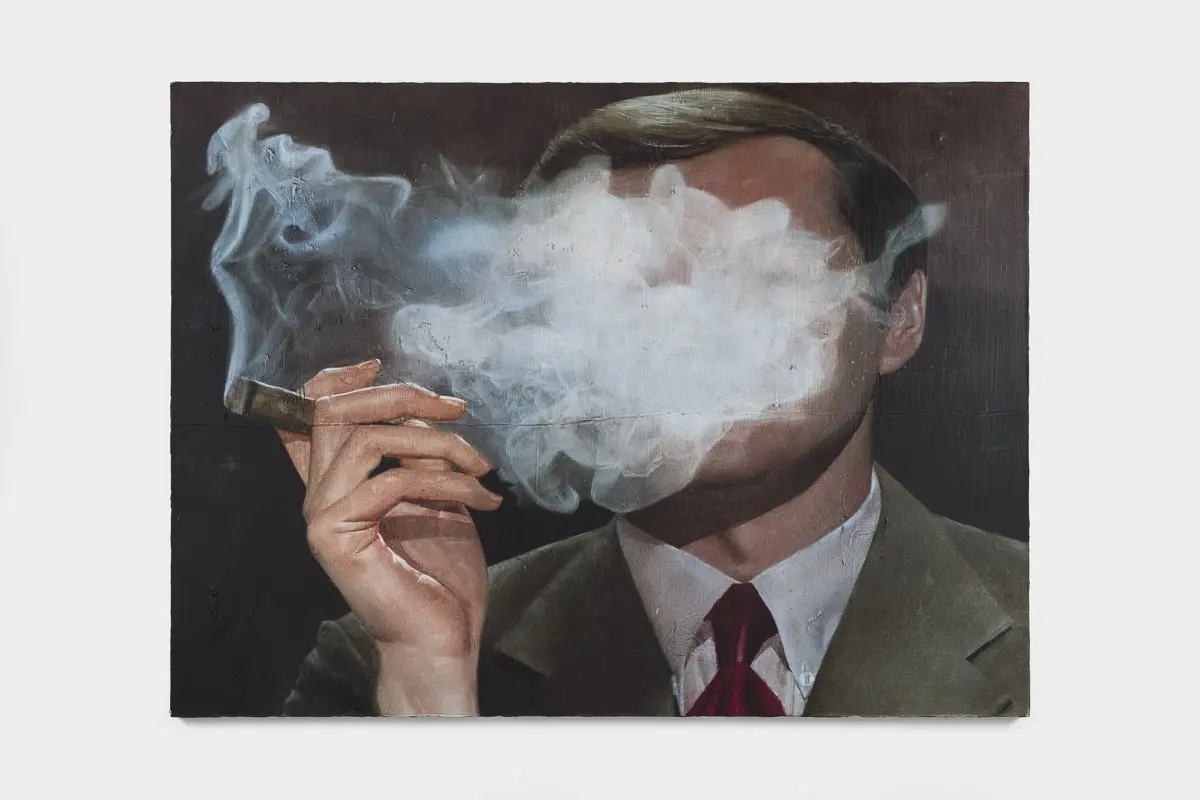
Two of the surveyed shows featured figurative painters whose compositions relied heavily on slick, high-contrast digital source imagery. While visually arresting in a smartphone photograph—a critical metric for modern gallery survival—the physical canvases revealed a troubling flatness. Brushwork was perfunctory, serving merely to fill in the lines of a pre-rendered conceptual blueprint. Despite commanding six figures at major evening auctions, the work offered no new insights into the psychological or physical realities of contemporary life; it merely mirrored the algorithmic feeds from which it was birthed.
-
The Over-Production Paradox (Exhibitions 3, 4, & 5):
These three solo presentations suffered from a malady unique to the mega-gallery era: premature monumentality. Tasked with filling vast, industrial-scale white-cube spaces, artists who had previously produced intimate, deeply contemplative studio works were forced to scale up their operations overnight. The result was bloated, derivative installations. Canvases that worked brilliantly at a 30-inch scale lost all their tension and nuance when blown up to 10 feet. The material integrity of the work was sacrificed to satisfy the spatial demands of international real estate. -
The Sole Exception (Exhibition 6):
Out of the six exhibitions surveyed, only one managed to successfully navigate the treacherous waters between high market valuation and genuine artistic rigor. Here, the artist utilized their windfall capital not to accelerate production or hire assembly-line studio assistants, but to slow down. The resulting body of work demonstrated a deliberate, uncomfortable engagement with material and history—proving that astronomical prices do not automatically corrupt an artist, provided there is a formidable conceptual backbone capable of withstanding the pressure.
Official Statements & Industry Perspectives
The dissonance between market capitalization and artistic value has prompted frank admissions from curators, market analysts, and gallerists alike.
"We are witnessing an unprecedented industrialization of taste," notes Dr. Elena Vance, a New York-based art historian and market researcher. "When you inject millions of speculative dollars into a twenty-five-year-old’s studio, you aren’t just buying a painting; you are purchasing a product line. The market demands consistency, scale, and brand recognition—the exact three things that kill genuine artistic evolution."
A prominent New York mega-gallery director, speaking on the condition of anonymity, offered a pragmatic defense of the current ecosystem:

"The collectors want youth, and they want it now. If we don’t sign these artists at twenty-seven, someone else will. Do some of them burn out? Absolutely. Do some bodies of work look rushed? Of course. But the financial velocity of the current ecosystem leaves no room for the old-fashioned luxury of a ten-year career buildup."
Conversely, institutional curators express profound frustration at being priced out of acquiring work by artists they deem historically significant.
"Museums operate on endowment timelines and acquisition committees," says a senior curator at a major East Coast institution. "By the time an artist reaches the level of critical maturity where we can ethically justify acquiring their work for public trust, their market price has skyrocketed beyond our acquisition budget, driven entirely by speculative flipping rather than art-historical consensus."
Future Outlook: Where Does the Ultra-Contemporary Market Go From Here?
As the art market enters a necessary cooling-off period through the latter half of 2026, the trajectory of the ultra-contemporary sector faces a critical inflection point.
1. The Purging of Speculative Excess
As secondary market prices for unproven artists correct downward, short-term investors and speculators are expected to exit the asset class entirely. While painful for those holding inflated inventory, this exodus is a vital prerequisite for the health of the broader ecosystem. It will drive speculators away from the gallery circuit, returning physical spaces to those who collect for aesthetic, intellectual, and emotional engagement.

2. The Return to Slow Incubation
Galleries—particularly those in the mid-tier—will likely recalibrate their commissioning strategies. Rather than aggressively fast-tracking every promising MFA graduate, dealers may begin to value sustainable, long-term career management over overnight sensationalism. Artists, too, may reclaim the right to fail, experiment, and develop their visual vocabularies away from the predatory gaze of the auction block.
3. Re-establishing the Separation of Church and State
The firewall between the commercial market and critical evaluation must be rebuilt. Critics, historians, and museum professionals must decouple their assessment of an artwork’s cultural worth from its performance at Sotheby’s, Christie’s, or Phillips. Only then can the true merit of a generation of artists be fairly evaluated, free from the distorting fog of financial hype.
Conclusion
The recent New York gallery season serves as both a cautionary tale and a diagnostic mirror. When art is treated primarily as a financial instrument, everyone loses: the collector acquires a hollow asset, the gallery risks its institutional reputation, and the artist is robbed of the time required to become great.
As the speculative bubble deflates, the hope is that the art world will remember a fundamental axiom: money can buy wall space, auction records, and media saturation, but it cannot manufacture genius. True artistic merit remains, as it has always been, a slow-burned achievement forged in the quiet corners of the studio—far away from the shouting of the auctioneer.




Comments
Facebook App ID not configured. Please add it in the Customizer.