
Executive Overview
In the contemporary literary landscape, the boundaries of fantasy are bounded only by the limits of human imagination. Authors frequently conjure sprawling continents, multi-layered mythologies, and reality-defying magic systems out of the ether. Yet, a growing movement among speculative fiction authors suggests that the most compelling fantastical realms are not those entirely divorced from reality, but those meticulously tethered to it.
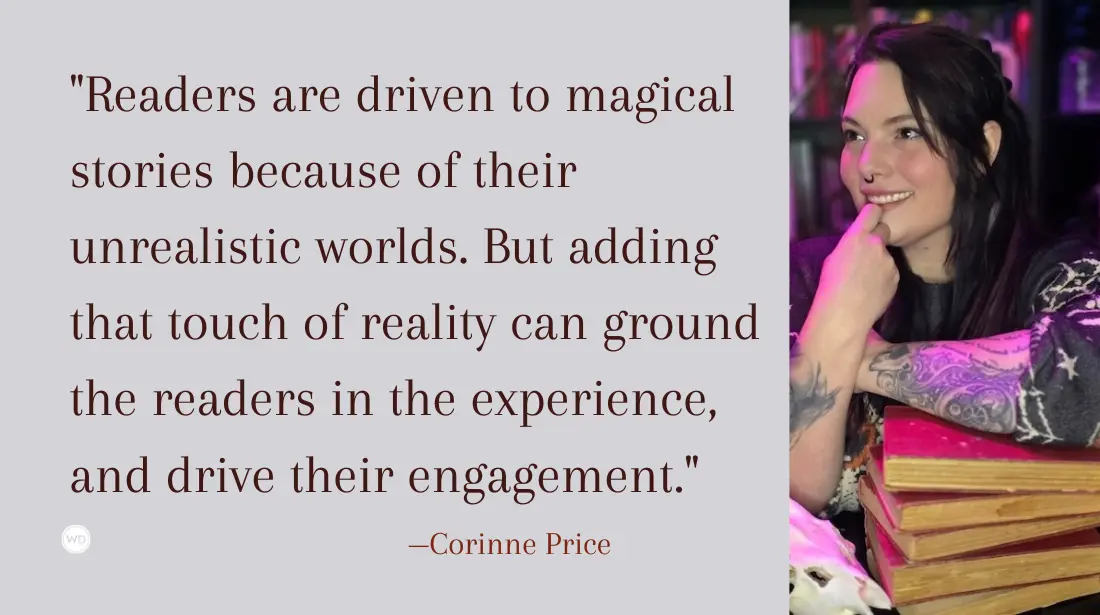
While writing The Vollmagus And The Etched series, author Corinne Price confronted a foundational creative challenge: avoiding glaring scientific inaccuracies when integrating real-world concepts into a magical framework. Rather than viewing physics, biology, and chemistry as handcuffs restricting creative liberty, modern fantasy architects are discovering that real-world scientific principles serve as an enhancement.
By grounding intricate magic systems in semi-realistic mechanics, writers can elevate the stakes, eradicate lazy plotting conveniences, and forge deeper reader engagement. When magic operates under consistent, quasi-scientific parameters, stakes become higher, problems demand genuine ingenuity, and readers are plunged deeper into the immersive experience. This paradigm shift proves that sometimes the most potent spellwork begins with understanding what is already scientifically possible.
Read Also
Detailed Chronology: The Evolution of Scientific Integration in Speculative Fiction
To understand how science came to heavily influence contemporary fantasy, it is helpful to trace the literary trajectory of worldbuilding mechanics over the past century:
- The Mythological Era (Mid-20th Century): Pioneered by foundational texts like J.R.R. Tolkien’s The Lord of the Rings, early modern fantasy relied heavily on folklore, divine intervention, and ancient lineages. Magic was wondrous, mysterious, and deliberately unexplained—a force of nature akin to destiny or divine will.
- The Systemization Wave (Late 20th to Early 21st Century): Authors like Brandon Sanderson popularized "hard magic systems," where magic operated under explicit, pseudo-mathematical rules. While systematic, these rules were often entirely internal to the story, operating independently of real-world physics or biology.
- The Interdisciplinary Convergence (Present Day): Today, authors are increasingly cross-referencing fictional mechanics with rigorous academic research. Writers are diving into medical journals, metallurgical texts, and aerospace physics—spanning mycelium biology, bone marrow functions, and cerebrospinal fluid dynamics—to inform how fantastical elements interact with biological and physical realities.
This modern shift bridges the gap between hard science fiction and high fantasy, resulting in hybrid narratives where magic does not simply wave away plot obstacles, but interacts dynamically with the laws of the natural world.
Supporting Context & Metrics: The Mechanics of Stakes and Suspension of Disbelief
The Pitfall of the "Poof" Solution
One of the greatest hazards in fantasy writing is the over-reliance on narrative conveniences—colloquially known as the "poof" solution. When characters possess an elaborate assortment of magic at their fingertips, readers frequently anticipate that complex obstacles can be hand-waved away with a simple flick of the wrist.
Consider a high-stakes medical scenario: a character’s hand is infiltrated by invasive fungal spores. In a purely hand-waved magic system, a healer might instantly banish the infection with a generic spell. But where is the suspense in that? If every hurdle is instantly surmounted, the narrative tension evaporates, leaving the reader with little psychological investment in the outcome.
Marrying Biology with Arcana
By introducing a touch of real-world biology, the threat instantly intensifies. In the natural world, most mycelium spores require sustained exposure to temperatures of 156 degrees Fahrenheit to be neutralized. However, the human body cannot withstand internal temperatures of 156 degrees for extended periods without catastrophic organ failure.
This friction creates an exquisite narrative dilemma. Imagine a scenario where a protagonist’s blood is infiltrated by arterial-dwelling spores that feed on oxygen and multiply rapidly. The protagonist can use magic to restrict blood flow to the infected hand, initiating oxygen deprivation. But a biological race against time begins: Which system will fail first—the spores, or the host?
To overcome this, the magic user must deploy precise, agonizing methodology. By vibrating their blood at a specific frequency to artificially elevate its temperature, they can push the tissue to roughly 110 degrees for a short, agonizing duration—just enough to weaken the spores’ grip without killing the host. The wound must then be physically reopened and flushed.
Is this sequence biologically accurate according to textbook medicine? Of course not; it takes place within a secondary world governed by magic. However, it abides by internal consistency and borrows structural weight from real-world thermal limits. While not every reader is a medical professional, jarring scientific contradictions can inadvertently jolt a reader out of the narrative trance, regardless of how poetic the prose may be. Grounding the magic prevents these disruptive hiccups.
Official Perspectives and Contemporary Literary Examples
A cross-section of recent speculative fiction demonstrates how deeply contemporary authors are embedding tangible, real-world mechanics into their worldbuilding:
- Hannah Kaner’s Godkiller: Kaner meticulously details Elogast’s baking processes, dragging the reader deep into the gritty, archaic methods of historical food preparation and grounding the societal era through sensory, practical details.
- Sarah Rees Brennan’s Long Live Evil: Brennan incorporates foundational metallurgy into her fantasy framework, touching upon the chemical realities of adding carbon and bones to iron to forge high-grade steel.
- Sara Wolf’s Heavenbreaker: Wolf forces her protagonist, Synali, to grapple with the punishing physiological realities of extreme gravitational forces while piloting massive mechs, marrying science-fiction physics with visceral bodily strain.
The Authorial Research Process
For authors like Corinne Price, the pursuit of realistic worldbuilding requires venturing far outside traditional literary research. Investigations often span:
- Mycology: Studying mycorrhizal networks and spore propagation limits.
- Hematology: Researching white blood cell production within bone marrow.
- Neurology: Analyzing the precise functions of cerebrospinal fluid.
While the vast majority of this specialized knowledge may never explicitly appear on the printed page, the rigorous research instills the fictional continent—such as the world of Crae Vost—with an undeniable undercurrent of realism. Authors who immerse themselves in academic papers, medical journals, and historical texts cultivate a subconscious authenticity that elevates the entire manuscript.
Future Outlook: The Horizon of Science-Infused Fantasy
As the literary market continues to evolve, readers are showing an increasing appetite for smart, nuanced speculative fiction that respects their intelligence. The artificial wall separating "science fiction" and "fantasy" is increasingly porous, leading to a renaissance of imaginative worldbuilding that honors physical laws even as it bends them.
Looking ahead, we can anticipate several key trends in the genre:
- Interdisciplinary Collaboration: Authors are increasingly consulting with scientists, physicians, and engineers to stress-test their magical systems against real-world thermodynamic and biological constraints.
- Enhanced Reader Engagement: As books provide richer, more grounded explanations for magical phenomena, reader communities are engaging in deeper analytical discussions, treating fictional mechanics with the same rigor historically reserved for hard sci-fi.
- Broadened Discovery: The research required to build these worlds frequently leads authors and readers down unexpected intellectual rabbit holes, fostering a culture of lifelong, cross-disciplinary curiosity sparked entirely by the guiding hand of fiction.
Ultimately, fantasy serves as a vehicle for profound escapism, guiding readers through magnificent landscapes born of an author’s mind. Yet, as contemporary writers prove daily, tethering that flight of fancy to the bedrock of reality does not shackle the imagination—it anchors the reader firmly within the magic, proving that sometimes the most potent spell of all is a deep, abiding respect for what is scientifically possible.
Check out Corinne Price’s Etched in Ink here. (Writers Digest uses affiliate links)




Comments
Facebook App ID not configured. Please add it in the Customizer.