
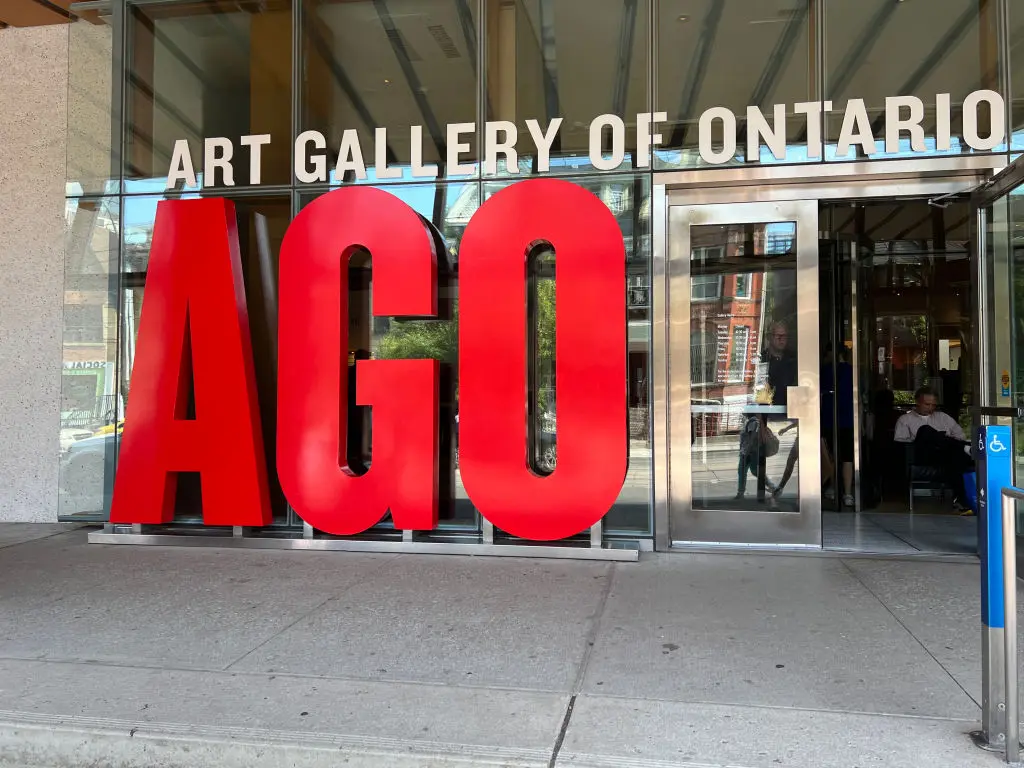
TORONTO — Stephan Jost, the polarizing director and chief executive officer of the Art Gallery of Ontario (AGO), will step down from his post at the end of the year, the institution announced on Tuesday. Jost’s departure marks the end of a consequential, high-stakes, and deeply turbulent ten-year tenure that reshaped the physical and institutional footprint of one of North America’s most prominent cultural repositories.
Under Jost’s leadership, the AGO experienced profound structural and curatorial shifts. He has been lauded for steering massive acquisitions of modern and contemporary art, securing unprecedented philanthropic gifts totaling half a billion dollars, and spearheading a transformative physical expansion that will soon culminate in the opening of a massive new contemporary wing.
Yet, Jost’s decade at the helm will equally be remembered for sharp internal divisions, intense public controversies, ideological clashes regarding global politics, and a crippling month-long labor strike that exposed deep fractures between the museum’s administration and its frontline workforce. As the AGO prepares to initiate a global search for Jost’s successor, the art world is left to evaluate a complex legacy: an institution vastly richer in collection and capital, yet deeply scarred by institutional conflicts that tested the limits of museum governance in the 21st century.
Read Also
Executive Overview: A Decade of Ambition and Friction
When Stephan Jost assumed leadership of the Art Gallery of Ontario in 2016, following successful directorships at institutions including the Honolulu Museum of Art, he inherited a respected provincial museum poised for international scaling. Over the ensuing decade, Jost set out to modernize the AGO, aligning its strategies with shifting demographic realities, contemporary curatorial urgencies, and aggressive capital fundraising campaigns.
The defining pillars of Jost’s tenure include:
- The "AGO 2028" Strategic Plan: A blueprint for long-term institutional growth, audience diversification, and capital development that Jost claims has successfully reached its benchmarks ahead of schedule.
- Massive Curatorial Acquisitions: A deliberate pivot toward modern and contemporary art, anchored by massive acquisitions of photography and conceptual works by Diane Arbus, Peter Hujar, and Hiroshi Sugimoto.
- The Dani Reiss Modern and Contemporary Gallery: A $500-million fully funded capital campaign and physical expansion project featuring a 40,000-square-foot, five-floor exhibition space slated to open in 2027.
- Demographic Accessibility Initiatives: Groundbreaking policy shifts, most notably free admission for all visitors under the age of 25 residing in Ontario, dramatically shifting the age profile of the museum’s visitor base.
- Severe Labor and Ideological Crises: A high-profile strike by over 400 unionized workers in early 2024, alongside intense controversies surrounding the departures of key Indigenous and contemporary curators amid geopolitical speech scrutiny.
In his exit announcement, Jost framed his departure as the natural conclusion of a completed mission. "Over the summer, I reflected on arriving at the AGO 10 years ago and establishing the Strategic Plan we call AGO 2028," Jost said in a statement. "I realized that we have met our goals ahead of schedule. Now is the time to set the AGO up for the future with new leadership."
Detailed Chronology: The Rise, Expansion, and Crises of Jost’s Tenure
Phase I: Building the Vision (2016–2019)
Arriving in Toronto in 2016, Jost quickly moved to imprint his vision on the AGO. Recognizing the need to attract younger, more diverse audiences to compete in a crowded metropolitan landscape, he championed accessibility. The introduction of free admission for visitors under 25 was an immediate success, injecting a younger demographic into the galleries and reshaping the social function of the museum within Ontario.
Concurrently, Jost began laying the groundwork for a sweeping re-evaluation of the museum’s collection strategy. Rather than relying solely on traditional European masterpieces and historical Canadian art, Jost pushed the AGO to aggressively acquire contemporary photography, conceptual art, and works addressing marginalized perspectives.
Phase II: The Pandemic and Philanthropic Surges (2020–2022)
The COVID-19 pandemic presented an existential crisis for cultural institutions worldwide, but Jost’s administration navigated the closures by doubling down on long-term capital fundraising. Working closely with the museum’s board of trustees, Jost leveraged his institutional influence—bolstered by his concurrent service as president of the Association of Art Museum Directors (AAMD) from 2024 to 2025—to secure major philanthropic commitments.
By engaging high-net-worth donors and corporate benefactors, the AGO secured an astonishing $500 million in gifts during Jost’s tenure. These funds served as the financial engine for the upcoming Dani Reiss Modern and Contemporary Gallery, designed to cement Toronto’s status as a global hub for contemporary visual culture.
Phase III: The Gathering Storm of Controversy (2023–2024)
Despite undeniable institutional growth, the latter half of Jost’s tenure was plagued by severe public controversies that strained the museum’s relationship with its staff, the creative community, and cultural critics.
- The Departure of Wanda Nanibush (2023): In late 2023, Wanda Nanibush, the museum’s inaugural curator of Indigenous art and a beloved figure in Canadian curatorial circles, departed the AGO abruptly. Her exit followed intense external scrutiny and pressure regarding her social media posts concerning Palestinian rights and the Israel-Hamas conflict. The departure sparked outrage among local artists and international arts advocates, who accused the museum of capitulating to political pressure and failing to protect its curatorial staff’s freedom of expression. The resignation of a secondary curator soon followed in solidarity.
- The Labor Strike (Spring 2024): Compounding institutional turmoil, more than 400 unionized workers at the AGO—comprising art handlers, visitor services staff, educators, and technicians—walked off the job in March 2024. The strike, centered on demands for living wages amidst soaring inflation in Toronto, forced the museum to shutter its doors to the public for an entire month. The labor stoppage dealt a blow to the museum’s public image, casting a harsh light on the vast disparities between the institution’s multi-million-dollar capital campaigns and the daily financial struggles of its frontline workers.
- The Nan Goldin Rejection (Early 2024): Controversy struck again earlier this year when a senior curator departed the AGO following internal revelations that the museum had rejected a planned acquisition of works by renowned artist and activist Nan Goldin. The decision reportedly stemmed from Goldin’s outspoken characterization of Israel’s military campaign in Gaza as a genocide. The cancellation of the acquisition drew sharp rebukes from contemporary artists who viewed the museum’s decision as an act of ideological censorship.
Supporting Context & Metrics: Evaluating the AGO Under Jost
To fully understand Stephan Jost’s decade at the AGO, one must weigh his structural and financial achievements against the reputational and internal costs incurred along the way.
Financial and Curatorial Triumphs
- Capital Secured: $500 million in philanthropic gifts over 10 years.
- Modern & Contemporary Acquisitions:
- 450 works by Diane Arbus
- 200 works by Peter Hujar
- 227 works by Hiroshi Sugimoto
- Physical Expansion: The upcoming 40,000-square-foot, five-floor Dani Reiss Modern and Contemporary Gallery, scheduled to open in 2027. This project stands as the physical manifestation of Jost’s modernizing agenda.
- Audience Shift: Millions of young visitors engaged through the elimination of admission fees for individuals under 25.
Governance and Labor Metrics
- Strike Duration: 30 days of complete public closure due to the March 2024 union strike over wage equity.
- Curatorial Turnover: The high-profile loss of foundational curatorial talent, including Wanda Nanibush and subsequent senior curatorial resignations, raising questions about institutional safety and ideological freedom within Canadian museums.
Official Statements and Institutional Perspectives
Reaction to Jost’s departure has highlighted the profound polarization that characterized his leadership. Supporters view him as a visionary executive who dragged a traditional gallery into the modern era, while detractors see a corporate-style director whose decisions alienated staff and compromised curatorial independence.
Beth Horowitz, co-president of the museum’s board of trustees, offered glowing praise for Jost’s contributions, emphasizing his legacy of growth and inclusivity:
"Stephan has transformed the AGO over the past decade. The collection is broader, deeper and more inclusive, the audience is younger and more diverse. His leadership of the Dani Reiss Modern and Contemporary Gallery project—fully funded and on track—is his legacy and will have a lasting impact."
Conversely, labor representatives and arts advocacy groups have offered a more muted evaluation, noting that Jost’s departure presents a critical opportunity for the museum to heal internal divisions, repair trust with its workforce, and recommit to authentic community engagement and institutional transparency.
Future Outlook: The Search for a New Director
As Stephan Jost prepares to step down at the conclusion of 2024, the Art Gallery of Ontario stands at a historic crossroads. The incoming director and CEO will inherit an institution structurally primed for global leadership, armed with a state-of-the-art contemporary facility set to open in 2027, an enriched, world-class photography and modern art collection, and a robust endowment fueled by half a billion dollars in fundraising.
However, the new leadership will also face the urgent, delicate task of healing institutional wounds. Rebuilding trust with a unionized workforce, restoring faith among progressive arts communities following the departures of key curators, and navigating the treacherous waters of geopolitical neutrality and artistic freedom will require exceptional diplomatic skill, empathy, and visionary stewardship.
The AGO has announced that it will immediately commence a global search for Jost’s successor. In the meantime, the art world watches closely, recognizing that the next chapter of the Art Gallery of Ontario will serve as a bellwether for how major cultural institutions balance corporate ambition, curatorial courage, and labor equity in the modern era.

Comments
Facebook App ID not configured. Please add it in the Customizer.