In the freezing pre-dawn hours of August 5, 1944, a violent eruption shattered the quiet Australian countryside. More than 900 Japanese prisoners of war, armed with improvised weapons crafted from baseball bats, gardening implements, and cutlery, stormed the perimeter fences of the Cowra POW camp in New South Wales. Driven by an unwavering military code that viewed capture as an unforgivable humiliation, the uprising resulted in the largest and bloodiest prison break of World War II.
By the time the gunfire ceased at daybreak, 234 Japanese men and four Australian soldiers lay dead, with scores more wounded. Every single escaping prisoner was eventually recaptured within days, rendering the tactical outcome of the revolt completely futile. Yet, the Cowra breakout was never about freedom in the traditional sense; it was a desperate, ideologically driven mass suicide designed to restore honor to men who believed their lives were already forfeit. Despite eclipsing the scale of better-known Allied breakouts—such as the infamous "Great Escape" from Nazi Stalag Luft III—the Cowra incident remains largely obscured outside of Australia and Japan, serving as a haunting testament to the tragic collision of incompatible cultural worldviews during the Pacific War.
Detailed Chronology: The Road to the Uprising
The Inception and Camp Dynamics
Established early in the Pacific conflict, the Cowra POW camp was originally designed to house Italian prisoners before expanding to accommodate Japanese enlisted men, officers, and conscripted laborers from Taiwan and Korea. By mid-1944, the camp held over 1,100 Japanese captives. Under the 1929 Geneva Convention, which Japan signed but never formally ratified, the Australian government maintained humane conditions. Prisoners were provided with generous rations, recreational facilities, and opportunities to play baseball and cultivate gardens.
To the Australian guards, who viewed prisoners through a Western lens of pragmatism, the camp’s stability was self-evident. Many survivors later recalled the conditions as "almost heavenly" compared to the active combat zones. However, beneath the veneer of daily routines, a radicalized faction among the prisoners grew increasingly restless. Hearing news of Japan’s mounting military defeats, hard-liners within Compound B began viewing their relative comfort not as humanitarian grace, but as a subtle form of psychological erosion.
The Catalyst: August 4, 1944
The immediate spark for the breakout occurred on August 4, 1944, when camp authorities announced plans to transfer Japanese enlisted soldiers below the rank of lance corporal to a different facility to ease overcrowding. Camp leaders strongly objected, arguing that separating younger soldiers from senior officers would destabilize the compound. The Australians dismissed these concerns, inadvertently pushing the radical faction to a tipping point.
Later that evening, a mass meeting was convened in Compound B. Dominated by fierce nationalists, the assembly argued that participating in a mass breakout was the only way to purge the shame of surrender. An estimated 80 percent of the prisoners voted in favor of an armed uprising. While many privately harbored deep reservations, the powerful pressure of collective conformity left little room for dissent. The plan was set: a bugle call would signal the charge at 2:00 a.m., aiming to overwhelm the guards, seize weapons, and orchestrate a glorious, terminal defeat.
The Attack and Pre-Dawn Chaos
At approximately 2:00 a.m., a weeping Japanese prisoner climbed a fence, shouting warnings that served as an early, frantic alarm—though too late to prevent the catastrophe. A bugle blast pierced the cold night air, and waves of prisoners surged forward. Setting fire to their own sleeping huts to illuminate the terrain, the men charged the barbed-wire perimeter, using thick blankets, mattresses, and baseball gloves to shield themselves from the razor wire.
The camp’s defenses were quickly overwhelmed in certain sectors. Japanese teams targeted a Vickers machine gun manned by privates Benjamin Gower Hardy and Ralph Jones. Though both Australians were brutally attacked—resulting in Jones’s death and severe injuries to Hardy—Hardy managed to remove a vital component of the machine gun, preventing the prisoners from turning the heavy weapon against the camp.
Meanwhile, hundreds of prisoners spilled out into the surrounding countryside. Armed guards opened fire with rifles and machine guns, cutting down waves of men scrambling through the wire. By 6:20 a.m., the chaotic shooting stopped, leaving a landscape of devastation inside and outside the perimeter.
Supporting Context & Metrics: Ideology, Culture, and Statistics
To understand why 900 men would willingly charge heavily armed fortifications with baseball bats, one must examine the strict militaristic culture of Imperial Japan.
The Senjinkun and the Stigma of Surrender
At the core of the Japanese soldier’s mindset was the Senjinkun (Field Service Code), issued in January 1941. The pocket-sized directive explicitly ordered soldiers to "be determined always to sacrifice himself" for the Emperor and his unit, declaring the ultimate decree regarding captivity:
"If alive, do not suffer the disgrace of becoming a prisoner; in death, do not leave behind a name soiled by misdeeds."
This cultural aversion to surrender was reflected in stark statistical disparities during World War II:
Western Allies vs. Japanese Captives: Western Allies captured roughly 35,000 Japanese service members throughout the war, contrasted against nearly 8 million German prisoners captured across various fronts.
The Cowra Toll: Of the 1,104 Japanese prisoners housed at Cowra on August 5, 1944, exactly 1,034 participated in the breakout.
Casualties: 234 Japanese men died during the breakout and its immediate aftermath (183 from gunshot wounds, 31 from self-inflicted violence or peer-inflicted execution, 12 from burns inside charred huts, and 8 from subsequent wounds or suicide during recapture).
Australian Casualties: Four Australian soldiers (Privates Benjamin Gower Hardy, Ralph Jones, Charles Henry Shepherd, and Lieutenant Harry Doncaster) were killed during the uprising, and a fifth (Thomas Roy Hancock) died in a friendly fire incident during the manhunt.
Official Statements and Archival Insights
The aftermath of the breakout triggered extensive military inquiries and governmental investigations to determine how Australian forces—despite receiving a prior warning from a Korean prisoner in June 1944—were caught so unprepared.
Historian and author Mat McLachlan notes in his analytical reviews of the event that the Australian command suffered from a fatal psychological blind spot:
"The Australians simply couldn’t get their heads around the fundamental concept that Japanese prisoners preferred death to imprisonment. They could only view the Japanese through their own lens, and that distorted perspective bred a dangerous complacency."
Conversely, archival records from surviving prisoners highlight the psychological trap they felt caught within. Former prisoner Masayoshi Yamada reflected in post-war documentation that while individual survival instincts initially made him "want to cling to life," the peer pressure of the collective military code ultimately induced a state of fatalistic resignation.
Despite the bloodshed, the official Australian response to the recaptured prisoners was remarkably lenient. Rather than facing military tribunals or execution, the survivors were provided basic medical care, fed standard rations, and eventually transferred to other facilities until the war’s conclusion.
Future Outlook: Legacy, Reconciliation, and Remembrance
In the decades following World War II, the Cowra breakout evolved from a site of national trauma into an enduring international symbol of peace and reconciliation between Australia and Japan.
Today, the fallen Japanese soldiers rest side-by-side in the Cowra Japanese War Cemetery, while the Australian servicemen are interred nearby. The establishment of the Cowra Japanese Garden and Cultural Centre in the 1970s transformed the regional town into a prominent hub for bilateral diplomacy and cultural exchange.
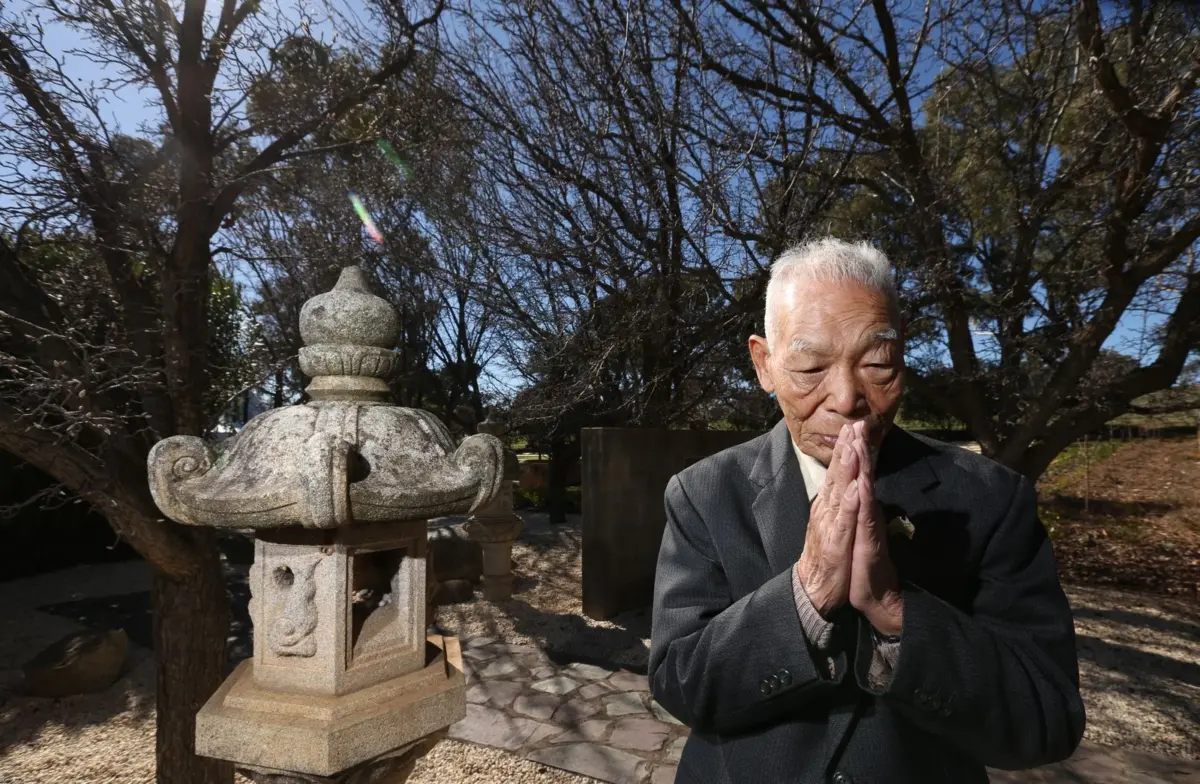
As living memory of World War II fades with the passing of the final survivors—such as Teruo Murakami, the last Cowra breakout survivor, who passed away in 2023 at the age of 103—the imperative to preserve this history grows stronger. Modern historians, educators, and diplomats continue to study Cowra not merely as a military anomaly, but as a profound cautionary tale regarding the dangerous consequences of cultural misunderstanding during times of global conflict. Through ongoing museum exhibits, international youth exchanges, and commemorative ceremonies, Cowra stands today as a bridge linking the violent tragedies of the past with a shared commitment to global harmony.

/https://tf-cmsv2-smithsonianmag-media.s3.amazonaws.com/filer_public/93/b2/93b2606a-1623-4018-8a40-5857fe0dd865/gettyimages-453574876.jpg)
/https://tf-cmsv2-smithsonianmag-media.s3.amazonaws.com/accounts/headshot/meilan_headshot2.png)
:focal(2492x1638:2493x1639)/https://tf-cmsv2-smithsonianmag-media.s3.amazonaws.com/filer_public/93/b2/93b2606a-1623-4018-8a40-5857fe0dd865/gettyimages-453574876.jpg)
/https://tf-cmsv2-smithsonianmag-media.s3.amazonaws.com/filer_public/14/29/1429fe5b-958d-477f-ac5c-ca00faa46df6/baseball.png)
/https://tf-cmsv2-smithsonianmag-media.s3.amazonaws.com/filer_public/b3/5e/b35e1338-7998-4cdd-abd9-6ffb122a1be8/bats.png)
/https://tf-cmsv2-smithsonianmag-media.s3.amazonaws.com/filer_public/9d/9d/9d9d2c0e-3274-4a17-9268-52ea4284eef8/statelibqld_1_80019_japanese_prisoners_arriving_at_brisbane_from_new_guinea_ca_1945.jpg)
/https://tf-cmsv2-smithsonianmag-media.s3.amazonaws.com/filer_public/66/24/6624772d-17c7-44a5-9afe-c87dc664c2a2/japanese_pows_guam_aug_1945.jpeg)
/https://tf-cmsv2-smithsonianmag-media.s3.amazonaws.com/filer_public/0d/2e/0d2ebc7e-5e5a-4451-9732-65d655352ef0/hajime.png)
/https://tf-cmsv2-smithsonianmag-media.s3.amazonaws.com/filer_public/53/c2/53c2bf20-3a22-4f67-8730-68cb9d67a094/japanese-pows.png)
/https://tf-cmsv2-smithsonianmag-media.s3.amazonaws.com/filer_public/82/c2/82c2344c-9b4f-4f81-bc1c-db9141287768/blankets.jpg)


Comments
Facebook App ID not configured. Please add it in the Customizer.