
Executive Overview
After an eleven-year hiatus that left millions of Apple ecosystem users in Pakistan on the outside looking in, Apple Music has officially arrived in the country. The long-awaited expansion, which went live following updates to Apple’s Media Services availability log, integrates Pakistan into the tech giant’s global music streaming network. Local users can now access millions of songs, curated playlists, spatial audio, and localized recommendations directly through native, Pakistan-based Apple IDs, eliminating the historical workaround of relying on foreign regional accounts.
This development marks a significant milestone for Pakistan’s burgeoning digital economy, reflecting shifting corporate perspectives on the country’s consumer market, regulatory landscape, and broadband penetration. With subscription tiers competitively priced starting at Rs379 per month for individuals and Rs649 for families—alongside a standard one-month introductory free trial—Apple is positioning itself to capture a substantial share of Pakistan’s increasingly connected youth demographic.
While other streaming heavyweights like Spotify and YouTube Music have established deep roots in the region over recent years, Apple’s belated entry signals a renewed commercial interest in South Asia’s telecommunications market. This extensive report examines the trajectory of the launch, the financial and technical implications for local consumers, the broader context of Apple’s regional integration, and what this expansion signals for the future of digital entertainment consumption in Pakistan.
Read Also
Detailed Chronology: The 11-Year Wait for Apple Music
To understand the weight of Apple Music’s arrival in Pakistan, one must look back at the platform’s inception and the protracted exclusion of one of the world’s most populous nations.
The Genesis: June 2015
When Apple officially launched its premier music streaming service in June 2015—succeeding the sunsetting of Beats Music and redefining how the company approached digital media—it rolled out simultaneously across more than 100 countries. Spearheaded by industry heavywaters and integrated deeply into iOS 8.4, the platform promised seamless listening experiences, human-curated radio stations (such as Apple Music 1, formerly Beats 1), and deep hardware integration. However, Pakistan was notably absent from the initial deployment list.
A Decade of Digital Exile
Throughout the late 2010s and early 2020s, as Apple expanded its footprint into neighboring and regional markets—including India, Saudi Arabia, the United Arab Emirates, Indonesia, and Japan—Pakistan remained conspicuously absent from Apple’s Media Services database.
This exclusion created a frustrating user experience for Pakistani Apple loyalists. To access the service, local consumers had to resort to workaround strategies, such as registering alternative Apple IDs tethered to the United States, United Kingdom, or United Arab Emirates. These workarounds were fraught with friction:
- Payment Barriers: International credit cards or region-specific gift cards were required to fund subscriptions, making ongoing billing a cumbersome logistical hurdle for everyday users.
- Currency Inefficiencies: Transactions conducted in foreign currencies subjected users to unfavorable exchange rates, dynamic currency conversion fees, and banking restrictions on cross-border digital purchases.
- Ecosystem Fragmentation: Using foreign accounts meant that app purchases, iCloud storage, and family-sharing configurations had to be managed outside of the user’s true geographical identity, often breaking local app store functionalities or blocking access to region-exclusive domestic applications.
The September 30 Turning Point
The tide finally turned on September 30, when eagle-eyed observers tracking Apple’s developer and support documentation noted quiet updates to the company’s Media Services availability pages. Alongside Pakistan, Apple added three other nations to its music roster: Albania, Brunei, and Burkina Faso.
Within hours of the documentation update, users across Pakistan reported the ability to change their primary Apple ID regions back to Pakistan—or create new local accounts—and immediately subscribe to Apple Music using locally issued debit and credit cards supporting international e-commerce transactions. The eleven-year wait had officially come to an end.
Supporting Context & Metrics: Pricing, Features, and Market Dynamics
The financial framework and technical feature set accompanying the Pakistani launch have been structured to lower barriers to entry while providing a premium experience that matches global standards.
Subscription Tiers and Pricing Strategy
Apple has introduced localized pricing tiers designed to compete directly with existing market incumbents while reflecting the purchasing power parity of the region:
| Subscription Plan | Monthly Price (PKR) | Key Inclusions & Perks |
|---|---|---|
| Individual Plan | Rs379 / month | Full catalogue access for a single user, personalized mixes, offline downloads, and lossless audio. Includes a 1-month free trial for new subscribers. |
| Family Plan | Rs649 / month | Shared access for up to six family members, with individual personal libraries and recommendations for each member. |
| Student Plan | Pending regional rollout | Geared toward verified higher-education students at a discounted rate (availability varies by local university verification systems). |
These price points position Apple Music competitively against rival platforms operating in the country, ensuring that urban professionals, audiophiles, and younger demographics find the service economically viable.
Premium Audio and Ecosystem Integration
Unlike third-party streaming apps that must navigate varied operating system permissions, Apple Music is baked directly into the native Music app across the entire Apple hardware spectrum—including iPhones, iPads, Mac computers, Apple Watches, Apple TVs, and HomePods.
Subscribers in Pakistan gain immediate access to the full breadth of Apple Music’s engineering capabilities:
- Lossless Audio: Subscribers can stream millions of tracks in Apple Lossless Audio Codec (ALAC) resolution, scaling from CD quality (16-bit at 44.1 kHz) up to Hi-Res Lossless (24-bit at 192 kHz), catering to high-end headphone and home audio enthusiasts.
- Spatial Audio with Dolby Atmos: Immersive, multi-dimensional sound experiences that create a theater-like audio environment when paired with compatible AirPods (such as AirPods Pro and AirPods Max) and Beats headphones.
- Apple Music Sing: Real-time lyrics with adjustable vocal levels, allowing users to sing along to their favorite tracks with lead vocals turned down or completely muted.
- Offline Downloading: Full download capabilities for uninterrupted listening during mobile network drops or traveling.
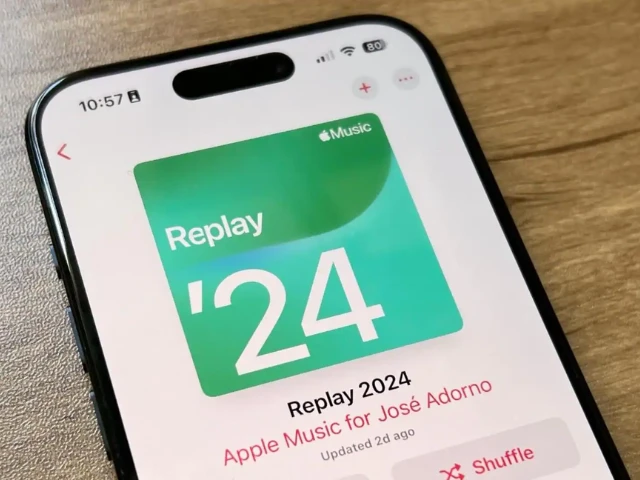
- Personalized Algorithms: Dynamic playlists such as New Music Daily, Get Up! Mix, Chill Mix, and the wildly popular year-end Apple Music Replay feature, which tracks personal listening habits over time.
Official Statements and Industry Impact
While Apple is traditionally tight-lipped regarding granular market-specific press releases—often preferring to let product rollouts speak for themselves—tech industry analysts, telecommunications executives, and local consumer advocacy groups have been vocal about the implications of the launch.
Bridging the Digital Divide
Digital economy experts in Islamabad and Karachi have hailed the move as a long-overdue nod to Pakistan’s tech-savvy population. "For over a decade, Pakistan’s Apple community has operated in a regulatory blind spot," notes digital media analyst Tariq Mehmood. "Users were forced to use workaround accounts just to stream music legally. Bringing Apple Music officially into the country signals that tech conglomerates are finally recognizing Pakistan not just as a hardware dumping ground, but as a viable, engaged digital services market."
The Competitive Landscape
Apple Music enters a mature streaming ecosystem in Pakistan. For years, platforms like Spotify (which launched official operations in Pakistan in early 2021) and YouTube Music have fought aggressively for market share, investing heavily in localized playlists (such as Coke Studio tie-ins, regional Punjabi and Urdu pop charts, and Qawwali collections) and localized marketing campaigns.
While Spotify and YouTube Music hold a commanding lead in terms of total user acquisition—largely driven by freemium tiers that allow ad-supported listening—Apple Music is carving out its niche by targeting audiophiles, ecosystem purists, and high-income demographics who value premium audio codecs (Lossless/Dolby Atmos) and strict privacy standards.
Future Outlook: What Does This Mean for Apple in Pakistan?
The arrival of Apple Music raises an inevitable question among tech consumers: What comes next?
Will Other Apple Services Follow?
As of late 2024, several cornerstone Apple services remain unavailable or restricted via Pakistan-based accounts, including:
- Apple Fitness+: Requiring deep integration with local health data infrastructure and regional fitness partnerships.
- Apple News & News+: Constrained by regional publishing rights, curation requirements, and local media regulations.
- Apple Pay: Perhaps the most anticipated financial service missing from the region. While digital wallets and branchless banking apps (like Easypaisa, JazzCash, and various commercial banking apps) have modernized Pakistan’s fintech sector, Apple Pay has yet to secure the requisite partnerships with the State Bank of Pakistan and local acquiring banks to enable tap-and-pay transactions via iPhone or Apple Watch.
Industry insiders suggest that the successful rollout of Apple Music serves as a localized stress test. By integrating its Media Services billing infrastructure, handling local value-added taxes (VAT), and establishing official communication channels with Pakistani telecommunications authorities, Apple is laying the administrative groundwork for future service expansions.
Economic Resilience and Local Artists
Beyond consumer convenience, the formal integration of Pakistan into Apple Music’s global network offers unprecedented exposure for Pakistani musicians, producers, and indie artists. With a local storefront, Pakistani tracks are now eligible for inclusion in curated global playlists, regional charts, and editorial features, exposing local sounds—from traditional folk and Sufi rock to contemporary underground hip-hop—to an international audience of hundreds of millions of Apple Music subscribers worldwide.
As broadband infrastructure continues to improve through nationwide 4G expansions and the gradual rollout of 5G trials, the digital entertainment sector in Pakistan is poised for exponential growth. Apple Music’s arrival is not merely the end of an eleven-year wait; it is the opening chapter of a more integrated, globally connected digital future for Pakistani consumers and creators alike.





Comments
Facebook App ID not configured. Please add it in the Customizer.