
Executive Overview
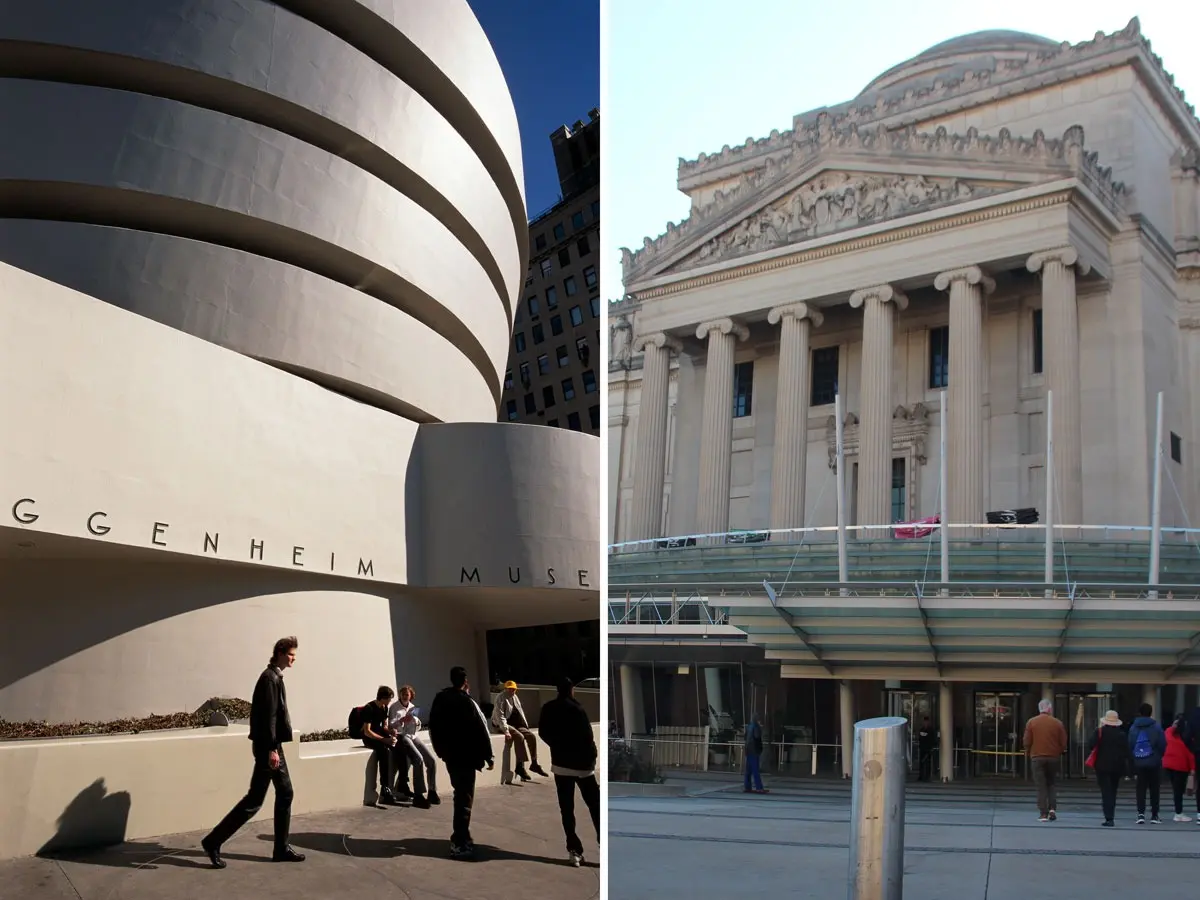
In a watershed moment for the cultural sector in New York City, unionized staff at four of the city’s most prominent institutions—the Brooklyn Museum, the Solomon R. Guggenheim Museum, the Jewish Museum, and the American Folk Art Museum (AFAM)—have officially ratified new labor agreements. Announced by United Auto Workers (UAW) Local 2110, the milestone brings a hard-fought conclusion to months, and in some cases years, of contentious negotiations characterized by public rallies, gala pickets, sudden structural layoffs, and eleventh-hour strike authorizations.
While the Brooklyn Museum and AFAM successfully crossed the finish line with newly minted four-year contracts, their counterparts at the Guggenheim and the Jewish Museum secured their respective agreements in September. These contracts arrive against a backdrop of acute financial strain across the metropolitan arts landscape. Facing soaring inflation, post-pandemic operational deficits, and dwindling endowments, several of these institutions had previously attempted to balance their books through sweeping staff reductions.
The newly ratified agreements secure critical material gains for hundreds of cultural workers, including substantial base wage increases, enhanced minimum salary floors, preserved healthcare benefits, and modernized workplace protections. Yet, even as these four institutions find a degree of labor stability, the broader movement continues to ripple outward. Negotiations remain underway at several other premier institutions, and the looming threat of industrial action underscores a fundamental shift in power dynamics within the city’s storied museums. Frontline employees, educators, conservators, and administrative personnel are increasingly utilizing collective bargaining to redefine what it means to work in the arts.
Read Also
Detailed Chronology of the Labor Battles
The path to ratification was far from straightforward, marked by escalating tensions, public demonstrations, and structural crises that brought labor and management to the brink of complete operational paralysis.
The Brooklyn Museum: From Deficit Crisis to Four-Year Accord
The struggle at the Brooklyn Museum was defined by a severe financial panic that erupted in early 2025. Confronting a daunting $10 million operating deficit, museum leadership startled the cultural community by announcing plans to slash more than 10 percent of its workforce. Crucially, the decision was made without prior consultation with the two unions representing the staff: DC 37 Local 1502 and UAW Local 2110.
The announcement triggered immediate and fierce pushback. Union members, recognizing the existential threat to their livelihoods, organized weeks of vocal rallies outside the museum’s Beaux-Arts gates. The public pressure campaign struck a chord with city lawmakers, eventually drawing the intervention of the New York City Council, which stepped in with a $2.5 million rescue grant to help mitigate the shortfall. Ultimately, the catastrophic layoffs were averted.
Capitalizing on this momentum, the bargaining units pressed forward into contract talks. In late September, Brooklyn Museum staff joined forces with workers from AFAM and the Whitney Museum to hold a high-stakes strike-authorization vote. The unified front proved decisive, culminating this week in the ratification of a robust four-year contract that institutionalizes annual raises and provides long-awaited financial security.
AFAM: A Historic Inaugural Agreement Born From the Picket Line
For the American Folk Art Museum, the ratification of its inaugural contract represents a historic milestone, achieved only after nearly two years of grueling negotiations. The relationship between staff and administration had deteriorated significantly earlier in the year when union members took to the picket lines outside the museum’s annual fundraising gala.
The gala protest was designed to spotlight stalled bargaining and aggressively denounce management’s opening counter-proposal: a meager bump in the minimum wage for front-facing staff—from $19 to $21.50 an hour—that stripped away vital existing benefits. Undeterred by the slow pace of talks, staff maintained intense solidarity, culminating in the recent approval of a four-year agreement that completely overhauls the museum’s compensation and structural policies.
The Guggenheim: Navigating Post-Pandemic Turmoil
At the Guggenheim Museum, the journey toward labor peace has been uniquely intertwined with leadership transitions and deep-seated structural deficits. The institution’s union, which originally organized in 2021 and represents approximately 150 curators, conservators, educators, and public programmers, ratified its first foundational contract in 2023—a two-and-a-half-year agreement.
However, financial pressures soon resurfaced. In February 2025, Mariët Westermann—who assumed the role of director and chief executive in 2024—announced that the museum would lay off 20 employees, accounting for roughly 7 percent of its total workforce. Westermann pointed to a "financial picture" that had steadily deteriorated over the prior decade.
The layoffs hit the workforce hard, with union leaders describing the implementation as "chaotic." When negotiations for a subsequent contract commenced in December 2025, the bargaining unit made fortified job security provisions its North Star. In March, tensions boiled over into direct action when Guggenheim union members picketed the grand opening reception for a high-profile Carol Bove survey, publicly condemning management’s repeated rejections of their core demands. These pressures ultimately paved the way for the union’s September agreement.
The Whitney Museum and the Broader NYC Landscape
While four institutions have successfully ratified contracts, the broader labor movement in New York’s museum sector remains hyper-active. At the Whitney Museum, roughly 200 employees who unionized in 2021—following two prior rounds of layoffs that sheared 20 percent off the workforce—remained locked in intense bargaining. Their negotiations carried the looming specter of an October 5 strike date, strategically timed just three days before member previews were set to open for the museum’s major blockbuster Roy Lichtenstein retrospective.
Meanwhile, UAW Local 2110 confirmed that its organizing and negotiating apparatus is operating at full throttle across the city. The union is currently deep at the bargaining table with several other monumental institutions, including the Metropolitan Museum of Art, the New Museum of Contemporary Art, the South Street Seaport Museum, and the Noguchi Museum.
Supporting Context & Financial Metrics
The core drivers behind this wave of unionization and subsequent contract ratifications are rooted in the astronomical cost of living in New York City and historical undercompensation within the arts and culture sector. For decades, the cultural cachet of working at world-renowned institutions was leveraged by management to justify depressed wages, stagnant salary bands, and heavy reliance on temporary labor. The post-pandemic inflationary spike shattered this dynamic.
Brooklyn Museum: Remaking the Compensation Structure
Under the terms of the Brooklyn Museum’s newly ratified second contract, significant financial adjustments have been codified:
- Base Minimums: Minimum salaries for full-time positions have been restructured to range between $63,585 and $129,854, depending entirely on the employee’s position level.
- Retroactive and Future Increases: These salary adjustments are retroactive to July 1, with structural minimums guaranteed to rise by an additional 10.34 percent by the final year of the contract.
- Frontline Wages: Visitor services and retail associates, who often bear the brunt of customer-facing stress and fluctuating foot traffic, will see their hourly wages climb to between $28.69 and $32 per hour by the conclusion of the agreement.
AFAM: Equity, Security, and Emergency Protections
The inaugural AFAM contract introduces sweeping financial and structural reforms tailored to a workforce that spent two years demanding parity:
- Guaranteed Escalation: All staff are guaranteed annual wage increases totaling 13.6 percent spread across the four-year term.
- Targeted Frontline Relief: Entry-level employees stationed in the museum store, along with security and facilities associates, secured immediate raises ranging from 8 to 22 percent, retroactive to July 1.
- Operational Protections: Beyond base pay, the contract establishes a formal, binding grievance procedure—a crucial accountability tool that was previously absent. It also mandates additional premium pay for employees who absorb extra duties or are mandated to work on-site during declared emergencies.
- Controlling Outsourcing: In a major win for job security, the contract restricts the museum’s historical practice of utilizing temporary employees and outside subcontractors to replace regular, benefited staff. Furthermore, it locks in comprehensive healthcare coverage completely free of employee premium contributions.
Official Statements and Perspectives
The human element of these negotiations underscores a profound cultural shift. Workers are no longer willing to quietly subsidize the operational budgets of elite institutions through personal financial sacrifice.
Elizabeth St. George, an assistant curator at the Brooklyn Museum, highlighted the pragmatic priorities of her bargaining unit in an official statement:
"We are pleased to have negotiated a second contract that preserves the quality of our health care and provides significant wage increases. It was important to us to maintain affordable health care, including keeping an out-of-network option."
At AFAM, the emotional resonance of a 25-year tenure meeting a newly democratized workplace was captured by Richard Ho, director of information technologies:
"AFAM staff voted unanimously to unionize to address pressing concerns about our workplace. I’m happy that we were able to reach an agreement that will make the Museum a more sustainable place to work for all of us. I’m proud that our entire staff stayed involved and supported each other throughout this process."
Conversely, museum executives have had to navigate the delicate balancing act of appeasing emboldened labor forces while preserving institutional solvency in an era of unpredictable philanthropic giving and shifting tourist demographics. While formal statements from museum directors have generally struck a conciliatory tone upon the finalization of agreements, the months leading up to these signatures were characterized by deep institutional resistance to fixed-cost expansions.
Future Outlook: A Permanent Shift in Cultural Labor
The successful ratification of these contracts at the Brooklyn Museum, Guggenheim, Jewish Museum, and AFAM marks the closing of a particularly turbulent chapter in New York City’s labor history, but it also signals the dawn of a permanent structural reality.
For generations, the museum sector operated under a paternalistic model where institutional prestige substituted for competitive remuneration and job security. The events of recent years—catalyzed by pandemic-era disruptions, systemic budget deficits, and an energized, highly educated workforce—have permanently dismantled that paradigm.
As UAW Local 2110 continues its active negotiations at titans like the Metropolitan Museum of Art and the New Museum, museum administrations across the country are taking notice. The message from the New York cultural sector is unequivocal: world-class art and scholarship cannot be sustained on the backs of underpaid, overworked, and precarious labor. By organizing, striking, and holding the line at galas and council chambers, cultural workers have proven that the future of the museum must be built on a foundation of equity, economic dignity, and mutual respect.




Comments
Facebook App ID not configured. Please add it in the Customizer.