
Executive Overview
In a landmark policy announcement that marks the first major structural funding update in two decades, New York City has doubled its direct financial support for individual artists. Spearheaded by Mayor Zohran Kwame Mamdani and Department of Cultural Affairs (DCLA) Commissioner Diya Vij, the city’s direct-support grants administered through borough arts councils will jump from $5,000 to up to $10,000.
This historic financial adjustment injects roughly $3.5 million cumulatively into all five municipal boroughs, distributed via open calls managed by local regrant partners. Alongside the direct funding boost, the city has introduced a complementary initiative granting past and present arts council grantees monthly access to Materials for the Arts (MFTA).
Read Also
The announcement arrives on the heels of a record-breaking municipal budget adoption for the 2027 fiscal year, wherein the DCLA secured $323.8 million—a 7.5 percent increase from the previous year—alongside a newly minted $10 million annual Cultural Stability Fund. In an expansive interview with ARTnews, Commissioner Diya Vij discussed the operational philosophy behind these changes, detailing how her extensive background in socially engaged public art and museum curation informs an administration committed to combating the city’s crippling affordability crisis for creative workers.
Detailed Chronology of the Policy Shift
The path toward this funding increase represents the culmination of months of municipal restructuring, grassroots listening tours, and a broader reassessment of how New York City values its creative class.
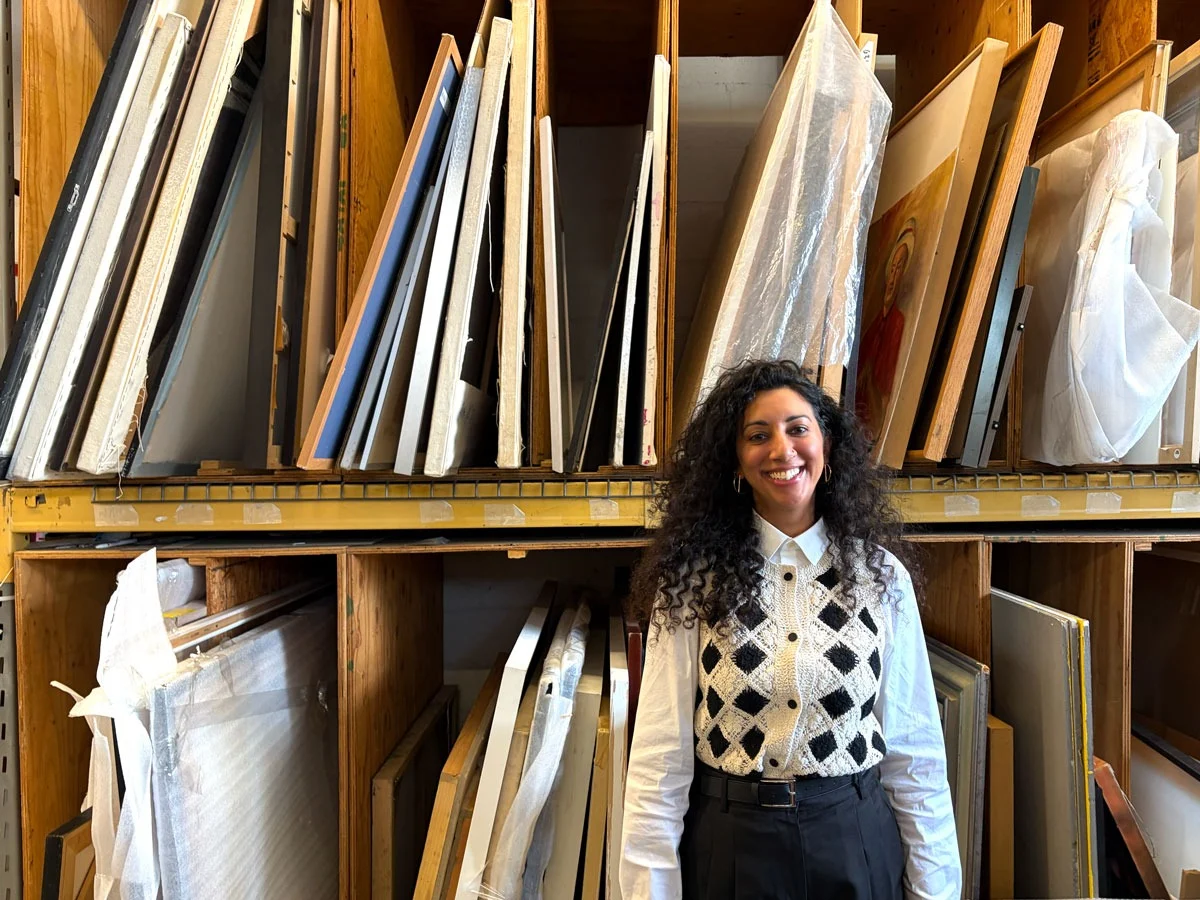
- February: Diya Vij is officially appointed as the City’s Commissioner of Cultural Affairs, making her the first person of South Asian descent to hold the role. Her return to the agency follows a decade-long tenure working with prominent cultural institutions like the High Line and Creative Time.
- Spring/Summer: Commissioner Vij embarks on an extensive, borough-wide listening tour, hosting roughly 15 open forums with coalitions, independent creators, and nonprofit leaders to diagnose the pressing operational hurdles facing the local arts ecosystem.
- July: The New York City Council adopts the municipal budget for the 2027 fiscal year. The DCLA secures a historic $323.8 million allocation—up from $299.6 million in 2026—which includes the creation of a three-year, $10 million-per-year Cultural Stability Fund aimed at stabilizing beleaguered nonprofits.
- October: Mayor Zohran Kwame Mamdani and Commissioner Vij formally announce the doubling of direct-support artist grants from $5,000 to $10,000, alongside the rollout of dedicated monthly shopping days at Materials for the Arts for all current and historical regrant recipients.
Supporting Context & Metrics: Navigating the Affordability Crisis
The decision to increase the artist grant cap was born out of stark economic realities. For roughly twenty years, the city’s baseline direct-support grant remained frozen at $5,000. Over two decades of compounding inflation, surging commercial real estate costs, and skyrocketing residential rents, the purchasing power of the grant steadily deteriorated.
The Cost of Creative Production
In her discussions with ARTnews, Commissioner Vij emphasized that $5,000 is simply no longer viable for executing a comprehensive creative project. Without adequate public backing, artists have increasingly been forced to absorb out-of-pocket expenses or slip into personal debt merely to fulfill public-facing commissions or mount exhibitions.
By raising the ceiling to $10,000, the DCLA aims to shift the focus from output-driven pressure to process-oriented experimentation. Artists require physical space, materials, and time to iterate, collaborate, and take risks without the immediate burden of financial ruin.
Navigating Federal Deficits and Resource Scarcity
The local policy intervention also serves as a vital local buffer against broader national funding contractions. Over recent years, federal arts funding has faced systemic erosion. While direct federal grants to individual artists largely vanished following the culture wars of the 1980s and 1990s, the National Endowment for the Arts (NEA), the National Endowment for the Humanities (NEH), and the Institute of Museum and Library Services (IMLS) have historically provided critical pipeline support to smaller cultural organizations that subsequently employ artists.
When factoring in simultaneous federal funding cuts across scientific and educational agencies—such as NASA and the National Science Foundation—the local cultural sector faces an immense fiscal deficit. While municipal and private philanthropy cannot entirely replace federal-scale investments, the DCLA’s localized interventions represent a targeted attempt to stabilize the ecosystem from the ground up.
Official Statements and Leadership Vision
The structural overhaul reflects a coordinated philosophy between City Hall and the DCLA regarding the intersection of municipal governance and the arts.
Mayor Zohran Kwame Mamdani on the Creative Class
In an official statement accompanying the announcement, Mayor Mamdani contextualized the policy change within the daily struggles shared by all working-class New Yorkers:
"Artists are working New Yorkers, and they pay the same rent and the same grocery bills as everyone else in this city. A grant frozen at $5,000 for twenty years has been losing value every single year. Doubling it is a first step toward making sure the people who give this city its culture can afford to keep living here."
Commissioner Diya Vij on Transformational Governance
Commissioner Vij brings a unique perspective to the DCLA, having navigated both the public sector and private non-profit institutions. Reflecting on her return to the agency after ten years, Vij noted that the current political climate offers a rare opportunity for transformational change.
Discussing her operational framework, Vij highlighted the necessity of listening to the constituents:
"We know the cost of living has increased, but the support hasn’t increased along with it. What I know from being a curator and talking to so many artists is $5,000 is just not enough money to do a complete project. The last thing we want is artists going into debt to complete a project because of a grant."
Vij’s prior public art commissions—ranging from the High Line’s community-centered health initiatives to Creative Time projects focused on Indigenous land restitution and post-COVID public space activation—heavily inform her systemic approach at the DCLA. Rather than viewing the agency strictly as a dispenser of exhibition funds, Vij views cultural infrastructure as a matter of municipal equity, addressing spatial scarcity, community care, and economic survival.
Current Application Windows and Access
The distribution of the newly expanded $10,000 grants is executed through five borough-specific arts councils, which operate as long-standing regrant partners to the DCLA. Four of these councils have active application cycles open for the upcoming grant term:
- Bronx Council on the Arts: Application deadline set for October 30.
- Brooklyn Arts Council: Application deadline set for October 11.
- Lower Manhattan Cultural Council (LMCC): Application deadline set for November 12.
- New York Foundation for the Arts (NYFA / Queens regrant): Application deadline set for November 17.
- Staten Island Arts: Application cycle slated to open in November.
Materials for the Arts Expansion
In addition to financial capital, resource accessibility forms a cornerstone of the new policy framework. Materials for the Arts (MFTA)—a DCLA program that diverts more than 4 million pounds of surplus commercial goods from landfills annually into the hands of educators and creators—is expanding its access. Beginning in October, any artist who has received a grant from their respective borough arts council will be granted a dedicated monthly shopping day at the MFTA warehouse, securing free access to raw supplies, frames, fabrics, and equipment.
Future Outlook: Building a City Built By Artists
As the DCLA rolls out these expanded grants and establishes the multi-million-dollar Cultural Stability Fund, the agency faces a defining test: operationalizing long-term solutions for a creative workforce continually threatened by displacement.
Commissioner Vij maintains that while funding is an indispensable baseline, true systemic health requires a fundamental re-evaluation of urban conditions. By prioritizing individual artists alongside traditional 501(c)(3) institutions, the city is signaling a departure from top-down institutional maintenance toward a more inclusive cultural policy.
The initiative is framed by city leadership not as a final destination, but as an essential baseline maneuver. By pairing increased direct funding with infrastructural support, resource-sharing via MFTA, and institutional stability grants, New York City is attempting to rewrite the social contract between the metropolis and the cultural producers who define its global identity.



Comments
Facebook App ID not configured. Please add it in the Customizer.