In the literary landscape of contemporary American poetry, few pieces manage to capture the raw, suffocating intersection of urban claustrophobia, familial grief, and rock-and-roll mythology quite like Trenna Sharpe’s "Hello, Bruce Springsteen." Selected as the Missouri Review Poem of the Week for October 5, 2026, Sharpe’s work stands out as an evocative meditation on memory, loss, and the uncanny ways pop culture anchors our most fragile human connections.
Sharpe, a Tennessee native currently residing in London, has steadily built a reputation for crafting poetry that blends visceral domestic realism with expansive, transcendent emotional landscapes. Her latest featured piece uses the stifling architecture of the New York City subway system and the mythos of "The Boss" as vessels to navigate a deeply personal tragedy: the death of her stepbrother, the late singer-songwriter Justin Townes Earle. Through striking imagery, rhythmic urgency, and an uncompromising gaze into the rearview mirror of her past, Sharpe transforms personal mourning into a collective, pulse-pounding hymn for the living and the dead.
Detailed Chronology: From the Subways of Manhattan to the Parking Lots of Chattanooga
To understand the emotional architecture of "Hello, Bruce Springsteen," one must trace the coordinates of memory and geography that informed its creation. The poem’s genesis spans decades, bridging the sweltering subterranean veins of New York City with the gravel-strewn parking lots of Tennessee.
The July Subways and the Dissolution of Boundaries
The narrative spark of the poem traces back to Sharpe’s first encounter with the New York City subway system during a punishing July heatwave. For someone unaccustomed to the sheer density and oppressive atmospheric pressure of underground metropolitan transit, the experience was transformative. Sharpe recalls stepping down into the tunnels and feeling an immediate, almost cellular shift: the boundaries between individuals dissolved. The air, heavy and unmoving, forced a strange intimacy upon strangers, turning the commute into a shared crucible.
This sensory overload serves as the primary metaphor in the opening lines of "Hello, Bruce Springsteen," where the subway is reimagined as a "womb" of raw vitality. It is within this crucible that the speaker invokes Bruce Springsteen—not merely as a distant rock icon, but as a guardian spirit of working-class endurance, sweat, and survival.
The Haunting Presence of Justin Townes Earle
Beneath the energetic surface of confetti parades, sweating tourists, and tongue-in-cheek invocations of Springsteen’s iconic Super Bowl halftime mishaps lies the true heartbeat of the poem: the memory of Justin Townes Earle.
Sharpe’s stepbrother, a beloved and fiercely talented fixture of the American roots music scene, passed away tragically from an accidental fentanyl overdose in August 2020. In her author’s note, Sharpe reflects on the complex contours of their relationship. Following the separation of their parents, the siblings spent years estranged. Yet, time and distance dissolved when Justin returned to town to play a pre-fame gig.
The reunion took place in the crumbling asphalt parking lot of JJ’s Bohemia in Chattanooga, Tennessee. In a moment dripping with cinematic irony and Southern grit, a local stranger took one look at them and slurred, "Y’all should kiss." Justin, laughing off the awkwardness, replied simply, "No, I’ve known her for a long time." Sharpe notes that she wanted to claim him then—and still wants to claim him now—with the simple, unbreakable declaration: "That’s my brother."
The memory of that night lingers, compounded by the ghost of the concert itself. Justin played Springsteen’s "Racing in the Street," while a member of his band accidentally shattered a beer bottle against a wall, bravely—or recklessly—performing the remainder of the set with a shard of glass lodged in his eye. It is this exact blend of grit, danger, and poetic vulnerability that permeates Sharpe’s verse.
Supporting Context & Metrics: Literary Provenance and Critical Reception
The selection of "Hello, Bruce Springsteen" by the Missouri Review highlights Sharpe’s growing stature within contemporary American and international poetry circles. Her work has consistently found a home in prestigious literary journals, reflecting a distinct voice that bridges regional American narratives with a diasporic perspective from London.
Publication History and Editorial Standing
Sharpe’s poetic footprint extends across some of the most respected journals in the literary ecosystem, including:
New England Review
North American Review
Sinister Wisdom
The Tangerine
Her inclusion in the Missouri Review’s marquee Poem of the Week feature places her alongside notable contemporary voices such as Lucy Biederman and David Eileen. The editorial team at the Missouri Review frequently curates works that challenge traditional lyricism by injecting vernacular speech, pop-culture touchstones, and stark narrative truths. Sharpe’s poem exemplifies this editorial mission, marrying high-art emotional intelligence with low-fi, everyday iconography.
The Visual Dialogues: Wanda Gag and Eugene Boudin
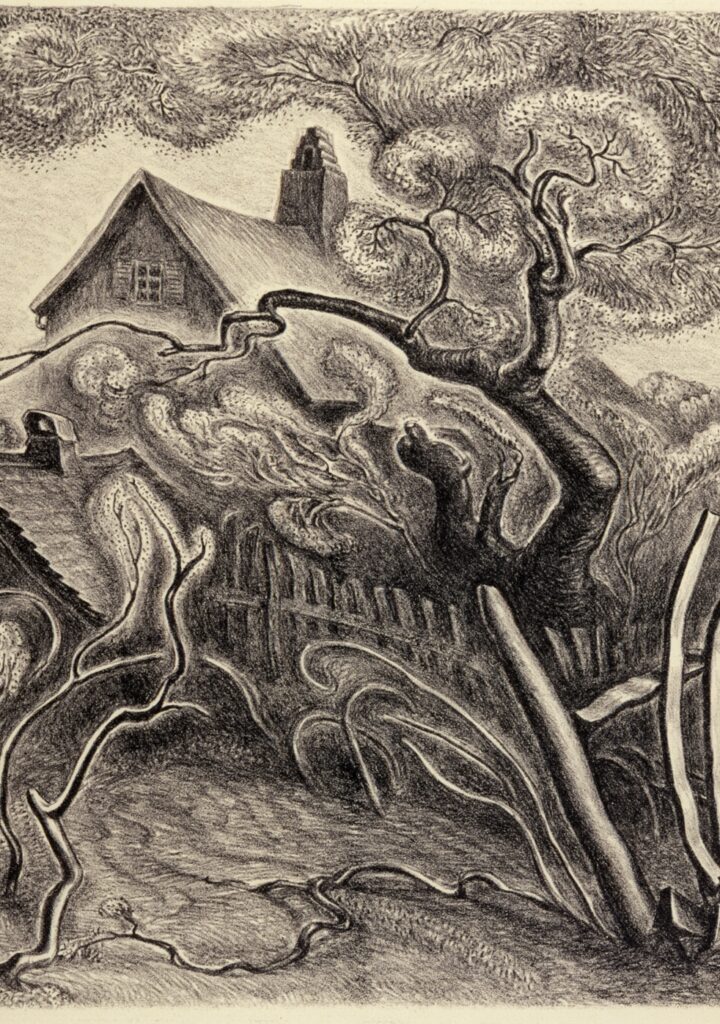
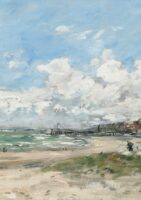
In keeping with the Missouri Review’s tradition of pairing poetry with historic masterworks, "Hello, Bruce Springsteen" is visually anchored by Wanda Gág’s 1927 lithograph, Spring (Spring in the Garden). Gág, renowned for her avant-garde yet deeply grounded folk-art sensibilities, provides a visual counterpoint to Sharpe’s urban heat. The blossoming vitality of Gág’s garden mirrors the poem’s thematic exploration of rebirth, even amidst the decay of parking lots and the grief of sudden loss.
Official Statements and Authorial Insights
In her accompanying author’s note, Sharpe offers profound context regarding the emotional mechanics of grief, imposter syndrome, and artistic inspiration. Addressing the complex nature of step-sibling relationships, she confronts the guilt often associated with non-biological or fractured family mourning.
"Sometimes I feel like I don’t deserve to grieve for him like I do because I wasn’t his real sister," Sharpe confesses. "But whenever I listen to the Boss sing, ‘Tonight my baby and me, we’re gonna ride to the sea / and wash these sins off our hands,’ I think of Justin. And I hope he feels free."
This sentiment captures the core thesis of the poem: that grief does not require official documentation or biological certification to be valid. Instead, art—whether it is Springsteen’s gravelly anthems or Sharpe’s own carefully chosen words—serves as the legal tender of human sorrow.
Sharpe’s reflection on Justin’s volatile yet magnetic personality humanizes a musician often mythologized by his fans. By grounding Justin in the gritty reality of Chattanooga parking lots and cracked beer bottles, she rescues him from the clinical statistics of the opioid crisis, restoring him to the vibrant, chaotic reality of a brother, a musician, and a memory that refuses to fade.
Future Outlook: The Evolution of Sharpe’s Poetic Journey
As "Hello, Bruce Springsteen" circulates widely following its feature in the Missouri Review, it signals an exciting trajectory for Trenna Sharpe’s literary career. Balancing her life in London with her deep emotional and ancestral roots in Tennessee, Sharpe is uniquely positioned to explore themes of displacement, American mythology, and transnational longing.
The poem’s success points toward a broader movement in contemporary verse: a rejection of sanitized academic detachment in favor of "sweaty" poetry—writing that smells of asphalt, subway steam, cheap beer, and unvarnished grief. As readers increasingly seek authentic emotional processing in the wake of societal and personal upheavals, voices like Sharpe’s provide a vital roadmap.
Whether she is examining the legacy of Southern troubadours or the subterranean pulse of global cities, Sharpe proves that poetry can still function as a confetti parade splitting open—a sudden, blinding burst of color in an otherwise monochromatic world. "Hello, Bruce Springsteen" is not merely a tribute to a rock legend or an elegy for a lost stepbrother; it is a declaration of survival, an insistence that we can step lightly into whatever heaven awaits us, carrying our ghosts every step of the way.






Comments
Facebook App ID not configured. Please add it in the Customizer.