
Executive Overview
The sprawling, elemental mythology of the Avatar universe is once again expanding its borders. Set to premiere on Paramount+ on October 9, 2026, the highly anticipated animated series Avatar: Seven Havens represents a bold new chapter in a franchise that has captured the global imagination for over two decades. Following in the footsteps of the landmark television milestones Avatar: The Last Airbender and its successor, The Legend of Korra, alongside the theatrical feature Avatar Aang: The Last Airbender earlier this year, Seven Havens promises to delve into uncharted territory while honoring the rich storytelling traditions established by creators Michael Dante DiMartino and Bryan Konietzko.
Greenlit for a robust 26 half-hour episodes divided into two distinct parts, Seven Havens breaks away from the frantic technological modernization seen in the latter seasons of The Legend of Korra. Instead, the creative team has pivoted toward a more grounded, mystery-driven fantasy narrative. Drawing stylistic inspiration from the timeless aesthetic of Studio Ghibli icons Hayao Miyazaki—specifically Spirited Away and Princess Mononoke—the series aims to reintroduce a palpable sense of wonder and mythic scale. As DiMartino and Konietzko pull back the curtain on this new era, fans and critics alike are preparing for a narrative journey that bridges the gap between past revolutions and a deeply misunderstood future.
Detailed Chronology: Navigating the Eras of the Avatar Universe
To fully appreciate the narrative weight of Avatar: Seven Havens, it is essential to map the historical trajectory of the universe crafted by DiMartino and Konietzko. The timeline of the Avatar world is not merely a sequence of dates, but a profound evolution of society, philosophy, spirituality, and industrialization.
Read Also
The Era of Aang (The Hundred Year War)
Beginning with Avatar: The Last Airbender, the world existed in a state of harsh, century-long conflict orchestrated by the Fire Nation. This was a traditional, elemental society heavily reliant on agrarian lifestyles, ancient monasteries, and feudal kingdoms. Technology was largely limited to rudimentary mechanics, early steam power, and traditional siege engines. The narrative focused heavily on spiritual balance, the restoration of harmony among the Four Nations, and the heavy burden placed upon a young Avatar awakening from a century-long slumber.
The Industrial Revolution (The Korra Era)
By the time of The Legend of Korra, the world had undergone a staggering technological transformation comparable to our own industrial and early atomic revolutions. Set in Republic City—a sprawling, metropolitan melting pot inspired by 1920s New York City and Shanghai—Korra introduced automobiles, radios, skyscrapers, moving pictures, and eventually, highly sophisticated mecha-suits powered by spirit energy. This era grappled with the growing pains of modernization: the friction between tradition and progress, the rise of equalist political movements, and the integration of spirits into a rapidly urbanized human society.
The Inter-Era Gap and the Rise of Seven Havens
Avatar: Seven Havens bridges the chronological chasm between the conclusion of The Legend of Korra and the contemporary setting of the new series. According to co-creator Michael Dante DiMartino, the narrative will actively explore the consequences of the "tech boom" witnessed during Korra’s lifetime. However, rather than pushing the timeline further into a sci-fi dystopia or a cyberpunk future, Seven Havens chooses a fascinating narrative retreat. It examines where the trajectory of the Korra era ultimately led, utilizing those technological foundations to shape a world that has weathered profound systemic and environmental shifts, ultimately returning to a more primal, fantasy-oriented state.
Supporting Context & Metrics: Production, Aesthetics, and Lore
The architecture of Avatar: Seven Havens is defined by distinct creative choices, production scales, and artistic philosophies that separate it from its predecessors.
Production and Release Metrics
- Platform: Paramount+
- Premiere Date: October 9, 2026
- Order Size: 26 half-hour episodes
- Structure: Serialized narrative split into two distinct parts
- Format: Traditional 2D animation
The Aesthetic Blueprint: Channeling Miyazaki
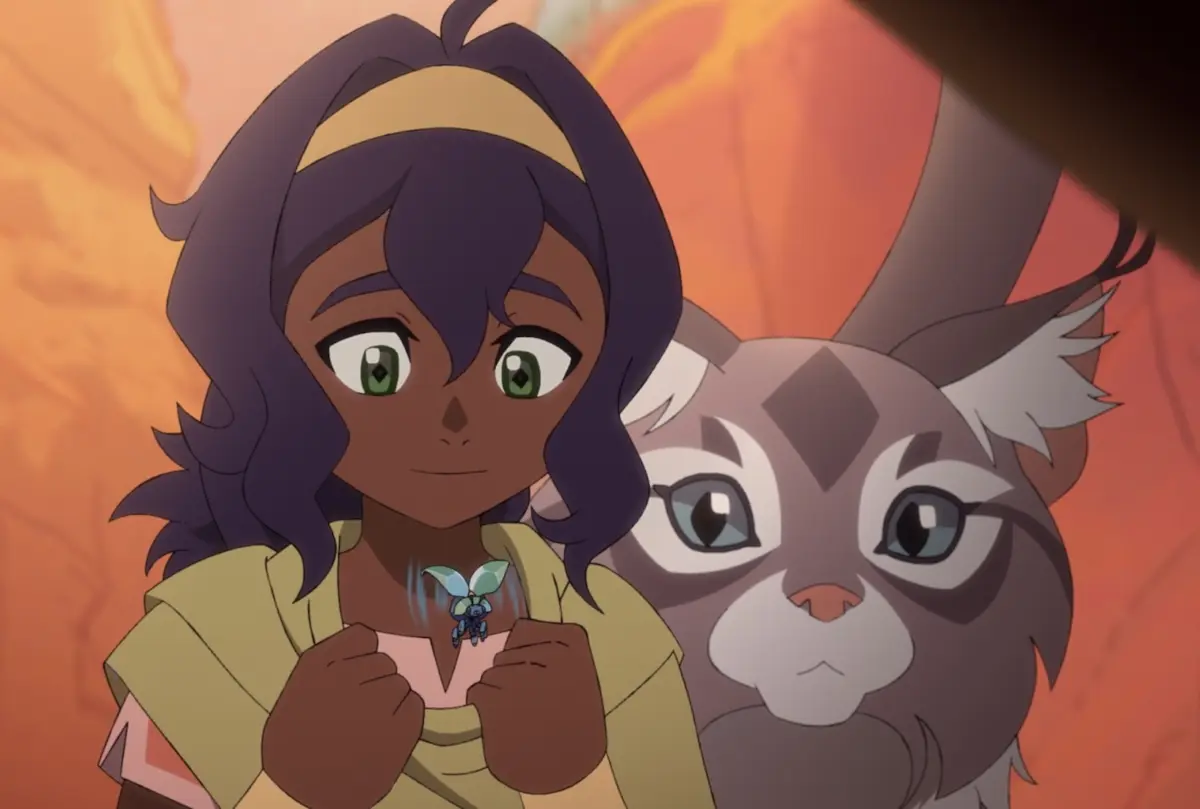
One of the most defining characteristics of Seven Havens is its commitment to 2D animation paired with a visual style deeply indebted to legendary Japanese animator Hayao Miyazaki. While The Legend of Korra progressively incorporated 3D CGI elements to render sprawling cityscapes and complex mecha-armor, Seven Havens steps backward into a softer, more organic aesthetic.
DiMartino has explicitly noted the influence of masterpieces such as Spirited Away and Princess Mononoke. This aesthetic choice is not merely cosmetic; it directly dictates the thematic atmosphere of the show. By leaning into hand-drawn textures, lush natural landscapes, and folkloric creature designs, the production team ensures that Seven Havens feels inherently fantasy-based. It deliberately avoids the sleek, sterile sheen of science fiction, prioritizing tactile environments where magic, nature, and humanity intersect.
Narrative Themes: Misunderstanding and Identity
At the heart of Seven Havens is a deeply personal and socially resonant conflict: the struggle of an Avatar who is profoundly misunderstood by the very people she has sworn to protect. Unlike Aang, who was largely revered as a savior across the recovering world, or Korra, who wrestled with public relations, political fallout, and her own identity as a public figure, the protagonist of Seven Havens navigates an environment where the mantle of the Avatar carries a different, perhaps more hostile, cultural baggage. This psychological friction introduces an investigative mystery element, driving the narrative forward as viewers uncover the hidden truths of the world alongside the characters.
Official Statements: Insights from the Creators
In their recent feature with Animation Magazine, Michael Dante DiMartino and Bryan Konietzko shed light on the conceptual origins and overarching ambitions for Seven Havens. Their statements offer a definitive look into the philosophy guiding this latest television iteration.
"When we started talking about different ideas, we definitely wanted to do a series that speaks to the whole universe in a way and that’s not just a side new adventure or something," DiMartino explained.
This assertion is crucial for longtime fans concerned about franchise fatigue or superficial spin-offs. Seven Havens is positioned as a foundational pillar of the Avatar canon, designed to enrich and contextualize the entire mythos rather than simply visiting a random corner of the map for nostalgic filler.
Addressing the intricate continuity of the franchise, DiMartino elaborated on how the new series hooks into established lore:
The show "will build off of Korra, the events of Korra, things that happen in between Korra and the time we come into Seven Havens."
Furthermore, addressing the seismic shift in technological focus, DiMartino provided clarity on how the series handles the legacy of industrialization:
"It’s almost like there was a big tech boom during Korra’s time, but now we’re not that focused on it. We explore tech in the show a bit, but it’s more so you’ll learn about where the Korra era was heading. And when we come into this story, you’ll see that the tech from the previous shows sets up where we are now. But these stories are more about an Avatar who has to take on this role while also having people misunderstand who she is."
This delicate balance ensures that continuity is respected—acknowledging that the technological advancements of the 1920s-esque Republic City cannot simply be erased—while gracefully steering the narrative back toward the mythic, character-driven roots that made the original series a timeless classic.
Future Outlook: What Seven Havens Means for the Franchise
As October 9, 2026, approaches, the premiere of Avatar: Seven Havens marks a watershed moment for Avatar Studios. Established under Paramount and Nickelodeon to steward the expanding universe, the studio has pursued a multi-pronged strategy encompassing theatrical films, comic books, novels, and serialized television.
The release of 26 episodes divided into two parts demonstrates immense confidence from the network. It allows DiMartino, Konietzko, and their team the narrative runway necessary to unpack complex mysteries, develop multi-dimensional characters, and explore sweeping world-building without rushing the pacing.
By choosing to lean into mystery, mythological fantasy, and hand-drawn 2D artistry reminiscent of Ghibli’s finest works, Avatar: Seven Havens successfully bridges the generational divide. It respects the aging fanbase that grew up with Aang while offering a fresh, accessible entry point for a new audience. If the creators’ insights prove accurate, Seven Havens will not only answer lingering questions about the post-Korra world but will redefine what stories can be told within the elemental cycle, proving once and for all that the wheel of the Avatar is infinite in its capacity for reinvention.





Comments
Facebook App ID not configured. Please add it in the Customizer.