

In the dynamic and ever-shifting landscape of contemporary American letters, few honors carry the specific, resonant cultural cachet of The Missouri Review’s Poem of the Week. For the week of October 5, 2026, the publication has selected "Hello, Bruce Springsteen" by Tennessee-born, London-based poet Trenna Sharpe. The piece immediately arrested critics and readers alike with its raw, visceral examination of grief, geographic displacement, and the haunting persistence of familial memory.
Sharpe’s work is no stranger to discerning literary audiences. Her sharp, evocative lines have previously graced the pages of prestigious literary journals including the New England Review, the North American Review, Sinister Wisdom, and The Tangerine. Yet, "Hello, Bruce Springsteen" represents a thematic apex for the poet—a high-wire act balancing the mythos of rock-and-roll iconography against the stark, unvarnished realities of personal loss, specifically the 2020 fentanyl overdose death of her stepbrother, the celebrated singer-songwriter Justin Townes Earle.
Accompanied visually by Wanda Gág’s evocative 1927 lithograph Spring (Spring in the Garden), the poem bridges the stifling, subterranean heat of a July New York City subway with the crumbling asphalt parking lots of Chattanooga, Tennessee. It is a work that investigates how public mythologies—embodied by "The Boss"—collide with private, messy, and enduring forms of mourning. This executive overview establishes the framework for a deep dive into the architecture of Sharpe’s poem, its complex biographical underpinnings, and its broader reverberations within the contemporary poetic landscape.
Read Also
Detailed Chronology: The Genesis and Publication of a Literary Milestone
To fully understand the weight of "Hello, Bruce Springsteen," one must trace the chronological arc that brought Trenna Sharpe from the sweltering subterranean platforms of New York City to the digital pages of The Missouri Review.
The genesis of the poem lies in a sensory shockwave experienced years prior: Sharpe’s first descent into the New York City subway system during the height of July. In her author’s note, Sharpe recalls how the oppressive, close heat of the tunnels dissolved the boundaries between individuals, making it feel as though "the air had given up on keeping us apart." This acute bodily awareness—a suffocating yet strangely communal melting pot—serves as the physical theater for the poem’s opening lines.
The timeline of grief, however, runs deeper and darker. In 2020, Sharpe experienced the profound loss of her stepbrother, Justin Townes Earle, who died tragically of an accidental fentanyl overdose. Following the separation of their parents during childhood, Sharpe and Earle had spent years estranged, living separate lives until an unexpected reconciliation years later in the parking lot of JJ’s Bohemia, a legendary music venue in Chattanooga, Tennessee. That historic meeting—marked by an inebriated bystander’s misinterpretation of their relationship ("Y’all should kiss") and Earle’s grounded, affectionate correction ("No, I’ve known her for a long time")—anchors the emotional climax of the poem.
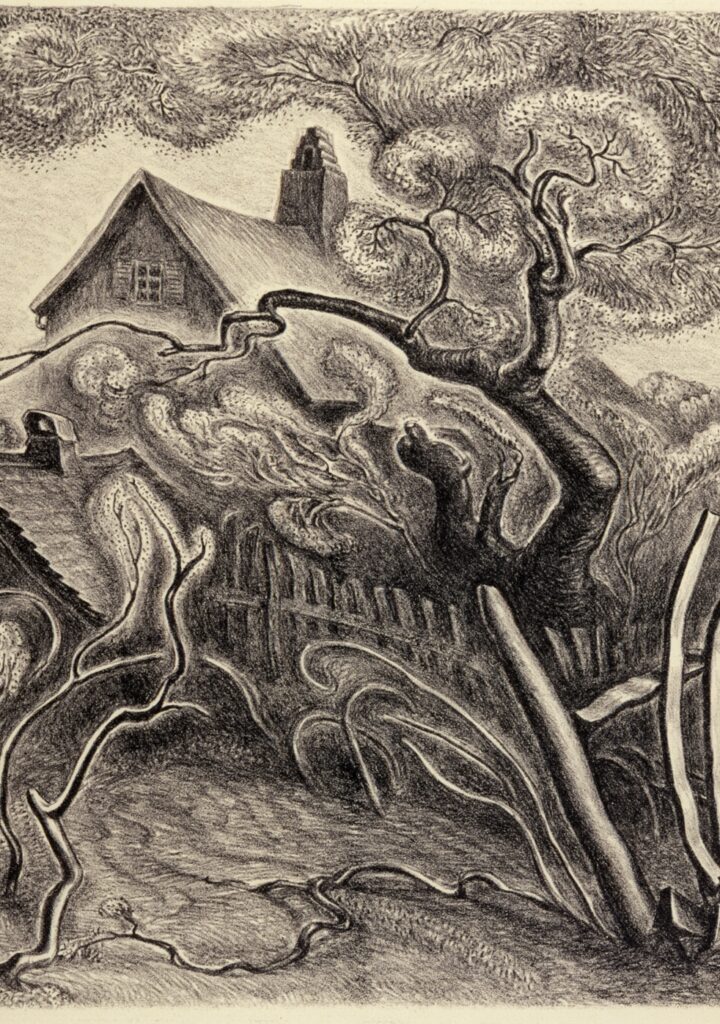
The journey culminated in October 2026 when The Missouri Review selected the resulting manuscript as its Poem of the Week. By pairing the text with Gág’s Spring (Spring in the Garden), the publication emphasized the poem’s underlying tension: the violent, beautiful eruption of life and memory breaking through hardened soil, asphalt, and structural decay.
Supporting Context & Metrics: Analyzing the Poetic Landscape and Critical Reception
The publication of "Hello, Bruce Springsteen" arrives at a time of heightened interest in poetry that bridges the personal and the pop-cultural. In recent years, literary journals have seen an influx of confessional yet self-aware verse that uses public icons as shorthand for internal emotional landscapes. Sharpe’s poem distinguishes itself within these metrics through its structural grit and emotional authenticity.
Literary Footprint and Publication Metrics
- Author’s Provenance: Born in Tennessee, currently residing in London, bridging Southern Gothic sensibilities with an expatriate’s perspective.
- Journal Pedigree: Sharpe’s inclusion in The Missouri Review adds to an impressive publishing history that includes the New England Review, North American Review, Sinister Wisdom, and The Tangerine.
- Thematic Resonance: The poem operates on multiple literary frequencies, blending urban sensory overload (the NYC subway) with regional American iconography (Chattanooga, Tennessee).
Structural and Thematic Breakdown of the Poem
The poem opens with an arresting metaphor:
The subway in July is a womb,
and Bruce, I tell you what,
I feel alive. I wear black to work,
but inside I am a confetti parade
splitting open—
Here, Sharpe establishes an immediate dichotomy between corporate conformity (wearing black to work) and internal explosive vitality (the confetti parade). The invocation of Bruce Springsteen is not merely nominal; it serves as an invocation of a patron saint of working-class salvation and endurance. Sharpe references Springsteen’s infamous 2009 Super Bowl halftime show mishap—where the singer slid across the stage and collided with a camera crane—transforming it into an emblem of resilience: "Let your be-denimmed crotch lead the way, Bruce. / It is powerful and impervious."
As the poem progresses, it shifts from the macrocosm of pop culture to the microcosm of familial grief. Sharpe wrestles with generational inheritance and maternal wisdom ("My mother was right, and / my mother was wrong, / and I am too"). The mention of heaven and hell gives way to the physical, sensory reality of her home state: "Spring in Tennessee is a body-crackling stretch / we all share."

The emotional core crystallizes in the final stanza, where the ghost of Justin Townes Earle emerges from the wreckage of time:
Justin is dead, but I see him in all my poems.
Look, there’s where I found him
after thirteen years apart: the crumbling parking lot
of JJ’s Bohemia in Chattanooga, Tennessee.
The poem concludes with a poignant echo of unfulfilled declaration—“That’s my brother,” I wanted to say and still do—highlighting the complex, often unrecognized grief of step-siblings navigating institutional and biological boundaries of family.
Official Statements & Authorial Reflections: Behind the Verses
In her extensive author’s note accompanying the publication, Trenna Sharpe offered rare insight into the emotional mechanics driving "Hello, Bruce Springsteen." Discussing the catalyst for the piece, Sharpe reflected on the sensory overload of the New York subway system:
"It was July the very first time I stepped down into the New York City subway. I’d never felt a close heat like it. It felt like me and everyone else down there were dissolving at the edges and blending together, like the air had given up on keeping us apart."
This physical dissolution directly mirrors the dissolution of boundaries between the living and the dead, the stranger and the kin, that permeates the poem.
Addressing the memory of her stepbrother, Justin Townes Earle, Sharpe addressed the imposter syndrome frequently accompanying non-biological or fractured familial grief:
"Sometimes I feel like I don’t deserve to grieve for him like I do because I wasn’t his real sister. But whenever I listen to the Boss sing, ‘Tonight my baby and me, we’re gonna ride to the sea / and wash these sins off our hands,’ I think of Justin. And I hope he feels free."
This official reflection underscores the poem’s ultimate message: art acts as the connective tissue that legitimizes grief, transcending the legal and biological technicalities that often gatekeep human sorrow.
Future Outlook: The Ongoing Legacy of Sharpe’s Work
As "Hello, Bruce Springsteen" continues to circulate across digital platforms and academic reading lists following its October 5 release, its trajectory points toward a bright future for Sharpe’s forthcoming collections. The poem has already ignited discussions in literary circles regarding how contemporary writers process the opioid epidemic and its collateral damage through the lens of popular culture.
The intersection of Southern storytelling, expatriate reflection, and rock-and-roll mythology positions Sharpe as a distinct, vital voice in twenty-first-century poetry. Editors and critics are already anticipating whether this piece serves as a precursor to a larger, book-length project exploring the geographies of grief between Tennessee and London.
Whatever follows, "Hello, Bruce Springsteen" has secured its place as a touchstone of modern elegy—proving that whether underground in a sweltering New York subway or standing in the crumbling asphalt of a Chattanooga parking lot, the human need to name our dead and invoke our icons remains as urgent and body-crackling as ever.


Comments
Facebook App ID not configured. Please add it in the Customizer.