In a monumental development for the contemporary art market and the stewardship of postwar American art, the Paula Cooper Gallery and Sprüth Magers have announced a joint collaborative initiative to stage concurrent, major exhibitions dedicated to the late, great Frank Stella. Slated for next spring in New York, the twin presentations mark the first dedicated gallery exhibitions of Stella’s work since his passing in May 2024 at the age of 87. Organized in close coordination with the Frank Stella Estate, the endeavor follows the posthumous tribute exhibition “Homage to Frank Stella,” mounted in September 2024 by the now-closed Mnuchin Gallery.
Before the New York shows open their doors next year, both galleries will offer a tantalizing preview of this collaborative partnership at Art Basel Paris, where each will feature a major museum-quality Stella work within their respective fair booths. The Paris presentations—featuring key pieces from the artist’s seminal "Irregular Polygons" and "Polish Village" series—will serve as a high-profile runway for the upcoming institutional-caliber gallery exhibitions.
Crucially, while this partnership unites two titans of the international gallery ecosystem in honoring one of the 20th century’s most transformative abstract painters, it does not establish a formal, exclusive representation agreement between the estate and either gallery. Instead, representatives for both spaces emphasize an organic, fluid approach to curation and estate stewardship. By pooling their historical relationships, curatorial expertise, and market prestige, Paula Cooper Gallery and Sprüth Magers are charting a new paradigm for posthumous artist estates—one that prioritizes intellectual engagement, cross-institutional dialogue, and fresh contextual frameworks over rigid, monopolistic representation models.
Detailed Chronology: A History of Relationships and Exhibitions
To understand the weight and significance of the upcoming spring 2025 exhibitions, it is necessary to trace the deep-rooted histories both galleries share with Stella, his inner circle, and his expansive, boundary-pushing oeuvre.
Deep Roots in New York’s Avant-Garde
While founder Paula Cooper never officially represented Frank Stella during his lifetime, her professional trajectory was inextricably linked to his. Cooper arrived in New York during a white-hot moment of artistic transformation in the 1960s, quickly embedding herself in the city’s downtown minimalist and conceptual art movements. In those formative years, she formed a close, enduring personal and professional friendship with Stella.
More importantly, Stella was intimately connected to the core roster of artists who built the foundation of the Paula Cooper Gallery. Figures such as Carl Andre, David Novros, Sol LeWitt, and Lynda Benglis operated within the same tight-knit creative and intellectual ecosystem. They shared critical discourse, exhibition spaces, and a radical ethos that dismantled the traditional boundaries of painting and sculpture.
Although Stella’s primary commercial representation remained anchored elsewhere for decades—most notably with the legendary Leo Castelli Gallery and later Dominique Lévy / Mnuchin—his footprint at Paula Cooper was established through selective, high-impact group presentations. Stella’s work was featured in foundational group exhibitions at the Paula Cooper Gallery in 1975, 1983, and 1999.
Recent Collaborations and the Path to the Estate Partnership
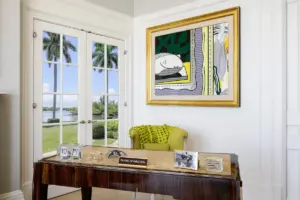
As Stella’s career entered its twilight years and his market matured, collaborations with Paula Cooper intensified. In 2022, the gallery organized a critically acclaimed exhibition at its now-defunct outpost in Palm Beach, Florida, placing Stella’s work in direct conversation with pieces by Carl Andre and Lynda Benglis. This was followed swiftly in 2023 by a focused, three-work exhibition mounted at the New York gallery space, which foreshadowed the deeper curatorial dialogues to come.
Sprüth Magers, meanwhile, brings an international institutional weight and a history of ambitious solo exhibitions to the partnership. The gallery, which operates spaces in Berlin, London, Los Angeles, and New York, previously mounted two major solo exhibitions dedicated to the artist: first in Berlin in 2016, and subsequently in Los Angeles in 2018. These shows underscored Stella’s enduring resonance with international audiences, proving that his geometric rigor and late-career exuberant complexities communicated fluently across generational and geographic divides.
When Frank Stella passed away in May 2024, the art world mourned the loss of a titan who had single-handedly rewritten the rules of American abstraction. Following his death, the Frank Stella Estate began a deliberate, thoughtful period of evaluation regarding its long-term strategy, legacy management, and exhibition roadmap. Rather than immediately signing an exclusive global contract with a single mega-gallery—a common, highly commercialized route for major estates—the estate sought partners capable of looking at the work with fresh eyes. According to senior partner Steve Henry, the estate reached out for assistance, recognizing that Paula Cooper Gallery possessed the curatorial sensitivity and historical context required to present Stella’s work in an entirely new light.
Supporting Context & Metrics: Masterworks Headed to Art Basel Paris
The appetizer for next spring’s New York exhibitions will be served on the global stage at Art Basel Paris, where both galleries will showcase museum-grade pieces that highlight pivotal evolutionary moments in Stella’s career. These works not only demonstrate the material ambition of the artist but also reflect the robust secondary and primary market valuations commanded by top-tier Stella masterworks.
Sprüth Magers: Tuftonboro III (1966)
At their Art Basel Paris booth, Sprüth Magers will exhibit Tuftonboro III (1966), a breathtaking example from Stella’s legendary "Irregular Polygons" series. Comprising a total of 11 distinct works, this series marked a radical departure from the regular, symmetrical canvases of his early career.
Aesthetic Profile:Tuftonboro III features a dynamic composition defined by a vibrant yellow triangle (punctuated with flashes of rich red) jutting out sharply on the left side, dynamically balanced by a cool blue-gray diagonal sweep.
Art Historical Significance: The "Irregular Polygons" shattered the traditional rectangular format of painting. By utilizing shaped canvases that incorporated multi-sided geometric configurations and fluorescent, industrial color palettes, Stella forced the viewer to confront the literal objecthood of the painting. The canvas was no longer a window looking onto a scene, nor was it merely a flat surface bearing marks; it was a physical object asserting its presence directly on the architectural wall.
Market Valuation: Priced at $2 million, Tuftonboro III represents a pinnacle of 1960s American abstraction, commanding intense interest from institutional curators and private collectors alike.
Paula Cooper Gallery: Zabludow III (1973)
Across the fair aisle, Paula Cooper Gallery will present Zabludow III (1973), a masterwork drawn from Stella’s monumental "Polish Village" series. Comprising 42 distinct pieces, this series represents one of the most emotionally resonant and structurally ambitious turning points in the artist’s entire oeuvre.
Inspiration and Genesis: The series was directly inspired by a book of photographs that Stella encountered, documenting the elaborately carved, multi-tiered wooden synagogues of 18th- and 19th-century Poland. Tragically, these architectural marvels were entirely obliterated by the Nazi regime during the Holocaust. Using wood, felt, cardboard, masonite, and heavy layers of paint, Stella constructed complex, low-relief assemblages that paid homage to these lost cultural monuments.
Art Historical Significance:Zabludow III captures the exact moment Stella broke free from the flat plane entirely, bridging the chasm between painting and sculpture. The works in the "Polish Village" series jut outward from the wall with aggressive, sculptural depth, setting the stage for the flamboyant, high-relief metal constructions that would dominate the final decades of his career.
Market Valuation: Priced at $950,000, Zabludow III offers a rare window into a transitional masterwork that blends rigorous modernist geometry with profound historical memory and material experimentation.
Official Statements and Curatorial Philosophy
The decision by Paula Cooper Gallery and Sprüth Magers to collaborate rather than compete for exclusive representation signals a maturing approach to estate management in the contemporary art ecosystem.
In an exclusive interview with ARTnews, senior partner Steve Henry elaborated on the organic nature of the partnership and the deep personal history shared between Paula Cooper and the artist:
"Paula had a very long and friendly relationship with Frank. She met him very early on when she came to New York, and he was, of course, very close with artists affiliated with the program—Carl Andre, David Novros, Sol LeWitt, Lynda Benglis—so they were in the same circle."
Despite these intimate ties, Henry noted that the current collaboration bypassed traditional corporate acquisition channels:
"Upon his death, I think the estate took some time to think about what the next steps would be, and they wanted help. That’s something that Paula and the gallery feel we can do well. We can present the work in a different context."
When pressed on whether this joint venture signals a formal, long-term exclusive representation agreement with either gallery, Henry was unequivocal, highlighting a refreshing preference for agility over bureaucracy:
"We all feel that the relationship can be more organic."
Expanding the Discourse on Stella’s Radicality
While art history textbooks have long cemented Frank Stella’s status as a pioneer of postwar minimalism—beginning with his iconic, austere "Black Paintings" (1958–59) and progressing through his 1960s shaped canvases—Henry argues that there is still vast territory left to explore. Too often, public understanding of Stella is bifurcated into his early minimalist genius and his late maximalist, baroque metal sculptures.
The upcoming New York exhibitions aim to bridge these epochs, placing particular emphasis on Stella’s output from the late 1970s and early 1980s. Henry outlined the core curatorial objective of the forthcoming shows:
"What Frank did in such an extraordinary way was stretch and expand and present a questioning of the conventions of painting… He goes from painting to sculpture in a really dynamic way, and the ‘Polish Village’ series sets that up."
Henry further emphasized that the goal is not merely to trot out familiar masterworks, but to re-engage with the artist’s core ethos of risk-taking:
"There is still room to expand upon his notions of radicality, his experimentation with materials and form, and provide a conversation for that in the context of some of his peers. It’s an opportunity to have an exciting kind of exchange with an artist whose work is well known and present it not necessarily in a new way, but a different way."
Future Outlook: What to Expect Next Spring in New York
As the art world looks ahead to the spring 2025 gallery season in New York, anticipation is reaching a fever pitch. While the definitive checklists for the concurrent exhibitions at Paula Cooper Gallery and Sprüth Magers are still being finalized, curators are combing through archival holdings, museum loans, and estate inventory to curate cohesive, intellectually rigorous presentations.
A Dual-Gallery Dialogue
By staging independent yet complementary exhibitions, the two galleries will offer New York audiences a rare comparative lens through which to view Stella’s evolution.
Sprüth Magers is expected to leverage its international curatorial network to explore the formal rigor and spatial interventions of Stella’s mid-career expansions.
Paula Cooper Gallery, drawing on its deep historical ties to the New York minimalist and conceptual scene, will likely contextualize Stella’s material experiments alongside the dialogues he shared with peers like Andre, LeWitt, and Benglis.
Implications for the Posthumous Estate Market
The collaborative model pioneered here by the Frank Stella Estate, Paula Cooper Gallery, and Sprüth Magers could serve as a blueprint for other major artist estates navigating the post-founder era. In an era where mega-galleries frequently lock down estates in sprawling, multi-city exclusive contracts that can sometimes result in over-commercialization or curatorial stagnation, a federated approach offers a compelling alternative.
By keeping the relationship "organic," the estate retains flexibility, allowing different institutions to bring their unique strengths, historical perspectives, and curatorial visions to bear on different chapters of the artist’s life’s work.
For collectors, curators, and scholars, the spring exhibitions will provide a vital litmus test for the enduring vitality of Frank Stella’s legacy. More than a year after his passing, the radical energy that drove a young Stella to splash black house paint onto raw canvas—and later to bend aluminum, wood, and fiberglass into gravity-defying sculptural reliefs—remains as potent as ever. As Paula Cooper Gallery and Sprüth Magers prepare to open their doors next spring, they invite the art world not just to mourn a departed master, but to perpetually rediscover him.








Comments
Facebook App ID not configured. Please add it in the Customizer.