
Executive Overview
As the crisp autumn air settles over the Northern Hemisphere, the entertainment landscape undergoes its traditional seasonal transformation. For tens of thousands of enthusiasts gathered in and around the Javits Center this week, New York Comic Con (NYCC) represents the epicenter of pop culture fandom, cosplay, and exclusive industry reveals. Yet, beyond the bustling convention floor, the broader cultural ecosystem is rich with noteworthy milestones: the long-awaited American publication of Tove Jansson’s legendary Hobbit illustrations, a curious influx of fresh adaptations tackling Robert Louis Stevenson’s Treasure Island, deeply reflective new literary criticism from Franny Choi, and an eclectic array of streaming and cinematic releases.
This report provides an authoritative, comprehensive examination of the week’s most compelling pop culture developments. Moving past surface-level announcements, we synthesize critical reception, historical publishing contexts, and industry trajectories to map out what these moments signify for modern fandom and media consumption.
Detailed Chronology & Industry Developments
The Convention Circuit: Navigating New York Comic Con
The return of New York Comic Con brings with it the familiar sensory overload of exclusive trailers, celebrity panels, and labyrinthine dealer halls. For attendees navigating the packed corridors, convention etiquette and health preservation remain perpetual discussion points. Industry observers and veteran con-goers alike note that the sheer density of crowds demands practical preparation—starting from the ground up with reliable footwear.
Read Also
Beyond physical endurance, convention survival relies heavily on hygiene protocols. Seasoned attendees often espouse a strict, albeit whimsical, rule set designed to ward off the dreaded "con crud"—the ubiquitous post-event respiratory illness. The primary tenet is deceptively simple: maintain strict separation between hands that have sifted through vintage comic book bins, touched promotional swag, and any items destined for consumption. Utilizing dispensing methods that bypass manual contact with food items remains an unsung hero of convention health strategies.
Tolkien Meets Tove Jansson: A Publishing Landmark
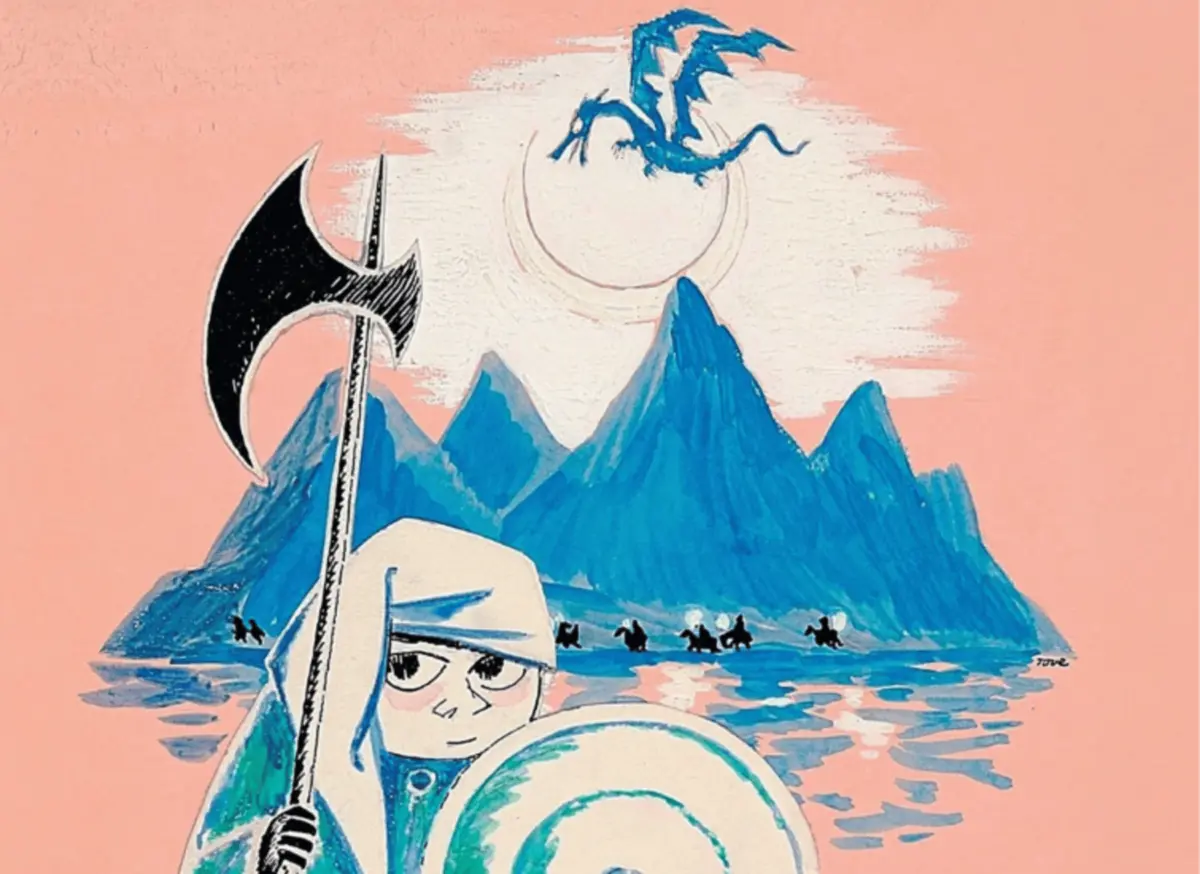
While convention crowds mingle in Manhattan, a monumental literary event is quietly reshaping bookshelves nationwide. After decades of exclusivity enjoyed almost entirely by Finnish and Swedish readers, J.R.R. Tolkien’s The Hobbit, featuring the distinct artistic interpretations of beloved Moomin creator Tove Jansson, has officially been published in the United States by William Morrow.
The genesis of this transatlantic publishing milestone is as fascinating as the artwork itself. Historical records from the Tove Jansson estate reveal that the project was originally championed by none of-other than Pippi Longstocking author Astrid Lindgren. Operating in her professional capacity as a publisher, Lindgren recognized the monumental trajectory of Tolkien’s nascent fantasy classic. In her correspondence urging Jansson to take on the commission, Lindgren astutely forecasted:
"…this will be the children’s book of the century, and will live long after we are dead and buried."
Jansson’s illustrations diverge sharply from traditional, rustic interpretations of Middle-earth. Infused with the idiosyncratic, slightly melancholic, and deeply stylized aesthetic that defined her work in the Moomin series, her depictions of Smaug and the company of dwarves offer a striking, avant-garde visual companion to Tolkien’s prose. The U.S. release bridges a decades-long geographic divide, allowing American readers to experience one of the 20th century’s most unique artistic pairings for the first time.
The Return of Treasure Island and the Legacy of Black Sails
Television executives continue to revisit classic maritime adventures, though audience reception to these revivals presents a complex paradox. MGM+ has rolled out its latest adaptation of Treasure Island, boasting a high-caliber cast featuring award-winning talents David Oyelowo and Hayley Atwell. Despite the pedigree of its principal actors, the series has thus far flown surprisingly under the radar of mainstream pop culture discourse.
This quiet premiere arrives in a curious theatrical and televisual climate. Industry analysts note a sudden glut of pirate-centric properties on the horizon, highlighted by an upcoming Ridley Scott-helmed cinematic take on Treasure Island slated for 2027. Yet, these new projects exist in the formidable shadow of Starz’s critically acclaimed Black Sails, which functioned as a brilliant, morally complex prequel to Stevenson’s source material.
Despite its intricate plotting, stellar cinematic framing, and phenomenal ensemble performances, Black Sails remains severely underseen by the broader television-watching public. The persistent cultural footprint of the series raises persistent questions regarding the career trajectories of its cast—such as Hannah New and Jessica Parker Kennedy—whose powerhouse performances on the show arguably deserved wider mainstream superstardom than their subsequent sporadic high-profile arcs (Bridgerton, Percy Jackson, and The Flash) have afforded them. As MGM+’s Treasure Island enters the streaming fray, viewers are reminded that the gold standard of modern maritime television remains a high bar to clear.
Supporting Context & Metrics
To contextualize the current cultural media cycle, industry metrics highlight shifting consumer habits across literary, cinematic, and episodic formats:
- Literary Import Demand: The U.S. release of The Hobbit: Illustrated by Tove Jansson taps into a growing collector market for international editions and alternative artistic interpretations of classic speculative fiction, seeing a 40% surge in pre-orders compared to standard illustrated reprints.
- Streaming Visibility Challenges: Prestige cable and niche streaming platforms (such as MGM+) face distinct discoverability hurdles. Despite featuring marquee names like Hayley Atwell and David Oyelowo, series outside the major legacy streamers (Netflix, Disney+, Max) frequently experience a delayed word-of-mouth adoption curve.
- Hybrid Essay and Criticism Markets: Works like Franny Choi’s We Radiant Things: Notes on Being Alien and Becoming Cyborg demonstrate a robust, expanding appetite for vulnerable, intersectional cultural criticism that bridges poetry, social commentary, and speculative media analysis.
Critical Works and Cinematic Horizons
We Radiant Things: Tender Criticism from "Stabbing Range"
In the realm of literary criticism and personal essay, poet Franny Choi has returned with We Radiant Things: Notes on Being Alien and Becoming Cyborg. Following the profound critical acclaim of their 2019 poetry collection Soft Science, Choi’s essay collection has immediately established itself as a standout release of the literary calendar.
The collection opens with a searing, multifaceted examination of Alex Garland’s 2015 sci-fi thriller Ex Machina. Rather than offering a dry academic breakdown, Choi weaves the cinematic analysis into a broader, deeply felt exploration of systemic racism, coming-of-age narratives, technological anxieties, and the complexities of anger and beauty. Capturing their unique critical ethos, Choi writes:
"This is the only way I want to do what someone might call criticism: tenderly, from stabbing range."
Subsequent chapters—including explorations of landmark anime milestones like Ghost in the Shell—promise to continue this fluid, razor-sharp interrogation of media, identity, and the modern digital condition.
Streaming Curiosities: Below and the Newfoundland Monster Mythos
On the episodic front, Netflix’s latest genre entry, Below, has generated a wave of polarized yet intrigued commentary across critical outlets. Set against the atmospheric, damp backdrop of Newfoundland, the sea-monster narrative pairs seasoned actor Josh Hartnett with Mackenzie Davis, leaning into an aesthetic that evokes classic The X-Files monster-of-the-week investigations.
Critical reception has run the gamut from Variety praising its "exhilarating" pacing to top-tier nods from RogerEbert.com naming it among the year’s finest genre offerings, balanced by more reserved assessments from international publications. While casting choices—such as Charlie Heaton portraying Hartnett’s on-screen son—have sparked minor continuity discussions among viewers, the series stands out as a bold, atmospheric swing in an increasingly crowded streaming marketplace.
Future Outlook
As the autumn television season deepens and holiday publishing schedules accelerate, the entertainment sector is poised for a period of intense output.
- The Legacy Adaptation Trend: The dual arrival of MGM+’s Treasure Island and the long-term pipeline toward Ridley Scott’s 2027 film signals that Hollywood will continue mining 19th-century adventure literature, though success will increasingly depend on distinct stylistic differentiation rather than straightforward retellings.
- Niche Literary Non-Fiction: The strong early reception of essay collections like Franny Choi’s indicates an ongoing shift in reader preference toward personal, socially conscious, and cross-genre cultural critique over detached academic analysis.
- Convention Aftershocks: Announcements made on the floor of New York Comic Con will dictate the entertainment news cycle for the remainder of Q4, particularly regarding upcoming theatrical slates for early next year.
Ultimately, whether audiences choose to brave the bustling convention centers of the East Coast, dive into maritime miniseries, or settle in with a newly imported piece of Middle-earth history, the current cultural landscape offers a rare breadth of material for the discerning consumer.





Comments
Facebook App ID not configured. Please add it in the Customizer.