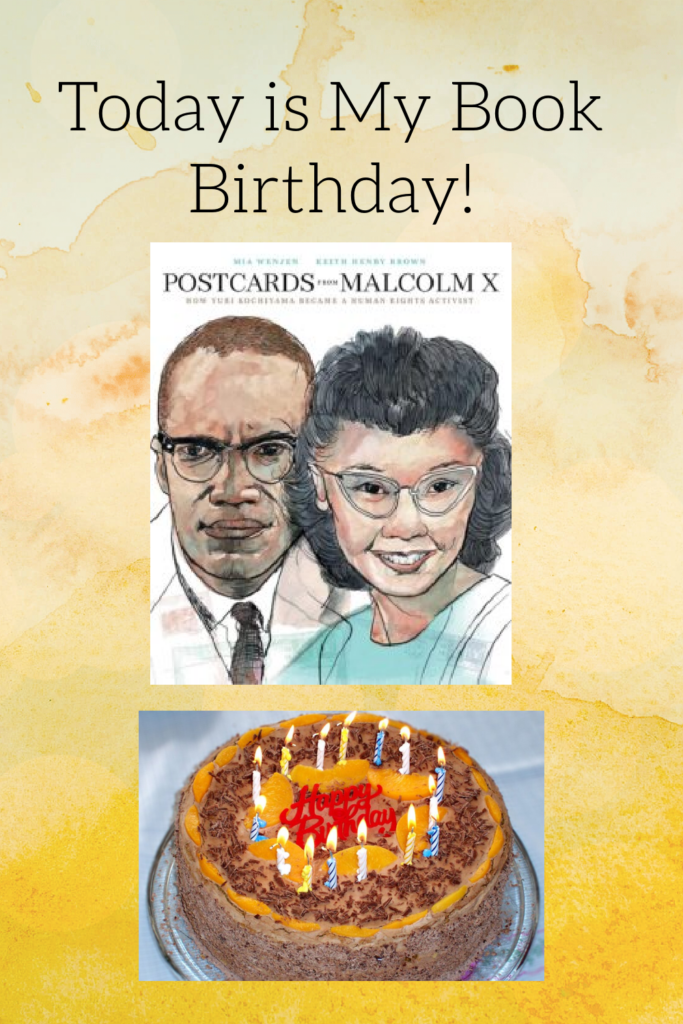
The children’s publishing landscape has reached a vital juncture in how it handles cross-cultural histories, civil rights movements, and the unheralded figures who bridged them. Today marks the official "book birthday" for Postcards from Malcolm X: How Yuri Kochiyama Became a Human Rights Activist, written by acclaimed author Mia Wenjen, illustrated by Keith Henry Brown, and published by Red Comet Press. Targeted at readers ages seven and up, this picture-book biography sheds light on an extraordinary partnership that defied mid-century racial boundaries: the deep intellectual and personal bond between Japanese American activist Yuri Kochiyama and civil rights icon Malcolm X.
At a time when modern social justice movements frequently struggle to sustain intersectional, cross-racial coalitions, Wenjen’s work provides a historically grounded blueprint for solidarity. The narrative follows Kochiyama’s evolution from an insulated California youth who believed racism did not exist, through the shattering crucible of World War II Japanese American internment, and into the heart of Harlem’s radical civil rights struggle. Featuring original postcards sent by Malcolm X during his international travels, extensive back matter, and a chronological timeline, the book operates simultaneously as a gripping historical account and an actionable guide for young readers. To mark the launch, Wenjen has announced a promotional giveaway of five copies, inviting educators, parents, and young activists to engage directly with the text’s core message of unity and perseverance.
Detailed Chronology: From the American West to Harlem’s Front Lines
To understand the weight of Postcards from Malcolm X, one must trace the improbable trajectory of Yuri Kochiyama’s life—a path forged by institutional trauma, shifting geographical landscapes, and a relentless pursuit of equity.
Formative Years and the Illusion of the "All-American" Life
Born a small-town girl in California, Yuri grew up largely insulated from the systemic prejudices that plagued minority communities across the United States. During her youth and early high school years, she possessed the carefree optimism of a traditional "All-American" teenager. Possessing strong writing skills honed through high school journalism, alongside natural emotional intelligence and charismatic leadership abilities, she naturally gravitated toward organizing peers. However, her worldview was fundamentally and violently altered by the events of World War II. Following the signing of Executive Order 9066, Kochiyama and her family—alongside more than 120,000 Japanese Americans—were forcibly removed from their homes and incarcerated in government internment camps.
This systemic violation shattered any remaining illusions about American egalitarianism. Yet, rather than breeding bitterness, the experience catalyzed an awakening. Her subsequent work with returning Japanese American soldiers exposed her to broader patterns of state-sponsored discrimination, setting the stage for her migration to New York City’s Harlem.
The Courthouse Handshake and the Genesis of a Mentorship
In 1963, a simple yet historic gesture occurred at a New York courthouse: Yuri Kochiyama extended her hand to Malcolm X. This initial introduction sparked a transformative friendship, though the path to mutual trust was fraught with skepticism. When they first met, Malcolm X—already a towering public intellectual and civil rights leader—approached Kochiyama with caution, questioning the motivations of an outsider entering the deeply localized struggles of the Black freedom movement.
As Wenjen notes, cross-racial solidarity is rarely achieved without friction. Kochiyama was forced to prove her dedication by consistently showing up, doing the grassroots work without demanding credit or personal recognition. Over time, that steadfast commitment earned her a place within Malcolm X’s inner circle.
While Kochiyama was already deeply active in Harlem community organizing, she initially lacked a macro-level framework to explain the root causes of structural racism. Malcolm X, possessing a genius for pedagogical clarity, served as both mentor and teacher. He demystified systemic oppression, translating complex socio-economic paradigms into accessible lessons. Their bond deepened to the point where Malcolm X promised to write to Kochiyama during his next international expedition—a promise fulfilled through a series of historic postcards that form the visual and thematic anchor of Wenjen’s book.
Legacy, Curriculum, and Continuing the Work
Following the tragic assassination of Malcolm X in 1965, Kochiyama refused to let his vision fade. She dedicated decades of her life to preserving his teachings, developing educational curricula based on his ideology, and presenting them directly to students across the United States. In many ways, Kochiyama’s lifelong evolution into a towering human rights activist functioned as a sustained tribute to Malcolm X’s unfinished legacy—a testament to what happens when an individual commits entirely to a cross-cultural fight for justice.
Supporting Context & Metrics: The Mechanics of Intersectionality
The publication of Postcards from Malcolm X arrives amid a broader literary and cultural movement toward inclusive, multifaceted historical non-fiction for children. Industry metrics over the past decade highlight a surging demand for stories that move beyond singular historical narratives to explore the intersections of Asian American, Black, Indigenous, and Latino histories.
The Challenge of Cross-Racial Coalition Building
In interviews surrounding the book’s launch, author Mia Wenjen emphasized that the initial suspicion and hostility between Kochiyama and Malcolm X mirror the exact barriers that hinder modern civil rights coalitions. Minority groups fighting parallel battles often operate in silos, hindered by historical mistrust or competitive narratives of victimization.
[Traditional Siloed Activism]
       │
       ├──> Fear of Co-optation / Lack of Trust
       ├──> Insufficient Understanding of Structural Oppression
       └──> Fragmented Community Resources

                      VERSUS

[Intersectional Solidarity (The Kochiyama/Malcolm X Model)]
       │
       ├──> Consistent "Show Up" Grassroots Labor (No Credit Demanded)
       ├──> Shared Ideological Frameworks (Mentorship & Education)
       └──> Unified Front Against Systemic Inequity
By examining how Kochiyama earned the trust of Black civil rights leaders through relentless, ego-free labor, Postcards from Malcolm X offers a functional manual for contemporary activism. The book challenges young readers to consider not only why unity is powerful, but how difficult it is to forge those ties in practice.
A Robust Literary Portfolio
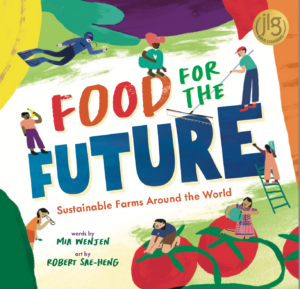
Postcards from Malcolm X is the latest addition to Wenjen’s extensive catalog of educational and socially conscious literature. Her previous works—including Barbed Wire Between Us (illustrated by Violeta Encarnación), Fortune Cookies for Everyone! (illustrated by Colleen Kong-Savage), The Traveling Taco, We Sing from the Heart: How the Slants® Took Their Fight for Free Speech to the Supreme Court, and Food for the Future: Sustainable Farms Around the World—consistently explore themes of civil liberties, immigrant perseverance, and systemic resilience.
Book Title
Core Theme / Subject
Illustrator
Publisher / Imprint
Postcards from Malcolm X
Yuri Kochiyama & Civil Rights Solidarity
Keith Henry Brown
Red Comet Press
Barbed Wire Between Us
Japanese American History & Resilience
Violeta Encarnación
Independent / Trade
We Sing from the Heart
Free Speech & Supreme Court Legal Battle
Simon Tam (Subject)
Trade Press
Food for the Future
Sustainable Agriculture & Global Ecology
Robert Sae-Heng
Barefoot Books
Official Statements & Promotional Outreach
To celebrate the release of Postcards from Malcolm X, Mia Wenjen has deployed a multi-platform engagement strategy designed to place the book directly into the hands of educators, parents, and young readers.
In an official statement accompanying the launch, Wenjen shared her foundational motivation for writing the book:
"For this book, I wanted to show intersectional, cross-racial solidarity, as an example from the past that will hopefully inspire similar collaboration today and in the future. It was important to me to show Yuri Kochiyama’s activity journey… I hope this book inspires our children on how powerful uniting together can be, but also how difficult it is to create those ties."
Book Birthday Giveaway Campaign
As part of the launch celebration, Wenjen is hosting a promotional giveaway awarding five physical copies of Postcards from Malcolm X. Participants are invited to enter by leaving a public comment detailing how they plan to utilize the book within their classrooms, libraries, or homes.
Companion Digital Resources and Media
To maximize the book’s utility in educational settings, Red Comet Press and the author have released a suite of supplementary materials:
Official Book Trailer: A cinematic preview blending Keith Henry Brown’s evocative illustrations with historical framing.
Curriculum-Aligned Back Matter: Includes original postcards written by Malcolm X, a detailed historical timeline, and discussion prompts.
Author Q&A and Review Features: Deep dives into the artistic process with illustrator Keith Henry Brown, alongside reviews from prominent literary outlets such as the School Library Journal.
Future Outlook: The Resonating Impact on Young Readers
As educational institutions across the nation navigate complex debates over history curricula, the release of Postcards from Malcolm X offers a timely reminder of the power of localized, empathetic education. By framing history through the lens of personal relationships rather than dry institutional dates, Wenjen and Brown have crafted a narrative that speaks directly to the emotional and intellectual capacities of children aged seven and up.
The long-term value of Postcards from Malcolm X lies in its refusal to simplify the complexities of coalition building. It acknowledges that true solidarity requires emotional maturity, active listening, and a willingness to step back and support leadership from communities outside one’s own. For teachers looking to cultivate the next generation of empathetic leaders, and for parents seeking to explain the intertwined roots of American social justice movements, this biography stands out as an essential modern text. Through the persistent memory of Yuri Kochiyama and the enduring vision of Malcolm X, the book ensures that the blueprint for cross-racial solidarity remains accessible, urgent, and alive for decades to come.







Comments
Facebook App ID not configured. Please add it in the Customizer.