
Executive Overview
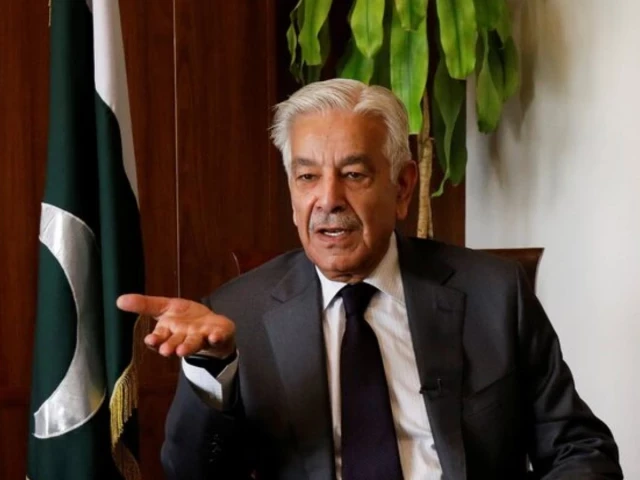
In an era where the boundary between official statecraft and internet subculture is increasingly blurred, high-ranking government officials frequently find themselves navigating the treacherous waters of social media. Pakistani Defence Minister Khawaja Asif recently learned this lesson firsthand. A seemingly innocuous, single-word response to an AI-generated viral puzzle on the platform X (formerly Twitter) snowballed into a major online spectacle.
What began as a low-stakes encounter with a digital image featuring Hollywood icon Marilyn Monroe wearing a modern smartwatch quickly ignited a firestorm of mockery, political commentary, and broader debates regarding the digital literacy and conduct of state officials.
While the incident itself was trivial—consisting merely of the word “Watch” paired with a watch emoji—it exposed deep-seated public expectations concerning the gravity associated with high office. In a nuclear-armed nation facing complex geopolitical and domestic challenges, the Defence Minister’s casual engagement with internet "engagement bait" proved irresistible to critics and satirists alike. This report provides an in-depth examination of the digital incident, the mechanics of AI-generated bait, the public backlash, and the larger implications for political communications in the twenty-first century.
Read Also
Detailed Chronology of the Incident
The sequence of events unfolded rapidly on Tuesday, October 13, transforming a standard Tuesday afternoon scroll into a public relations talking point for the Pakistani federal government.
The Source Material: The 1956 Marilyn Monroe Puzzle
The catalyst for the controversy was a widely circulated, AI-generated image posted by an anonymous or engagement-farming account on X. The image depicted Hollywood legend Marilyn Monroe posed against the backdrop of 1950s vintage automobiles and period-accurate architecture.
The visual puzzle was explicitly designed to trap scrolling users: it challenged viewers to spot the historical anomaly in a scene purportedly set in 1956. The glaring giveaway was an unmistakably contemporary digital smartwatch strapped securely to Monroe’s wrist. These types of AI-generated historical anomalies are a staple of modern social media algorithms, purposefully engineered to provoke comments, corrections, and quote-posts to boost algorithmic reach.
The Defence Minister’s Reply
At an unspecified hour on Tuesday, Khawaja Asif encountered the post. Rather than scrolling past the transparently synthetic image, the Defence Minister chose to participate. Utilizing his verified account, Asif quote-posted the image with a remarkably brief response:
“Watch ⌚”
By identifying the anachronism with a solitary word and an emoji, Asif inadvertently stepped into a trap designed to maximize visibility. Within minutes of his post, the algorithmic amplification kicked in, pulling his official account into the wider orbit of viral internet culture.
The Immediate Backlash and Satirical Wave
Almost instantly, users on X began screenshotting and quote-posting the Minister’s response, turning it into a trending topic across Pakistan. The juxtaposition of a senior cabinet minister interacting with an AI-generated meme puzzle—rather than ignoring it or focusing on affairs of state—provided ample material for online critics.
The reaction spanned from lighthearted disbelief to biting political satire. Within hours, the comment section under his post, as well as quote-posts by prominent digital commentators, filled with hundreds of sarcastic remarks. The incident demonstrated the unforgiving nature of social media, where public figures are held to an unyielding standard of professional distance, even in their casual online interactions.
Supporting Context & Metrics: The Mechanics of AI Engagement Bait
To fully understand why Khawaja Asif’s tweet generated such an intense reaction, one must examine the broader ecosystem of social media algorithms and the psychology of digital engagement.
The Rise of AI "Engagement Bait"
In recent years, generative artificial intelligence has flooded platforms like X, Facebook, and Instagram with hyper-realistic, yet subtly flawed, historical and fantasy imagery. From historical figures wearing modern sneakers to impossible architectural marvels, these images rely on a psychological phenomenon known as "the Cunningham’s Law effect"—the fastest way to get the right answer on the internet is not to post a question, but to post the wrong answer.
By embedding modern accessories into vintage settings, creators exploit human psychological impulses:
- The Correction Urge: Users feel an irresistible urge to point out obvious errors to prove their intelligence or attentiveness.
- Algorithm Boosting: Every comment, quote, and corrective reply signals to the platform’s algorithm that the content is generating high user interaction, subsequently pushing it onto the feeds of millions of users worldwide, including high-profile public figures.
Public Figures Under the Digital Microscope
When ordinary citizens fall for engagement bait, the result is fleeting embarrassment or benign amusement. However, when a government minister—particularly one holding a sensitive portfolio like Defence—interacts with such content, the stakes change dramatically.
Social media metrics dictate that interactions by verified, high-authority accounts carry immense weight. Asif’s quote-post acted as a force multiplier for the original AI farming account, inadvertently helping to monetize or elevate a low-quality post. For critics, this signaled a perceived lack of digital savvy or discipline. In an era where political opponents scrutinize every digital footprint, even a single-word emoji response can be reframed as evidence of distraction or detachment from pressing national duties.
Official Statements and Public Reactions
The public response to the Defence Minister’s tweet was swift, merciless, and deeply reflective of the polarized nature of Pakistani digital spaces. Users ranged from independent citizens expressing bewilderment to political detractors utilizing the moment to score points against the ruling administration.
Selected User Reactions and Commentary
-
The Appeal to Office:
One user, identifying as Hasan, captured the overarching sentiment of institutional critique with a widely shared post:“Ladies and gentlemen… I present to you the defence minister of Islamic republic of Pakistan”
-
Calls for Digital Restraint:
Reflecting a common comedic trope regarding politicians and their smartphones, another user, Abdo Dameen, quipped:“Someone needs to take his phone away lol 😭”
-
Invoking Artificial Intelligence against Itself:
In a uniquely modern twist, some users brought AI into the critique itself. One commenter, Shehzy khan, directly tagged the platform’s native AI assistant, Grok, to pass judgment on the Minister’s behavior:“@grok As a Defense minister of atomic country (Pakistan) Is it okay to do this kind of post?”
-
The "Wrong Account" Theory:
Several commentators speculated whether the Defence Minister had mistakenly tweeted from his personal or burner account onto his official handle, a common PR blunder in modern politics where handlers or politicians themselves mix up professional and private personas.
As of the writing of this report, neither Khawaja Asif nor his official media team have issued a formal statement addressing the tweet or the subsequent online jokes. The strategy of silence is a common crisis-management approach for trivial social media gaffes, designed to starve the controversy of oxygen rather than drawing further attention to it.
Future Outlook: The Digital Responsibilities of Statesmen
The episode involving Khawaja Asif is far more than an isolated viral joke; it serves as a valuable case study in modern political communication and digital hygiene. As artificial intelligence continues to evolve, generating increasingly sophisticated forms of misinformation, deepfakes, and engagement bait, the vulnerability of public figures will only increase.
1. The Need for Enhanced Digital Literacy in Government
Governments worldwide are beginning to realize that cybersecurity and digital literacy training must extend beyond protecting state secrets to encompass personal social media hygiene. Cabinet ministers and high-ranking bureaucrats are prime targets for algorithmic manipulation, phishing, and psychological traps designed to extract engagement or manufacture controversies.
2. The Blurring Lines of Public Persona
Politicians increasingly feel pressured to maintain an active, relatable presence on social media to connect with younger, digitally native voters. However, balancing the casual, informal nature of platforms like X with the solemn dignity of public office is a delicate tightrope walk. A misjudged emoji or a flippant reply can instantly undermine months of carefully cultivated statesmanlike authority.
3. Algorithmic Resilience for State Officials
Moving forward, political communications teams will likely enforce stricter protocols regarding how official accounts interact with viral content. Implementing "think before you post" guidelines, or utilizing dedicated media handlers to vet non-official interactions, may become standard operating procedure for defense and foreign ministry officials globally.
Conclusion
Khawaja Asif’s brief encounter with Marilyn Monroe’s futuristic smartwatch will likely fade from the trending tables as newer internet phenomena take its place. Yet, it leaves behind a lingering reminder of the perils of the digital age. For leaders steering the course of nations, the internet is not merely a playground for casual amusement, but a high-stakes arena where every word—no matter how brief—is permanently etched into the public consciousness.



Comments
Facebook App ID not configured. Please add it in the Customizer.