
Executive Overview
Literacy is the bedrock of modern education, personal agency, and lifelong success. Yet, for millions of children around the globe, the journey toward fluent reading and writing is fraught with anxiety, frustration, and psychological barriers. Far too often, educators and parents misinterpret a child’s resistance to reading as laziness, defiance, or a lack of intellectual capability. In reality, reading reluctance is frequently the outward manifestation of deep-seated academic trauma, persistent learning friction, and the cumulative weight of past failures within rigid educational frameworks.
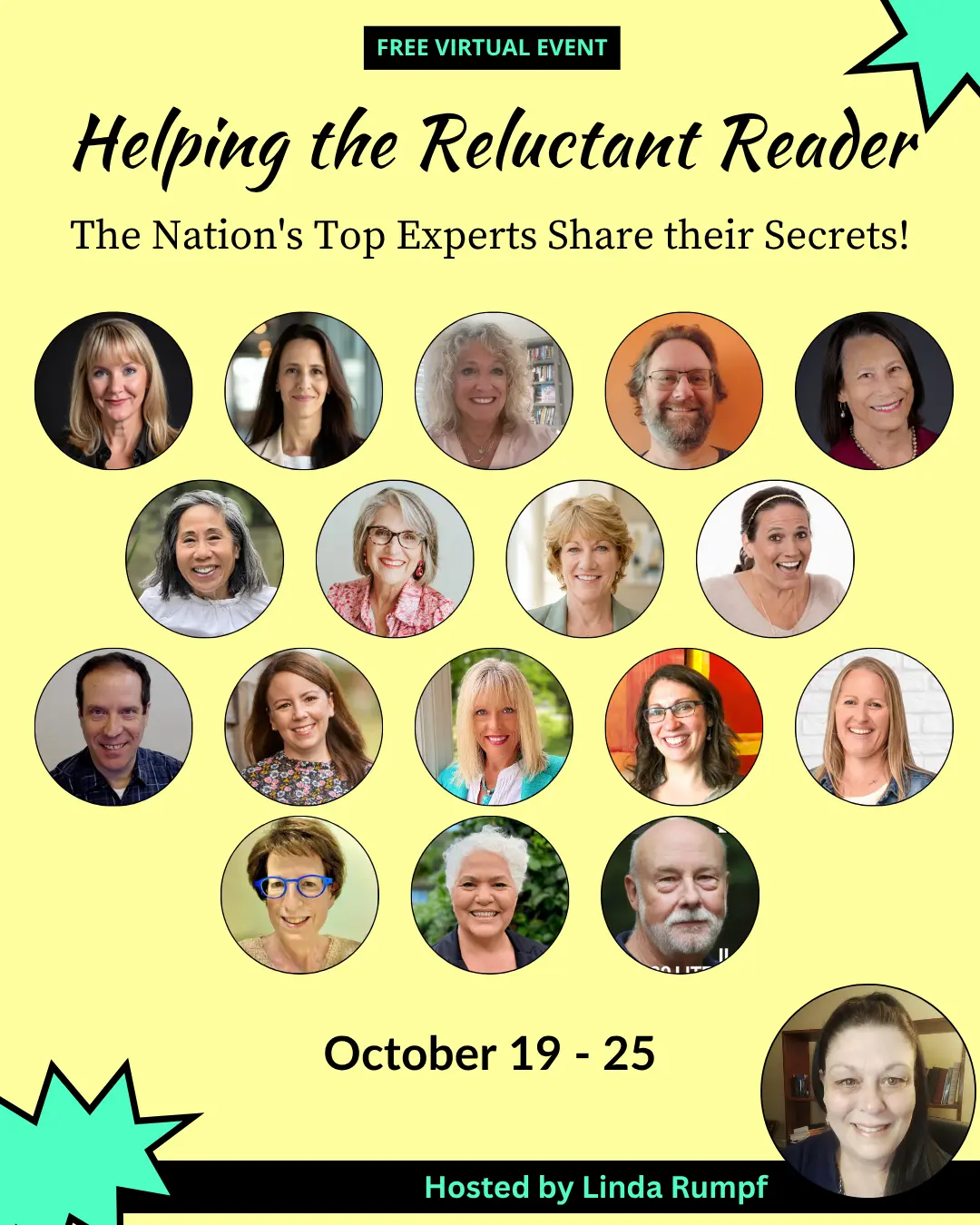
To address this pressing crisis, the educational community is mobilizing. The annual Close the Reading Gap Summit has emerged as a premier global forum for parents, educators, interventionists, and literacy advocates. Scheduled to launch its comprehensive sessions on October 19th, this year’s tuition-free virtual event centers on a critical, highly sensitive theme: Helping the Reluctant Reader.
This deep-dive report explores the psychological roots of reading resistance, unpacks the systemic failures that give rise to "reading trauma," and highlights the actionable methodologies being shared at this year’s summit. Featuring an elite lineup of literacy researchers, developmental psychologists, and veteran educators—including prominent speakers like Dr. Louisa Moats, Julie Bogart, Dr. Tim Rasinski, and Mia Wenjen—the summit promises a paradigm shift. Attendees will learn how to "flip the script," transforming alienated students into confident, enthusiastic readers and writers through targeted scaffolding, multisensory morphology, captivating literature, and empathy-driven instruction.
Read Also
Detailed Chronology: The Seven-Day Roadmap to Literacy Transformation
The 2026 Close the Reading Gap Summit is structured as a comprehensive, multi-day masterclass. Each day of the event focuses on a distinct pillar of literacy intervention, moving methodically from foundational cognitive psychology to practical classroom and household applications.
Day One: Working With Reluctant Readers
The summit opens with a powerhouse panel dedicated to decoding the neurology and instructional roadblocks behind reading reluctance. Featuring heavyweights in the literacy field—Dr. Louisa Moats, Nora Chahbazi, Emily Gibbons, and Dr. Marnie Ginsberg—Day One establishes the scientific baseline. Speakers will dissect why traditional reading instruction often fails neurodivergent learners or children with reading disabilities like dyslexia. Attendees will explore the science of reading, moving away from guessing strategies toward explicit, systematic phonics instruction that eliminates the guesswork and lowers cognitive anxiety.
Day Two: Turning Reluctant Writers into Brave Writers
Because reading and writing are reciprocal, symbiotic cognitive processes, addressing one without the other yields incomplete results. Day Two features renowned writing mentor Julie Bogart, creator of the "Brave Writer" philosophy. Bogart’s session focuses on dismantling the perfectionism and psychological paralysis that plague young writers. Educators and parents will learn how to lower affective filters, encouraging children to view writing as a mode of personal expression rather than a high-stakes test of grammar and spelling.
Day Three: The Psychology of Reading Refusal
Understanding why a child slams a book shut is prerequisite to helping them open it again. Day Three tackles the behavioral and emotional dimensions of reading avoidance. Dr. Melanie Wilson, Melanie Jeffrey, and Sarah Collins guide attendees through the intricate psychology of reading refusal. Sessions will emphasize practical, stress-reducing interventions: keeping reading tasks bite-sized, utilizing advanced cognitive scaffolding to bridge skill gaps, and fundamentally "flipping the script" so that children experience micro-successes that gradually rebuild their self-efficacy.
Day Four: Teaching So They Can’t Fail
Instructional design plays a massive role in student resistance. If a task is perpetually out of reach, students will inevitably disengage to protect their self-esteem. On Day Four, Kurt Engelmann and Sherrie Rain present foolproof instructional frameworks. Their sessions focus on errorless learning environments, carefully sequenced skill progression, and responsive teaching techniques that ensure every student achieves tangible victories during every single instructional block.
Day Five: Fun with Words—Morphology and Poetry
Monotony is the enemy of engagement. Day Five injects creativity and linguistic play back into literacy instruction. Dr. Pete Bowers and Dr. Tim Rasinski—two luminaries in word study and fluency—demonstrate how morphology (the study of word parts) and poetry can spark genuine curiosity. By treating words as puzzles to be solved rather than static spelling lists to be memorized, children begin to view language acquisition as an engaging, dynamic investigation.
Day Six: Enticing Books—Your Secret Weapon
Sometimes, the missing link isn’t a strategy or a psychological breakthrough; it is simply the right book. Day Six focuses entirely on curation and book-matching. Industry experts Mia Wenjen, Joanne Kaminski, and Lori Josephson share insider strategies for finding high-interest, low-readability texts, graphic novels, diverse narratives, and immersive series that hook reluctant readers. This session serves as a masterclass in leveraging irresistible literature as a secret weapon to bypass student defenses.
Day Seven: Winning Them Over—Advanced Strategies
The summit concludes with a high-impact arsenal of final strategies. Emily Laidlaw and Kim Yarson take the stage to offer creative, out-of-the-box engagement techniques. From gamified reading incentives to community-building literacy initiatives, Day Seven equips parents and teachers with a diverse toolkit to sustain long-term reading habits well beyond the duration of the summit.
Supporting Context & Metrics: Unpacking Reading Trauma and Reluctance
To fully appreciate the urgency of the 2026 Close the Reading Gap Summit, one must examine the broader socioeconomic and psychological data surrounding youth literacy.
The Anatomy of "Reading Trauma"
In educational psychology, "reading trauma" is not a formally recognized clinical diagnosis, but it is a profoundly real experiential phenomenon. It describes the chronic, cumulative anxiety children experience when forced to read aloud in front of peers, corrected harshly for mispronunciations, or graded on comprehension of texts that exceed their developmental capability. Over time, these negative classroom episodes condition the child’s amygdala to perceive reading as a threat.

When a child exhibits behaviors such as stomachaches before reading time, hiding books, acting out, or flatly stating "I hate reading," adults frequently misdiagnose the issue as behavioral disobedience. In truth, these are protective stress responses. The child is attempting to escape an environment where they feel exposed, incompetent, and vulnerable.
The Cost of Stagnation
National and international literacy assessments consistently highlight persistent achievement gaps. When students fall behind in the crucial early reading years (K-3)—where the focus transitions from "learning to read" to "reading to learn"—the deficit compounds exponentially across all academic subjects. Reluctant readers read significantly fewer words per year than their fluent peers, widening the vocabulary gap, stunting cognitive development, and limiting future economic mobility.
Flipping the Script: The Intervention Equation
Research consistently shows that reversing reading reluctance requires three core interventions:
- Affective Safety: Lowering emotional stakes by eliminating public humiliation (such as round-robin reading) and validating the child’s frustration.
- Explicit Skill Repair: Identifying specific phonemic, decoding, or comprehension gaps and addressing them through direct, multisensory instruction.
- Autonomy and Choice: Restoring student agency by allowing children to select their own reading materials, regardless of whether those materials are comic books, graphic novels, or non-fiction encyclopedias.
The Close the Reading Gap Summit directly addresses all three pillars, providing attendees with actionable frameworks rooted in cognitive science and empathetic pedagogy.
Official Statements and Expert Insights
The philosophy driving the 2026 summit is championed by its participating educators and speakers, who advocate for a compassionate, evidence-based revolution in how adults approach struggling students.
"Children who resist reading are not lazy. They are not misbehaving. They are often frustrated and sick of doing it ‘wrong,’ or not making progress. You can turn this around! Helping a reluctant reader succeed often hinges on things that aren’t difficult, if you know what to do and have a few extra tools in your toolbox."
— Summit Speaker Statement
This sentiment echoes throughout the professional literacy community. Educators are increasingly recognizing that student motivation is inextricably linked to instructional design. If a curriculum relies on outdated, ineffective methodologies—such as the discredited "three-cueing" system that encourages children to guess words based on pictures or context rather than decoding them—struggling readers are set up for systemic failure.
By uniting researchers like Dr. Louisa Moats (a pioneer in structured literacy) with practical practitioners and authors like Julie Bogart and Mia Wenjen, the summit bridges the often-fractured divide between academic research and living-room reality. Parents and teachers are given direct access to top-tier insights without the barrier of steep conference fees, democratizing access to elite educational strategies.
Future Outlook: A New Era for Literacy Advocacy
As educational landscapes continue to evolve in the post-pandemic era, digital distractions, learning loss, and systemic inequities present unprecedented hurdles for youth literacy. However, initiatives like the Close the Reading Gap Summit signal a hopeful shift toward holistic, empathetic, and scientifically rigorous interventions.
The future of reading instruction relies heavily on the normalization of neurodiversity, the elevation of structured literacy frameworks, and the unwavering belief that no child is a lost cause. When parents and teachers are equipped with the right tools—scaffolding techniques, morphological word studies, low-stakes writing prompts, and irresistible book selections—the cycle of reading trauma can be decisively broken.
For educators and parents eager to become catalysts for change, the opportunity is immediate. The 2026 Close the Reading Gap Summit offers a comprehensive roadmap to systemic transformation.
How to Participate
Registration for the virtual event is currently open. Attendees can secure their complimentary access by visiting the official registration portal via the Close the Reading Gap Summit Link.
By investing time in understanding the psychology of reading refusal and mastering the art of "flipping the script," participants will not only help children conquer the mechanics of literacy—they will restore their confidence, ignite their curiosity, and open the door to a lifelong love of reading and writing.



Comments
Facebook App ID not configured. Please add it in the Customizer.