
Executive Overview
The political landscape of the United States is undergoing a profound structural shift. Following Donald Trump’s historic return to the White House, the populist conservative movement that swept him back into power is encountering its most severe internal crisis to date. What was once heralded by loyalists as an impenetrable, unified political force—the "Make America Great Again" (MAGA) coalition—is exhibiting clear signs of fragmentation.
Crucially, this disillusionment is no longer confined to traditional political opponents or mainstream media commentators. Instead, the warning lights are flashing loudest from within the echo chambers of right-wing media and conservative data analysis. Prominent conservative pollsters and commentators—most notably Rich Baris, known widely in political circles as the "People’s Pundit" and director of Big Data Poll—are openly confirming what nonpartisan pollsters have begun to document: the MAGA base is fracturing, frustrated by the operational friction, controversial executive appointments, and perceived policy compromises that have characterized Trump’s second administration.
This investigative analysis explores the mechanics of this internal schism. It examines how a movement built on deep-seated resentment toward the political establishment is now turning its critical lens inward, questioning whether the leader who promised to dismantle the "Deep State" and restore economic nationalism is delivering on those foundational pledges—and who, if anyone, can hold this volatile coalition together in a post-Trump era.
Read Also
Detailed Chronology: The Journey to Coalition Instability
+-----------------------------------------------------------------------------------+
| CHRONOLOGY OF THE POPULIST RIFT                                                  |
+-----------------------------------------------------------------------------------+
| Nov 2024      | Electoral Triumph: Trump re-elected on a broad anti-establishment |
|               | populist coalition, spanning working-class and suburban voters.   |
|               |                                                                   |
| Jan-Feb 2025  | Early Governance Friction: Executive orders spark administrative   |
|               | chaos; initial cabinet nominations face fierce internal debate.   |
|               |                                                                   |
| Spring 2025   | Early Warning Signals: Pollsters observe early erosion in base    |
|               | confidence as economic realities clash with campaign promises.    |
|               |                                                                   |
| Mid 2025      | The Open Fracture: Conservative media figures express frustration |
|               | over key appointments, foreign policy, and traditional GOP influence. |
+-----------------------------------------------------------------------------------+
Phase 1: The Triumph and the Unraveling Mandate
The origin of the current rift lies in the immediate aftermath of the election victory. Trump’s return to power was propelled by an expanded, multi-ethnic, working-class coalition that felt abandoned by the political and economic mainstream. The victory was interpreted by movement architects as a absolute mandate to purge federal institutions, impose sweeping tariffs, and radically alter American foreign policy.
However, the transition from movement politics to administrative governance quickly revealed structural fault lines within the coalition.
Phase 2: Early Governance and Cabinet Discord
As the administration began issuing rapid-fire executive actions and nominating key officials, tensions flared between two core factions:
- The Populist Purists: Demand a complete dismantling of federal agencies, strict protectionist tariffs, and an uncompromising stance against international engagements.
- The Pragmatic / Establishment Aligners: Counsel institutional continuity, fiscal restraint, and corporate tax incentives.
Early appointments brought this ideological friction into public view. When high-profile positions were allocated to political veterans or corporate insiders, segments of the base viewed the moves as a surrender to the very establishment they had fought to overthrow.
Phase 3: The Public Emergence of Base Discontent
By mid-year, the internal debate could no longer be contained behind closed doors. High-profile conservative media outlets, including popular broadcasts like The Charlie Kirk Show, began hosting discussions that openly dissected the administration’s shortcomings. Data analysts who had long defended Trump’s electoral viability, such as Rich Baris, began documenting a measurable drop in enthusiasm among core working-class supporters, marking a dramatic turning point in the movement’s self-perception.
Supporting Context & Metrics: Polling Trends and Base Demographics
To understand the nature of the fracturing MAGA coalition, one must analyze the data driving these conclusions. For years, right-wing polling firms like Big Data Poll operated as counterweights to mainstream polling institutions, often capturing low-propensity populist voters that standard methodologies missed. When these specialized pollsters signal a downturn, it indicates a structural shift rather than a temporary public relations dip.
+-----------------------------------------------------------------------------------+
| FACTIONAL DYNAMICS WITHIN THE RIGHT                                               |
+-----------------------------------------------------------------------------------+
| MAGA Populists (Core)   | - Anti-establishment; radical institutional reform      |
|                         | - Strict economic nationalism & tariffs                   |
|                         | - High skepticism toward traditional GOP leadership     |
+-----------------------------------------------------------------------------------+
| Traditional/Corporate   | - Tax cuts, deregulation, strong national defense       |
| Conservatives           | - Skeptical of executive overreach & global isolation   |
|                         | - Seek institutional stability over upheaval            |
+-----------------------------------------------------------------------------------+
| Disillusioned Converts  | - Price-sensitive working-class & suburban voters       |
|                         | - Focused strictly on economic outcomes and inflation   |
|                         | - Highly prone to defection if results lag promises     |
+-----------------------------------------------------------------------------------+
Primary Drivers of Base Frustration
-
Persistent Economic Pressure and Inflation Realities:
The foundational promise of the populist movement was economic relief for the working class. However, systemic inflationary pressures and the market volatility associated with aggressive tariff implementation have created friction. Working-class families, who formed the backbone of the 2024 victory, remain sensitive to everyday cost-of-living increases, leading to growing impatience with macro-level political disputes. -
The Residual Contempt for the "Old GOP":
A defining feature of the modern populist voter is an intense antipathy toward traditional, pre-2016 Republican leadership. The base views figures associated with the Paul Ryan or Mitch McConnell era not merely as political opponents, but as controlled opposition. Any sign that the administration is coordinating with or yielding to old-guard Republican interests triggers immediate backlash among grass-roots organizers and right-wing digital media hosts. -
Personnel as Policy:
In populist politics, personnel choices are viewed as the ultimate metric of loyalty. When the administration relies on seasoned Beltway operatives to manage federal agencies, movement purists interpret it as a betrayal of the promise to "drain the swamp." Conversely, when radical loyalists fail to pass confirmation or struggle with basic administrative management, pragmatic voters express frustration at political gridlock.
Official Statements & Critical Dialogue
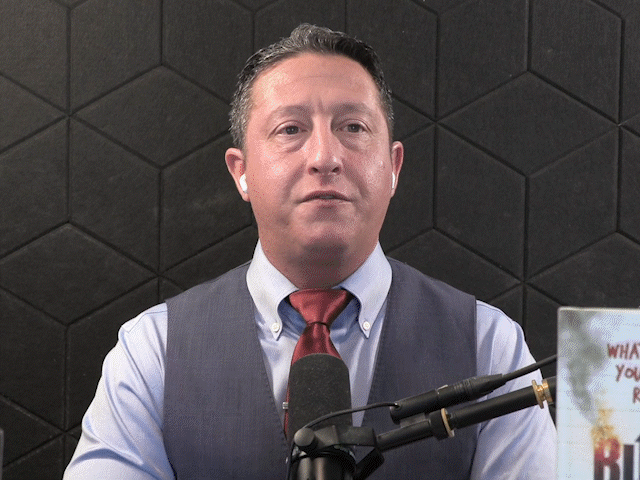
The growing divide was brought into sharp focus during a recent interview on The New Yorker Radio Hour, where editor David Remnick engaged in a detailed discussion with pollster Rich Baris. The dialogue provided a rare look into how conservative strategists view the internal dynamics of their own movement.
Perspectives from the Dialogue
David Remnick, Host of The New Yorker Radio Hour:
"A growing portion of the electorate appears to recognize the mayhem President Donald Trump has instigated since returning to the Oval Office. That segment includes some of the people who put him back into office… [MAGA] is fracturing, raising critical questions about how the President lost the trust of his base, the contempt MAGA voters have for the old Republican Party, and who might take the reins after Trump."Rich Baris, Director of Big Data Poll ("The People’s Pundit"):
"The base didn’t sign up for a return to standard Republican Party politics under a different name. There is a profound, deep-seated contempt among MAGA voters for the institutional GOP—the old guard. When voters see decisions that look like concessions to that old establishment, or when economic relief doesn’t materializes at the grocery store, you start to see real trust erosion. It’s not that these voters are becoming Democrats; it’s that they are tuning out, becoming cynical, and walking away from the process altogether."
Analysis of the Strategic Shift
Baris’s observations highlight a critical reality for conservative strategists: the risk facing the administration is not necessarily that its base will vote for opposition candidates, but rather that voters will fall into political demotivation. The populist wave was built on high-voltage turnout among non-traditional voters; if those voters conclude that the political system is unreformable regardless of who holds the presidency, the coalition collapses from within.
Future Outlook: The Succession Struggle and the Post-Trump Era
As the second term progresses, attention is shifting to the question of succession. Donald Trump has dominated the conservative ecosystem for nearly a decade, functioning as both the ideological anchor and the primary unifying figure of the American right. However, the current fragmentation raises an urgent question: Can "Trumpism" survive without Trump?
+-----------------------------------------------------------------------------------+
| POTENTIAL SCENARIOS FOR THE FUTURE OF THE AMERICAN RIGHT                          |
+-----------------------------------------------------------------------------------+
| 1. Institutionalized Populism | - A disciplined successor (e.g., J.D. Vance)     |
|                               |   codifies populist doctrine into a stable party  |
|                               |   platform with programmatic focus.               |
+-----------------------------------------------------------------------------------+
| 2. Movement Fragmentation     | - The coalition splits into competing factions    |
|                               |   (libertarian, nationalist, traditional GOP),   |
|                               |   diluting national electoral effectiveness.      |
+-----------------------------------------------------------------------------------+
| 3. Establishment Resurgence   | - Corporate and traditional conservatives re-take |
|                               |   control of party mechanics following voter     |
|                               |   exhaustion with political turbulence.           |
+-----------------------------------------------------------------------------------+
Potential Heirs to the Mantle
As the movement looks to the future, several distinct factions are competing to define the post-Trump era:
- The Populist Intellectuals (e.g., J.D. Vance): Representing a more ideologically coherent form of national conservatism, this faction seeks to combine pro-worker economic policy with conservative social values, aiming to build a permanent, institutionalized populist majority.
- The Executive Disruptors (e.g., Vivek Ramaswamy, Ron DeSantis): Focusing on institutional overhaul and culture-war battles, these figures appeal to voters who prioritize administrative deregulation, government efficiency, and aggressive cultural battles over economic interventionism.
- The New Right Media Ecosystem: Influencers and commentators across digital platforms will play a decisive kingmaker role. As demonstrated by the influence of figures on The Charlie Kirk Show, the post-Trump leader must maintain credibility with an increasingly skeptical digital landscape that rejects traditional party discipline.
Conclusion
The fracturing of the MAGA movement marks a key transition in modern political history. The populist surge that reshaped the American electorate was driven by a shared rejection of the status quo. However, governing requires construction, compromise, and management—qualities that often conflict with revolutionary populist energy.
Whether Donald Trump can recalibrate his administration to regain the trust of his base remains uncertain. What is increasingly clear, as both conservative analysts and mainstream observers agree, is that the era of unquestioned, monolithic unity within the populist right has come to an end. The struggle to define the future of the American Right—and the nation’s political landscape—has officially begun.





Comments
Facebook App ID not configured. Please add it in the Customizer.