
Executive Overview
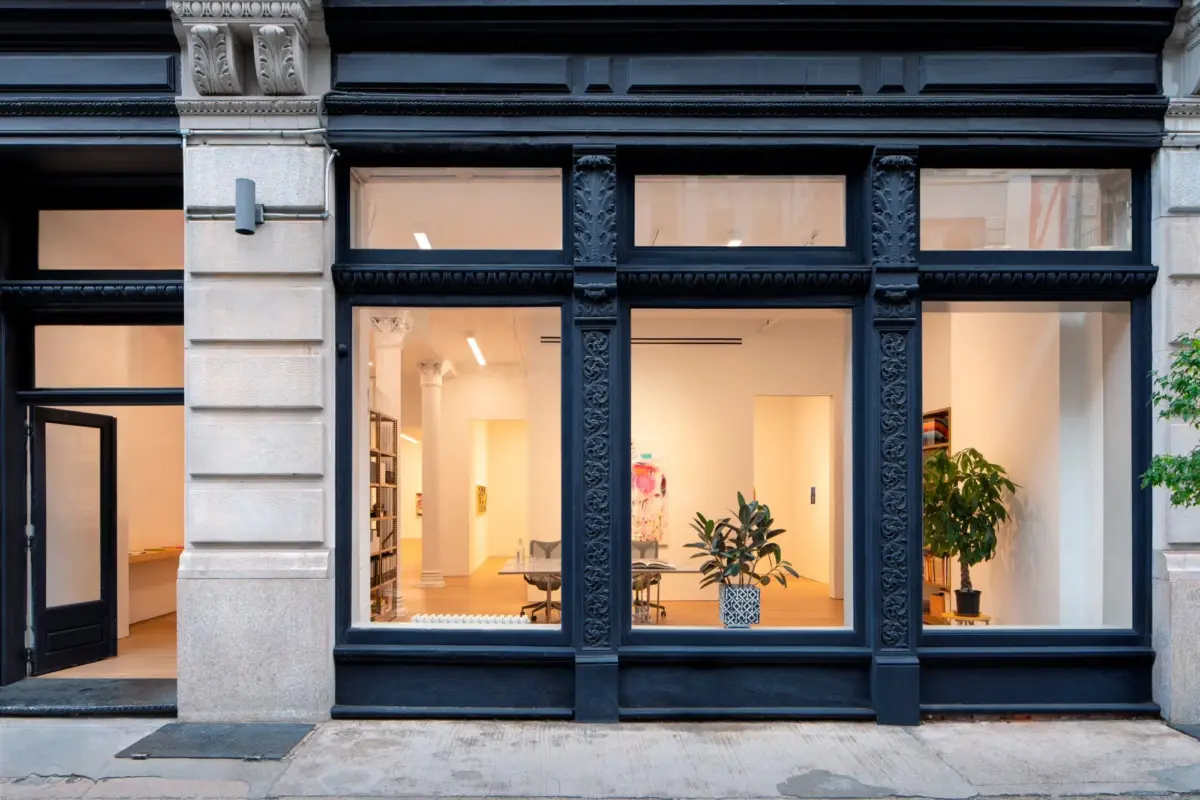
For a quarter of a century, the New York gallery Canada has stood as a beacon of artist-run independence and community-focused programming within the hyper-competitive global art market. Founded in 1999 by a tight-knit collective of artists—Sarah Braman, Suzanne Butler, Phil Grauer, and Wallace Whitney—the institution carved out an influential space for contemporary art, championing vital talents like Joe Bradley, Katherine Bernhardt, Katherine Bradford, Samara Golden, and Rachel Eulena Williams.
However, the venerable Tribeca institution has recently weathered one of the most turbulent chapters in its history. Behind the scenes, the gallery found itself thrust into an existential legal crisis initiated by an unexpected source: Jean Lignel, a Paris-based music producer, entrepreneur, and high-profile art collector who bought into the gallery during the darkest days of the 2008 global financial crisis.
In early 2025, Lignel filed a pair of explosive lawsuits in the New York County Supreme Court targeting Canada’s founders. His legal challenge sought nothing less than the judicial dissolution of the gallery, alongside allegations that its founding partners had improperly pocketed upwards of $3 million in corporate funds over a 15-year span.
Read Also
While a New York court swiftly rebuffed Lignel’s push for dissolution, ruling that the gallery remained a fully functioning, viable business, the shockwaves of the litigation have severely tested Canada’s foundations. In the year and a half since the legal fallout began, the gallery has quietly contracted. Three key partners—including a founding member and two high-profile industry additions—have departed the operation. Simultaneously, five artists have exited the roster, shrinking the footprint of a gallery that once expanded aggressively into a two-space Tribeca footprint before retreating to a single storefront to batten down the hatches.
This in-depth investigation explores the origins of the partnership, the mechanics of the high-stakes courtroom battle, the financial realities of running an independent New York gallery, and what the future holds for an institution fighting to preserve its hard-earned legacy.
Detailed Chronology of the Legal Battle
The 2008 Genesis: A Lifeline in an Economic Meltdown
To understand the legal collision of 2025, one must cast back to the autumn of 2008. As the global economic meltdown and a brutal recession ravaged the New York art market, independent galleries were dropping like flies. Desperate for liquidity and strategic positioning, Canada’s four founders—Braman, Butler, Grauer, and Whitney—entered into negotiations with Jean Lignel, an affluent collector known in elite circles for his West Village carriage house functioning as both a private gallery and a family home, and whose walls housed blue-chip works by Andy Warhol, Keith Haring, and Ida Applebroog.
Court documents submitted during the litigation reveal that in 2008, Lignel agreed to inject $150,000 into the fledgling enterprise in exchange for a staggering 50 percent ownership stake in the gallery’s LLC. For years, Lignel’s involvement remained a largely quiet affair, unmentioned in the public press and operating in the background as the gallery grew its cultural cachet, eventually migrating from its original Lower East Side roots to a sprawling Tribeca hub at 60 Lispenard Street in 2019.
The 2025 Explosions: Dissolution and Allegations of Financial Impropriety
The quiet partnership shattered in February 2025, when Lignel filed two separate lawsuits against the gallery’s founders in the New York County Supreme Court.
- The Dissolution Suit: Lignel’s primary legal weapon was a petition to judicially dissolve Canada, arguing that the business relationship had broken down irretrievably and that the enterprise could no longer function in accordance with the original operating agreement.
- The Financial Impropriety Suit: In a parallel complaint, Lignel alleged that between 2009 and 2023, Canada’s founding members had systematically "withdrawn" more than $3 million from company accounts "in violation of the operating agreement."
The founders fired back aggressively, mounting a robust defense through a formal counterclaim. They maintained that Lignel was fully aware that the founding members were drawing compensation for their day-to-day labor running the gallery. Furthermore, the founders argued that their compensation was drastically below market rate. To contextualize these figures, legal filings pointed out that the going rate for partner salaries at comparable New York art galleries typically spans between $350,000 and $395,000 per year—an executive-level compensation package that Canada’s artist-founders were certainly not pulling in.
The Courtroom Verdict
The legal battles, while deeply disruptive, proved short-lived in the active courtroom phase. In May 2025, a New York judge swiftly denied Lignel’s motion to dissolve the gallery.
The presiding judge noted that Lignel had utterly failed to meet the legal burden of proving that Canada could no longer operate under the terms of the agreement he signed back in 2008. Crucially, the judge pointed to tangible evidence of the gallery’s ongoing vitality: Lignel himself conceded in arguments that the gallery had recently hired additional, non-LLC managers, unequivocally demonstrating that Canada remained a fully functioning, operational commercial enterprise.
By the start of 2026, neither lawsuit appeared to be actively proceeding through the courts. The Canada partners’ financial counterclaim was voluntarily discontinued earlier in the year, and while the cases traveled through a series of initial appeals, they have effectively stalled out, leaving the gallery to pick up the pieces.
Supporting Context & Metrics: Downsizing to Survive
While Canada successfully defended its right to exist in a court of law, the human and operational cost of the legal siege has been profound. Running an independent gallery in New York City is an unforgiving financial balancing act under the best of conditions; fighting a hostile co-owner in court while managing post-pandemic market contractions proved to be an immense strain.
The Real Estate Retreat
At its zenith, Canada operated a sprawling footprint in Tribeca. In addition to its primary headquarters at 60 Lispenard Street, the gallery maintained an annex space located directly across the street to accommodate ambitious, simultaneous programming.
However, the financial realities of the legal battle and a cooling art market forced a drastic pivot. In August 2025—just months after Lignel’s lawsuits shook the enterprise—Canada made the pragmatic decision to sublease its annex gallery to contemporary dealer Max Levai (who has since relocated his own operations to Chelsea).
"We couldn’t afford to keep both of the spaces," gallery co-founder Wallace Whitney candidly admitted to Artnet News at the time. "And now, like many galleries, we are buckling down for a long haul. We want to stick around as long as possible."
The Exodus of Partners
The turbulence within the executive ranks has been equally striking. A comparative analysis of Canada’s current staff directory against archived versions of the gallery’s website reveals a significant loss of institutional leadership over the past year and a half.
- Suzanne Butler: A founding member and a named defendant in Lignel’s lawsuits, Butler is no longer listed as a partner on the gallery’s masthead.
- Tif Sigfrids: Having famously closed her respected bricks-and-mortar gallery in Athens, Georgia, in 2024 to join Canada as a partner, Sigfrids’s tenure proved brief. She has quietly exited the operation, declining to comment on her departure.
- Christiana Ine-Kimba Boyle: In one of the industry’s most-watched career moves, Boyle left her post as senior director at Pace Gallery in 2024 to become a partner and co-owner at Canada (where she had previously worked as a senior director). Yet, after a mere two and a half months in her ownership role, Boyle departed in March 2025 to launch her own itinerant gallery venture, Gladwell Projects, which has staged pop-up exhibitions across Harlem, Jersey City, and Paris. She likewise declined to comment on her brief stint at Canada.
The Roster Shifts: Artists on the Move
The instability at the top naturally filtered down to the gallery’s artist stable. A review of archived web rosters via the Wayback Machine indicates that five artists have quietly parted ways with Canada since the lawsuits were filed:
- Matt Connors
- Jess Fuller
- Daniel Hesidence
- Robert Janitz
- Joan Snyder
Snyder, a titan of contemporary painting whose work has commanded critical acclaim for decades, was recently picked up by blue-chip giant Luhring Augustine, while also maintaining representation with Thaddaeus Ropac. Reached by ARTnews, Snyder revealed that she had been entirely unaware of the behind-the-scenes legal warfare. She noted that she departed Canada "under amicable circumstances" and emphasized that her two solo exhibitions with the gallery had been exceptionally "successful."
Despite these departures, Canada has not been entirely static in its recruitment. In December 2025, the gallery announced the addition of rising-star multidisciplinary artist Kahlil Robert Irving to its roster, signaling a deliberate effort to renew and evolve its creative vision.
Official Statements and Industry Perspectives
The silence from the legal camp contrasts sharply with the measured statements issued by the gallery’s remaining leadership.
When contacted by journalists, legal counsel representing Jean Lignel declined all requests for comment regarding the status of the litigation, his investment history, or his broader vision for the enterprise he once sought to dismantle.
Conversely, legal representatives for the Canada founders offered a candid, albeit measured, perspective on the ordeal in an email to ARTnews:
"CANADA’s four founding members—Phil Grauer, Sarah Braman, Wallace Whitney, and Suzy Butler—were deeply disappointed that Mr. Lignel, their Paris-based business partner, did not support the Gallery as it expanded its operations, including during a challenging period in the art market, and subsequently sought its dissolution through litigation.
However, as the Court’s decision confirmed, the Gallery remains fully operational and continues its artist-run, community-focused programming and mission. While CANADA regrets that the members’ dispute involved court intervention, the Gallery remains hopeful that it can work collaboratively with Mr. Lignel in the future."
The statement encapsulates the delicate tightrope walk facing the founders: defending their operational autonomy while keeping the door open to a resolution with a co-owner who holds a commanding 50 percent stake in their corporate entity.
Future Outlook: Can Canada Reclaim Its Independence?
As Canada enters its 27th year of continuous operation, the institution stands at a fascinating crossroads. The immediate existential threat—judicial dissolution—has been successfully beaten back in a New York courtroom. Exhibitions continue to cycle through the Lispenard Street space, underscored by a recent run of shows by Scott and Tyson Reeder that concluded to positive local reception.
Yet, profound questions linger regarding the gallery’s long-term corporate governance. With Jean Lignel still retaining his 50 percent equity stake acquired during the 2008 recession, the underlying structural tension of the partnership has not magically vanished, even if active litigation has stalled out. The departure of three key partners and five established artists highlights the high cost of internal friction within an ecosystem as fragile as the independent art market.
For an institution built on the ethos of artist-run solidarity, weathering storms is part of the foundational DNA. Having survived the 2008 financial crash, the seismic disruptions of the global pandemic, and a high-stakes corporate mutiny, Canada has proven its resilience.
Whether the gallery can reconstitute its leadership team, rebuild its roster to its former glory, and chart a harmonious path forward with its enigmatic financial backer will determine the next decade of its storied existence in downtown New York. One thing remains certain: the art world will be watching closely as Canada writes its next chapter.




Comments
Facebook App ID not configured. Please add it in the Customizer.