
In the contemporary literary landscape, the intersection of domestic memory, childhood introspection, and the quiet mechanics of trauma remains a fertile and devastating territory for lyric poetry. On October 19, 2026, The Missouri Review designated W. M. Lobko’s striking lyric, “I Was Braver Than I Thought,” as its featured Poem of the Week. This distinction places Lobko’s work at the forefront of this week’s literary discourse, inviting readers and critics alike to examine how narrative spaces—both real and imagined—house our earliest terrors and resilience.
Lobko, an acclaimed poet whose work has previously appeared in esteemed publications such as the Iowa Review, Kenyon Review, Washington Square, Boston Review, and Guernica, brings a sharp, sculptural sensibility to this latest piece. Nominated for a Pushcart Prize and recognized as a semi-finalist for the prestigious 92Y/Boston Review Discovery Prize, Lobko crafts poetry that balances visceral domestic realism with speculative, almost cosmic isolation.
“I Was Braver Than I Thought” acts as a psychological cartography of childhood. It explores the ways in which a young mind attempts to quarantine household volatility through the construction of meticulous alternate realities—model spaceships, ozone-scented desks, and ice planets. Yet, as the poem unfurls, it reveals that the architecture of childhood imagination cannot entirely seal out the outside world. Instead, external griefs and domestic fractures inevitably pierce the hull. This feature article provides a comprehensive exploration of Lobko’s poem, examining its textual architecture, its thematic resonances, its authorial origins, and its place within the broader ecosystem of contemporary American verse.
Read Also
Detailed Chronology and Literary Context
The journey of “I Was Braver Than I Thought” from a private manuscript to its digital and print prominence in late October 2026 reflects the careful curation characteristic of The Missouri Review’s weekly poetry feature. While individual poems often undergo lengthy gestation periods, their public rollout serves as a cultural checkpoint for the author’s ongoing artistic evolution.
The Trajectory of W. M. Lobko’s Career
To understand the weight of Lobko’s latest publication, one must trace the trajectory of his literary career. Educated at the University of Oregon—an institution renowned for cultivating distinct lyric voices—Lobko established himself early on as a poet of sharp observation and intellectual rigor. His subsequent move to teach just north of New York City placed him within a vibrant, highly competitive regional poetry community, influencing a body of work characterized by precise diction and emotional restraint.
His prior acceptances in journals of high literary gravity (Kenyon Review, Boston Review, Guernica) cemented his reputation as a writer’s writer—someone capable of balancing narrative clarity with complex sonic structures. The Pushcart Prize nomination and his standing as a semi-finalist for the 92Y/Boston Review Discovery Prize signaled to editors and critics that Lobko’s voice was maturing toward a major collection. The selection of “I Was Braver Than I Thought” by The Missouri Review in October 2026 marks another milestone in this trajectory, offering a window into his current thematic preoccupations.
The Unveiling of the Poem
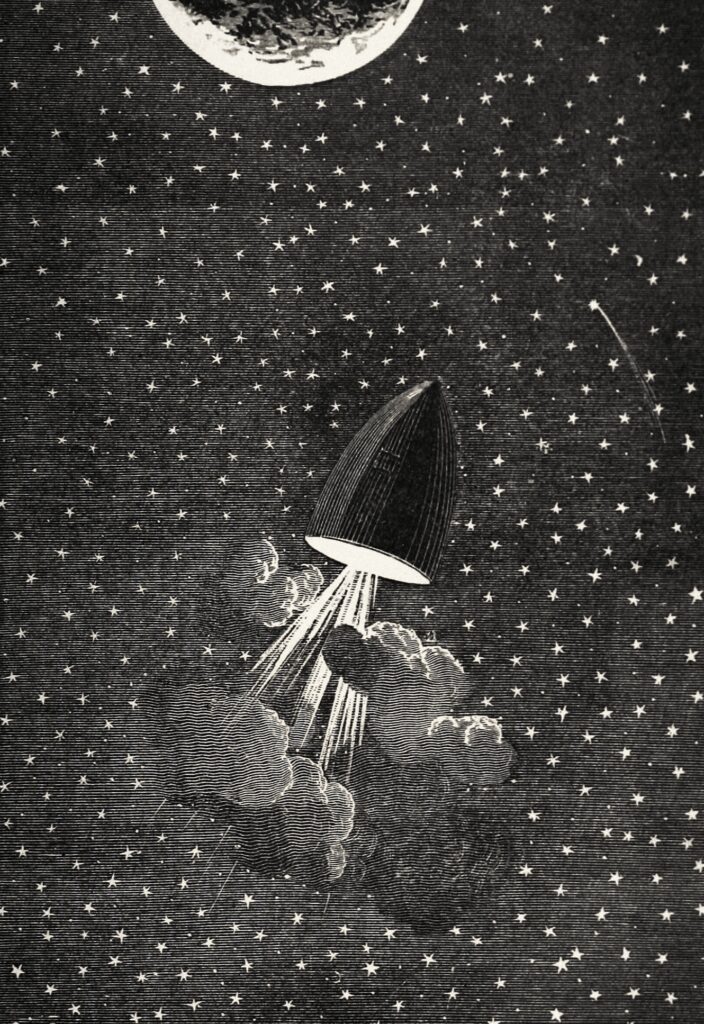
Released digitally on October 19, 2026, the poem was paired with striking visual imagery—evoking both the cold geometry of space exploration and the intimate, claustrophobic atmosphere of a child’s desk illuminated by an armature light. The editorial decision to highlight the poem anchors a vibrant autumn lineup for the journal, arriving alongside notable works by contemporaries such as Catie Rosemurgy and Trenna Sharpe. Within this digital showcase, Lobko’s poem stood out for its seamless blending of tactile domestic detritus—Lysol, graham crackers, toy green motorcycles—with the vast, silent expanses of the cosmos.
Textual Analysis: Dissecting "I Was Braver Than I Thought"
The Domestic Microcosm and the Body as Archive
The poem opens with an immediate grounding in physical sensation and psychological containment:
Cave of the crook of my arm.
Slick heat of my breath on the desk
Lysol would lift away.
From the very first line, Lobko establishes the body as a defensive structure. The "cave of the crook of my arm" is a classic childhood posture of self-soothing and protection, a somatic retreat from a threatening environment. The mention of "Lysol" introduces an undercurrent of sanitation, hygiene, and the compulsive need to scrub away contamination—not merely physical dirt, but the invisible residue of fear and trauma.
As the stanza develops, the speaker reflects on an evolving understanding of terror:
Only lately having learned
the ghosts that would wake me at 2 a.m.
could be facts, germs in the chrome of the toy green motorcycle
I dropped in the toilet, say,
or the high twist in my mother’s voice
when she learned her mother was dead.
Here, Lobko performs a brilliant pivot from the mundane anxieties of childhood (microbes on a dropped toy) to existential grief. The transition is anchored by the auditory memory of a mother learning of her own mother’s passing. The sound is captured through a devastating simile: "It was like / the high E-flat of a bough breaking, / song I was then decades from singing." The musical precision of "high E-flat" transforms grief into an acoustic event, a fracture in the natural order that the young speaker is not yet equipped to process, but whose resonance will echo far into their adult future.
Architectural Escapism: Ice Planets and Plastic Spaceships
In the poem’s central movement, the speaker details the imaginative strategies deployed to survive the emotional weather of the household:
I was architect of an ice planet. I was a skull
hearing itself with every graham cracker’s
ashen reverberation.
The juxtaposition of cosmic grandiosity ("architect of an ice planet") with the stark, somatic reality of the physical body ("a skull / hearing itself with every graham cracker’s / ashen reverberation") highlights the psychological dissociation inherent in coping mechanisms. The mind builds vast, frozen worlds precisely because the immediate domestic environment is too volatile to inhabit fully.
The sensory details sharpen as the speaker recalls the tactile rituals of childhood modeling:
model spaceships in grey plastic
richly smelling of ozone under the armature light I
aimed so relentlessly, faithful
nothing would melt or erupt.
The armature light becomes a surrogate sun, a controlled source of energy directed by the child’s hand in an attempt to impose order on chaos. The faith placed in the model spaceships—that they will not "melt or erupt"—is a pathetic fallacy of the highest order. The child desperately believes that managing the miniature universe of the desk can stabilize the macrocosm of the family.
The Eruption of Domestic Chaos
That fragile illusion of control is shattered by the poem’s most violent and cinematic memory:

The one fight
we caught my mother & father having
so heinous the sitcom characters stopped to watch,
axe through the bucket klieg lights,
axe through the snowbound door, axe through
the umbilical.
The hyperbole of "so heinous the sitcom characters stopped to watch" captures the surreal, disorienting nature of witnessing parental rage as a child. The domestic sphere ceases to be a safe harbor and transforms into a theater of catastrophe. The cascading anaphora of "axe through" ("axe through the bucket klieg lights, / axe through the snowbound door, axe through / the umbilical") severs the protective fantasy. The "umbilical" imagery underscores the profound sense of biological betrayal and severed security; the child’s life-line to the family unit is violently chopped away.
Resolution: The Silence of Space and Resilience
Despite the trauma of the central conflict, the poem refuses to remain trapped in despair. It pivots toward a complex reconciliation with the nature of space, distance, and endurance:
Still, I loved space,
how inaccessible it was, its famous silence, how
the ships crisscrossing it started out pristine
then of a sudden were blast-scored, emphysemic
buckets of bolts
prayer could hold together.
Space offers the ultimate sanctuary precisely because of its "famous silence." In contrast to the shattering noise of parental warfare, the silent void is safe. Yet Lobko does not romanticize space as pristine or untouched. Instead, he recognizes that the ships navigating that void—much like the children and adults who endure family trauma—are inevitably "blast-scored, emphysemic / buckets of bolts / prayer could hold together."
This concluding metaphor is a masterclass in poetic economy. The ships are battered, struggling to breathe ("emphysemic"), and held together by little more than structural fragility and desperate hope ("prayer"). Yet they persist. They cross the abyss. In this light, the poem’s title—I Was Braver Than I Thought—acquires its full, earned weight. The bravery was not the absence of fear, but the quiet, daily persistence of holding together a fractured vessel amidst the cold expanse.
Supporting Context and Authorial Perspective
To fully appreciate the layers of "I Was Braver Than I Thought," one must look to the author’s own reflections on the creative process. In his official Author’s Note accompanying the Missouri Review publication, Lobko offered a vital shift in perspective regarding the poem’s origins and thematic scope:
"At first, I thought this poem was about my family, my parents, me—but I’ve come to see it more as a devotional of sorts to the stories & myths that help us make meaning, whatever they might happen to be."
This meta-critical insight reframes the poem from a strict piece of autobiographical confession into a broader meditation on myth-making. While the text is rich with specific, tactile memories—the toy green motorcycle, the graham crackers, the armature light—Lobko universalizes these details. The child building an ice planet is not merely escaping an unhappy household; he is engaging in a primordial human act: creating narratives, systems, and mythologies to render a chaotic universe legible.
Metrics, Reception, and Contemporary Relevance
In the broader landscape of contemporary American poetry, where confessional modes frequently risk tipping into sentimentality or flat narrative, Lobko’s work exemplifies the value of lyric indirection. By filtering raw emotional history through the lens of science-fiction iconography (spaceships, ice planets, ozone, klieg lights), the poem achieves emotional resonance without emotional manipulation.
Literary critics reviewing Lobko’s trajectory note his acute sensitivity to soundscapes—evident here in lines like "the high E-flat of a bough breaking" and "ashen reverberation." These sonic choices elevate the poem from a recollection of events into a sensory composition where sound enacts meaning. The poem’s publication as Poem of the Week generated considerable engagement across literary social media channels and academic circles, sparking discussions about how adult writers revisit childhood spaces of defense and imagination.
Official Statements and Editorial Reception
The editorial team at The Missouri Review has long championed poetry that challenges conventional lyric boundaries while maintaining deep emotional authenticity. While formal press releases for individual weekly poems are concise, the curatorial framing provided by the journal underscores the significance of Lobko’s contribution.
In selecting "I Was Braver Than I Thought," the editorial staff highlighted Lobko’s ability to weave disparate imagery—ranging from domestic cleaning products to cosmic exploration—into a cohesive psychological portrait. The inclusion of Lobko alongside notable contemporary voices reinforces the journal’s commitment to publishing poetry that engages both the private interior life and the broader mythologies of survival.
Furthermore, Lobko’s established presence in journals such as the Kenyon Review and Boston Review has positioned him as an authoritative voice in contemporary letters. Reviewers frequently praise his technical discipline, noting that his background in rigorous academic study at the University of Oregon and his immersion in the New York literary ecosystem have honed a style that is both intellectually engaged and deeply felt.
Future Outlook: The Evolution of Lobko’s Poetic Voice
As Lobko continues his work north of New York City—balancing teaching with active poetic composition—the reception of "I Was Braver Than I Thought" points toward a promising horizon. Works of this caliber frequently signal the consolidation of a mature aesthetic, one in which personal history is successfully transmuted into universal myth.
Readers and critics tracking Lobko’s career will undoubtedly watch for how these themes of structural fragility, myth-making, and emotional endurance manifest in his future manuscripts. Whether through forthcoming collections or individual lyric suites, Lobko has demonstrated a rare capacity to look back into the "cave of the crook of my arm" and report back not with bitterness, but with the clear-eyed, compassionate vision of an artist who understands how fragile vessels are kept afloat by prayer, memory, and imagination.
In an era defined by rapid digital consumption and shifting cultural touchstones, “I Was Braver Than I Thought” stands as a testament to the enduring power of the slow, careful lyric. It reminds us that our earliest mythologies—whether built from grey plastic spaceships or the silent expanses of the mind—remain the primary tools with which we navigate the dark.





Comments
Facebook App ID not configured. Please add it in the Customizer.