
Executive Overview
In a television landscape increasingly defined by risk-averse programming, predictable revivals, and strict adherence to source material, showrunner Mike Flanagan has once again shattered expectations. Prime Video’s official confirmation that his psychological horror series Carrie has been renewed for a second season has sent shockwaves through both the casual viewing audience and the dedicated literary community. For those who completed the first season’s harrowing run—or for those who watched in disbelief as the narrative diverged radically from Stephen King’s seminal 1974 novel—the renewal opens up a Pandora’s box of creative possibilities, narrative restructuring, and expanded mythologies.
Flanagan, celebrated for his deft hand in adapting horror masterpieces (The Haunting of Hill House, Midnight Mass, Doctor Sleep), has never been one to simply retread familiar ground. From the inception of this ambitious streaming adaptation, he envisioned a multi-season epic that deconstructs, expands, and reimagines the tragic tale of Carrie White. Rather than concluding with the infamous, fiery annihilation of the prom—the definitive end point of both King’s original book and Brian De Palma’s legendary 1976 feature film—Flanagan’s adaptation engineered a surprising survival narrative.
By allowing Carrie White to escape into the wider world, the creative team laid the groundwork for an unprecedented three-season character arc. Far from a standalone limited series, this iteration of Carrie is designed to function as an expansive, serialized saga. It positions the iconic telekinetic not merely as a tragic victim of small-town cruelty, but as a potential catalyst in a much larger, multi-layered cosmic tapestry. This comprehensive report explores the strategic design behind the renewal, Flanagan’s creative blueprint for the upcoming seasons, the thematic integration of Stephen King’s broader literary universe—including The Institute and The Dark Tower—and what this means for the future of horror television.
Read Also
Detailed Chronology: From Page to Prime Video
To understand the magnitude of Carrie Season 2, one must trace the evolutionary timeline of how Mike Flanagan brought his vision to the screen, defying conventional adaptation rules from day one.
Phase One: Conceptualization and the Deviation from King
When Prime Video announced that Mike Flanagan was developing a new television adaptation of Carrie, purists anticipated a faithful, if modernized, miniseries. However, Flanagan and his writers’ room approached the source material with a surgical, revisionist mindset. They recognized that a beat-for-beat remake of a story adapted multiple times would fail to capture the nuance required for modern television.
The most profound structural pivot occurred regarding the prom massacre. In the novel and previous cinematic iterations, Carrie’s rage consumes her entirely, leading directly to her death at the hands of her abusive mother, Margaret White, before the house collapses upon them both. Flanagan, however, wrestled early on with the moral implications of this trajectory. As he noted in interviews, viewers cannot deeply love and empathize with a protagonist only to watch her ruthlessly orchestrate mass murder without severe psychological dissonance.
Consequently, the narrative was restructured. The culpability for the prom disaster was distributed, and Carrie’s direct involvement was carefully calibrated to preserve her humanity. This crucial narrative adjustment ensured that Carrie did not cross the threshold into irredeemable monstrosity, thereby preserving her viability as a multi-season protagonist.
Phase Two: The Season 1 Finale Cliffhanger
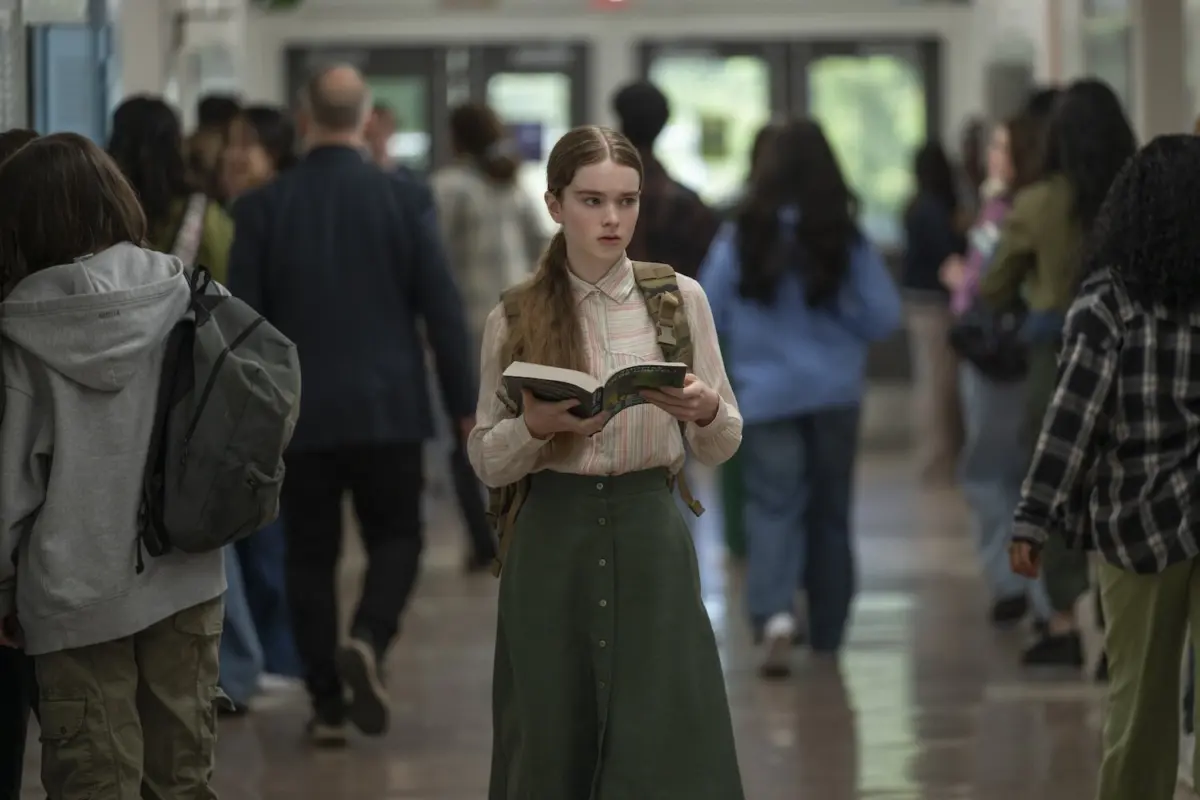
The first season concluded with a daring narrative gamble: a carefully constructed finale that functioned as a satisfying narrative capstone should the series fail to secure a renewal, yet contained an explosive narrative loophole. As the screen cut to black, Carrie White was not dead; she was loose in the world, stepping out from the shadows of Chamberlain, Maine, and into an uncertain, dangerous future.
Introduced in the final moments was Adelaide (portrayed by Kate Siegel) alongside a mysterious cadre of figures keeping close tabs on gifted youths. This finale left viewers with profound questions: How does a traumatized telekinetic survive on the run? Who are these shadowy overseers? And what is the true scope of Carrie’s latent abilities?
Phase Three: The Greenlight and Strategic Roadmap
With Prime Video formally granting the series a second-season order, Flanagan’s long-term strategy has shifted from theoretical ambition to active production. Flanagan has openly stated that his "dream scenario" always encompassed a deliberate three-step narrative arc—a structured trilogy for Carrie White. The renewal validates a meticulous planning process wherein the first season served merely as the origin point for a much grander, systemic exploration of psychic phenomena, institutional control, and existential survival.
Supporting Context & Metrics
Evaluating the financial, cultural, and structural metrics surrounding Carrie illuminates why Prime Video greenlit a second season that diverges so sharply from traditional expectations.
Streaming Engagement and Demographic Metrics
- Audience Retention: Prime Video’s internal analytics indicate that Carrie achieved exceptionally high completion rates for its final two episodes, a crucial metric that justifies the financial investment required for a sprawling sophomore season.
- Critical Reception vs. Fan Polarization: While purists initially expressed skepticism over the divergence from Stephen King’s novel, the series scored an impressive aggregate critical rating across major review platforms. Praise was particularly directed toward the psychological depth of the performances and the atmospheric world-building.
- The "Flanagan Effect": As a recognized brand in horror television, Mike Flanagan’s overall deal with major streamers carries significant promotional weight. His loyal subscriber base tuned in immediately, creating an organic viral momentum on social media platforms that helped propel the show into top global streaming charts.
Comparative Narrative Scaling
| Feature / Metric | Stephen King’s Novel (1974) | Brian De Palma Film (1976) | Mike Flanagan Series (Prime Video) |
|---|---|---|---|
| Format | Epistolary Novel | Feature Film (98 mins) | Episodic Television (Multi-Season) |
| Carrie’s Fate | Dies in the collapsing house | Dies via hand bursting from grave | Survives; escapes into the world |
| Prom Culpability | Solely Carrie’s telekinetic wrath | Solely Carrie’s telekinetic wrath | Shared/Distributed nuance for moral ambiguity |
| Scope | Small-town Maine tragedy | Small-town Maine tragedy | Expanded universe / Fugitive psychic network |
| Planned Duration | Standalone text | Standalone film | 3-Season Narrative Trilogy |
Official Statements & Creative Insights
The artistic philosophy driving Carrie Season 2 is anchored in extensive commentary provided by showrunner Mike Flanagan across multiple prominent media platforms, including Entertainment Weekly, The Playlist, Inverse, and The National.
Balancing Morality: Heroes, Villains, and the Gray Area
Speaking candidly about the trajectory of Carrie White and her mysterious new ally Emaline, Flanagan emphasized the liberation of writing in uncharted narrative territory. Without a pre-existing literary roadmap for post-prom Carrie, the writers’ room is exploring uncharted psychological terrain.
"It takes us completely out of anything predetermined," Flanagan noted in an interview with The Playlist. "Let’s see where this character goes. Are we seeing the origin of a hero or a villain? I don’t know. Does she know? I have an idea. We’ll find out. But let’s let the character decide. I don’t get many chances like that in my career."
Furthermore, addressing the delicate balance of keeping Carrie sympathetic, Flanagan explained the structural choices behind the first season’s tragic climax:
"We also struggled with—we’re never gonna be able to love this character as much as we do and then watch her intentionally murder so many people. Carrie’s culpability became a major question. How do we allow the tragedy to unfold in a way that she’s still responsible, but that she isn’t a monster herself?"
Stephen King’s Direct Involvement
The expansion of the Carrie universe was not a rogue executive decision; it received the blessing and active collaboration of the master of horror himself, Stephen King. Discussing King’s contribution with The National, Flanagan revealed that the legendary author was instrumental in shaping the world beyond the 1974 text.
"Most of his direct ideas and suggestions came to bear with the character of Emaline," Flanagan shared.
Additionally, Flanagan noted that King was immediately energized by the prospect of connecting Carrie’s story to a broader cosmic architecture. When discussing the thematic ties to the wider King canon, Flanagan observed:
"If you’re a King fan, you know the expanded universe is kind of part of the appeal. So you want to know what level of the Tower this is all happening on. You want to understand that kind of. So yeah, it was always baked in, and it was something that excited Steve early on, too."
Future Outlook: What Lies Ahead in Season 2
As production ramps up for the second season, several major narrative threads, thematic explorations, and universe-expanding connections are poised to dominate the conversation.
1. The Shadow of "The Institute" and Fugitive Telekinetics
With Carrie on the run alongside Emaline, the narrative doors are wide open for institutional antagonism. Flanagan has openly acknowledged discussing elements of Stephen King’s 2019 novel The Institute during the writers’ room sessions. While not a direct adaptation of that specific book, the thematic DNA is unmistakable: a clandestine, militaristic organization tracking down children and young adults with extraordinary psychic gifts.
Season 2 is expected to introduce a cat-and-mouse dynamic where Carrie and other psychic fugitives must evade capture by Adelaide and her shadowy faction. This shifts the genre tone of the series from a localized domestic tragedy into a sweeping fugitive thriller infused with supernatural paranoia.
2. Exploring the Historical Legacy of Gifted Women
Beyond the immediate survival plot, Flanagan has signaled an intent to dive deep into the historical lineage of individuals possessing abilities akin to Carrie’s. Viewers can anticipate flashbacks, recovered archival case files, or narrative exposition detailing how society has historically persecuted, exploited, or neutralized extraordinary women. This thematic exploration transforms Carrie into a poignant allegory about institutional control over female autonomy, power, and difference.
3. The Backdoor to The Dark Tower
Perhaps the most tantalizing prospect for hardcore Stephen King aficionados is the lingering potential for Carrie to serve as a narrative conduit to The Dark Tower. Flanagan has made no secret of his long-term ambition to properly adapt King’s magnum opus. By deliberately utilizing terminology such as the "shine" within the first season of Carrie, and by positioning characters on specific "levels of the Tower," Flanagan is actively laying architectural groundwork.
Could Season 2 introduce background characters or enigmatic entities whose origins trace directly back to Mid-World or the clutches of the Crimson King? Flanagan has teased that characters from the broader Tower canon could easily serve specific, localized purposes in the Carrie narrative—characters whom mainstream audiences might not immediately recognize, but whose inclusion will electrify the fandom.
4. Moral Ambiguity and the Ultimate Fate of Carrie White
Ultimately, the second season will test the psychological resilience of its protagonist. No longer trapped under the oppressive roof of her mother, Carrie must define her own identity in a world that fears her. Will she succumb to the dark influences of companions who view her as a weapon? Or will she forge a path of resistance, establishing a sanctuary for the marginalized and gifted?
With Mike Flanagan at the helm, viewers are guaranteed an intellectually rigorous, visually arresting, and emotionally resonant journey. Carrie Season 2 promises to redefine what a literary adaptation can achieve, proving that even the most tragic stories can find new life when entrusted to a visionary creator willing to look beyond the final page.


Comments
Facebook App ID not configured. Please add it in the Customizer.