
Executive Overview
Karachi has long stood as a historic nexus of trade, migration, and artistic expression, but for three weeks in early 2026, the metropolis has transformed into a vibrant epicenter of global cultural diplomacy. At the heart of this transformation is the Third World Culture Festival Karachi 2026, a monumental international initiative spearheaded by the Arts Council of Pakistan Karachi (ACPK). On its sixteenth day, the festival achieved a rare convergence of international theatre, cross-border cinematic showcases, artisan masterclasses, high-level diplomatic visits, and grassroots youth engagement.
As geopolitical tensions and economic anxieties frequently dominate global headlines, the festival has carved out a vital space for soft power, intercultural dialogue, and artistic resilience. Day 16 offered a microcosmic view of the festival’s broader ambitions: a seamless integration of children’s education through the performing arts, rigorous technical masterclasses led by European artisans, provocative international dramaturgy addressing contemporary socio-political anxieties, and a high-profile security and social cohesion review led by the highest echelons of provincial law enforcement.
This comprehensive report provides a deep-dive investigation into the events of the sixteenth day, examining the logistical coordination, artistic merits, and socio-political implications of a festival that continues to redefine Pakistan’s cultural footprint on the global stage. Through an analysis of specific productions, workshops, and official engagements, this article explores how Karachi is successfully positioning itself as an inclusive, secure, and dynamic capital for world arts.
Read Also
Detailed Chronology of Events
The sixteenth day of the festival was characterized by a tightly choreographed continuum of events that spanned multiple venues within the Arts Council complex, catering to audiences ranging from primary school children to seasoned cinephiles, avant-garde theatre critics, and diplomatic delegations.
Morning Session: Youth Engagement and International Children’s Theatre
The day’s programming opened with a sharp focus on youth development and early childhood artistic exposure. Transforming the traditional auditorium dynamic into an immersive playground, the renowned Spanish theatre troupe Barafunda Teatro took center stage with their acclaimed production, “Piñata Horse.”
Designed specifically to captivate young minds, the performance featured a towering, brilliantly colored giant horse constructed entirely of inflated balloons, serving as a mesmerizing visual anchor. The troupe’s interactive clown performances broke down the traditional fourth wall, inviting children into a world of physical comedy, non-verbal storytelling, and participatory play. For many of the schoolchildren in attendance—many of whom hailed from underserved communities across Karachi—the performance was a rare and transformative encounter with European avant-garde children’s theatre. The therapeutic value of shared laughter and playful interaction underscored the festival’s commitment to inclusivity, ensuring that the arts are accessible to the youngest segments of society.
Mid-Day Program: High-Level Institutional Visits and Social Cohesion
As the morning sessions transitioned into the afternoon, the festival grounds welcomed Inspector General (IG) of Sindh Police, Javed Alam Odho. The IG’s visit carried both symbolic and practical weight, signaling the provincial government’s unwavering backing of the festival’s security infrastructure while emphasizing its role in fostering national integration.
During his tour, IG Odho visited a vibrant youth delegation from Balochistan who were participating in the RISE Balochistan Social Cohesion Programme. This initiative is designed to build bridges between the youth of Pakistan’s largest province and the broader national and international community. Stopping to enjoy a traditional Balochi music performance, the IG praised the festival’s unique ability to act as a cultural melting pot where local traditions seamlessly converse with global art forms.
Addressing security logistics, IG Odho reassured international participants, delegates, and local attendees that comprehensive, multi-tiered security arrangements had been deployed across all venues. His presence underscored a crucial reality of international festival management in South Asia: the intricate balance between maintaining an open, welcoming, cultural environment and ensuring absolute institutional protection against security vulnerabilities.
Afternoon Masterclasses and Cinematic Showcases
In the early afternoon, the festival shifted its focus toward technical proficiency and contemporary screen narratives. In the applied arts sector, Greek artists Iro Xenakis and Sofia Perraki led an intensive jewellery design workshop. Moving beyond theoretical concepts, the masterclass introduced participants to advanced jewellery-making techniques, encouraging them to merge classical Mediterranean motifs with contemporary aesthetics. The curriculum placed a heavy emphasis on originality, pushing local designers to explore sustainable materials and avant-garde forms.
Simultaneously, the festival’s cinema block offered a compelling double bill of contemporary Pakistani independent filmmaking.
- “The Shadows Left Behind,” directed by Aoun Al Haider, explored the psychological reverberations of loss, urban alienation, and memory in modern Pakistan, utilizing stark cinematography and minimalist dialogue.
- This was followed by Arslan Majeed’s “Beyond The Wetlands,” a sweeping ecological and human-centric drama that examined the fragile interdependence of rural communities and their shrinking natural habitats.
Together, these screenings highlighted the maturation of Pakistan’s indie film sector, proving that local filmmakers are increasingly capable of engaging with universal existential and ecological themes through a distinctly localized lens.
Evening Drama: Global Perspectives on Stage
As dusk settled, the festival’s theatre spaces came alive with a trio of international productions that explored the vast spectrum of human emotion, ranging from systemic oppression to lighthearted farce and folkloric mysticism.
- The United Arab Emirates (“EXIST”): Pushing the envelope of contemporary socio-political theatre, the UAE delegation presented “EXIST,” a harrowing yet vital exploration of the violence, systemic oppression, and silencing faced by women across various global societies. Through expressionistic choreography, haunting soundscapes, and visceral monologues, the production challenged audiences to confront uncomfortable truths regarding gender-based injustices.
- Spain (“The Sandwich Club”): Providing a sharp tonal shift, Spain’s second major offering of the day, “The Sandwich Club,” delivered razor-sharp comedic entertainment. Utilizing absurdist humor and rapid-fire physical comedy, the play dissected modern interpersonal relationships, corporate monotony, and the quiet absurdities of daily urban life.
- Belarus (“Savka’s Joke”): Offering a glimpse into Eastern European folkloric traditions, the Belarusian production blended traditional mythos, domestic marital disputes, and supernatural interventions. The play utilized rich acoustic instrumentation and stylized folk costumes to transport Karachi audiences directly into the rural folklore of Eastern Europe, demonstrating the universal resonance of domestic comedy laced with the uncanny.
Nightfall: The Grand Musical Finale
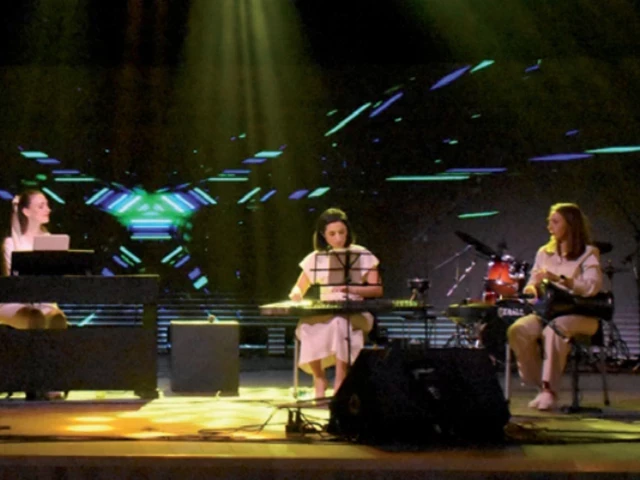
The sixteenth day concluded on a high, kinetic note with “Eclectic Rhythms,” a marathon musical showcase that brought together artists from Chile, the UAE, Syria, Tunisia, Sudan, Indonesia, and Pakistan.
This cross-continental collaboration transcended linguistic and structural boundaries, creating a spontaneous sonic tapestry that fused Latin American acoustic styling, Middle Eastern maqams, North African percussion, Southeast Asian melodic structures, and traditional South Asian Qawwali and folk motifs. The performance was not merely a concert, but a physical manifestation of cultural harmony, with musicians swapping instruments, improvising across genres, and inviting a jubilant audience to participate in an unforgettable celebration of global diversity.
Supporting Context & Metrics
To fully understand the magnitude of Day 16, it must be viewed within the macro-framework of the Third World Culture Festival Karachi 2026. The festival, now in its third major iteration under the institutional umbrella of the Arts Council of Pakistan Karachi, has established itself as one of the largest non-commercial cultural gatherings in the Global South.
| Metric Category | Festival Scope & Day 16 Indicators |
|---|---|
| Total Festival Duration | 3+ Weeks (Ongoing) |
| Current Milestone | Day 16 of Continuous Programming |
| Participating Nations (Day 16) | Spain, Greece, UAE, Belarus, Chile, Syria, Tunisia, Sudan, Indonesia, Pakistan |
| Core Disciplines Highlighted | Children’s Theatre, Applied Arts (Jewellery), Independent Cinema, Contemporary Drama, World Music |
| Key Institutional Partners | Arts Council of Pakistan Karachi, Sindh Police, RISE Balochistan Programme |
| Estimated Daily Footfall | Tens of thousands of attendees, delegates, and students |
The logistical architecture required to sustain such an enterprise is formidable. Bringing troupes from Minsk, Abu Dhabi, Madrid, and Santiago into Karachi demands meticulous visa coordination, freight management for complex stage sets (such as Barafunda Teatro’s giant balloon horse), and round-the-clock hospitality management.
Furthermore, the economic implications for Karachi are profound. Local hotels, transport networks, and hospitality sectors have experienced a measurable boost. More importantly, the festival serves as a vital psychological counter-narrative for a city that has historically struggled with international media profiling. By welcoming foreign artists into the heart of the city without incident, the festival effectively rewrites Karachi’s international narrative, establishing it as a secure, culturally ravenous metropolis capable of hosting world-class artistic endeavors.
Official Statements and Institutional Perspectives
The success of Day 16 was underpinned by proactive leadership and a clear articulation of institutional goals from both cultural organizers and law enforcement officials.
The Security and Cohesion Imperative: IG Javed Alam Odho
During his extensive walkthrough of the festival grounds, Inspector General of Sindh Police Javed Alam Odho emphasized the intersection of law enforcement and cultural diplomacy. In an official briefing on the sidelines of the festival, Odho remarked:
"Culture is the truest mirror of a society, and the enthusiasm we witness today proves that Karachi’s pulse beats in harmony with the world. Our primary mandate as law enforcement is not merely the maintenance of law and order, but the creation of safe spaces where human creativity can flourish without fear. The comprehensive security protocols we have instituted for this festival—spanning international delegations, local youth programs, and massive public venues—demonstrate Sindh Police’s commitment to facilitating global cultural exchange. When we see young delegates from Balochistan sharing this space with artists from Spain, the UAE, and beyond, we are witnessing the construction of a peaceful, inclusive Pakistan."
Grassroots Diplomacy and Youth Empowerment
Organizers from the Arts Council of Pakistan Karachi echoed these sentiments, noting that the inclusion of marginalized youth groups—such as the participants of the RISE Balochistan Social Cohesion Programme—remains a foundational pillar of the festival’s charter. By embedding young people from remote regions into high-level international discourse, the festival deliberately dismantles geographical and psychological peripheries.
Greek jewellery designer Iro Xenakis, speaking on the pedagogical success of her masterclass, noted:
"The raw creative hunger we encountered in Karachi is breathtaking. Design is a universal language, and the students here didn’t just learn technical skills—they reinterpreted their own heritage through a modern global lens. This is what true cultural exchange is supposed to be: reciprocal, transformative, and deeply inspiring."
Future Outlook: The Legacy of Karachi 2026
As the Third World Culture Festival Karachi 2026 races toward its grand conclusion, the legacy of its sixteenth day offers a compelling blueprint for the future of international arts festivals in developing economies.
The day’s programming successfully bridged three vital domains that are frequently kept separate:
- Pedagogical Outreach: Ensuring that children and young adults are active participants rather than passive observers.
- Professional Development: Providing masterclasses that elevate local artisan industries to international export standards.
- High-Art Discourse: Showcasing uncompromising global theatre that tackles difficult themes—such as gender oppression in the UAE’s “EXIST”—within a deeply conservative regional context.
The overarching takeaway from Day 16 is that culture cannot be quarantined; it thrives on friction, cross-pollination, and fearless dialogue. By positioning Karachi as a hospitable, secure, and artistically sophisticated destination, the Arts Council of Pakistan Karachi has not only elevated the national arts scene but has also provided a masterclass in how cities can utilize soft power to heal divisions, project resilience, and foster global solidarity.
As international delegations pack their bags and local artists prepare for the final curtain calls of the 2026 edition, the impact of these interactions will continue to ripple outward. The seeds planted in children’s theatre workshops, the technical skills honed in jewellery masterclasses, and the bridges built between Baloch youth and international performers will endure long after the temporary stages are dismantled. Karachi has spoken—not through the language of conflict, but through the enduring, unifying power of world culture.


Comments
Facebook App ID not configured. Please add it in the Customizer.