
Executive Overview
Karachi’s relentless pulse, characterized by its chaotic traffic, vibrant street culture, and unpredictable rhythm, has long served as an incubator for artistic expression. In its latest high-profile cultural snapshot, Coke Studio Nu.WAV has officially drawn the curtain on its acclaimed six-song series with the release of its grand finale, Diwanay Dil. This high-energy collaboration brings together the undisputed pioneers of Pakistani Urdu hip-hop, the Young Stunners (consisting of Talha Anjum and Talhah Yunus), soulful vocal sensation Sabaat Batin, and premier beatsmith and producer Jokhay.
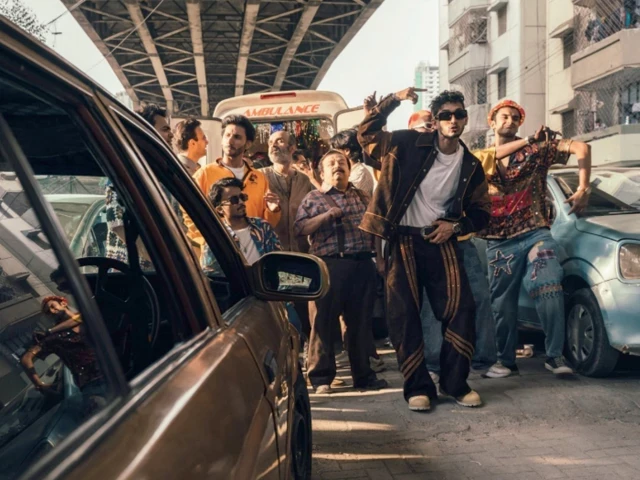
More than just a standard music video release, Diwanay Dil functions as a cinematic love letter to the megalopolis of Karachi. By blending contemporary Urdu hip-hop verses with organic live instrumentation, the track mirrors the city’s frantic heartbeat. The accompanying music video, co-directed by Talhah Yunus and Wali Baloch, subverts an everyday urban annoyance—the infamous city-wide traffic jam—and transforms it into an anarchic, surrealist spectacle featuring a rogue menagerie of characters, ranging from stranded grooms and harried commuters to a wandering superhero and a literal gorilla.
Beneath the visual theatrics lies a significant milestone for Pakistan’s contemporary music industry. Diwanay Dil marks the triumphant conclusion of the Nu.WAV series, an initiative designed to bridge the gap between underground street culture and mainstream platforms, fostering unique cross-pollinations between seasoned icons and nascent talents. As the latest chapter in the storied, multi-decade legacy of Coke Studio Pakistan, this release underscores the franchise’s enduring capacity to reinvent itself, capturing the evolving zeitgeist of South Asian youth culture through genre-defying sonic experiments.
Read Also
Detailed Chronology & Production Anatomy
The genesis of Diwanay Dil is rooted in creative spontaneity rather than calculated, sterile studio over-engineering. The production journey began with a minimalist guitar riff conceived by producer Jokhay. Eschewing the temptation to over-produce or dilute the initial spark, Jokhay chose to preserve the raw integrity of the composition. He gradually layered organic elements onto the baseline, incorporating live drums and auxiliary instrumentation to flesh out the sonic architecture. This approach ensured that the track retained the improvisational energy of a late-night jam session, providing a rich, textured canvas for the vocalists.
When it came to vocal delivery, the track required a delicate balance between the hard-hitting, cadence-driven delivery of urban hip-hop and the earthy, emotive pull of traditional folk-infused vocals. Talha Anjum and Talhah Yunus stepped up with razor-sharp verses that reflect the existential hustle of modern city life. Meanwhile, Sabaat Batin—whose musical journey bridges rural roots and urban recognition—infused the track with a haunting, soulful counter-melody that anchors the high-tempo production.
The visual adaptation of Diwanay Dil is equally layered. Set under Karachi’s iconic Lilly Bridge—a notoriously congested artery of the metropolis—the narrative follows Talha Anjum desperately trying to make it to a film shoot on time. However, his journey is thwarted by an absurdly immobile traffic jam. Stuck alongside him are ordinary commuters, public transport buses, and smoke-belching rickshaws, all sharing space with surreal anomalies: a stranded wedding groom, costumed dancers, a superhero, and a gorilla.
As the narrative progresses, the line between reality and cinematic fiction begins to blur. The setting transitions seamlessly onto a film set, exposing the artificiality of the production while simultaneously validating the emotional truth of the chaos. Notably, Sabaat Batin’s cameo appearance riding in a traditional rickshaw is a poignant nod to his own biographical trajectory—representing his early days navigating the labyrinthine streets of studio-hunting in pursuit of musical validation before breaking into the mainstream.
Supporting Context & Metrics: The Evolution of Pakistan’s Hip-Hop & Nu.WAV
To fully appreciate the cultural weight of Diwanay Dil, one must examine the broader ecosystem that enabled its creation. The track serves as the final installment of the Nu.WAV anthology, a curated micro-series that has systematically explored the outer fringes of Pakistan’s contemporary music landscape. Over the course of six distinct releases—beginning with Dil, followed in succession by Rangeen, Maheya, Shabnam, Qasam, and finally Diwanay Dil—the platform has acted as a bridge, introducing regional folk sensibilities, electronic textures, and underground lyricism to a mass commercial audience.
The Rise of Young Stunners
Formed in 2012 by Talha Anjum and Talhah Yunus, the Young Stunners occupy a towering position in the history of Pakistani music. Initially rising from the digital underground via YouTube and SoundCloud during a period when hip-hop was largely dismissed as a niche Western imitation, the duo systematically forged a distinct identity for Urdu rap. Their breakout success transformed the genre from a localized subculture into a regional powerhouse. Anthems such as Gumaan, Afsanay, Quarantine, and Two Tone have accumulated tens of millions of streams, redefining how young Pakistanis articulate identity, ambition, and social critique.
The Architects: Sabaat Batin and Jokhay
- Sabaat Batin: Hailing from Munianwala, a small town near Faisalabad, Batin represents the decentralized nature of modern Pakistani stardom. Operating far away from the traditional media hubs of Karachi and Lahore, he cultivated his musical identity independently, fusing regional folk storytelling with contemporary vocal styling. His breakout hit, Gal Sun, served as his formal introduction to the national consciousness, establishing him as a vocalist capable of bridging rural emotional depth with modern sonic sensibilities.
- Jokhay (Daniyal Malik): As a producer, Jokhay has been the invisible hand behind the golden age of Urdu hip-hop. His long-standing collaborative partnership with the Young Stunners—cemented by seminal works such as their collaborative album Khana Badosh—has defined the sonic blueprint of the genre in South Asia. Known for his atmospheric beats, cinematic sample selection, and seamless blending of hip-hop percussion with traditional instrumentation, Jokhay remains a definitive architect of the contemporary Pakistani sound.
The Legacy of Coke Studio Pakistan
The release of Diwanay Dil under the Coke Studio banner highlights the longevity of the franchise. Originating in Brazil in 2007 as Estúdio Coca-Cola—a conceptual project designed to cross-pollinate the styles of two local artists—the franchise found its most enduring and culturally impactful incarnation in Pakistan. Launched in 2008 by Nadeem Zaman and legendary musician Rohail Hyatt (formerly of the pioneering pop-rock band Vital Signs), Coke Studio Pakistan quickly evolved into the country’s longest-running and most prestigious annual music television program.
Over nearly two decades, the platform has undergone several distinct eras of leadership:
- The Rohail Hyatt Era (Seasons 1–6): Characterized by acoustic purity, organic world-music fusion, and the archival celebration of classical, Sufi, qawwali, and folk traditions.
- The Strings Era (Seasons 10–10/production extensions): Spearheaded by Bilal Maqsood and Faisal Kapadia, this period expanded the show’s commercial appeal, pushing the boundaries toward contemporary pop-rock and cinematic arrangements.
- The Modern Era (Zulfiqar ‘Xulfi’ Jabbar Khan and subsequent curators): Focused on hyper-modern genre fluidity, embracing electronic music, indie rock, and, most notably, the explosion of youth-driven Urdu hip-hop.
By incorporating Nu.WAV into its broader institutional framework, Coke Studio has successfully future-proofed its relevance, proving that the institution can adapt to the digital-first habits of Gen-Z consumers without abandoning its foundational ethos of cross-cultural and cross-generational collaboration.
Official Statements & Industry Perspectives
The release of Diwanay Dil has elicited enthusiastic responses from key stakeholders, artists, and executive producers alike, reflecting the collaborative spirit that defined the Nu.WAV project.
Expressing his thoughts on the conceptual framework of the finale, Coke Studio Nu.WAV Executive Producer Kamal Khan emphasized the track’s role as a mirror to urban reality:
"Diwanay Dil is an unvarnished expression of Karachi’s irrepressible character. It encapsulates the city’s chaotic traffic, its surreal, unexpected encounters, and those fleeting moments of larger-than-life grandeur that happen against all odds. Bringing together the distinct, volatile energies of Young Stunners, Sabaat Batin, and Jokhay allowed us to craft a fitting, high-octane conclusion to the Nu.WAV series."
Industry analysts have similarly noted that the collaboration represents a maturation of Pakistan’s commercial music ecosystem. For years, corporate-backed platforms maintained a strict firewall against independent underground artists, preferring sanitized, radio-friendly compositions. Projects like Nu.WAV signal a structural shift, acknowledging that true cultural capital now resides in the streets—among independent bedroom producers, underground cyphers, and regional artists operating outside traditional institutional pipelines.
Future Outlook: The Next Wave of Pakistani Music
As the dust settles on the conclusion of the Nu.WAV series, Diwanay Dil stands as both a destination point and a departure gate for Pakistan’s contemporary music scene. The success of this six-song anthology proves that the traditional binary between "commercial/mainstream" and "underground/alternative" has effectively collapsed. Mainstream broadcasting platforms increasingly rely on the authentic street credibility of independent hip-hop acts, while underground producers and rappers now possess the production budgets and global distribution networks necessary to mount cinematic, high-concept visual productions.
Looking forward, the ripple effects of this collaboration are expected to reshape the industry in several profound ways:
- Mainstream-Underground Synergy: Established corporate platforms will likely continue to fund decentralized micro-series akin to Nu.WAV, allowing for faster, more experimental releases that bypass the cumbersome, year-long wait times of traditional seasonal formats.
- Regional Integration: The seamless inclusion of artists like Sabaat Batin demonstrates that regional, non-urban vernacular talent can share top billing with metropolitan hip-hop heavyweights without diluting their unique artistic identities. This paves the way for further cross-provincial musical experiments across Punjab, Sindh, Khyber Pakhtunkhwa, and Balochistan.
- Global Export of Urdu Urban Culture: With platforms like Spotify and YouTube dismantling geographic barriers, tracks like Diwanay Dil are no longer consumed solely within domestic borders. They feed a rapidly expanding global diaspora and international listenership hungry for South Asian urban contemporary sounds.
Ultimately, Diwanay Dil captures a vital truth about modern Pakistani creativity: out of traffic jams, daily anxieties, and urban decay comes an irrepressible drive to create, collaborate, and celebrate. As the Young Stunners, Sabaat Batin, and Jokhay drive off into the cinematic Karachi sunset, they leave behind a benchmark that will challenge the next generation of artists to push the boundaries even further.


Comments
Facebook App ID not configured. Please add it in the Customizer.