
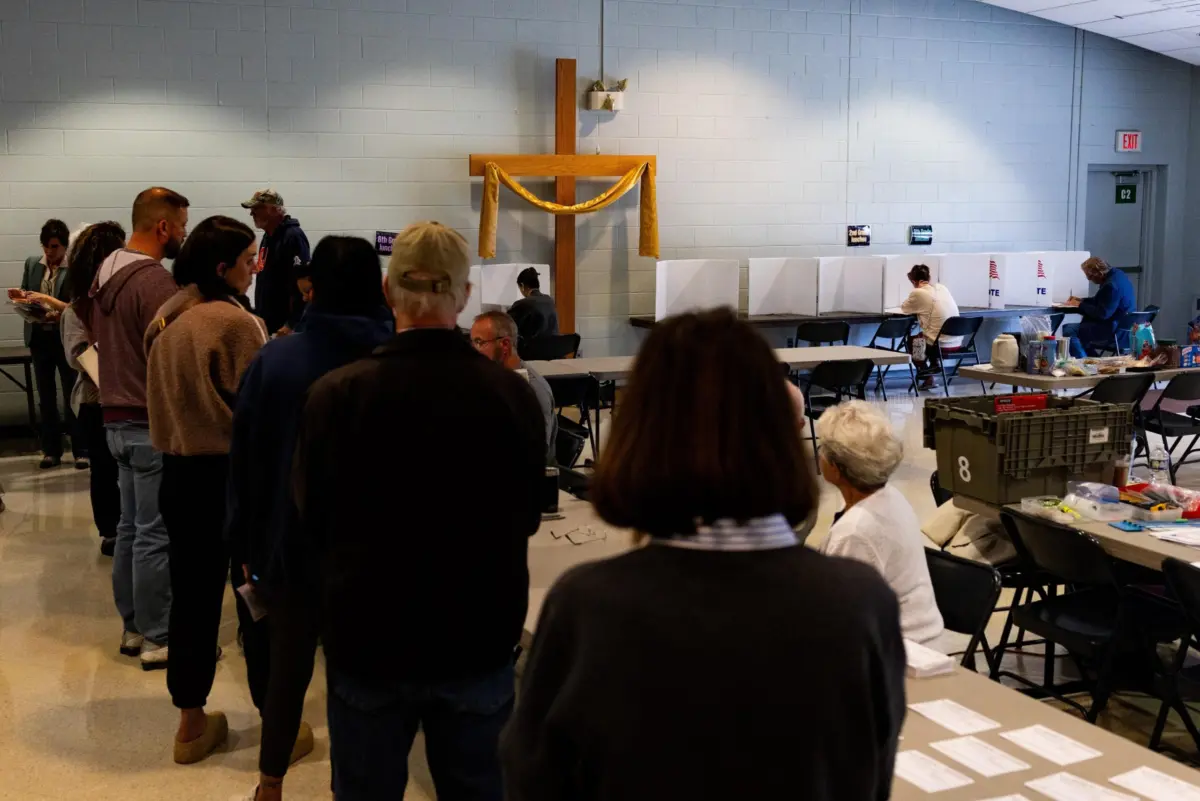
For decades, political analysts have operated under a rigid set of assumptions regarding the intersection of faith and American voting behavior. The traditional narrative painted a clear and unyielding picture: secular and non-religious voters increasingly drifted toward the left, while religious-identified individuals—most notably white evangelicals and committed churchgoers—anchored themselves firmly to the right. While notable exceptions like Jewish voters, Latino Catholics, and Black Protestants consistently maintained a strong Democratic alignment, the broader demographic tide flowed predictably along cultural and theological lines.
However, the political landscape underwent a profound, turbulence-filled realignment. Driven by shifting social issues, generational changes, and evolving national priorities, the electorate witnessed a remarkable divergence from historical voting patterns. Religious voters, long categorized as static blocs within the Republican or Democratic camps, exhibited a newfound volatility.
This transformation became glaringly apparent as a wave of progressive-leaning religious politicians entered Congress, mirroring a broader grassroots shift. Exit polls, county-level returns, and early post-election data from across the United States indicate that faith communities are no longer tethered unconditionally to traditional partisan alliances. Catholics shifted left in notable numbers, evangelical turnout faced unexpected enthusiasm deficits, and segments of the Jewish electorate reassessed their loyalties amidst escalating debates over foreign policy and domestic extremism.
Read Also
Rather than serving as predictable foot soldiers for one party, religious Americans increasingly functioned as true swing voters. This evolution threatens to disrupt old coalitions and forge entirely new political paradigms as both major parties prepare for the subsequent election cycles.
Detailed Chronology: How the Religious Electorate Shifted
To understand the magnitude of this realignment, one must trace the trajectory of how distinct religious communities navigated the political pressures leading up to the historic midterms.
The Catholic Pivot: From Split Decisions to a Leftward Swing
Historically, Catholics represented a bedrock constituency for the Democratic Party, peaking in the 1960s when John F. Kennedy secured roughly 80 percent of the Catholic vote. Over the subsequent decades, demographic assimilation, the rise of the anti-abortion movement, and the emergence of the religious right pulled Catholic voters steadily into the Republican fold. By the 2012, 2016, and 2020 presidential cycles, Catholics mirrored the median American voter, splitting their ballots down the middle.
This equilibrium cracked during the 2024 presidential election, where Catholics backed Donald Trump by margins reaching 59 to 39 percent in exit polls and 55 to 43 percent in Pew Research Center data. Yet, the political environment shifted dramatically. Throughout the subsequent legislative cycles, prominent tensions emerged between the administration and the Vatican, punctuated by public disagreements with Pope Leo XIV and his bishops over mass deportations, immigration enforcement, and military engagement abroad.
When voters returned to the polls, these frictions manifested in a striking reversal. According to comprehensive exit polling, Catholic voters swung left by more than 20 points, narrowly handing the demographic majority to Democratic candidates at 50 to 49 percent. Religion and politics scholar Ryan Burge noted that white Catholics swung roughly 9 points toward Democrats, while heavily Catholic congressional districts experienced an average swing of 15 points. Out of the 12 House districts with the highest concentrations of Catholic voters, Democrats successfully captured eight seats and registered net gains across all 12.
Jewish Voters and the Tightening Tense Margins
Comprising roughly two percent of the population, Jewish Americans occupied an outsized role in the national discourse. Long recognized as one of the most reliable pillars of the Democratic coalition, Jewish voters found themselves at the center of intense ideological crosscurrents as the debate over Israel transformed into a profound domestic political flashpoint.
As progressive factions within the Democratic Party intensified their criticism of the Israeli government’s military actions, critics leveled accusations of rising antisemitism from the left. Concurrently, controversies surrounding far-right rhetoric and Islamophobia plagued specific high-profile Senate races, notably in Michigan and New York. Republicans predicted a mass defection of Jewish voters toward conservative candidates.
While a wholesale exodus did not materialize, exit polls and post-election surveys confirmed a measurable erosion of Democratic margins. While Democrats retained a substantial lead—securing roughly 68 to 31 percent in national exit polls—this advantage was notably narrower than the 78 to 22 margin observed in 2024. Polling data from the Jewish Electorate Institute and local regional studies indicated that while the baseline loyalty remained tilted toward Democrats, the cushion had shrunk considerably compared to prior election cycles, with localized data in battleground states revealing sharper anti-incumbent sentiment among Jewish neighborhoods.
Evangelical Consistency Amidst Turnout Shortfalls
For half a century, evangelical Christians have constituted the most politically cohesive and influential religious voting bloc in the United States, reliably delivering overwhelming margins for the Republican Party. In this election cycle, that ideological loyalty remained completely intact. Among evangelicals who cast ballots, support for Republican candidates held steady at 82 to 16 percent, mirroring historical presidential highs.
The vulnerability for the GOP, however, was not defection, but participation. Exit polls and demographic analyses revealed that evangelicals made up a smaller overall share of the electorate compared to previous cycles. This drop in relative share points to a distinct enthusiasm and mobilization deficit. Furthermore, analysis of the ten congressional districts nationwide with the highest concentration of evangelical voters—primarily clustered in Southern states such as Alabama, Arkansas, and Tennessee—revealed an average leftward swing of 23 points. This dramatic shift highlighted the limits of conservative mobilization in the absence of a presidential-level ground game.
Supporting Context & Metrics: Analyzing the Data
Disentangling the influence of faith from intersecting factors such as race, socioeconomic class, and regional geography remains a complex challenge for political scientists. Wave elections, characterized by broad national surges, often obscure granular demographic stories. Furthermore, comprehensive voter-roll-validated datasets—such as the gold-standard studies produced by the Pew Research Center and Catalist—require months of meticulous verification, leaving analysts to rely on early exit polls, county-level returns, and localized academic studies.
Nevertheless, quantitative metrics reveal clear patterns across mainline Protestant and Catholic communities:
- Mainline Protestant Resurgence: Once the dominant demographic of American Christianity, mainline Protestant denominations—including Episcopalians, Presbyterians, and United Methodists—demonstrated renewed electoral power. Heavily mainline districts swung by an average of 15 points toward Democrats, with the top eight mainline-heavy districts entirely flipping into the Democratic column. Exit polls indicated a 6-point margin swing among Protestants and non-evangelical Christians as a whole, shifting from a 63–36 Republican preference in 2024 to a 60–39 split.
- The Latino Catholic Factor: Concentrated heavily in the Southwest, Latino Catholics proved central to Democratic victories in competitive regions. Counties with higher shares of Latino Catholic residents exhibited heightened resistance to aggressive immigration enforcement policies, propelling down-ballot success for progressive and moderate Democratic candidates in states like Texas.
- Intra-Party Anxiety: Post-election polling conducted by the Mellman Group on behalf of the Jewish Electorate Institute exposed deep structural anxieties within religious communities. Roughly 25 percent of Republican Jews expressed concern that their party was becoming overly tolerant of antisemitic rhetoric and white nationalist elements. Simultaneously, over a third of Jewish Democrats voiced deep reservations regarding the growing influence of the far-left and socialist wings within the Democratic Party.
Official Statements & Expert Perspectives
The shifting dynamics of the religious vote drew immediate analysis from theologians, pollsters, and political strategists alike, reflecting a shared recognition that old partisan assumptions are no longer operational.
"When you witness a structural movement of fifteen to twenty points across historically steady demographic markers like Catholic congressional districts, you are no longer looking at random noise," noted Dr. Ryan Burge, a leading scholar on religion and politics. "You are seeing the manifestation of a newly malleable electorate. Faith communities are beginning to evaluate candidates on a transactional, issue-by-issue basis rather than adhering to rigid, generational tribalism."
Party strategists on both sides of the aisle have been forced to reevaluate their outreach strategies. Democratic organizers point to the success of candidates who actively incorporate faith-based values into their public messaging—such as campaigns centered on economic justice, healthcare access, and social welfare—as proof that the party can successfully appeal to mainline Protestants and moderate Catholics without alienating its secular base.
Conversely, Republican leadership maintains that the core ideological commitments of evangelical voters remain unshakeable on foundational social issues. However, conservative strategists acknowledge that relying solely on high-turnout presidential cycles is insufficient for maintaining congressional majorities.
"The data demonstrates that evangelicals remain firmly committed to our principles when they cast a ballot," noted a prominent conservative political strategist speaking on condition of anonymity. "Our primary challenge moving forward is not ideological persuasion; it is mechanical motivation. We must rebuild the local ground operations necessary to ensure our base turns out with the same fervor in midterms as they do when the presidency is on the line."
Meanwhile, religious leaders have expressed cautious optimism regarding this political volatility. Representatives from various faith traditions argue that a less predictable religious electorate could compel both political parties to moderate their rhetoric, court diverse constituencies with greater respect, and address substantive moral concerns such as poverty, family support, and community cohesion.
Future Outlook: The 2028 Horizon and Beyond
As the dust settles on the recent midterms, the broader implications for the American political landscape are profound. The traditional paradigm—where religious identification served as a nearly infallible proxy for partisan alignment—has been fundamentally fractured.
The emergence of religious voters as potential swing participants introduces a volatile new variable into future election cycles. For the Democratic Party, the challenge will lie in maintaining the newfound loyalty of mainline Protestants and Catholic swing voters while managing internal ideological divisions regarding foreign policy and national security, particularly among Jewish and Muslim constituents. For the Republican Party, the imperative will be addressing turnout fatigue among core evangelical communities while broadening its appeal to suburban Catholics and middle-income families concerned with economic affordability.
Looking ahead to the 2028 presidential election, neither party can afford to take religious demographics for granted. The active involvement of the Vatican in global social issues, the shifting generational makeup of traditionally conservative states like Utah, and the ongoing renegotiation of domestic moral priorities ensure that faith will remain a central battleground in American politics. Ultimately, the willingness of religious Americans to cross party lines signals the dawn of a new political era—one defined less by unyielding tribal loyalties and more by the fluid, unpredictable demands of a rapidly changing nation.





Comments
Facebook App ID not configured. Please add it in the Customizer.