
Executive Overview
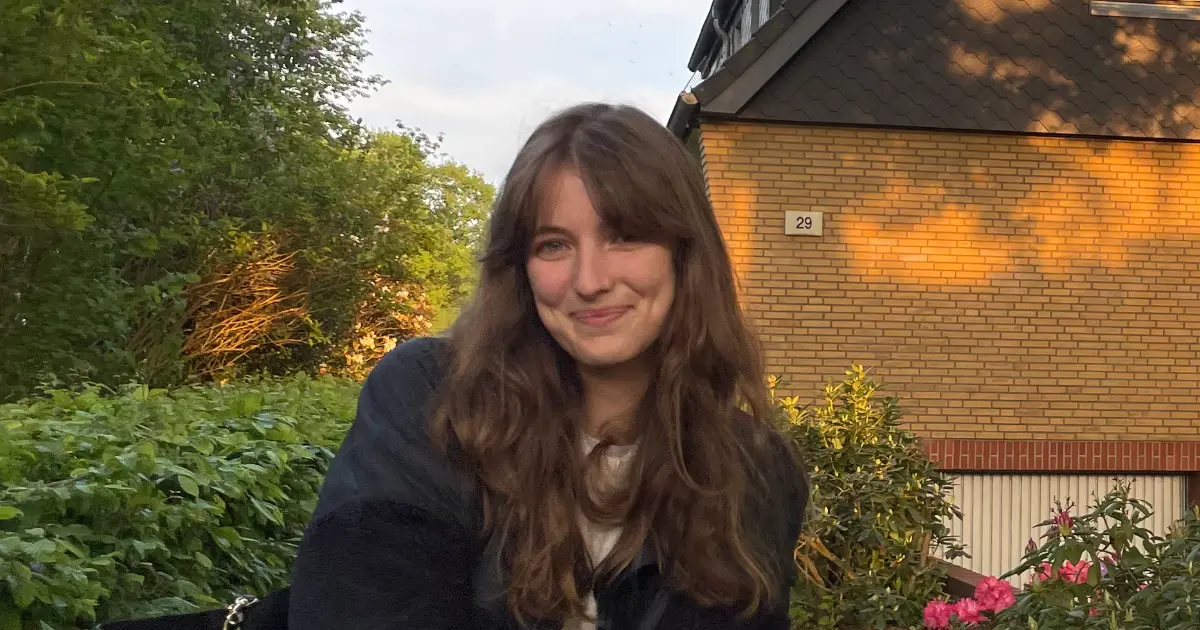
In an increasingly globalized yet culturally fragmented literary marketplace, the role of literature in translation remains both vital and precarious. Publications dedicated exclusively to cross-lingual prose, poetry, and criticism are notoriously rare. Yet, organizations such as Words Without Borders (WWB) continue to act as essential conduits, introducing Anglophone readers to voices from across the geopolitical and linguistic spectrum. At the intersection of this cultural exchange stands Regan Mies—a New York-based writer, translator, critic, and editorial fellow at WWB who also teaches undergraduate creative writing at Columbia University.
In this comprehensive profile and interview overview, Mies explores the mechanics of literary translation, the symbiotic relationship between her own fiction writing and her translation practice, and the pressing need for a more inclusive, border-crossing publishing industry. Tracing her trajectory from rural central Minnesota to the vibrant literary ecosystem of New York City and Hamburg, Mies offers an insightful look at how language acquisition transforms into an lifelong vocation of cultural stewardship. This article examines her literary philosophies, her reading habits, her advocacy for "writing from the margins," and her vision for the future of world literature in English translation.
Detailed Chronology: From Rural Minnesota Classrooms to New York City Editorial Desks
The formation of a literary translator is rarely a linear journey. For Mies, the path began far from the epicenters of global publishing, rooted instead in the linguistic tapestry of rural central Minnesota.
Read Also
Roots in Central Minnesota and Early Linguistic Awakening
Growing up in a region bearing a pronounced mid-nineteenth-century German heritage—alongside enduring Scandinavian, Hmong, and Somali cultural threads—Mies experienced the living history of immigration and language first-hand. In middle and high school, she seized the opportunity to formally study German.
What began as a curriculum requirement quickly evolved into a passionate pursuit. Mies found that language learning uniquely synthesized her interests in literature, history, and the structural pattern-recognition of linguistics. Among her earliest, albeit bewildered, formative memories are reading plays by Friedrich Dürrenmatt and Max Frisch in the classroom. Perhaps most profoundly, this linguistic journey unlocked a deeply personal connection: she discovered she could converse with her grandmother, who occasionally spoke German as a young child and was pleasantly surprised to find her fluency still intact decades later.
Collegiate Exploration and the Hamburg Interlude
Carrying this momentum into higher education, Mies majored in German alongside political science, strategically weaving creative writing courses into every semester. However, the definitive turning point arrived during her senior year when she enrolled in her first translation course. Taught by Katrine Jensen—whom Mies credits with providing crucial early encouragement—the class positioned translation not as a rigid academic exercise, but as a space for creativity, play, and structural experimentation.
Following graduation, Mies relocated to Hamburg, Germany, immersing herself in a daily life dictated by a foreign tongue. Spending countless hours browsing independent bookstores and attending readings at local Literaturhäuser, she deepened her practical engagement with European literature. This immersion soon translated into professional advocacy: she began working with New Books in German, an organization dedicated to recommending and promoting contemporary German-language titles to publishing markets in the United States and the United Kingdom.
Graduate Studies and New York Editorial Work
Returning to the United States to pursue graduate studies in New York City, Mies cemented her professional network within the literary translation community. Her collaboration with New Books in German, paired with her studies and eventual editorial fellowship at Words Without Borders, solidified her commitment to making translation a cornerstone of her intellectual and creative life. Today, her days are divided among editorial duties for WWB, drafting and revising her own novel, tackling translation commissions, penning critical book reviews, and teaching undergraduate fiction workshops at Columbia University.
Supporting Context & Metrics: The Landscape of Translated Literature
To fully appreciate Mies’s work, one must contextualize the broader ecosystem of translated literature in the Anglophone market. Historically, translated works have accounted for a notoriously low percentage of total book sales in the United States and the United Kingdom—frequently cited in publishing analytics as hovering around the "three percent problem" (though recent industry reports suggest marginal gains thanks to independent presses and targeted digital marketing).
The Diversity Deficit in Translation
Organizations like Words Without Borders combat this imbalance by widening the aperture of what is published and read in English. Yet, challenges remain regarding which languages and regions receive attention. While European languages have historically dominated translation pipelines, there is an urgent, growing demand for works originating from the Global South, indigenous communities, and diaspora populations.
Mies’s literary philosophy directly addresses this metric gap. By championing what she terms "writing from the margins"—literatures that occupy the complex spaces between multiple languages, cultures, and national identities—she advocates for a publishing ecosystem that views translation not as an exoticized luxury, but as an indispensable component of global literacy.
Official Statements and Insights: In Conversation with Regan Mies
In an extensive dialogue regarding her career, reading habits, and creative methodologies, Mies shared granular insights into the mechanics of language, translation, and contemporary letters.
On the Draw of Words Without Borders and Literature in Translation
Reflecting on what initially attracted her to WWB, Mies emphasizes the rarity of dedicated translation platforms:
"Publications and organizations dedicated solely to literature in translation are few and far between (although the ranks are growing!). I’ve been a reader of the fiction, criticism, poetry, and interviews that Words Without Borders publishes for years now, and I’ve always been wowed by the diversity of contributors and their writing—not only with regards to the languages they write in or the countries they’re from, but also when it comes to genre, style, even visibility."
Mies points out that WWB achieves a difficult editorial equilibrium, publishing works by emerging, unknown authors alongside storied Nobel laureates and everyone in between. Her passion for translated literature, however, began long before her editorial career. As an avid reader in high school, she instituted structured reading challenges for herself:
"Early in high school, I decided I’d read at least one nonfiction title, one ‘classic,’ and one book in translation per month, after which I was free to dive into whatever else might be calling to me. This lasted quite a few years. And then there was the novel-from-every-country project (still a work-in-progress!)."
Beyond structural reading goals, Mies notes that what continually brings her back to translation is its inherent risk-taking:
"What keeps bringing me back to literature in translation is its propensity to be experimental and surprising, and the opportunity it gives me to learn about the world from new perspectives—and be deeply moved by them. I also feel that reading translated literature gives you membership into an incredible community of dedicated publishers and really passionate readers."
On the Symbiosis of Writing and Translation
As both a creative writer and a translator, Mies experiences a unique cognitive interplay between crafting original prose and rendering another author’s voice into English.
"Every writer’s goal, at least to an extent, is to develop and hone their unique voice—to write in the way only they can write. Translation turns this goal on its head; instead, I’m invited to step into and perform a voice that might be wholly distinct from my own. And rather than generate new material, my aim with translation becomes interpreting and remaking the material before me."
This duality provides a productive creative sanctuary:
"After time spent on my own writing, it’s refreshing to be able to escape the blank page by turning to translation. And translation’s challenge, on the flip side, is that each page is so full, and that every word in every sentence affects a reader’s overall experience of the tone and atmosphere of a story."
Ultimately, Mies views translation as a generative act that continually rejuvenates her original fiction:
"I think, ultimately, translation invites me to explore new voices and introduces me to new possibilities in language, often energizing my own creativity. And in my own writing, I’m able to interrogate the values, preoccupations, and themes that matter to me, which I can then use to inform which translation projects I might want to spend my time with."
On Aesthetics, Tastes, and Influential Authors
When asked what defines a great book, Mies looks for works that demand an active, visceral response from the reader:
"My favorite books are those that either pull me into their world entirely, making me forget I’m even reading, or those that urge me to start writing notes in their margins or drawing connections to other things I’ve read—books that insist I find ways of discussing them with others, or find time to reread them after turning the last page. I think all great books inspire a moment of ‘wow, I’ve never read anything like that’ in their readers."
Her personal reading list spans multiple traditions, eras, and stylistic frameworks. Among contemporary authors, she names Jenny Erpenbeck, Vigdis Hjorth, Alejandro Zambra, and Liliana Corobca as instant pre-order priorities. Focusing on German-language literature, she frequently champions:
- Fatma Aydemir
- Marlen Haushofer
- Brigitte Reimann
- Katja Oskamp
- Wolfgang Hilbig
- Friederike Mayröcker
- Clemens Meyer
- Canonical masters such as Franz Kafka, Thomas Mann, and W.G. Sebald
Furthermore, her rotating reading list routinely features Annie Ernaux, Elena Ferrante, and Clarice Lispector, alongside recent discoveries such as Dorothy Tse, Hanne Ørstavik, Ibtisam Azem, Yukio Mishima, Mohamed Kheir, Rita Indiana, and José Donoso.
Future Outlook: Championing Marginal Geographies and Cross-Cultural Narratives
Looking toward the horizon of English-language publishing, Mies expresses a clear desire for the market to embrace narratives that challenge neat national classifications. She advocates passionately for books born from the intersections of multiple cultures and linguistic heritages:
"I am beyond certain there’s more room for writing from the margins in the English-language market, work that sits between various languages and cultures, or connects them."
To illustrate this vision, Mies points to several key contemporary works and authors:
- Fatma Aydemir: A German writer of Turkish descent whose family novel, Djinns, offers an unflinching look at contemporary identity and generational fracture.
- Nathacha Appanah: A Mauritian-French author whose novel Tropic of Violence is set on the island of Mayotte, exploring displacement and social precarity.
- Igiaba Scego: Author of Adua, which traces the forty-year journey of a Somali immigrant in Rome, mapping post-colonial echoes across urban landscapes.
- Pajtim Statovci: A Finnish novelist born in Kosovo to Albanian parents, whose work rigorously interrogates belonging across time, border, and ethnicity.
- Quynh Tran: Author of Shade and Breeze, a celebrated novel following a Vietnamese family settled within a small Swedish-speaking town in Finland.
- Yoko Tawada: A master of multilingualism who writes and publishes critically acclaimed novels in both German and Japanese.
Beyond the Page: Literary Citizenship
Outside of drafting novels, translating texts, and teaching at Columbia University, Mies maintains a lifestyle deeply anchored in the literary community. Whether she is collecting niche stationery, visiting newly opened independent bookstores, attending book launches, or running through Central Park and along the Hudson River while listening to audiobooks, her life remains dedicated to the celebration of language in all its iterations.
As literature continues to navigate the complexities of a fragmented digital age, critics and translators like Regan Mies serve as indispensable navigators. By dismantling linguistic barriers and championing voices from the geographical and cultural margins, she helps ensure that the future of world literature remains stubbornly curious, boundary-defying, and profoundly human.


Comments
Facebook App ID not configured. Please add it in the Customizer.