
Executive Overview
The landscape of Venezuela has undergone a seismic, highly contested transformation following the military operation that successfully ousted longtime socialist leader Nicolás Maduro. In the immediate wake of the intervention, hope surged across the South American nation. Data from the Caracas-based polling firm Meganálisis captured a population overwhelmingly in favor of foreign intervention, recording that 92 percent of Venezuelans felt a profound sense of gratitude toward U.S. President Donald Trump for removing Maduro, while 90 percent expressed a desire for the United States to serve as Venezuela’s primary geopolitical and economic ally.
Yet, the euphoria of liberation has rapidly given way to a complex, anxious reality. Months into heavy U.S. involvement aimed at steering Venezuela’s future, the rhythm of reform has proved deeply uneven. While Washington has moved at breakneck speed to secure strategic economic assets—culminating in what the White House has lauded as "the biggest oil deal in world history"—critical progress toward democratic restoration, political enfranchisement, and institutional rebuilding has lagged significantly.
This stark asymmetry between corporate energy integration and political democratization has triggered a dramatic reversal in public sentiment. Fresh polling data from Meganálisis reveals that 83 percent of Venezuelans now harbor deep skepticism, believing that President Trump does not genuinely have their country’s best interests at heart. As prominent opposition figures—most notably Nobel Peace Prize laureate María Corina Machado—intensify their calls to accelerate democratic transition mechanisms, pressure is mounting intensely on Washington to reconcile its economic gains with its stated commitment to democratic renewal.
Read Also
This comprehensive report examines the trajectory of the post-Maduro era, analyzing the friction between fast-tracked energy ambitions and stalled political reforms, detailing the structural roadmap proposed by U.S. leadership, and evaluating the mounting domestic and international pressure facing the architects of Venezuela’s transition.
Detailed Chronology: From Military Intervention to Economic Realignment
To understand the current socio-political friction in Venezuela, it is essential to trace the sequence of events that brought the nation to this critical juncture.
The Ousting of Nicolás Maduro
The military operation that removed Nicolás Maduro from power brought an abrupt end to years of authoritarian rule, hyperinflation, and severe humanitarian crisis. For over a decade, the Maduro administration had weathered domestic uprisings, international economic sanctions, and widespread electoral condemnation. However, the coordinated intervention fundamentally altered the balance of power in the region overnight, opening a geopolitical vacuum that the United States stepped in to fill.
The Honeymoon Phase
In the days immediately following the operation, Venezuela experienced an unprecedented moment of national relief. The Meganálisis poll conducted during this initial window reflected near-universal optimism. Citizens flooded the streets of Caracas and other major urban centers, waving flags and expressing profound relief. The overwhelming sentiment was that international intervention—specifically led by Washington—was the only viable mechanism left to shatter the political deadlock that had crippled the nation’s economy and forced millions into diaspora.
The Fast-Tracking of Energy Pacts
While the Venezuelan populace anticipated a holistic rebuilding of their democratic institutions, U.S. foreign policy executors prioritized immediate geopolitical stabilization and resource security. U.S. Secretary of State Marco Rubio outlined a structured, three-step paradigm for intervention:
- Stability
- Recovery
- Transition to Democracy
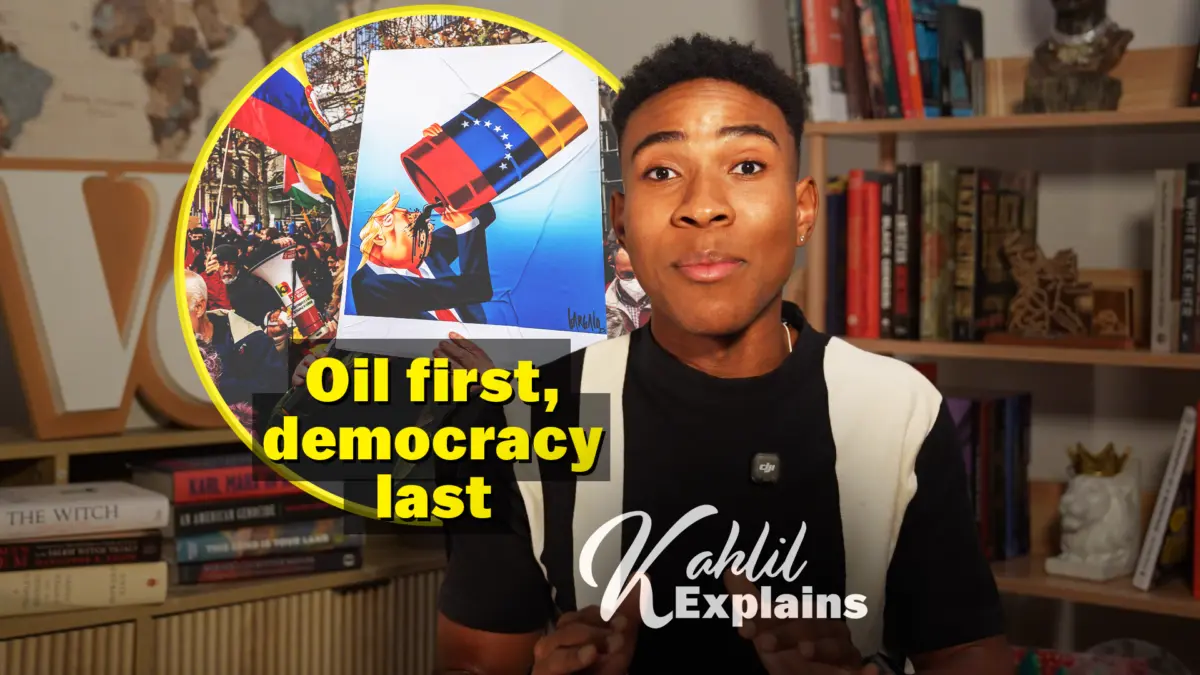
While steps one and three—establishing long-term political stability and holding free and fair democratic elections—met administrative bottlenecks and bureaucratic hesitation, step two (economic recovery, specifically concerning energy infrastructure) accelerated aggressively. The culmination of this fast-tracked economic focus was the formal announcement by the White House of a sweeping bilateral pact designated as "the biggest oil deal in world history." While celebrated in Washington and among international energy conglomerates as a masterstroke of economic pragmatism, the deal served to heighten domestic suspicions in Venezuela regarding the true motivations of the foreign intervention.
Supporting Context & Metrics: Shifting Public Sentiment and Economic Realities
The erosion of trust among the Venezuelan citizenry is not merely anecdotal; it is documented by robust sociological metrics and polling data that trace the psychological arc of a nation caught between liberation and exploitation.
The Polling Trajectory: From 92% Gratitude to 83% Skepticism
The shift in public opinion represents one of the most volatile movements in modern Latin American polling history.
- Phase One (Immediate Aftermath): 92% of surveyed citizens expressed gratitude toward U.S. leadership; 90% favored the U.S. as Venezuela’s principal ally. The population viewed the intervention through an idealistic lens of rescue and rehabilitation.
- Phase Two (The Mid-Term Reality Check): As months passed without tangible improvements in everyday living standards, institutional transparency, or a definitive calendar for democratic elections, public disillusionment set in.
- Phase Three (Current Consensus): The latest Meganálisis findings reveal that 83% of Venezuelans now doubt U.S. altruism, fearing that the nation has simply traded one form of external or internal extraction for another.
| Polling Metric | Immediate Post-Intervention | Current Status |
|---|---|---|
| Gratitude toward U.S. Leadership | 92% | Slipped significantly as reforms stall |
| Desire for U.S. as Main Ally | 90% | Tempering into conditional pragmatism |
| Belief that U.S. Wants What’s Best | Unmeasured / High Initial Trust | 83% Disbelieve U.S. altruism |
The Oil Imperative and Geopolitical Stakes
Venezuela sits atop the largest proven crude oil reserves in the world. For decades, state mismanagement, systemic corruption, and crippling international sanctions degraded its production capacity from over three million barrels per day down to a fraction of its potential.
For Washington, securing access to these vast reserves was viewed not merely as a commercial opportunity, but as a strategic imperative to stabilize global energy markets and reduce reliance on hostile petro-states. However, by prioritizing multi-billion-dollar oil concessions before establishing a credible, inclusive democratic framework, the intervening powers inadvertently fueled the narrative that Venezuela’s sovereign wealth was being bartered away in backrooms while ordinary citizens continued to grapple with deep-seated economic hardship.
Official Statements and Institutional Responses
The divergence in priorities has sparked intense debate among key political actors, spanning Washington’s diplomatic corridors and Caracas’s resurgent opposition movement.
The U.S. Framework: Rubio’s Three-Step Paradigm
Defending the pace and scope of American involvement, U.S. Secretary of State Marco Rubio has repeatedly emphasized the necessity of a methodical approach. According to administration briefings and congressional testimonies, rushing into open democratic elections without first securing absolute institutional and economic stability risks plunging the country back into chaos or creating space for opportunistic authoritarian remnants to seize power.
Rubio’s framework—Stability, Recovery, and Transition—is pitched as a logical sequence. Administration officials argue that physical infrastructure must be repaired, the energy grid secured, and the financial system jumpstarted (via massive capital injection and foreign corporate management) before a sustainable democratic election can take place. Critics, however, argue that this sequencing is a convenient pretext to lock in long-term oil concessions before the Venezuelan people regain full sovereign agency over their resources.
The Opposition’s Demand: María Corina Machado and Democratic Urgency
The most formidable voice pressing back against Washington’s gradualism is Nobel Peace Prize winner María Corina Machado. Earning international acclaim for her unyielding resistance to the Maduro regime, Machado has emerged as the moral compass of the post-transition era.
In recent high-profile addresses and international press engagements, Machado has cautioned that the patience of the Venezuelan people is wearing dangerously thin. Warning against the dangers of an oligarchic transition that bypasses grassroots democratic mandates, she has urged both international partners and domestic transitional authorities to immediately jumpstart transparent democratic processes.
"You cannot build a stable nation on the sidelines of its own citizenry," Machado asserted in a recent statement addressing the political stalemate. "Economic recovery is meaningless if the people of Venezuela are once again treated as spectators in their own political destiny. The time for a definitive transition to democracy is now, not at the convenience of foreign energy syndicates."
Future Outlook: Navigating the Path to Sustainable Democracy
As Venezuela navigates this critical crossroads, the coming months will determine whether the post-Maduro era culminates in genuine democratic renewal or settles into a fragile, foreign-managed corporate protectorate.
Key Variables for the Months Ahead
- The Electoral Calendar: The single most pressing demand from the Venezuelan opposition and civil society is the establishment of an unalterable, internationally monitored timeline for free, fair, and competitive democratic elections. Failure to produce a credible roadmap risks triggering widespread domestic unrest.
- Equitable Distribution of Economic Dividends: For public sentiment to recover, the massive financial inflows generated by the historic U.S.-Venezuela oil deals must visibly translate into public services, healthcare restoration, currency stabilization, and poverty alleviation. If wealth is perceived to flow exclusively to foreign corporations and local elites, social stability will fracture.
- Institutional Independence: Rebuilding the judiciary, the electoral council, and legislative bodies independent of both old regime loyalists and external corporate pressures remains essential for long-term legitimacy.
Conclusion
The military operation that removed Nicolás Maduro ended an era of dark authoritarianism, but it did not automatically deliver the democratic paradise that millions of hopeful Venezuelans envisioned in the immediate aftermath of his fall. The friction between Washington’s calculated, economic-first strategy and Caracas’s desperate yearning for political self-determination has created a volatile political climate.
If the United States and the transitional authorities fail to pivot decisively toward the final phase of Rubio’s plan—a genuine, unfettered transition to democracy—they risk squandering the historic goodwill of a population that once viewed them as saviors. The ultimate success of Venezuela’s future will not be measured by the volume of oil extracted, but by the strength of the democratic institutions left in its wake.



Comments
Facebook App ID not configured. Please add it in the Customizer.