
Executive Overview
In the realm of contemporary literary journalism and testimonial literature, few projects carry the profound psychological weight, moral urgency, and harrowing genesis of Samar Yazbek’s newest book. Born from the grim reality of a residential complex near Doha’s Hamad International Airport transformed into a makeshift medical facility for wounded evacuees from Gaza, the book stands as an unyielding testament to human suffering, resilience, and survival.
What began as an intended humanitarian gesture—a storytelling workshop aimed at facilitating the psychological recovery of displaced women and children—quickly metastasized into a grueling, multi-month archival project. Confronted with the visceral devastation of the Israeli war on Gaza, where civilians presented with missing limbs, severe trauma, and life-altering injuries, acclaimed Syrian author and journalist Samar Yazbek altered her mission. She chose to immerse herself in the daily lives of the survivors, recording their testimonies directly to preserve a collective memory of what she unhesitatingly defines as an act of genocide. Guided by the foundational feminist principle that the personal is political, Yazbek sought to anchor the historical record in the raw, unfiltered voices of the victims.
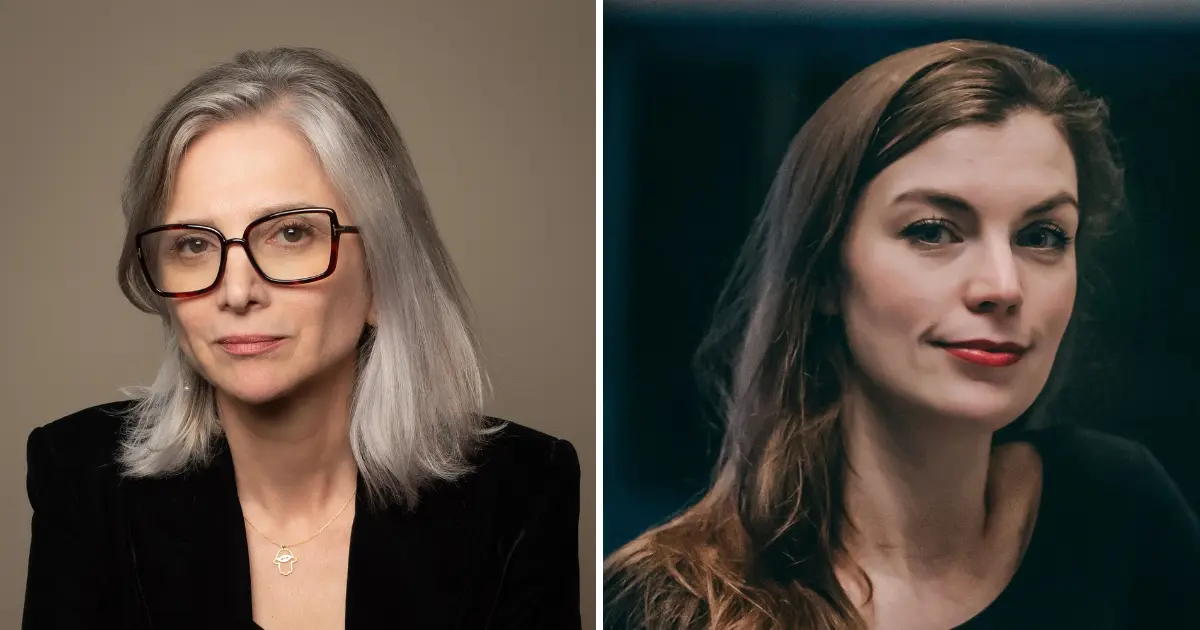
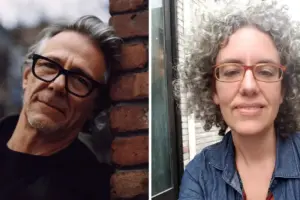
Bringing this harrowing text to an international readership required an equally intense act of literary translation and emotional endurance. Spearheaded by literary agent Yasmina Jraissati, the global rollout saw simultaneous translations commissioned across multiple languages, including French, Italian, German, Dutch, and Swedish. For the English edition, Yazbek reunited with award-winning translator Leri Price—marking their third major collaboration following critically acclaimed works like Planet of Clay and Where the Wind Calls Home.
Read Also
This article explores the genesis of this vital text, the logistical and emotional hurdles of translating trauma across linguistic boundaries, the innovative collaborative frameworks utilized by its translators, and the dark artistic metaphors that shaped its creation. Through an in-depth examination of the author-translator dynamic, we uncover how contemporary literature confronts the unspeakable, preserving the fractured, nonlinear realities of those who have lived through unimaginable catastrophe.
Detailed Chronology: From the Wards of Doha to the Global Page
The Genesis in Qatar
The trajectory of the book began not in a quiet study, but in the sterile, high-stress environment of a residential complex in Doha, Qatar. Positioned close to Hamad International Airport, the facility had been repurposed to house and treat severely wounded evacuees evacuated directly from the conflict zones of Gaza.
When Yazbek initially visited the complex, her intentions were pedagogical and therapeutic. As a writer deeply familiar with the intersections of conflict, displacement, and human rights, she hoped to conduct storytelling workshops for women and children, utilizing narrative therapy to assist in psychological stabilization and recovery. However, the reality of the environment shattered any conventional pedagogical framework.
Stepping into the facility, Yazbek encountered a scene she likens to a horror film. Men, women, and children navigated the corridors in wheelchairs, bearing horrific injuries, amputations, and the invisible scars of profound psychological shock. The sheer scale of the cruelty and the visceral nature of the devastation forced a recalibration of her purpose. Rather than running a temporary workshop, Yazbek resolved to document the lives and testimonies of the survivors.
For several months, Yazbek embedded herself in the daily rhythms of the evacuees. She conducted extensive interviews, recorded detailed testimonies, and shared in the daily existence of ordinary civilians displaced by the war. These direct, unvarnished accounts provided the foundational architecture for her conviction that the conflict constituted an act of genocide. Rather than allowing these individual tragedies to dissolve into the abstract statistics of daily news cycles, Yazbek committed herself to compiling them into a cohesive literary narrative. Inspired by theorist bell hooks’s dictum that "the personal is political," the project evolved into an essential act of counter-archiving—a deliberate effort to safeguard the collective memory of the victims against erasure.
The Global Translation Pipeline
Once the Arabic manuscript began to take shape, the logistical machinery of international publishing swung into motion. Yasmina Jraissati, Yazbek’s literary agent, recognized the immediate global imperative of the text. Eschewing the conventional, sequential publishing model where a book is released in its original language and trickles out to secondary markets years later, Jraissati orchestrated a coordinated, multi-language rollout.
Simultaneous translation contracts were secured across Europe. Translators working in French, Italian, German, Dutch, Swedish, and other languages mobilized to bring the testimonies to their respective linguistic communities with minimal delay. For the English edition, Jraissati turned to Leri Price, a literary translator renowned for her deep sensitivity to contemporary Arabic fiction and her previous triumphs with Yazbek’s oeuvre.
For Price, stepping into this project was both an honor and a formidable responsibility. Having previously collaborated with Yazbek on Planet of Clay (a National Book Award Finalist) and Where the Wind Calls Home, Price shared a well-established professional trust with the author. Yet, the nature of this specific text demanded an unprecedented level of emotional stamina and methodological innovation from the entire translation team.
Supporting Context & Metrics: The Mechanics of Translating Trauma
Translating a work rooted in active catastrophe presents unique artistic and ethical dilemmas. How does a translator render the unspeakable without sanitizing it? How do they maintain fidelity to testimonies born of extreme psychological distress while ensuring accessibility for an international audience?
Navigating the Emotional Toll
For Leri Price, the primary challenge of the project was not technical or linguistic, but deeply emotional. Working in isolation from the physical theater of pain, Price found herself submerged in a relentless stream of trauma, grief, and suffering as she translated the testimonies word by word.
"It doesn’t really feel appropriate to elaborate on that when I am so removed from the people and situations and pain I was describing, but it was very difficult," Price reflects. The act of holding space for these narratives on the page required an extraordinary allocation of emotional reserves, transforming the act of literary translation into a form of secondary witnessing.
The Riddle of the Title
Practical challenges manifested early in the translation process, most notably in the treatment of the book’s title. The original Arabic title, Thakirat al-nuqsan, possesses a poetic resonance and restraint that resisted direct transposition into English.
Literally translating to something akin to “Remembering what has gone missing” or “The memory of something that is now lacking,” the Arabic phrase evokes a profound ontological state: the idea that an entity has vanished completely, leaving behind a permanent, palpable void. This concept of "building around emptiness" is a central thematic motif that Yazbek explores extensively in her foreword.
Despite numerous iterations, Price and her editorial team found that no direct English equivalent captured the exact emotional and conceptual weight of the original phrase. The breakthrough came from literary agent Yasmina Jraissati, who proposed drawing directly from the material artifacts of the war: a phrase taken from a leaflet dropped by Israeli forces immediately before bombing raids. The resulting English title delivers a stark, uncompromising emotional blow—encapsulating the brutal reality that under conditions of total warfare, the mere act of existing is to put oneself in mortal danger.
Innovative Collaborative Frameworks
To mitigate the crushing psychological burden placed upon the author, the translation team devised an innovative workflow. Recognizing that forcing Yazbek—who had already absorbed the trauma of collecting and editing the testimonies—to repeatedly answer granular linguistic queries would inflict unnecessary cruelty, the translators bypassed traditional linear communication channels.
In what marked a first for Price’s career, the international team of translators established a shared online workspace. This digital document served as a centralized hub where translators working across different languages could post queries, share strategic solutions for complex idiomatic passages, and clarify ambiguities among themselves. Yazbek maintained a deliberate distance from this process, adhering to her philosophy that translation is an act of literary rewriting that demands authorial neutrality once the original text is complete.
By utilizing this peer-to-peer digital ecosystem, the translators protected the author from repeated interrogation while ensuring absolute textual cohesion. Crucially, the translators across all languages arrived at a unified consensus regarding style: they intentionally preserved the "jaggedness" of the text. Rather than smoothing over contradictions, non-linear chronological leaps, or fractured syntax, the translations honor the raw, unpolished cadence of the original testimonies, ensuring the authentic voices of the survivors remain uncompromised.
Official Statements & Reflections
To fully grasp the aesthetic and moral dimensions of the book, one must examine the reflections of its creators, whose perspectives are anchored in decades of engagement with political violence, exile, and literature.
Samar Yazbek on the Goyaesque Nightmare
When asked to describe the internal landscape of editing and transcribing the testimonies from Gaza, Samar Yazbek invokes the visceral, haunting imagery of Spanish master Francisco de Goya (1746–1828).
"When I was editing and revising testimonies, or transcribing all these chilling recordings when the Gazan people told me their stories, Goya’s paintings were whirling through my head and all around me," Yazbek states. "They are human brutality, the human being’s dark mind, laid bare in their very worst forms—humans devouring humans. All these horrifying, well-known images about humanity’s capacity for savage cruelty were in my head. Goya was constantly present during the writing of this book."
This invocation of Goya—particularly his Disasters of War etching series—provides a critical interpretive lens for the book. It positions the work not merely as contemporary reportage, but as a timeless canvas of human depravity and resilience, aligning the modern catastrophe in Gaza with the historical lineage of artistic confrontations with systemic violence.
Leri Price on the Sound of Testimony
Asked for a singular metaphor, image, or song to encapsulate the essence of the translated text, Leri Price offers a response of breathtaking economy and force:
"A howl."
This single-word definition cuts through the academic and literary discourse surrounding the book, returning readers to the primal, pre-linguistic origin of the testimonies. It is a reminder that beneath the structural frameworks of international law, political discourse, and literary translation lies a raw, unmitigated human cry for justice and recognition.
Future Outlook and Significance
As the book prepares for its official release under the auspices of Words Without Borders in 2026, its broader cultural and political implications are already coming into focus. In an era characterized by information saturation, political polarization, and the rapid cycling of global atrocities through digital media, testimonial literature serves as an indispensable anchor for historical accountability.
By bridging the gap between individual suffering and collective memory, Samar Yazbek and Leri Price have forged a work that transcends the boundaries of conventional journalism. The book stands as a monument to the resilience of ordinary civilians caught in the machinery of war, a rigorous exercise in ethical translation, and a stark reminder of the writer’s duty to bear witness when the world looks away.
As international literary communities grapple with how to respond to contemporary humanitarian crises, the collaborative, transnational model pioneered in the creation and translation of this text offers a blueprint for future projects. It demonstrates that when literature approaches the abyss, it must do so not with detachment, but with the collective courage to listen, to preserve, and—above all—to refuse to let the silence win.

Comments
Facebook App ID not configured. Please add it in the Customizer.