
Executive Overview
In the dead of an Australian winter night, at approximately 2:00 a.m. on August 5, 1944, a piercing bugle call shattered the stillness of the New South Wales countryside. Suddenly, more than 900 Japanese prisoners of war burst from their barracks at the Cowra POW camp. Armed with improvised weapons—baseball bats, gardening tools, sharpened cutlery, and heavy blankets fashioned to shield against razor wire—they charged the perimeter fences.
What followed was the largest and bloodiest prison break of World War II, dwarfing the more famous "Great Escape" from Nazi Stalag Luft III just months prior. By the time the gunfire ceased at dawn, 234 Japanese men were dead, either killed by Allied fire or through self-inflicted wounds. Five Australians—four soldiers and one civilian search volunteer—also lost their lives.
/https://tf-cmsv2-smithsonianmag-media.s3.amazonaws.com/filer_public/93/b2/93b2606a-1623-4018-8a40-5857fe0dd865/gettyimages-453574876.jpg)
Despite its staggering scale and profound historical weight, the Cowra breakout remains largely obscure outside of Australia and Japan. More than eight decades later, the uprising serves as a profound historical lens through which to examine the unyielding power of wartime ideology, the clash of civilizations, and the psychological trauma inflicted by a military code that viewed surrender not as a misfortune, but as an unforgivable, life-ending dishonor.
Read Also
Detailed Chronology: The Night the Barracks Burned
To understand the tragedy of Cowra, one must examine the specific social and administrative tinderbox that accumulated inside the facility throughout 1944. Originally constructed to house Italian prisoners, the camp was divided into compounds. By mid-1944, Compound B held over 1,000 Japanese enlisted men, while Compound D housed officers, along with Korean and Taiwanese laborers conscripted by the Imperial Japanese Army.
/https://tf-cmsv2-smithsonianmag-media.s3.amazonaws.com/accounts/headshot/meilan_headshot2.png)
The Spark: August 4, 1944
The immediate catalyst for the revolt occurred just hours before the breakout. Camp authorities informed the Japanese leadership that prisoners below the rank of lance corporal would soon be transferred to another facility to alleviate overcrowding. Senior officers and hard-line enlisted men strongly objected, arguing that separating the younger, impressionable soldiers from their superiors would break the informal chain of command that kept collective discipline intact. The Australians, however, proceeded with their logistical plans.
Later that evening, Compound B convened a clandestine mass meeting. Dominating the discourse were radical hard-liners who framed the impending separation as an existential threat and an opportunity to reclaim their honor. Surrendering, they argued, had branded them as cowards; a mass uprising would allow them to die a "glorious death" in battle, thereby erasing their perceived shame and boosting morale for the imperial forces fighting on the front lines. Approximately 80 percent of the prisoners voted in favor of a coordinated, suicidal breakout.
:focal(2492x1638:2493x1639)/https://tf-cmsv2-smithsonianmag-media.s3.amazonaws.com/filer_public/93/b2/93b2606a-1623-4018-8a40-5857fe0dd865/gettyimages-453574876.jpg)
The Assault: 2:00 a.m., August 5, 1944
In the hours leading up to the attack, prisoners fashioned makeshift weapons and distributed woolen blankets and baseball mitts to scale the razor-wire fences without sustaining fatal snags before reaching the perimeter.
At roughly 2:00 a.m., a weeping Japanese prisoner climbed a fence, signaling distress to a guard. Before the guard could investigate, naval pilot Hajime Toyoshima—the first Japanese POW captured on Australian soil—sounded a bugle. On this cue, prisoners set fire to their own huts and surged outward in four distinct groups.
/https://tf-cmsv2-smithsonianmag-media.s3.amazonaws.com/filer_public/14/29/1429fe5b-958d-477f-ac5c-ca00faa46df6/baseball.png)
- The Machine Gun Assault: One group made a direct charge for a Vickers machine gun post manned by privates Benjamin Gower Hardy and Ralph Jones. Awakened in their pajamas, the two Australians fought desperately. While Jones was stabbed to death and Hardy was heavily clubbed, Hardy managed to remove a vital component from the gun, rendering it inoperable and preventing the prisoners from turning the weapon against the camp.
- The Perimeter Breaches: Thousands of desperate men flooded the fences. Unprepared for a suicidal human-wave assault, Australian guards responded with heavy rifle and machine-gun fire, cutting down wave after wave of charging prisoners.
By 6:20 a.m., the compound was secured, but the chaos had resulted in catastrophic loss of life. Over the next nine days, authorities recaptured all of the escapees who had made it beyond the wire, though many did so only after taking their own lives in the surrounding bushland.
Supporting Context & Metrics: The Ideology of "No Surrender"
The sheer lethality of the Cowra breakout cannot be understood through Western military paradigms alone. It was the direct product of Japan’s hyper-militaristic wartime culture, which weaponized traditional concepts of honor to enforce absolute obedience.
/https://tf-cmsv2-smithsonianmag-media.s3.amazonaws.com/filer_public/b3/5e/b35e1338-7998-4cdd-abd9-6ffb122a1be8/bats.png)
The Senjinkun and Bushido
At the core of this mindset was the Senjinkun (Field Service Code), a pocket-sized manual issued to Japanese soldiers in 1941. The code explicitly instructed servicemen: "If alive, do not suffer the disgrace of becoming a prisoner; in death, do not leave behind a name soiled by misdeeds." This doctrine distorted the classical samurai code of Bushido, twisting it into a totalitarian demand for self-annihilation.
Statistics from the Pacific Theater highlight the total embrace of this philosophy:
/https://tf-cmsv2-smithsonianmag-media.s3.amazonaws.com/filer_public/9d/9d/9d9d2c0e-3274-4a17-9268-52ea4284eef8/statelibqld_1_80019_japanese_prisoners_arriving_at_brisbane_from_new_guinea_ca_1945.jpg)
- Western Allies vs. Japanese Surrender Rates: While Western Allies captured roughly 8 million German service members during WWII, they captured an estimated 35,000 Japanese personnel.
- The Cowra Demographics: Of the 1,104 Japanese men housed at Cowra on August 4, 1944, nearly 900 participated in a suicide-charge where they knew they possessed almost zero chance of long-term survival or escape.
- Causality Breakdown: The post-breakout investigative reports revealed that among the 234 Japanese fatalities, 183 died from gunshot wounds, 31 died from self-inflicted violence or injuries inflicted by peers, 12 were burned beyond recognition in the charred ruins of their huts, and 5 succumbed to a combination of combat and self-inflicted wounds.
The "Heavenly" Camp vs. The Psychological Nightmare Ironically, the conditions at Cowra were remarkably humane. Under the 1929 Geneva Convention (which Japan had signed but failed to ratify), Australian authorities provided prisoners with ample food, recreational facilities (including soccer and baseball gear), medical care, and gardens.
Many prisoners, including Teruo Murakami—who lived to be 103 and was the final survivor of the breakout—later described the camp’s material conditions as "almost heavenly." Yet, this comfort exacerbated their psychological torment. Receiving fair treatment from the enemy violated their core belief that they deserved only death or execution upon capture. Furthermore, because the Japanese government officially classified missing or captured soldiers as dead—often sending notifications and pensions to their families—the men believed they had permanently disgraced their lineages and could never return home.
Official Statements and Archival Insights
The aftermath of Cowra forced both the Australian government and military historians to re-evaluate how they managed prisoners of war from culturally distinct backgrounds.
/https://tf-cmsv2-smithsonianmag-media.s3.amazonaws.com/filer_public/66/24/6624772d-17c7-44a5-9afe-c87dc664c2a2/japanese_pows_guam_aug_1945.jpeg)
In retrospective analyses, Australian War Memorial historians have repeatedly emphasized the critical intelligence failure that preceded the disaster. In June 1944, a Korean prisoner had quietly warned camp officials about whispered rumors of an impending uprising. While commanders installed two machine guns outside Compound B, they ultimately fell victim to cultural myopia.
As military author and historian Mat McLachlan notes, the Australian command "simply couldn’t get their heads around the fundamental concept that Japanese prisoners preferred death to imprisonment… that distorted perspective bred a dangerous complacency."
/https://tf-cmsv2-smithsonianmag-media.s3.amazonaws.com/filer_public/0d/2e/0d2ebc7e-5e5a-4451-9732-65d655352ef0/hajime.png)
Conversely, oral histories collected decades later reveal a complex internal struggle among the Japanese survivors. Many participants admitted they joined the uprising out of intense peer pressure rather than genuine ideological fervor. One anonymous survivor stated in a 2021 documentary: "There was a mood in which we had to say yes when we actually wanted to say otherwise."
Future Outlook: From Battlefield Trauma to Global Reconciliation
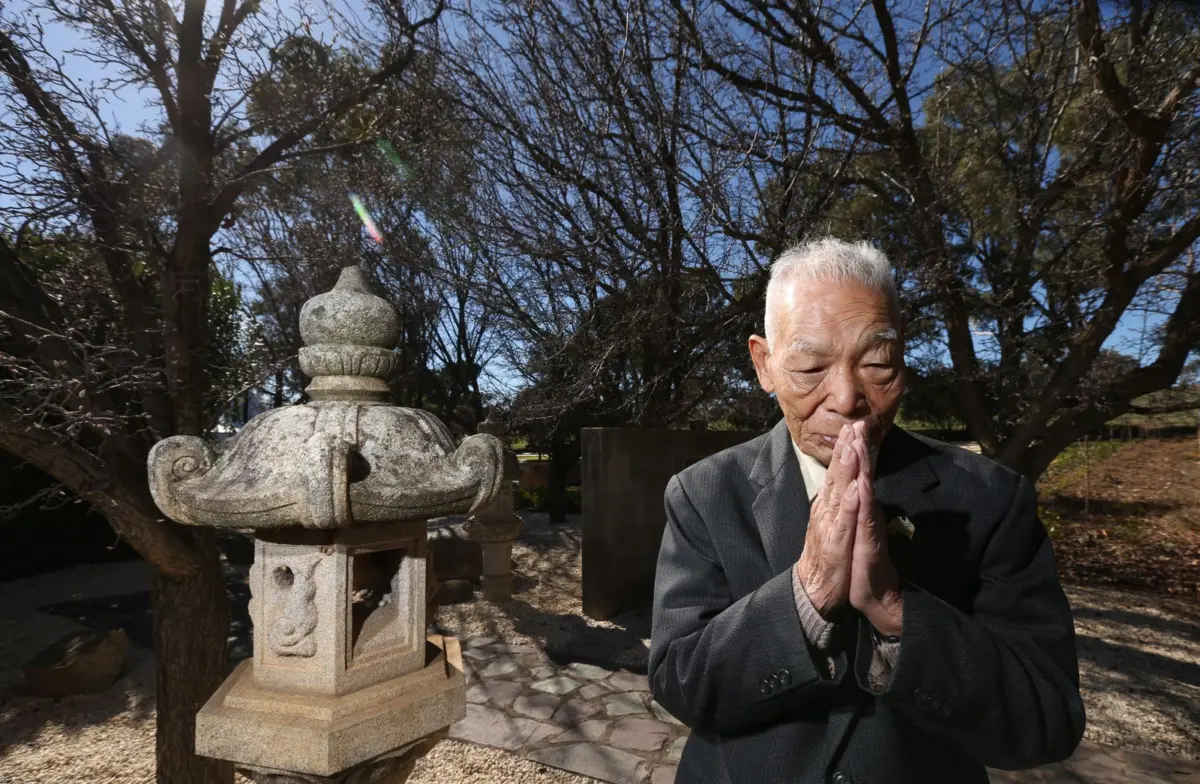
In the decades following World War II, the legacy of Cowra underwent a remarkable transformation. Rather than remaining a monument to racial hostility and wartime brutality, Cowra evolved into an international symbol of peace, reconciliation, and cross-cultural understanding.
/https://tf-cmsv2-smithsonianmag-media.s3.amazonaws.com/filer_public/53/c2/53c2bf20-3a22-4f67-8730-68cb9d67a094/japanese-pows.png)
- The Cowra Japanese War Cemetery: Today, the Japanese soldiers who died during the breakout rest in peace alongside other Japanese service members in a meticulously maintained war cemetery. Australian soldiers Hardy, Jones, Shepherd, Doncaster, and Hancock are honored in nearby memorials.
- The Cowra Japanese Garden and Cultural Centre: Established in the 1970s, this sprawling traditional Japanese garden serves as a living monument to bilateral friendship between Australia and Japan.
- The World Peace Bell: Housed within the region, the bell rings out as a continuous reminder of the cost of conflict and the necessity of diplomacy.
As living memory of World War II fades into the annals of history, institutions like the Cowra Japanese War Cemetery and ongoing academic research ensure that the lessons of August 5, 1944, are not lost. The Cowra breakout stands as an eternal, sobering reminder of how rigid nationalism and ideological dogma can drive human beings to reject the gift of life itself—while simultaneously demonstrating that even the deepest wounds of war can ultimately give way to enduring peace.


Comments
Facebook App ID not configured. Please add it in the Customizer.