
Executive Overview
For nearly six years, everyday investors, retail traders, and tech enthusiasts have watched the high-stakes drama of the frontier artificial intelligence industry unfold from the sidelines. They have debated the ethics of synthetic cognition, derided the sky-high energy demands of mega-scale data centers, praised the creative and analytical breakthroughs of generative models, and protested the rapid displacement of human labor. Yet, despite participating in the cultural and economic dialogue surrounding the technology, the general public has never been able to directly own a piece of a frontier AI lab.
That barrier dissolves tomorrow morning.
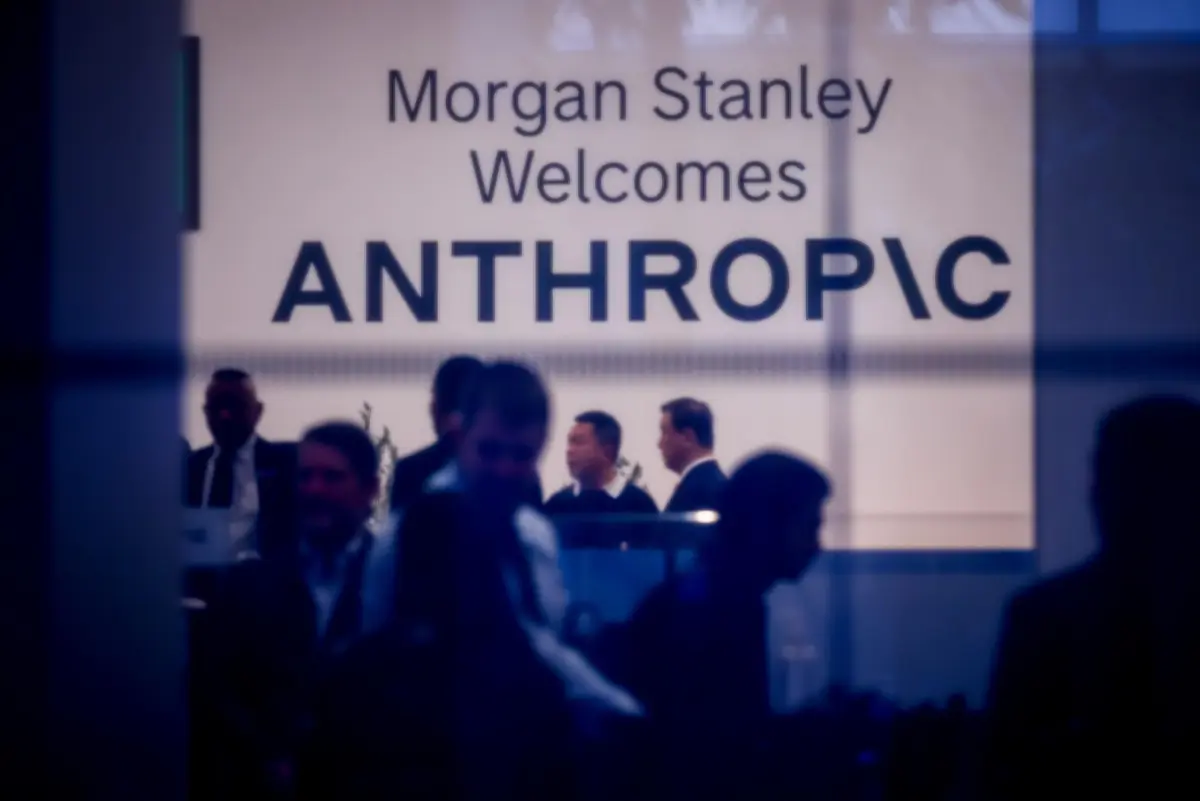
At precisely 9:00 AM, Anthropic—the artificial intelligence research organization and developer of the ubiquitous Claude chatbot ecosystem—is slated to make its public debut on the open market. The initial public offering (IPO) values the six-year-old firm at more than $1 trillion. This staggering milestone instantly vaults Anthropic into the pantheon of the world’s most valuable publicly traded entities, placing it shoulder-to-shoulder with blue-chip giants like Walmart and JPMorgan Chase.
Read Also
The offering represents a definitive public referendum on the intrinsic value of generative AI, arriving at a precarious cultural and political crossroads. Policymakers, federal regulators, and independent technologists are actively scrutinizing the economic productivity and societal risks of the industry. AI-related equities have suffered bouts of notable volatility, and newly empowered congressional coalitions have signaled an aggressive legislative stance toward data center expansion, power grid strains, and tech monopolies.
Yet, looking at the frenzied order books for Anthropic’s market entry, one would never guess a regulatory storm was brewing. On track to become one of the largest capital raisings in Wall Street history, the IPO has shattered expectations. After initially setting a conservative price range of $70 to $78 per share, institutional and retail demand surged so violently that underwriters reportedly revised the offering price to $83 a share.
While the listing opens the door for retail investors eager to secure a stake in a company shaping the future of global labor—and, as critics ominously note, potentially altering the trajectory of human civilization—the structural mechanics of modern IPOs ensure that the lion’s share of the financial windfall will flow to insiders. Executives, early venture backers, and foundational employees stand to reap generational fortunes. As Wall Street prepares for the opening bell, Anthropic’s debut serves as a grand masterclass in the changing lifecycle of corporate America, the democratization of risk, and the astronomical financial gravity of the artificial intelligence boom.
Detailed Chronology: The Road to a Trillion-Dollar Valuation
To understand the magnitude of Anthropic’s public debut, one must trace the compressed, hyper-accelerated timeline of the modern AI laboratory. Founded in 2021 by former leaders and researchers from OpenAI—including Dario Amodei, Daniela Amodei, and others who prioritized safety research and constitutional alignment—Anthropic operated with a singular mission: to build reliable, interpretable, and steerable AI systems.
Phase One: The Private Incubation (2021–2023)
In its infancy, Anthropic functioned like a traditional deep-tech research startup, albeit one devouring unprecedented amounts of computational capital. Unlike industrial giants that could self-fund research through legacy hardware or enterprise software sales, the lab relied heavily on venture capital injections, strategic partnerships, and cloud-compute agreements.
During this foundational window, the company’s capital structure remained tightly guarded. Funding rounds were measured not in tens of millions, but in billions. Technology behemoths such as Amazon and Google poured massive investments into Anthropic’s coffers, securing cloud-compute dependencies and preferred partner statuses while keeping the company entirely out of the reach of public equity markets.
Phase Two: The Commercial Explosion (2023–2025)
The public release of the Claude model family altered the competitive landscape. As enterprises sought reliable alternatives to OpenAI’s GPT models, Anthropic positioned itself as the enterprise-grade choice, emphasizing safety guardrails, advanced reasoning capabilities, and coding assistants like Claude Code.
Revenues scaled at a pace historically unprecedented in corporate history. However, the costs associated with training frontier models scaled just as aggressively. Maintaining clusters of tens of thousands of specialized accelerators required continuous capital infusions. Rather than tapping public markets—a move historically executed by tech startups within three to five years of inception—Anthropic continued to rely on private equity, sovereign wealth funds, and multi-billion-dollar corporate rounds.
Phase Three: The IPO Sprint (Late 2025–November 2026)
The whispers of an impending IPO transformed into concrete reporting in late 2025 and early 2026. Investment banking syndicates began quietly auditing the lab’s books, assessing whether public markets possessed the appetite to absorb a multi-trillion-dollar or near-trillion-dollar valuation for a company that had not yet reached mature, predictable profitability at scale.
By mid-November 2026, the S-1 filing and subsequent roadshows confirmed what Wall Street had suspected: Anthropic was bypassing traditional caution. Setting an initial price range of $70 to $78, the underwriters experienced an avalanche of institutional demand. By the eve of the trading debut, the offering price was hiked to $83 per share, confirming that the market’s voracious appetite for artificial intelligence infrastructure remained largely unabated, even in the face of macro headwinds.
Supporting Context & Metrics: The Evolution of the Late-Stage IPO
Anthropic’s path to the public markets highlights a quiet, fundamental transformation in how American capitalism operates. For generations, going public was a rite of passage for young, high-growth companies. Iconic enterprises such as Apple, Amazon, and eBay crossed the public threshold when they were barely five years old, allowing retail investors to share in the explosive, foundational growth phases of these corporate titans.
The Shift from Public to Private
Over the past two decades, however, that paradigm has inverted. Data compiled by corporate finance scholars reveals a stark demographic shift in the American equity landscape:
- The Median Age at IPO: Between the early 2000s and 2025, the median age of a company executing an IPO doubled, moving from six years old to 12 years old.
- Prolonged Private Lifecycles: Modern tech giants now spend over a decade maturing behind closed doors, cultivating massive scale, monopolistic market shares, and institutional backing before ever selling a single share to the general public.
Financial analysts attribute this structural shift to two primary drivers:
- The Abundance of Private Capital: Private equity funds, venture capital pools, sovereign wealth funds, and corporate balance sheets now possess trillions of dollars in deployable dry powder. Companies that once needed to tap public markets to fund aggressive scaling operations can now secure equivalent or greater capital privately without submitting to regulatory scrutiny or public shareholder activism.
- Desire for Control and Secrecy: Private firms are exempt from the grueling, transparent quarterly financial reporting requirements mandated by the Securities and Exchange Commission (SEC). They do not have to broadcast proprietary strategic shifts to competitors, nor do they have to contend with activist public shareholders dictating corporate governance.
The Retail Disadvantage
While this private-heavy model shields executives and allows them to execute long-term strategies without quarterly stock-price panic, it carries profound socioeconomic consequences for everyday investors.
According to Brad Badertscher, a professor of accountancy at the University of Notre Dame who has extensively researched IPO trends:
"The way I see it, the later a company goes public, the more of its growth gains accrue to private investors."
Under the modern financial architecture, corporate insiders, venture capitalists, and early institutional backers accumulate equity at pennies on the dollar while the enterprise is young and volatile. By the time a company reaches a trillion-dollar valuation and finally opens its books to the public, the steepest vertical climb of its value curve has already been captured by private elites. Retail investors join the party only after much of the foundational wealth creation has occurred, shouldering asymmetric risk relative to their upside potential.
Official Statements and Industry Perspectives
The impending debut has elicited a complex spectrum of commentary from economists, policymakers, and tech executives, reflecting the deep polarization surrounding the AI industry’s trajectory.
The Investor Optimism
Institutional buyers and market bulls emphasize that Anthropic represents the absolute vanguard of human ingenuity. Proponents argue that the company’s commitment to constitutional AI—an approach designed to make models harmless, helpful, and honest—gives it a distinct reputational and regulatory moat.
A representative from a major institutional investor participating in the IPO syndicate noted off the record:
"We are not simply pricing a software company; we are pricing the foundational infrastructure of the next century’s knowledge economy. The demand we are seeing across international sovereign funds and domestic asset managers reflects a fundamental truth: the digital transformation led by Anthropic is irreversible."
Regulatory and Political Pushback
Conversely, lawmakers on Capitol Hill have voiced mounting skepticism. With a new class of congressional Democrats taking office on platforms prioritizing labor protection, energy conservation, and antitrust enforcement, the regulatory microscope on Anthropic and its peers is intensifying.
Freshly elected representatives have pointed to the immense power consumption of AI data centers as a direct threat to municipal climate goals and grid stability. Furthermore, labor advocates have warned that advanced coding assistants and reasoning models threaten white-collar employment stability across legal, financial, and software engineering sectors.
A prominent progressive lawmaker recently remarked during a committee hearing preview:
"We are witnessing the financialization of technology that could fundamentally destabilize middle-class employment. Handing out trillion-dollar valuations to private labs while working families bear the externalized costs of energy spikes and job displacement is an economic model that demands rigorous federal oversight."
Future Outlook: Risks, Rewards, and the Horizon
As the trading desk countdown ticks toward 9:00 AM tomorrow, the overarching question is not whether Anthropic can successfully list, but what follows the opening bell.
The Macroeconomic and Regulatory Headwinds
Despite the immediate hype, Anthropic’s public journey will be fraught with acute financial and systemic risks:
- Legislative Interventions: A potential wave of bipartisan or progressive-led regulations targeting artificial intelligence safety, data privacy, and intellectual property usage could alter the operational cost structure of running frontier models.
- The Nvidia Ripple Effect: Any structural shock, supply chain bottleneck, or cyclical downturn in the semiconductor industry—particularly regarding major hardware suppliers like Nvidia—directly impacts the compute economics of training successive generations of Claude.
- Valuation Correction Risks: With a valuation hovering above $1 trillion, the market has priced in near-flawless execution. Any missed earnings target, security vulnerability, or competitive leap by rivals like OpenAI, Google DeepMind, or open-weight alternatives could trigger sharp market corrections.
The Ultimate Verdict
Anthropic’s trillion-dollar IPO marks the definitive transition of artificial intelligence from a speculative Silicon Valley R&D project into a core pillar of global financial markets. It proves that public appetite for AI supremacy remains insatiable, even as society wrestles with the profound ethical, economic, and existential questions raised by the technology.
Whether everyday investors who buy in at tomorrow’s opening price will reap generational rewards or catch a falling knife at the peak of a market cycle remains one of the defining financial mysteries of our era. But one reality is absolute: the walls separating the public from the frontier AI labs have finally crumbled, and Wall Street will never be the same.





Comments
Facebook App ID not configured. Please add it in the Customizer.