
Executive Overview
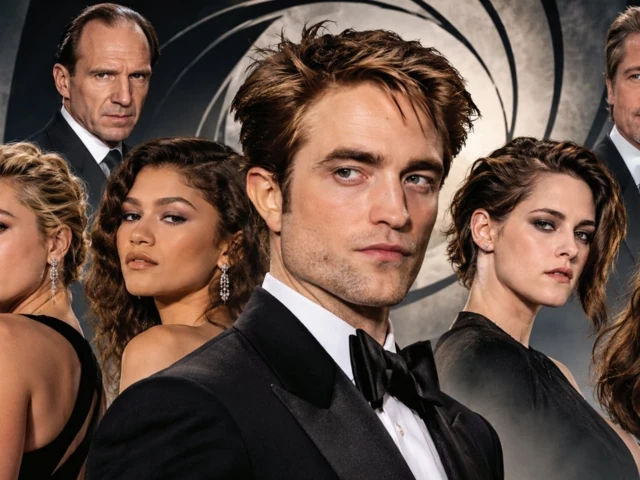
The cinematic landscape shifted permanently when Amazon MGM Studios officially confirmed Robert Pattinson as the next actor to inherit the iconic tuxedo of James Bond. While this monumental casting decision successfully brings an end to months of intense industry speculation regarding Daniel Craig’s successor, it has simultaneously opened the floodgates to an entirely new wave of theatrical conjecture. The 26th installment in the legendary espionage franchise is already shaping up to be one of the most anticipated and radically reimagined cinematic events of the decade.
With visionary filmmaker Denis Villeneuve at the helm, directing a taut, high-stakes screenplay crafted by acclaimed writer Steven Knight, the upcoming production is signaling a profound departure from the gritty, grounded realism that defined the Craig era. Instead, the creative heavyweights—bolstered by powerhouse producers Amy Pascal and David Heyman—appear poised to inject a fresh, avant-garde stylistic vitality into the legendary property.
However, before a single frame of celluloid is shot, the central preoccupation of the global entertainment ecosystem remains focused squarely on the supporting ensemble. Who will populate the morally ambiguous world alongside Pattinson’s fresh-faced incarnation of MI6’s most lethal operative? From speculative frontrunners for the coveted Bond girl roles to Hollywood heavyweights jokingly or earnestly positioning themselves for villainous turns, the rumor mill is spinning at an unprecedented velocity.
Read Also
This comprehensive report delves deep into the evolving dynamics of the 26th James Bond film. By analyzing industry murmurs, evaluating official statements from franchise veterans, and contextualizing the creative forces driving the project forward, we examine how the post-Craig era is shaping up. With production slated to commence in 2027 and a targeted theatrical release in 2028, the monumental machinery of the James Bond franchise is officially in motion—leaving audiences worldwide shaken, stirred, and eagerly awaiting every new development.
Detailed Chronology: From Craig’s Farewell to the Dawn of Pattinson
To fully comprehend the magnitude of Robert Pattinson’s casting, one must examine the transformative trajectory the franchise has undergone over the past decade. The conclusion of Daniel Craig’s tenure with No Time to Die (2021) marked a definitive closing chapter for the series. Craig’s era redefined James Bond for the 21st century, trading the campy escapism of previous decades for a visceral, serialized psychological portrait of a broken man navigating a morally compromised geopolitical landscape.
When Craig officially hung up his Walther PPK, Amazon’s subsequent acquisition of Metro-Goldwyn-Mayer (MGM) introduced a new corporate stakeholder into the equation, leading to a prolonged, highly calculated period of introspection for long-time producers Barbara Broccoli and Michael G. Wilson. For years, the studio remained tight-lipped regarding the direction of the 26th film. Countless names traversed the rumor mill, from traditional action stars to rising British television talents, turning the casting process into a global parlor game.
The turning point arrived when Amazon MGM Studios pivoted toward an elite auteur-driven model, securing Denis Villeneuve—fresh off his monumental triumphs with the Dune franchise and Blade Runner 2049—to direct. Villeneuve’s involvement immediately elevated the cinematic prestige of the project, signaling to the industry that the studio was chasing artistic auteurism alongside box-office dominance.
The subsequent recruitment of Steven Knight, renowned for his razor-sharp character dynamics in Peaky Blinders and Eastern Promises, cemented a formidable creative triad. Knight’s ability to write hyper-articulate, dangerous characters operating within complex criminal and political underworlds promised a sophisticated narrative architecture for the new Bond.
The final puzzle piece fell into place with the selection of Robert Pattinson. Over the past decade, Pattinson has executed one of the most impressive career reinventions in modern Hollywood history. Shedding the teen-idol skin of the Twilight Saga, he transitioned into an indie powerhouse before re-entering blockbuster territory with Christopher Nolan’s Tenet and Matt Reeves’ dark neo-noir opus The Batman.
Pattinson brings a unique combination of brooding physical intensity, aristocratic detachment, and chameleon-like acting prowess to 007. His casting bridges the gap between high-art cinema and global commercial appeal. By locking in Pattinson, Amazon MGM Studios has concluded the primary casting debate, paving the way for the intricate assembly of the supporting cast that will define this bold new chapter.
Supporting Context & Metrics: The Rumor Mill, Fan Theories, and Franchise Dynamics
With the anchor of the production secured, attention has turned organically to the constellation of characters orbiting James Bond. The traditional archetypes—the enigmatic Bond girl, the megalomaniacal antagonist, and the steadfast MI6 support network—are undergoing intense re-evaluation by fans, critics, and industry insiders alike.
The Search for the Leading Lady
The traditional concept of the "Bond girl" has evolved dramatically over the last twenty years, transitioning from disposable damsels in distress to complex, autonomous agents who often outmatch 007 intellectually and physically. In the context of the 26th film, media speculation has centered heavily on actors with proven dramatic weight and blockbuster credentials.
Foremost among these is Florence Pugh. Having collaborated with director Denis Villeneuve on the monumental Dune: Part Two, Pugh’s name has surfaced repeatedly in industry circles as an ideal candidate for the female lead. Her capacity to command the screen with ferocious intensity makes her a natural fit for a Villeneuve-directed espionage thriller. However, industry insiders stress that no formal offers have been extended or accepted.
Similarly, Zendaya—another alum of Villeneuve’s Dune universe—has entered the conversation among fervent fan communities. Her undeniable global star power and cool, modern screen presence align neatly with the aesthetic sensibilities likely to be employed by the director.
In a twist that sent shockwaves through social media, fan imaginations have also played with the possibility of Pattinson reuniting with his former Twilight co-star, Kristen Stewart. While an on-screen reunion carries immense pop-culture weight, some theorists have suggested casting Stewart not as a romantic interest, but as an unconventional, subversive antagonist—a prospect that highlights the appetite for radically breaking traditional casting molds.
Meanwhile, established television royalty has also thrown its hat into the ring. Bridgerton breakout star Simone Ashley publicly expressed keen interest in stepping into the franchise, adding her name to the growing roster of performers eager to claim a stake in the legendary property. Additionally, Ana de Armas—whose dazzling, action-packed cameo as CIA operative Paloma in No Time to Die remains one of the modern highlights of the Craig era—has prompted speculation regarding a potential return, though whether in the same capacity or an entirely new role remains unknown.
The Antagonist Equation: From Hollywood Royalty to Fan Favourites
Finding a foil worthy of Pattinson’s modern, cerebral Bond is perhaps the production’s most critical casting hurdle. The villain must challenge 007 not merely through brute force, but through ideological opposition.
In a surprising and lighthearted twist, Hollywood icon Brad Pitt injected himself into the discourse following the casting announcement. Praising Pattinson’s appointment, Pitt jokingly suggested that Villeneuve should give him a call regarding the villain role. While industry analysts view Pitt’s comments as playful Hollywood banter rather than a serious career move, the mere concept of an acting showdown between Pitt and Pattinson has given fan forums plenty of ammunition.
More serious industry discussions have revolved around actors like Nicholas Hoult and Cillian Murphy. Both performers possess an innate ability to project chilling intelligence and psychological volatility, making them perennial favorites for prestige antagonist roles. Yet, despite widespread fan lobbying, neither actor has been linked to a confirmed studio offer.
The Fate of MI6: Continuity Versus Reinvention
Perhaps the most delicate balancing act facing the filmmakers is determining how much of the classic MI6 supporting infrastructure to carry over from the Daniel Craig years.
The character of M, the steely head of the Secret Intelligence Service, has been a franchise fixture across multiple iterations. Ralph Fiennes, who commanded the role with gravitas and regal authority in Skyfall, Spectre, and No Time to Die, recently addressed Pattinson’s casting. Fiennes expressed deep affection for his former collaborator Daniel Craig, famously admitting he remains "in love with Daniel Craig," while simultaneously praising Pattinson as a phenomenal actor destined for success. However, Fiennes’ gracious endorsement left the door wide open regarding his own potential return, offering encouragement to the incoming star without confirming whether he will don the tweed jacket of M once more.
Conversely, Ben Whishaw—who injected whimsical humanity and cutting-edge tech savvy into the role of Q—has been forthright about his current status with the production. Speaking candidly at the London launch of the second season of Black Doves, Whishaw confirmed that the new creative team has not contacted him about reprising his role.
More pointedly, Whishaw used the platform to advocate for a clean slate, urging the franchise’s new custodians to be remarkably bold and reinvent the spy genre to make it genuinely relevant to contemporary audiences. His perspective underscores a growing sentiment within the industry: that the Pattinson era must not simply mimic the successes of the past, but must aggressively redefine what a 21st-century espionage thriller looks like.
Official Statements and Industry Reactions
The transition from one James Bond to another is never a quiet affair, requiring careful orchestration by studio executives, producers, and the incoming creative talent. With Amazon MGM Studios firmly at the helm, the corporate strategy has been designed to project absolute confidence in this daring new direction.
Amy Pascal and David Heyman, two of the most successful and prolific producers in contemporary cinema, are steering the physical production of the film. Their collective track record—spanning the Spider-Man universe, the Harry Potter franchise, Barbie, and Gravity—proves their ability to manage colossal intellectual property without sacrificing narrative integrity. By pairing their commercial acumen with Villeneuve’s uncompromising artistic vision, the studio is signaling a desire to merge blockbuster spectacle with high-end cinematic artistry.
Steven Knight’s involvement as screenwriter is equally telling. Knight is celebrated for his economical dialogue, morally grey characters, and gritty atmospheric world-building. In interviews discussing his broader career philosophies, Knight has frequently emphasized the importance of grounding high-concept premises in authentic human psychology and socioeconomic realities. Translating this ethos to the James Bond mythos suggests a narrative that will look past mere gadgetry and globe-trotting set pieces to examine the psychological toll exacted upon a state-sanctioned assassin in a shifting, fragmented world.
Publicly, the legacy stakeholders—most notably long-term producers Barbara Broccoli and Michael G. Wilson—have maintained a measured stance, ensuring that the transition honors the deep-rooted traditions of the Eon Productions legacy while embracing the modern distribution realities of the Amazon era. The consensus emerging from industry insiders is that the 26th film will serve as a foundational anchor for an expanded cinematic universe, opening up television spin-offs, character-driven side stories, and multi-platform storytelling experiences.
Future Outlook: The Road to 2028
As the initial shock of Robert Pattinson’s casting settles into a state of anticipatory excitement, the immediate future of the James Bond franchise enters a strategic holding pattern. With principal photography officially scheduled to commence in 2027, the production team has granted itself an intentional runway to perfect the script, finalize the supporting ensemble, and construct the elaborate action sequences that fans have come to expect.
A 2028 theatrical release window places the film squarely at the center of the global cinematic calendar, giving Villeneuve and his crew ample time in post-production to deliver the visual and auditory splendor that has become the director’s trademark. Collaborating once again with top-tier cinematographers, production designers, and composers, Villeneuve is poised to craft a visual language for 007 that diverges starkly from the handheld, hyper-kinetic editing styles of previous chapters, favoring instead wide, immersive vistas, architectural precision, and heavy atmospheric tension.
In the interim, the global fan base will undoubtedly continue its passionate speculation. Every minor casting rumor, every whispered location scout, and every hint regarding the plot will be dissected under a microscope by a public that views James Bond not merely as a movie franchise, but as a deeply ingrained cultural touchstone.
Ultimately, the buzz surrounding the franchise is, as the classic cocktail suggests, shaken—disrupted by a bold, unexpected casting choice and an elite auteur-driven creative team—but it is far from settled. The true measure of this new era will not be taken until the lights dim in cinemas worldwide in 2028, and Robert Pattinson steps out of the shadows, introduces himself, and reclaims the cinematic world of 007 for a brand-new generation. Until that moment arrives, the exhilarating guessing game continues.





Comments
Facebook App ID not configured. Please add it in the Customizer.