
For
generations, the landscape of historical fiction has been dominated by a singular, persistent paradigm: the chronicle of the “Great Man.” From the marble halls of Versailles to the sun-baked palazzos of Renaissance Italy, mainstream historical narratives have overwhelmingly prioritized the exploits of wealthy, powerful, and almost exclusively white men. These figures are routinely cast as the architects of civilization, while the complex socioeconomic machinery that sustained them—and the marginalized populations who bore the brunt of their ambitions—are relegated to historical footnotes.
However, a literary counter-movement is actively reshaping this traditional canon. At the vanguard of this shift are authors who draw inspiration not from dusty political treatises, but from the radicalizing power of childhood literature that dared to center the realities of race, gender, and class.
Read Also
Author Zoe Sivak stands prominently among this new wave of writers. Radicalized in her youth by the unflinching social commentary found within the American Girl book series—whose characters like Kit, Samantha, Josefina, Felicity, Molly, and Addy treated young girls as powerful agents of historical change—Sivak has translated that formative perspective into a celebrated career in historical fiction. Through her critically acclaimed debut, Mademoiselle Revolution, and her latest work, The Last Prince of Florence, Sivak systematically deconstructs conventional historical myths. By anchoring her stories in familiar historical settings—such as the French Revolution and 16th-century Renaissance Florence—she subverts reader expectations, illuminating the suppressed narratives of women of color, enslaved revolutionaries, and the laborers whose invisible work built the modern world. This article explores the evolution of Sivak’s writing philosophy, examining how contemporary historical fiction is challenging traditional power dynamics, rewriting the margins of history, and demanding a more inclusive reckoning with our shared past.
Detailed Chronology: From American Girl to the Renaissance
To understand the trajectory of Zoe Sivak’s literary philosophy, one must trace the chronological evolution of her engagement with history—beginning with the formative texts of her youth and culminating in her contemporary historical novels.
The Formative Years: The Radicalization of Childhood Reading
Long before she contemplated writing historical fiction for adults, Sivak was immersed in the world of historical children’s literature. While many young readers gravitated toward contemporary fantasy or mystery series, Sivak’s imagination was monopolized by the past. Specifically, the American Girl book series served as her introduction to historiography.
Unlike sanitized versions of history often taught in primary schools, the narratives of characters like Addy Walker (an escaped slave navigating the Civil War) and Josefina Montoya (living in 1824 New Mexico) did not shy away from structural violence. These books taught young readers that children—and specifically young girls—were not passive bystanders, but active agents confronting the unflinching realities of race, gender, and class conflict. This early literary diet established a lifelong standard for Sivak: historical fiction must possess narrative truth and systemic depth.
The Search for Breadth: Encountering the "Great Man" Paradigm
As Sivak matured, her appetite for historical truth collided with a stark publishing reality: mainstream historical fiction and non-fiction were deeply imbalanced. The genre heavily favored recent, Eurocentric events—most notably the World Wars—while maintaining a severe deficit of diverse heroes.
In her academic and personal reading, Sivak continually encountered the pervasive "Great Man" theory of history. In Western historiography, the architects of civilization were almost exclusively wealthy, powerful white men. Recognizing this narrative monopoly, Sivak identified a critical gap in the literary market. As an aspiring author, she faced a creative challenge: how to write historical fiction that balanced the familiar with the unfamiliar. She needed a recognized scaffolding—a famous setting or well-documented historical era—to draw readers in, but with a substantive perspective that would fundamentally challenge their assumptions long after the final page was turned.
Mademoiselle Revolution: Bridging the French and Haitian Revolutions
Sivak’s debut novel, Mademoiselle Revolution, put this philosophy into rigorous practice. Most Western readers possess a passing familiarity with the French Revolution: the dramatic overthrow of the ancien régime, the bloody specter of the guillotine, and radical architects like Maximilien Robespierre.
Sivak disrupted this familiar narrative by introducing the Haitian Revolution—the violent, successful overthrow of brutal enslavers that established the world’s first Black-led democratic republic—as a vital, intersecting axis. Through her protagonist, Sylvie de Rosiers, a free woman of mixed-race descent, Sivak physically and figuratively bridged the gap between Old World institutions and New World ideals. By inserting Sylvie into Robespierre’s inner circle, the novel deconstructed the sanitized mythology of the French Revolution, contrasting its ultimately autocratic trajectory with the radical democratic triumphs of the Haitian struggle, thereby challenging the reductionist label of "slave rebellion."
The Last Prince of Florence: Unmasking the Renaissance
Building upon the critical success of her debut, Sivak turned her lens to 16th-century Italy in The Last Prince of Florence. Focusing on the historical figure of Simonetta da Collevecchio—and her famous son, Alessandro de’ Medici—Sivak targeted an era deeply embedded in the Western cultural imagination.
While television series and historical buffs frequently romanticize the House of Medici, Sivak’s narrative exposes the human cost required to maintain the Renaissance fantasy. Simonetta, a woman navigating the margins of a hyper-patriarchal society, directly challenges concepts of legacy, power, and race. Through her perspective, readers witness the visible and invisible labor that kept the Medici ship afloat, shifting the focus from the glittering portraits of wealthy patrons to the marginalized bodies upon whose backs their dynasties were built.
Supporting Context & Metrics: The State of Historical Fiction Publishing
The literary interventions championed by authors like Zoe Sivak do not occur in a vacuum; they reflect broader, measurable shifts in reader demographics, publishing trends, and academic historiography regarding how historical narratives are consumed and valued.
The Demographic Shift in Readership and Authorship
Over the past decade, the historical fiction market has experienced a significant demographic evolution. According to industry analyses from publishing networks like Publishers Weekly and the Writer’s Digest community, contemporary readers—particularly women and younger demographics—are increasingly seeking out "hidden histories" that center intersectional identities.
- The Diversity Deficit: Historical fiction has historically suffered from homogeneity. Market data from literary agencies indicate that prior to the mid-2010s, over 70% of bestselling historical fiction titles focused strictly on European or American royal courts, military campaigns, or mid-20th-century European conflicts.
- The Rise of Marginalized Perspectives: In recent years, books focusing on women of color, LGBTQ+ historical figures, and colonized populations have seen a dramatic surge in both acquisition rates and bestseller list representation. Novels that re-examine eras like the Renaissance, the Enlightenment, and the Antebellum period from non-traditional viewpoints now routinely outperform traditional, single-perspective historical romances.
Comparative Thematic Framework: Traditional vs. Revisionist Historical Fiction
| Analytical Metric | Traditional "Great Man" Historical Fiction | Revisionist/Intersectional Historical Fiction (e.g., Sivak) |
|---|---|---|
| Primary Protagonists | Monarchs, generals, wealthy industrialists, political masterminds (predominantly white and male). | Enslaved individuals, mixed-race women, domestic laborers, revolutionaries from the Global South. |
| Treatment of Conflict | Sanitized political maneuvers, grand battles, idealized democratic transitions (e.g., the French Revolution viewed solely as a triumph of liberty). | Unflinching systemic violence, economic exploitation, intersecting racial and class struggles (e.g., contrasting the French and Haitian Revolutions). |
| Reader Engagement | Nostalgic comfort, reinforcement of established historical mythologies, voyeuristic glimpses into luxury. | Cognitive dissonance, intellectual challenge, exposure to suppressed human costs of historical progress. |
| Literary Objective | To entertain through the grand aesthetic of past epochs. | To interrogate power structures, uplift silenced voices, and re-evaluate shared human history. |
The Economics of Familiar Scaffolding
Publishing metrics indicate that commercial success in historical fiction relies heavily on reader recognition—what industry insiders refer to as "anchoring." Authors who attempt to write about entirely unfamiliar historical contexts often face steep commercial hurdles due to marketing friction.
By utilizing widely recognized historical backdrops—such as the French Revolution or the House of Medici—authors can successfully smuggle complex, critical socio-political discourse to a mass audience. This strategy leverages pre-existing market interest in famous eras while subverting the ideological framework traditionally associated with them, proving that commercial viability and radical historiographical critique are not mutually exclusive.
Official Perspectives & Authorial Intent
To fully grasp the mechanics of this literary movement, one must examine the direct statements and guiding philosophies of the creators driving it. Zoe Sivak’s reflections on her craft provide profound insight into the responsibilities of the modern historical novelist.
Deconstructing the "Sanitized" Past
In discussions regarding her portrayal of historical revolutions, Sivak has consistently emphasized the danger of romanticizing political violence selectively. In an interview detailing the genesis of Mademoiselle Revolution, she noted the distinct disparity in how Western education and literature treat concurrent uprisings:
"The French Revolution was both savagely brutal and unsuccessful, but the movement is held up as a democratic triumph. The Haitian Revolution, while also ruthless and violent, did result in a true democracy. One revolution is explored and romanticized, and the other is frequently reduced to ‘a slave rebellion.’ Through Sylvie, we can critique these hollow narratives and the men who uphold them."
This critique strikes at the heart of historical bias. By juxtaposing the two revolutions, Sivak exposes how Eurocentric historical frameworks selectively assign heroism and villainy based on the racial and national identities of the participants.
Humanizing the Historical Icon
Beyond critiquing macro-political structures, Sivak’s authorial mission involves stripping away the marble veneer from historical figures to reveal their complete humanity—flaws, contradictions, and all. Rather than treating historical icons as infallible gods or irredeemable monsters, she advocates for a holistic portrayal that places them alongside the everyday people who enabled their existence:
"Robespierre wrote love poetry. Alessandro de’ Medici broke his nose playing football. These men, and the women that realized them to their fullest potential, deserve equal footing on our shelves."
By humanizing the architects of power while simultaneously elevating the domestic, emotional, and physical labor of women like Simonetta da Collevecchio, Sivak argues for a more democratic approach to historical memory.
The Ethical Duty of the Historical Novelist
Ultimately, Sivak frames the act of writing historical fiction not merely as an exercise in world-building, but as an ethical choice. In her view, authors hold immense power over how society remembers its collective trauma and triumphs. She poses a direct challenge to her peers and readers alike:
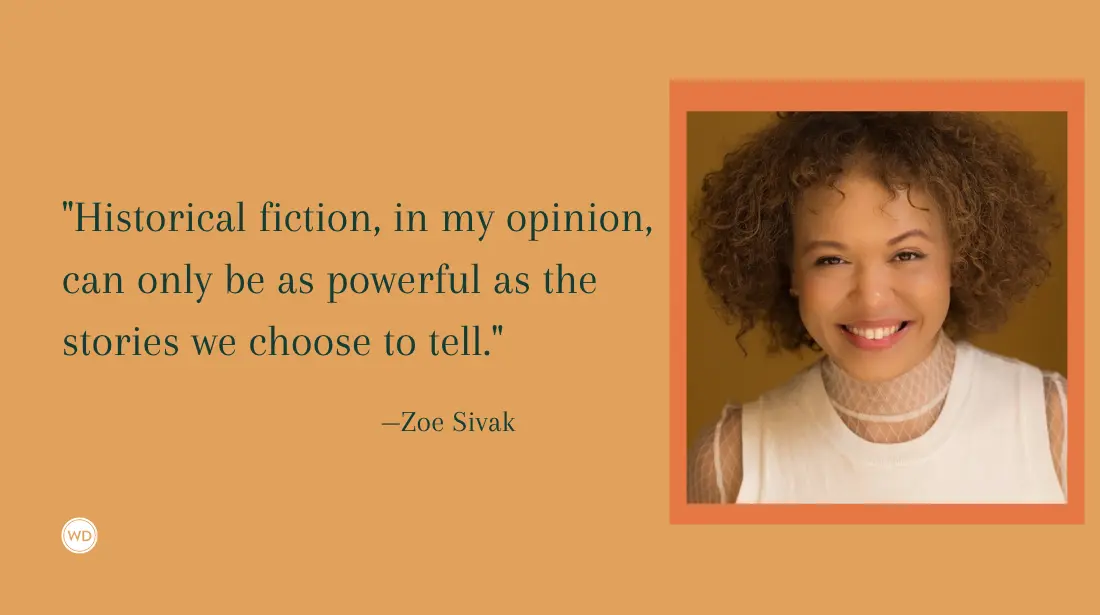
"Historical fiction, in my opinion, can only be as powerful as the stories we choose to tell. Are we sharing a new perspective? Are we uplifting a silenced voice? Are we righting a wrong? Are we saying something new?"
This manifesto underscores a fundamental shift in the genre: historical fiction is no longer content to serve as a comforting escape into aestheticized nostalgia. Instead, it has evolved into a vital arena for historical reckoning, interrogation, and truth-telling.
Future Outlook
As the literary landscape continues to evolve through the 2020s and beyond, the trajectory of historical fiction points toward an increasingly decentralized, intersectional future. The monopoly held by the "Great Man" theory is steadily fracturing, making way for a richer, more chaotic, and infinitely more accurate tapestry of human history.
What Lies Ahead for the Genre
- Expansion Beyond Western Europe: Publishers and literary agents are actively seeking manuscripts that explore pre-colonial histories across Africa, Asia, and the Americas, written by authors with deep ancestral or academic connections to those regions. This will help dismantle the lingering remnants of Eurocentric hegemony in historical publishing.
- The Intersection of Historiography and Speculative Elements: Authors are increasingly blending rigorous historical research with speculative or magical realist elements to capture the psychological and cultural realities of marginalized peoples whose spiritual and cosmological worldviews were suppressed by colonial powers.
- Interactive and Multimedia Historiography: With the rise of digital archives, podcasts, and immersive research platforms, modern historical novelists are equipped with unprecedented access to primary source materials detailing the lives of ordinary citizens, enslaved populations, and working-class women. This accessibility will likely result in even greater granular precision in future historical fiction.
The Enduring Legacy of Radical Literacy
The journey from devouring American Girl novels in childhood to penning subversive, critically acclaimed historical fiction illustrates a powerful generational truth. The stories we consume in our formative years lay the psychological groundwork for how we interrogate power structures in adulthood.
Authors like Zoe Sivak prove that historical fiction can be both commercially vibrant and intellectually revolutionary. By inviting readers into the worlds they think they know—only to strip away the comforting illusions of whiteness, absolute privilege, and patriarchal infallibility—these writers are permanently altering our relationship with the past.
Great men may remain the prominent anchors of conventional historical memory, but thanks to a growing movement of revisionist authors, we are finally shedding light on the multitudes who kept their ships afloat. As long as storytellers continue to ask the vital question—Whose voice are we uplifting?—the future of historical fiction will remain a powerful instrument for truth, empathy, and justice.





Comments
Facebook App ID not configured. Please add it in the Customizer.