
Executive Overview
In an era increasingly characterized by epistemological uncertainty—where the boundaries between information, satire, advertising, and artificial intelligence grow daily more porous—the nature of "truth" has become one of contemporary culture’s most fiercely contested battlegrounds. While media theorists and social commentators diagnose this phenomenon as a uniquely modern malaise of the "post-truth society," acclaimed author Nafissa Thompson-Spires offers a different, historically rooted perspective: for marginalized communities, particularly Black Americans, objective truth has long been manipulated, gaslit, and fragmented by dominant social structures.
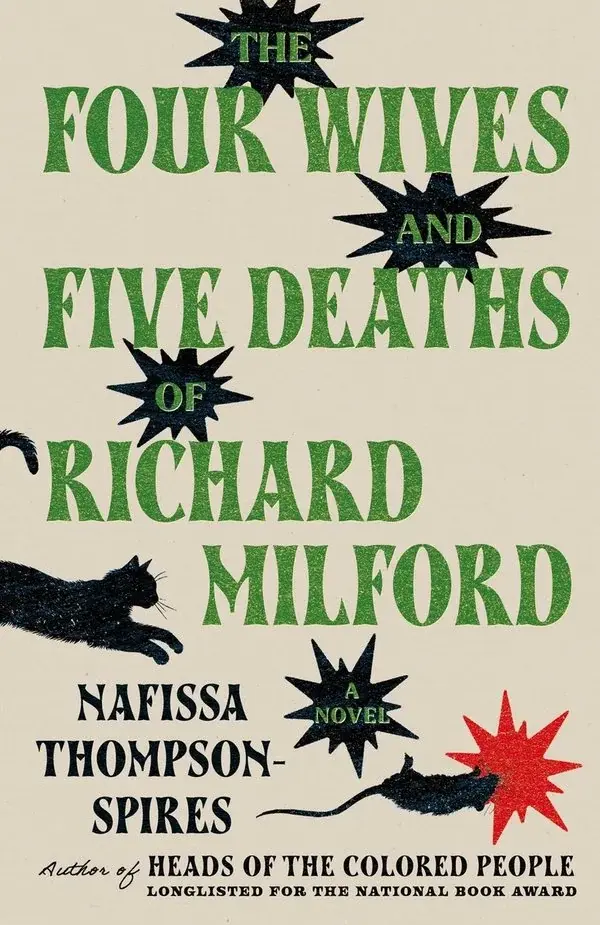
Following her critically acclaimed, National Book Award-longlisted debut short story collection Heads of the Colored People, Thompson-Spires returns to the literary foreground with her debut novel, The Four Wives and Five Deaths of Richard Milford. Set in the fictional, all-Black town of Newville, Oklahoma, during the 1920s, the novel serves as both a tightly wound whodunit and a sophisticated dark satire. Center stage is Richard Milford—an unrepentant moonshiner, serial womanizer, and community terror—whose absurd, recurring demises challenge the conventional boundaries of narrative realism.
In a wide-ranging dialogue with literary journalist Jalen Giovanni Jones for Electric Literature, Thompson-Spires dissected the mechanics of her latest work. She explored how narrative structure can interrogate systemic gaslighting, the psychological burden of the "sophomore slump," the theoretical underpinnings of Black satire, and the concept of "Great Time"—a framework articulated by author John Edgar Wideman wherein history operates not linearly, but cyclically. Thompson-Spires’ work demonstrates how speculative elements and literary play can dismantle harmful societal archetypes while honoring the complex legacies of historic Black self-governance.
Read Also
Detailed Chronology: The Evolution of a Literary Breakthrough
+-----------------------------------------------------------------------------------+
|                            LITERARY TRAJECTORY timeline                           |
+-----------------------------------------------------------------------------------+
|  2018         : Publication of 'Heads of the Colored People' (Longlisted for NBA) |
|  2019–2024    : 5-Year Crafting of Debut Novel; Overcoming "Sophomore Slump"      |
|  Key Turning  : Structural Breakthrough via Consultation with Author R.O. Kwon    |
|  2026/2027    : Release of 'The Four Wives and Five Deaths of Richard Milford'    |
|                 (Named First Novel Prize Finalist)                                |
+-----------------------------------------------------------------------------------+
From Short Fiction to Structural Experimentation
The transition from short story writer to novelist is rarely seamless, and for Thompson-Spires, the five-year development of The Four Wives and Five Deaths of Richard Milford was marked by intense structural deliberation. Heads of the Colored People established her as a master of concise, razor-sharp social commentary. However, expanding those thematic impulses into a sustained novel posed a distinct structural challenge.
"I found novel writing really difficult," Thompson-Spires admitted. "God bless all the people who can write novels, who can just pop them out so quickly. This book took me five years."
The breakthrough occurred when editorial guidance converged with a pivotal conversation with fellow author R.O. Kwon. Thompson-Spires had envisioned a premise wherein the central antagonist dies five distinct, outlandish deaths, but struggled to bind these surreal incidents into a cohesive arc. Kwon encouraged her to lean directly into that structural impossibility.
By treating the five deaths as structural anchors, Thompson-Spires constructed a novel built upon short, modular chapters that function with the self-contained precision of short stories while contributing to an overarching narrative relay race.
Mechanics of the Multi-Perspective Whodunit
Within fewer than 200 pages, the novel orchestrates six distinct point-of-view perspectives. The narrative relies on a relay-style structure: each chapter hands off the investigation of Richard Milford’s fate to another voice.
- The Four Wives: Each woman brings a distinct perspective on Milford’s domestic tyranny and romantic deceit, offering competing motivations for his demise.
- Alberta the Housekeeper: Serving as an intimate anchor, Alberta has known Milford since childhood, offering a deeply personal counterpart to the town’s broader exaggerations.
- The Newville Town Collective: Functioning as a gossipy, biased Greek chorus, the collective voice of Newville represents the town’s public memory, civic pride, and capacity for self-deception.
Supporting Context & Historical Metrics
The Historical Significance of Oklahoma’s All-Black Towns
The setting of 1920s Newville, Oklahoma, is deeply rooted in historical reality. Following the Civil War and continuing through the early 20th century, Black Americans established more than 50 historic all-Black towns across Oklahoma—spaces designed to foster economic autonomy, political self-determination, and safety from white supremacist violence. Today, only 13 of these historic municipalities remain.
+----------------------------------------------------------------------------------+
|                   HISTORICAL LANDSCAPE: ALL-BLACK TOWNS (OKLAHOMA)              |
+----------------------------------------------------------------------------------+
| Historical Total (Early 20th Century) : ~50 Municipalities                       |
| Extant Towns Today                    : 13 Municipalities                        |
| Key Historical Markers Referenced     : Booker T. Washington Tours, Boley, OK;    |
|                                         Tulsa Realities; Anti-Lynching Committees|
+----------------------------------------------------------------------------------+
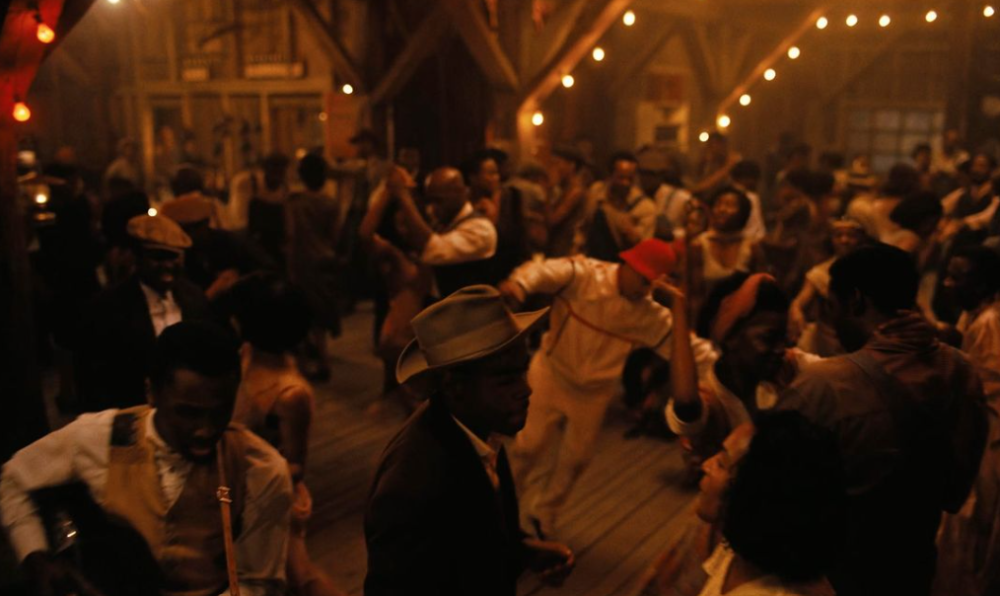
Thompson-Spires selected this setting to examine the internal politics of historic Black spaces. Newville is not depicted as an idyllic utopia, but as a complex community driven by ideological debates over Black Nationalism, civic duty, and historical legacy. The novel incorporates references to real-world history, such as Booker T. Washington’s historic travels through Boley, Oklahoma, the backdrop of the Tulsa Race Massacre, and the formation of local anti-lynching committees.
Deconstructing the "Invincible Black Man" Archetype
A central thematic element of the novel is the absurd invulnerability of Richard Milford. Despite suffering catastrophes that would be fatal to anyone else—including horse accidents, lightning strikes, and baptismal mishaps—Milford repeatedly defies death.
This choice directly satirizes both the traditional literary "trauma plot" and the racialized stereotype of the physically indestructible Black man.
+-----------------------------------------------------------------------------------+
|                        THEMATIC SUBVERSION SPECTRUM                               |
+-----------------------------------------------------------------------------------+
| REALIST TRAUMA PLOT            <------------->  BLACK SATIRE / TALL TALE           |
| Linear hardship; singular plot                  Absurdist repetition; magic real  |
| Focus on victimhood                             Focus on structural critique       |
| Myth of absolute truth                          Deconstruction of public memory   |
+-----------------------------------------------------------------------------------+
By presenting a character who survives multiple absurd fatalities, Thompson-Spires turns a critical lens onto societal perceptions of Black men. Her commentary extends to real-world issues, such as police brutality, questioning why excessive force is so often rationalized through myths of hyper-human strength or invincibility.
Official Statements & Key Analytical Insights
On Gaslighting and Epistemological Trauma
Reflecting on the continuity between her short story collection and her debut novel, Thompson-Spires emphasized that both works address systemic gaslighting:
"All these women in the book have been gaslit in many different ways. The town of Newville is gaslighting, too, when it comes to how they approach Rich—how they think about his trauma, and how they see him as this cursed, evil figure that they’re happy to be rid of… My writing is still interested in that overall project."
— Nafissa Thompson-Spires
On Satire, Metafiction, and "Great Time"
Drawing upon literary theory, Thompson-Spires highlighted the influence of postmodernist Black writers, particularly Ishmael Reed and John Edgar Wideman, in framing her approach to history:
"John Edgar Wideman talks about Great Time in his work, which describes how for Black people, time is a circle. Everything is happening at the same time and at a different time, and it’s repetitive. I wanted to think about that with storytelling… I wanted to expose how time is cyclical, and for Black people, the same things are going on now that have been going on ad nauseum."
— Nafissa Thompson-Spires
She recounted a personal family experience in Texas to illustrate the real-world weight of cyclical history: as a toddler in a ice cream shop, she inadvertently approached individuals known locally to have lynched one of her relatives—perpetrators who lived without legal consequence. This encounter reinforced her understanding of how past trauma coexists with present reality.
Overcoming the "Sophomore Slump" Through Play
Discussing the psychological pressures of following up a successful debut, Thompson-Spires shared how she overcame creative paralysis by returning to literary play:
"A lot of people talk about the sophomore slump—this idea that the second book is just so much harder… I had so much fear that I was going to fall into a sophomore slump… I had to keep reminding myself of what I tell my students, which is that play always has to come back into the picture. If you’re stuck, play… As soon as I felt like I had permission to be playful, I ran with it."
— Nafissa Thompson-Spires
Comparative Assessment: ‘Heads’ vs. ‘Richard Milford’
| Feature / Metric | Heads of the Colored People (2018) | The Four Wives and Five Deaths of Richard Milford (2026/2027) |
|---|---|---|
| Format | Short Story Collection | Linked Debut Novel / Satirical Mystery |
| Primary Setting | Contemporary Urban/Suburban USA | Fictional All-Black Town (Newville, OK, 1920s) |
| Structural Logic | Standalone thematic vignettes | Modular, relay-style multi-POV narrative (<200 pages) |
| Dominant Tone | Darkly comedic, hyper-realistic | Absurdist, tall-tale satire, magical realism |
| Core Critique | Contemporary middle-class Black identity & microaggressions | Post-truth history, the trauma plot, and the "invincible Black man" myth |
| Critical Recognition | National Book Award Longlist | First Novel Prize Finalist |
Future Outlook & Literary Legacy
The publication of The Four Wives and Five Deaths of Richard Milford marks a key moment in contemporary African American fiction. By blending historical fiction, whodunit mechanics, and postmodern satire, Thompson-Spires offers a compelling exploration of how communities construct memory, truth, and myth.
As readers navigate an increasingly uncertain media landscape, Thompson-Spires’ work serves as a reminder that questioning narrative truth is far from a modern novelty. Through dark humor, structural innovation, and historical awareness, her novel demonstrates the power of fiction to interrogate how society decides who is remembered, who is vilified, and whose stories endure.




Comments
Facebook App ID not configured. Please add it in the Customizer.