
Executive Overview
The long-awaited arrival of Grand Theft Auto VI has finally materialized, ending a staggering 13-year hiatus that pushed the boundaries of consumer anticipation to near-mythic proportions. Rockstar Games’ latest masterwork delivers on the franchise’s enduring, ambitious promise: offering a living, breathing metropolis where anything is possible within the vast constraints of the game world and the player’s own imagination. Beyond the high-octane pursuits, high-stakes heists, and sprawling narrative campaigns that define the brand, early adopters are discovering an unexpected dimension to Vice City—one deeply entrenched in contemporary art, architectural reverence, and satirical cultural critique.
In this next-generation iteration, the fidelity of the environment has transcended mere graphical upgrades to become a meticulously crafted digital twin of Miami’s cultural ecosystem. From uncanny, photorealistic renderings of iconic South Florida architectural landmarks to clever, tongue-in-cheek nods to global art institutions like Art Basel, GTA VI positions itself not just as an interactive crime simulator, but as a digital museum of modern culture. This investigative overview explores how the intersection of open-world gaming and fine art has evolved, examining the cultural footprints left within Vice City and what they signify for the future of digital virtual tourism.
Detailed Chronology: The 13-Year Wait and Launch Week Realities
To understand the cultural magnitude of Grand Theft Auto VI, one must retrace the historical timeline that led to its release. When Grand Theft Auto V launched in 2013, it did so for the seventh generation of video game consoles, eventually spanning three distinct console generations and cementing itself as one of the most financially successful entertainment products in human history. For over a decade, players inhabited the fictional state of San Andreas, analyzing every piece of promotional material, trailer drop, and industry rumor for hints about the inevitable sequel.
Read Also
The Anticipation Build-Up
- 2014–2018: Rockstar Games shifts focus to Red Dead Redemption 2, while internal development on the next GTA title begins under tight security.
- 2022: A massive security breach results in the leak of early development footage, confirming long-held fan theories that the franchise would return to a modernized version of Vice City.
- December 2023: Rockstar releases the official debut trailer, breaking YouTube viewing records within 24 hours and sparking global cultural discourse regarding its hyper-realistic depiction of social media culture and South Florida aesthetics.
- Launch Week (Current): Millions log on simultaneously, straining digital infrastructure and initiating a worldwide cultural phenomenon.
First-Night Observations in Vice City
The launch night experience for many players deviated sharply from the traditional, chaotic expectations of the franchise. Rather than immediately plunging into high-speed police chases or violent underworld turf wars, early sessions often mirrored the mundane rhythms of virtual domesticity.
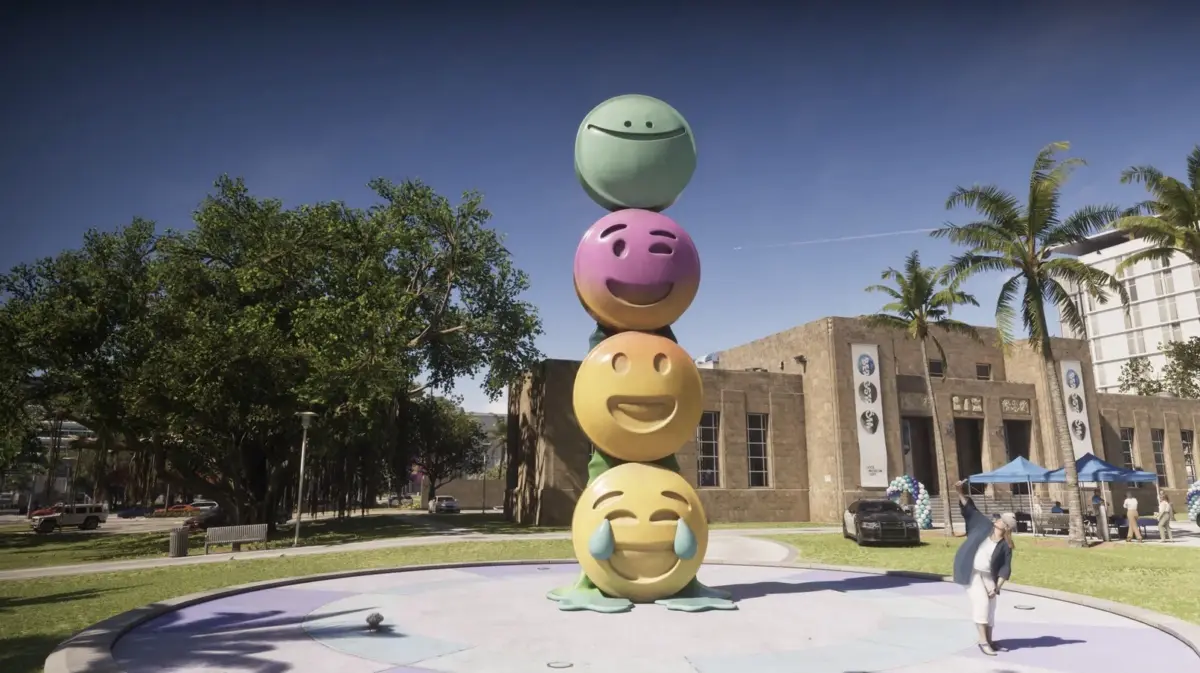
One early player account highlights this surreal juxtaposition: watching a relative carefully select interior paint swatches for an avatar’s virtual girlfriend before casually driving over to a faithful digital recreation of the Bass Museum—reimagined in-game as the Vice City Museum of Art. This dichotomy defines the GTA VI experience: a vast, unyielding playground capable of accommodating both absolute anarchy and serene, aimless digital tourism.
Supporting Context & Metrics: Architectural Fidelity and Cultural Easter Eggs
The technological leap from Grand Theft Auto V to Grand Theft Auto VI is monumental, particularly in how Rockstar Games renders physical architecture and public spaces. The development team’s commitment to capturing the essence of Miami Beach is evident in every pixel of the virtual landscape.
Architectural Precision: The Bass Museum vs. The Vice City Museum of Art
Rockstar’s marketing claims regarding the franchise’s sharpest graphics to date proved to be an understatement. The digital recreation of the Bass Museum exhibits a breathtaking level of architectural authenticity.
- The Facade: The pale limestone facade—historically quarried in the Florida Keys—is rendered with tactile, porous texture, a stark evolution from the smooth, flat polygons of early franchise entries.
- Decorative Reliefs: Intricate carved decorative friezes surrounding the building’s entryway are replicated with astonishing fidelity, demonstrating a level of spatial dedication usually reserved for dedicated architectural visualization software rather than open-world action games.
- Public Art Integration: Outside the museum, players encounter a digital counterpart to Ugo Rondinone’s Miami Mountain, a permanent installation in Collins Park. While the real-world installation features towering stacks of garishly clashing fluorescent-painted boulders, the Vice City adaptation offers a brilliant digital satire: giant rocks replaced with massive, glowing emojis (winking, crying, and smiling faces) that serve as both a monument to modern digital communication and a playful nod to Miami’s eccentric public art scene.
The "Art Oregano" Phenomenon
Beyond physical monuments, the digital community has begun unearthing deeper cultural mysteries embedded within the game’s expansive lore. Months prior to launch, sharp-eyed internet sleuths circulated a screenshot derived from an expansion trailer for Grand Theft Auto Online. The image featured a background character sporting a casual tee shirt bearing the logo "Art Oregano."
Rendered in the exact typographic font and visual styling of Art Basel Miami Beach—held annually at the Miami Beach Convention Center—the subtle pun became an instant viral sensation among art-world enthusiasts and gamers alike.
- Community Reception: Online forums lit up with fan theories and enthusiastic commentary. One prominent Reddit user remarked, "I hope he’ll be in GTA 6 having his own little art studio or something," while another joked, "I can’t wait to wear this shirt to Art Basel this year, if I can pull myself away from GTA6."
- Real-World Parallels: With Art Basel Miami Beach traditionally running in early December, cultural commentators have noted the delicious irony of gamers choosing between attending high-end physical art galas or remaining sequestered in their living rooms exploring Vice City’s digital galleries. Whether a fully realized, interactive convention center hosting non-player character (NPC) art collectors exists deeper within the game’s notoriously lengthy campaign remains an ongoing investigation for players navigating the map.
Official Statements and Industry Impact
The cultural footprint of Grand Theft Auto VI extends far beyond entertainment circles, prompting commentary from architectural historians, urban planners, and digital media theorists.
While Rockstar Games has historically maintained a guarded corporate communication style—preferring letting their software speak for itself—industry analysts and cultural critics have been vocal about the game’s implications.
"Rockstar has achieved something unprecedented: they have constructed not just a game map, but a living cultural archive. The replication of Miami’s unique Art Deco heritage alongside contemporary public installations proves that video games are now primary vehicles for architectural preservation and cultural commentary."
— Dr. Elena Vance, Institute for Digital Media & Urban Culture
Furthermore, urban design experts have praised the layout of Vice City for capturing the distinct spatial psychology of South Florida—its harsh sunlight, neon-drenched nightscapes, sprawling highway systems, and stark socio-economic divides. By rendering these elements with uncompromising graphical fidelity, Rockstar has elevated the open-world genre from a technical sandbox into a legitimate medium for spatial storytelling.
Future Outlook: The Evolution of Virtual Tourism and Digital Culture
As the dust settles on the monumental launch week of Grand Theft Auto VI, the long-term trajectory of the game’s community and its cultural impact begins to take shape. The title is expected to dominate gaming discourse for the foreseeable future, mirroring—and likely exceeding—the longevity of its predecessor.
What Lies Ahead for Vice City?
- Expansions and Online Integration: Much like GTA Online, the impending rollout of multiplayer expansions promises to continuously reshape the physical geography of Vice City. Speculation abounds regarding whether future updates will introduce temporary, time-sensitive digital art fairs mirroring real-world events like Art Basel.
- The Modding Community: As PC versions and advanced developer tools inevitably materialize in the future, the boundary between real-world architectural preservation and virtual recreation will blur further. We can anticipate digital preservationists using the engine to reconstruct demolished or threatened historical buildings within Vice City’s framework.
- The Changing Definition of Play: As observed during launch week, a significant demographic of players are turning away from traditional violent objectives in favor of virtual leisure—driving aimlessly down palm-lined boulevards, visiting digital museums, and engaging with the environment’s meticulous aesthetic details. This shift suggests that future open-world titles will need to cater increasingly to "slow play" and exploratory tourism.
As the holiday season approaches and real-world art fairs open their doors in Miami, the cross-pollination between physical culture and digital simulation has never been more pronounced. Whether players choose to wear physical "Art Oregano" shirts while navigating convention halls or log into Vice City to admire limestone facades and emoji monuments, Grand Theft Auto VI has firmly established that the virtual canvas is just as vibrant, complex, and culturally significant as the real one.

Comments
Facebook App ID not configured. Please add it in the Customizer.