
Executive Overview
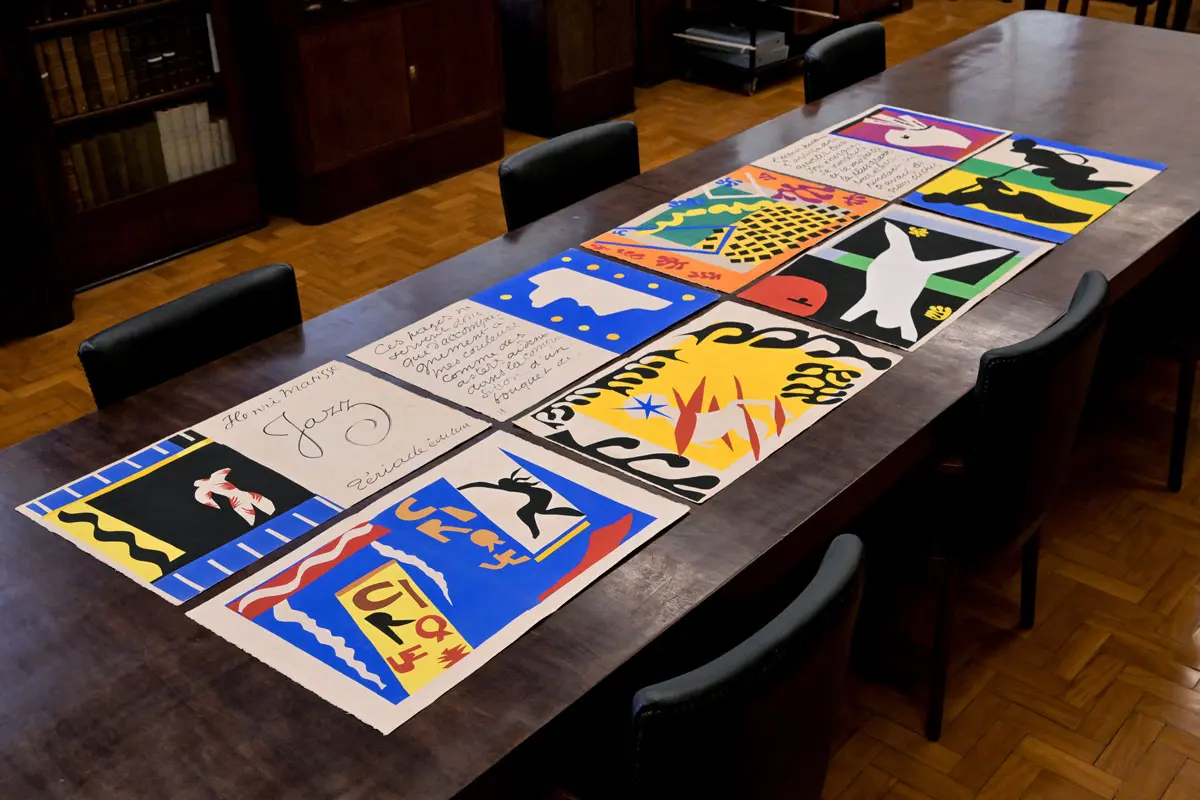
In a major triumph for international cultural heritage and law enforcement, Brazilian authorities have successfully recovered eight rare prints from Henri Matisse’s iconic 1947 Jazz series. The artworks, which hold profound historical and artistic value, were tracked down and retrieved from an apartment in the Sãu Paulo metropolitan suburb of Sãu Bernardo do Campo following a months-long, multi-jurisdictional investigation.
The prints were originally stolen during a brazen daylight robbery on December 7, at the Mário de Andrade Library—the largest municipal library in Sãu Paulo. Two armed perpetrators executed the high-stakes heist during regular public visiting hours, overpowering a security guard and two innocent visitors before fleeing into the bustling metropolis with the invaluable portfolio and five additional paintings by celebrated Brazilian modernist Candido Portinari.
The recovered Matisse portfolio includes eight defining works of the artist’s late career: The Clown, The Circus, Monsieur Loyal, The Nightmare of the White Elephant, The Codomas, The Swimmer in the Aquarium, The Sword Swallower, and The Cowboy. Valued collectively at more than 1 million Brazilian reais (approximately $193,000 USD), these pieces were on public display as part of the prominent exhibition titled "From Book to Museum: MAM Sãu Paulo and the Mário de Andrade Library."
Read Also
While the recovery of the Matisse prints marks a monumental victory for Sãu Paulo’s cultural custodians, the incident has exposed glaring vulnerabilities in the security protocols of public exhibition spaces housing world-class art. Local authorities have responded by enacting sweeping security overhauls to safeguard the city’s irreplaceable public archives.
Coinciding remarkably with a separate, high-profile art recovery operation in Europe involving masterworks by Paul Cézanne, Pierre-Auguste Renoir, and another piece by Matisse, this Sãu Paulo recovery underscores the ongoing global battle against organized art theft, black-market trafficking, and the systemic neglect of public gallery security.
Detailed Chronology: From Daylight Heist to Suburban Recovery
The December 7 Raid
The chilling sequence of events began on the afternoon of December 7, inside the historic Mário de Andrade Library. As ordinary citizens browsed collections and enjoyed the cultural offerings of Sãu Paulo’s premier public library, two armed men executed a meticulously planned raid. Capitalizing on the open-door policy of the public institution, the thieves targeted the gallery space hosting the collaborative exhibition between the Museum of Modern Art of Sãu Paulo (MAM) and the library.
According to police accounts provided to the New York Times, the assailants quickly neutralized a lone security guard on duty and subdued two visitors caught in the immediate vicinity. Wielding weapons, the robbers ripped the works from their displays with alarming efficiency. In total, they made off with eight Matisse prints from the Jazz portfolio and five modernist paintings by Brazilian luminary Candido Portinari.
Surveillance footage captured the surreal aftermath of the crime. The thieves casually traversed the crowded streets of Sãu Paulo carrying the priceless artifacts. In one particularly striking piece of security footage detailed by investigators, one of the suspects casually set a stack of heavy frames next to a pile of sidewalk garbage before momentarily walking away and returning to haul them off—a testament to the chaotic and brazen nature of the street-level transit of stolen fine art.
The Investigation and Suspect Arrests
The Sãu Paulo Civil Police launched an intensive, intelligence-led investigation immediately following the robbery. The operation unfolded in methodical stages over the spring and summer months:
- December 8, 2026: The day immediately following the robbery, law enforcement apprehended their first suspect, pointing to a localized network of opportunistic fences and criminal collaborators.
- April 2026: In a major breakthrough, detectives closed in on and arrested two additional suspects, whom investigators described as the primary masterminds and organizers of the heist.
- August 2026: Piecing together intelligence gathered from the ringleaders, authorities tracked the physical location of the Matisse prints to a residential apartment located in Sãu Bernardo do Campo, an industrial suburb on the outskirts of Sãu Paulo.
Upon raiding the suburban apartment, police recovered the pristine Matisse prints. A fourth individual was arrested at the scene on charges of receiving and harboring stolen cultural property. While the Matisse works have now been safely secured, police investigations remain ongoing regarding the exact whereabouts and recovery status of the five stolen Candido Portinari paintings.
Supporting Context & Metrics: The Significance of Matisse’s Jazz
To fully grasp the magnitude of the loss averted by Brazilian police, one must understand the unique artistic and historical weight of Henri Matisse’s Jazz series.
The Birth of Jazz
Created between 1943 and 1947, Jazz represents a pivotal chapter in the career of French master Henri Matisse (1869–1954). By the time he embarked on the project, Matisse was in his seventies, suffering from severe health complications that left him largely wheelchair-bound and physically incapable of traditional easel painting. Refusing to yield to his physical limitations, Matisse pioneered a revolutionary technique known as gouaches découpées—painting sheets of heavy paper with vibrant gouache colors and then cutting them out with scissors.
Published by art dealer and publisher Tériade in 1947, Jazz was originally conceived as an artist’s book containing 20 stencil prints (pochoirs) alongside Matisse’s own handwritten, poetic musings. The imagery draws deep inspiration from the worlds of the circus, popular theater, and musical rhythms, mirroring the improvisational, syncopated nature of jazz music.
The portfolio includes some of the most recognizable and visually dynamic compositions of the twentieth century. The prints recovered in Sãu Paulo—The Clown, The Circus, Monsieur Loyal, The Nightmare of the White Elephant, The Codomas, The Swimmer in the Aquarium, The Sword Swallower, and The Cowboy—are celebrated for their explosive chromatic energy, fluid organic shapes, and joyful defiance of physical decay and wartime trauma.
Valuation and Cultural Equity
While the insured and market value of the eight prints was calculated by Folha de S. Paulo to be in excess of 1 million Brazilian reais ($193,000 USD), fine art experts universally emphasize that such figures fail to capture the true worth of institutional masterworks. Publicly held prints of this caliber are virtually irreplaceable; they form the bedrock of public education, aesthetic enrichment, and cross-cultural dialogue.
The exhibition "From Book to Museum: MAM Sãu Paulo and the Mário de Andrade Library" was designed precisely to bridge the gap between exclusive private collecting and public accessibility. By bringing blue-chip international modernism into a municipal library setting, the exhibition democratized high art, making masterpieces directly accessible to working-class Paulistanos. The theft was therefore not merely an assault on private property or institutional insurance policies, but an attack on the cultural birthright of the citizens of Sãu Paulo.
Official Statements and Institutional Accountability
The successful recovery of the prints prompted an outpouring of relief and assertive commentary from municipal leaders and cultural officials across Brazil.
Totó Parente, the municipal secretary of culture and creative economy, issued a passionate and unequivocal statement following the police breakthrough:
"The recovery of these eight works represents news of enormous importance for the culture and heritage of Sãu Paulo. These are works that belong to the city and to the memory of the people of Sãu Paulo."
Parente did not shy away from addressing the systemic security failures that allowed two armed men to walk into a public library and walk out with priceless international treasures. He announced that the municipal administration had initiated immediate, structural remedies to prevent future breaches:
"The Secretariat has adopted measures to reinforce the security protocols of the Mário de Andrade Library and expand the protection of its heritage. Our commitment is to ensure that these works are preserved and return to fulfilling their cultural function, as part of the public heritage and memory of the city."
Security analysts point out that public libraries and municipal galleries worldwide face a difficult balancing act: maintaining an open, welcoming, and accessible environment for local communities while fortifying their facilities against sophisticated criminal syndicates. The Sãu Paulo heist has served as a wake-up call for municipal galleries across Latin America, prompting calls for biometric access points, enhanced surveillance grids, and armed, rapid-response private security details that do not compromise the democratic ethos of public cultural spaces.
Future Outlook: A Global Wave of Art Recoveries
The triumphant recovery of the Sãu Paulo Matisse prints arrived during an extraordinarily eventful 48 hours for international art crime investigators. Curiously, just one day prior to the Sãu Paulo announcement, Italian authorities in Europe announced a parallel breakthrough involving a historic museum heist.
In that operation, Italian police successfully recovered three masterworks stolen in a lightning-fast, three-minute raid from Italy’s Fondazione Magnani Rocca. The recovered European stash included:
- Henri Matisse’s delicate work on paper, Odalisque on the Terrace (1922).
- Pierre-Auguste Renoir’s Les Poissons (1917).
- Paul Cézanne’s Still Life with Cherries (1890).
Collectively valued at more than $10.4 million USD, the simultaneous recovery of major modernist works in both hemispheres highlights an evolving sophistication in transnational art recovery units, Interpol cooperation, and digital tracking of black-market art rings.
What Lies Ahead for the Sãu Paulo Masterpieces?
As the criminal justice system processes the individuals arrested in Sãu Bernardo do Campo and Sãu Paulo, museum conservators and library curators are turning their attention to the physical condition of the rescued Matisse prints. Exposure to damp suburban environments, improper handling during transport, and the stress of the physical theft can cause irreversible degradation to works on paper, which are exceptionally sensitive to humidity, light, and temperature fluctuations.
Once conservators complete their forensic and conservation assessments, the municipal government plans to return the Jazz prints to public view—though under drastically tightened security conditions. City officials have signaled that the temporary exhibition may be extended or reimagined as a celebration of civic resilience, turning a dark chapter of criminal audacity into a testament to the enduring power of public heritage.
Ultimately, the Sãu Paulo Matisse recovery serves as both a cautionary tale and a beacon of hope. It underscores the perpetual vulnerability of public cultural institutions in an era of brazen criminality, while simultaneously demonstrating that dedicated police work, international cooperation, and unwavering civic commitment can successfully reclaim history from the shadows of the black market.

Comments
Facebook App ID not configured. Please add it in the Customizer.