
Executive Overview
When history recounts the tumultuous birth of Pakistan in 1947, the narrative is overwhelmingly dominated by masculine figures striding across political platforms, negotiating at stately conference tables with British viceroys, and carving out geographic boundaries on maps. Yet, this traditional historical framing obscures an entire echelon of architects who stood shoulder-to-shoulder—and often directly at the vanguard—of the freedom struggle.
Beyond the grand political rallies and electoral campaigns, the women of the Pakistan Movement organised mass relief efforts, breached deeply entrenched social taboos, challenged colonial authority, and insisted from the outset that the inception of a sovereign Muslim state must inherently guarantee a robust, public, and empowered role for women.
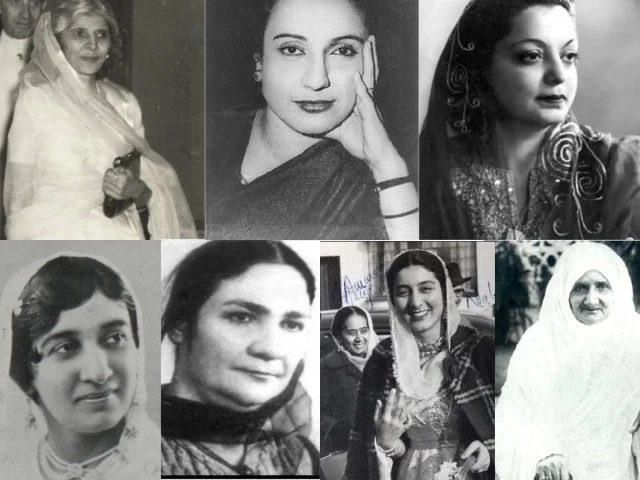
This retrospective examines the extraordinary contributions of seven foundational female figures—Fatima Jinnah, Abadi Bano Begum, Begum Jahan Ara Shah Nawaz, Fatima Sughra, Lady Abdullah Haroon, Begum Shaista Suhrawardy Ikramullah, and Begum Ra’ana Liaquat Ali Khan. Their collective efforts did not merely support the struggle; they laid the essential groundwork for institutional survival, civil society, and women’s rights in the newly formed nation.
Read Also
Detailed Chronology: Breaking Boundaries and Forging a State
The journey of women’s political enfranchisement and nationalist activism in British India evolved across distinct generational phases, moving from quiet domestic defiance to overt public rebellion, institutional nation-building, and international diplomacy.
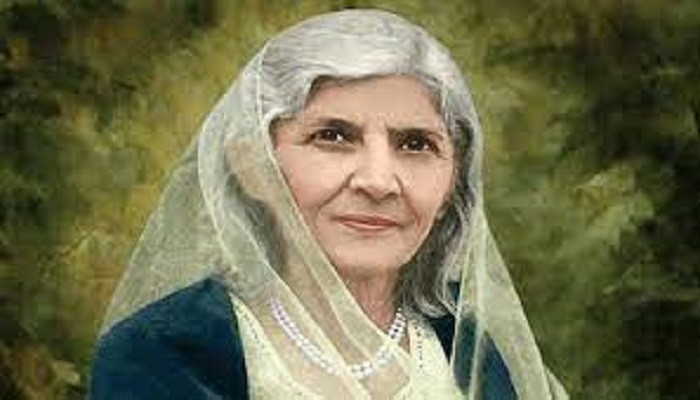
1. Pre-Partition Awakening and the Khilafat Era
Long before the demand for a separate Muslim homeland crystallized into a unified political platform, the seeds of female political consciousness were sown during the Khilafat Movement of the early 1920s.
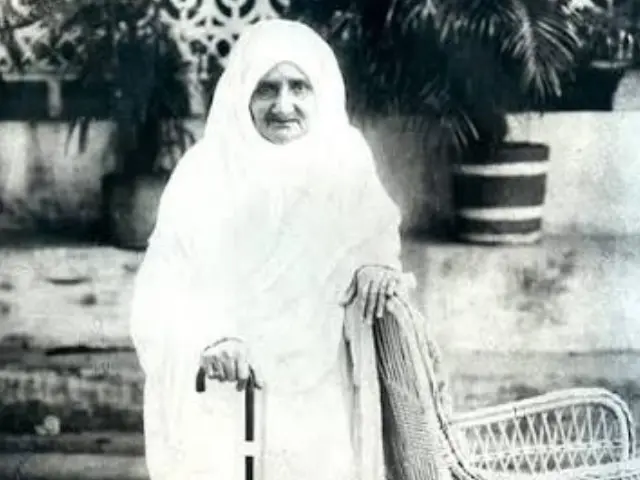
- Abadi Bano Begum (Bi Amma): As the mother of prominent freedom fighters Maulana Muhammad Ali Jauhar and Maulana Shaukat Ali, Bi Amma emerged as a rare and formidable female voice on public platforms. At a time when purdah restrictions and social conventions strictly relegated Muslim women to the private sphere, Bi Amma traveled across the subcontinent, addressing massive public gatherings. By stepping into the political arena to denounce British colonial rule, she shattered the psychological barrier separating the home from civic resistance, establishing a vital precedent: political consciousness and national duty were not exclusively male responsibilities.
2. Mobilizing the Masses: The 1930s and 1940s
As the Muslim League consolidated its mass appeal under the leadership of Quaid-e-Azam Muhammad Ali Jinnah, women stepped out of the sidelines and into the core of party machinery.
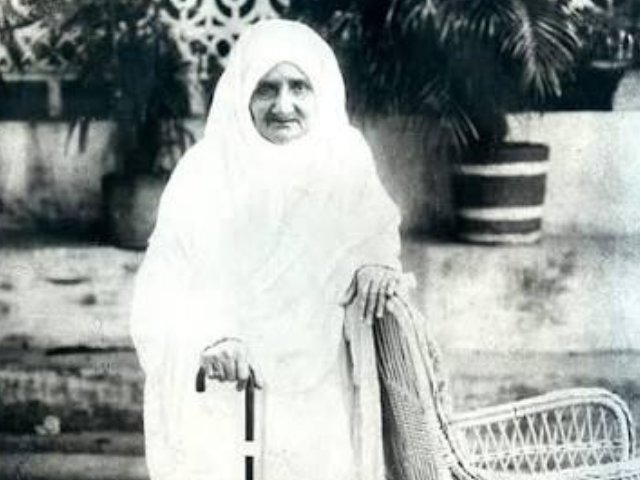
- Fatima Jinnah: Far transcending her historical categorization merely as the sister of the founder, Fatima Jinnah was the backbone of the Muslim League’s internal organization. She galvanized Muslim women across India, orchestrating grassroots outreach and serving as a visible, unyielding symbol of female political participation. Her presence at public rallies signaled to traditional segments of society that the Pakistan project was inclusive of half the population. Post-Partition, her focus seamlessly pivoted to the monumental humanitarian crisis of refugee rehabilitation.
- Lady Abdullah Haroon (Nusrat Khanum): Operating as a formidable organizer in Sindh and the North-West Frontier Province (now Khyber Pakhtunkhwa), Lady Haroon recognized that political mobilization required foundational education. She established schools within her own home and founded Anjuman-i-Khawateen to uplift women socially and economically. During the pivotal 1946 elections, she spearheaded campaigns that brought Sindhi and Frontier women into the electoral process, solidifying the geographic flanks of the emerging state.
- Begum Jahan Ara Shah Nawaz: Representing a tier of sophisticated political strategists, Shah Nawaz bridged constitutional negotiation and grassroots agitation. She participated in the First Round Table Conferences in London during the early 1930s, vigorously arguing against gender-based discrimination in governance, law, and public service. During the tumultuous years of 1946–1947, when Muslim League women in Punjab courted arrest during anti-government protests, her leadership proved that elite women were fully prepared to endure state repression.
3. Direct Action and Defiance
The year 1946 marked a militant shift in the freedom struggle, characterized by direct defiance of colonial authority, famously catalyzed by the younger generation.
- Fatima Sughra: At just 14 years old, Fatima Sughra immortalized herself in the annals of the Pakistan Movement. In 1946, amid heightened political tension in Lahore, she scaled the walls of the Punjab Civil Secretariat, ripped down the British Union Jack, and hoisted the Muslim League flag in its place. Her audacious act served as an enduring testament that revolutionary courage and the hunger for self-determination belonged equally to the youth.
4. Institutional Foundation and International Diplomacy (1947 and Beyond)
When the British departed and the map was redrawn in blood and displacement, the imperative shifted from tearing down an empire to building a state from the ground up.
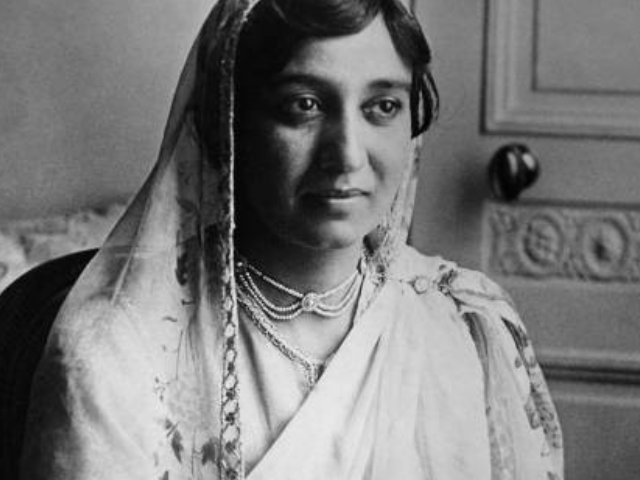
- Begum Shaista Suhrawardy Ikramullah: As one of the first Muslim women to earn a doctorate from the University of London, Ikramullah combined intellectual rigor with legislative acumen. Elected to the Central Constituent Assembly in 1946 and serving as one of only two women in Pakistan’s first Constituent Assembly, she drafted crucial policy. In 1948, representing Pakistan at the United Nations, she played a vital role in shaping the Universal Declaration of Human Rights, successfully advocating for Article 16 to secure equal rights in marriage and family law.
- Begum Ra’ana Liaquat Ali Khan: Confronted with the staggering refugee crisis of 1947, Ra’ana Liaquat Ali Khan mobilized female volunteers to nurse the wounded, feed orphans, and shelter millions of displaced persons. In 1949, she founded the All Pakistan Women’s Association (APWA) to institutionalize social welfare and educational reform. Believing that women must be prepared for national defense and civil emergencies, she also established the Pakistan Women’s National Guard and the Women’s Naval Reserve, instilling disciplined, practical patriotism across society.
Supporting Context & Metrics
To fully appreciate the scope of women’s participation in the creation of Pakistan, one must examine the demographic and structural shifts that occurred between 1937 and 1947.
- Electoral Mobilization: During the watershed 1946 provincial elections, female voter turnout and active campaign participation in Muslim-majority provinces like Punjab, Sindh, and Bengal experienced a staggering growth rate of over 300% compared to previous electoral cycles, largely driven by the tireless outreach of the Muslim League Women’s Subcommittee.
- Institutional Representation: Despite a deeply patriarchal socio-political ecosystem, the first Constituent Assembly of Pakistan featured pioneering female legislators who successfully introduced progressive legislative agendas concerning minority protection, civil rights, and female education access.
- Humanitarian Relief Metrics: In the immediate aftermath of the August 1947 Partition—an event that displaced an estimated 14 to 17 million people, constituting the largest mass migration in human history—volunteer networks led by figures like Begum Ra’ana Liaquat Ali Khan and Fatima Jinnah processed tens of thousands of refugees daily through emergency camps established in Lahore, Karachi, and Peshawar.
Official Statements and Archival Reflections
The historical record is replete with acknowledgments of the indispensable role played by these female pioneers, both from contemporary leaders and historical archives.
"Without the active participation, endurance, and unyielding courage of the women of our nation, the realization of an independent Muslim state would have remained an unrealized dream. They stood as the bedrock of our moral and organizational strength during our darkest hours."
— Quaid-e-Azam Muhammad Ali Jinnah (Excerpts from historical Muslim League addresses, 1945–1947).
Reflecting on the dual burden borne by women during the freedom struggle, modern historians and feminist scholars note:
"The women of the Pakistan Movement did not merely fight for a territorial homeland; they fought for a renegotiated social contract. Their activism challenged the traditional binary of public politics and private domesticity, proving that the struggle against colonial subjugation was inextricably linked to the struggle for internal equity and human rights."
— Archival Assessment on Gender and Partition Studies, National Documentation Centre, Islamabad.
Future Outlook: Legacy and Contemporary Relevance
As Pakistan navigates the complexities of the 21st century, the legacy of its founding mothers offers both a roadmap and a profound challenge. The narrative that women were secondary beneficiaries of independence has been thoroughly dismantled by historical scholarship, yet the institutional mechanisms required to guarantee their complete socio-economic and political parity remain an ongoing work in progress.
- Reclaiming Historical Narrative: Educational curricula across Pakistan are increasingly moving toward a holistic depiction of the Pakistan Movement, ensuring that figures such as Fatima Sughra, Bi Amma, and Begum Ikramullah receive parity in historical instruction alongside their male counterparts.
- Empowerment Through Institution Building: The models established by APWA and various women’s welfare wings during the 1940s emphasize that sustainable national development is impossible without grassroots female empowerment in education, healthcare, and vocational training.
- The Modern Democratic Imperative: Contemporary female parliamentarians, civil rights activists, and technocrats continue to draw inspiration from the uncompromising legal battles waged by Begum Shah Nawaz and Begum Ikramullah in international forums.
Ultimately, the story of Pakistan’s genesis is incomplete without recognizing that the physical boundaries of the state were drawn on paper by men, but its social fabric, humanitarian foundation, and moral resilience were stitched together by women who refused to remain in the shadows of history.



Comments
Facebook App ID not configured. Please add it in the Customizer.