In the hushed, freezing depths of the Baltic Sea, approximately 190 feet below the surface off the coast of Sweden, rests an extraordinary time capsule. Discovered in the summer of 2024 by technical divers Pawel Truszynski and Marek Cacaj of the renowned exploration group Baltictech, a pristine 19th-century shipwreck has slowly yielded secrets that bridge maritime archaeology, elite European geopolitics, and imperial Russian history.
Initially mistaken for a routine trade vessel—or, in a fleeting, romantic misidentification, a Caribbean pirate galleon—the wreck has emerged as a floating monument to post-Crimean War diplomacy. Spanning centuries of silt and silence, meticulous historical detective work has revealed that the vessel sank between 1856 and 1857 while journeying from Hamburg to St. Petersburg. Its cargo bay was stacked with an astonishing array of luxury goods: hundreds of bottles of vintage Louis Roederer Champagne, fine stoneware jars of prized Selters mineral water from the German Duchy of Nassau, delicate English ceramics, state-of-the-art scientific instruments, and rare meteorites.
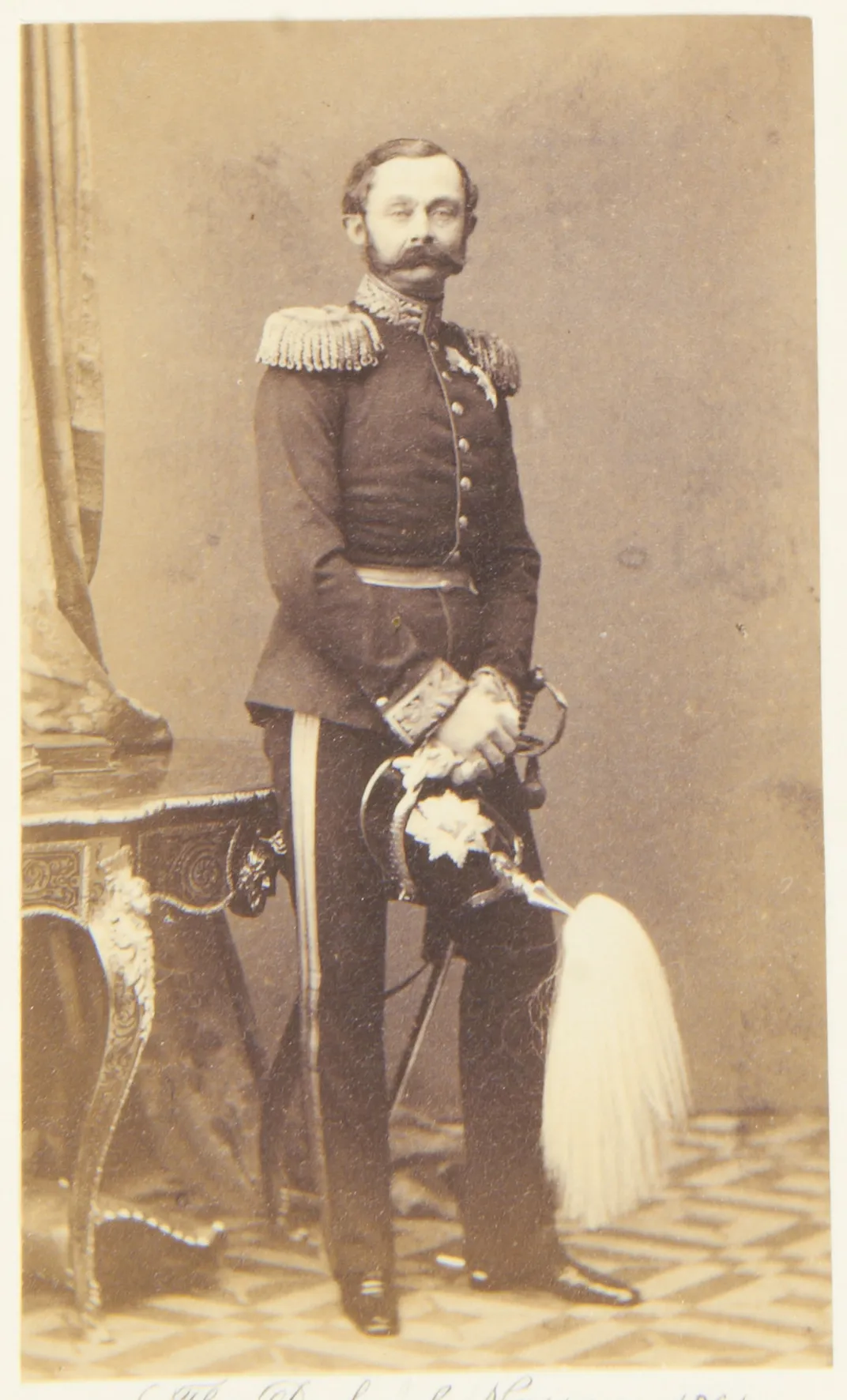
According to lead historical researcher Pawel Truszynski, this collection was not merely commercial freight. Rather, it was likely intended as a state gift from Adolf, Duke of Nassau, to Tsar Alexander II of Russia, designed to signal a thaw in European relations and re-establish commercial channels in the wake of the devastating Crimean War. As Baltictech awaits Swedish governmental approval for a third, definitive archaeological expedition, this untouched seabed monument continues to force historians to rethink the interconnected networks of 19th-century imperial luxury and international diplomacy.
Detailed Chronology: From Accidental Sonar Blip to Historical Breakthrough
The 2024 Discovery
The saga began on a late summer evening in 2024. Truszynski and Cacaj were wrapping up a technical diving excursion sponsored by Baltictech, the organizer of one of the world’s premier technical diving conferences. As they prepared their ascent, an unfamiliar anomaly registered on their sonar screen.
"It looked like absolutely nothing special—just a minor anomaly barely visible against the silt," Truszynski recalls.
Descending to a depth of 190 feet, the divers found a fully exposed cargo hold, its structural integrity preserved by the cold, brackish, and low-oxygen environment of the Baltic Sea. Rows of bottles, collapsed wooden barrels, and sediment-buried crates stretched out before them. Tomasz Stachura, leader of the Baltictech expedition, noted to the press at the time that after 40 years of diving experience, finding isolated bottles was common, but discovering a wreck with an entirely intact, multi-faceted cargo payload was entirely unprecedented.
Adhering to strict archaeological and legal protocols, the team left the bulk of the site undisturbed. However, they brought up a single clay water jug, a single Champagne bottle, and several ceramic dishes to initiate scientific identification.
Cracking the Ceramic Code
The investigation faced an immediate, frustrating hurdle: the total absence of external ship identification. "Underwater, we found no ship’s bell, no nameplate and no lettering on the hull," Truszynski explains. "We were dealing with a completely anonymous entity."
The first major breakthrough came when the divers shared photographs of the stamped clay bottle with Matylda Gierszewska-Noszczynska, an archaeologist specializing in historic pottery. She identified the emblem as belonging to the German Duchy of Nassau. Specifically, the stamp marked a high-end brand of naturally carbonated mineral water known as Selters, sourced from a spring in the village of Niederselters. Historical records confirmed that this specific stamp style was utilized between 1836 and 1866, narrowing the vessel’s final voyage window to a tight, actionable timeframe.
The Louis Roederer Revelation
Two weeks after the initial dive, Stachura’s team opened the recovered Champagne bottle to assess the preservation of its contents. A faint, embossed French inscription on the cork caught the eye of Stachura’s son, and Truszynski soon deciphered the hallmark of Reims-based Champagne house Louis Roederer and its signature offering, Carte Blanche.
Archival records housed in France revealed that Louis Roederer maintained deep, historic ties to the Russian imperial court. Tsar Alexander II had previously requested that the house reserve its absolute finest vintages exclusively for his personal use—a relationship that would eventually give birth to the iconic Cristal cuvée in 1876. Handwritten ledgers from 1857 show that Louis Roederer’s annual exports to Russia reached nearly 600,000 bottles as the Russian aristocracy rushed to replenish their cellars following wartime deprivation. Laboratory testing later confirmed that the salvaged bottle was an 1857 vintage containing a high sugar profile characteristic of the Russian export market of the era.
The 2025 Excavation and the Davenport Plate
Determined to unearth definitive proof of the ship’s identity, Truszynski and diver Michał Iwicki returned to the Baltic site in 2025. Concentrating their efforts on exploratory excavation within the deck sediments, Iwicki reached deep into the silt and unearthed a ceramic plate stamped with a factory mark and the number "56."
Experts at the Stoke-on-Trent City Archives in England confirmed that the plate was manufactured in 1856 by the Davenport ceramic factory. Crucially, Davenport Davenport-ware was immediately exported upon leaving the kiln, rarely sitting in long-term warehouse storage. This placed the vessel’s departure squarely in late 1856 or early 1857.
Combing through Amsterdam archival manifests using a strict cross-reference of technical specifications, mast counts, geographic coordinates, and multi-origin cargo profiles, Truszynski finally identified a matching historical vessel. The ship had cleared the bustling port of Hamburg carrying English porcelain (Davenport), French Champagne (Louis Roederer), German mineral water and luxury goods (Selters and Villeroy & Boch), alongside state scientific instruments and rare mineral and meteorite specimens.
Supporting Context & Metrics: The Geopolitical Landscape of 1856–1857
To fully appreciate the weight of the shipwreck’s cargo, one must examine the fragile European geopolitical ecosystem of the mid-19th century.
The Aftermath of the Crimean War
The Crimean War (October 1853 – March 1856) pitted the Russian Empire against an alliance of the Ottoman Empire, France, Great Britain, and Sardinia. Sparked by disputes over Christian holy sites in the Holy Land and Russian expansionist pressures, the conflict inflicted severe economic and military strain on St. Petersburg. Following the death of Tsar Nicholas I in March 1855, his son, Alexander II, inherited a nation locked in a punishing military stalemate.
Russia ultimately suffered a humiliating defeat, forcing Alexander II to sign the Treaty of Paris in March 1856 on unfavorable terms. The British Royal Navy had maintained a strict blockade of the Baltic Sea throughout the conflict, cutting off St. Petersburg from Western European luxury goods, industrial components, and diplomatic correspondence.
The "Czar Liberator" and German Neutrality
Domestically, Alexander II would soon earn the moniker "Czar Liberator" for his monumental 1861 decree abolishing Russian serfdom, which freed more than 20 million serfs. Internationally, however, his immediate post-war priority was the normalization of diplomatic ties.
During the war, the German Duchy of Nassau—ruled by Adolphe, Grand Duke of Luxembourg—had walked a tightrope of strict neutrality. Privately, however, the duchy leaned toward St. Petersburg, heavily influenced by familial bonds. Adolphe’s first wife, Grand Duchess Elizabeth Mikhailovna of Russia, was a cousin of Alexander II. Though Elizabeth had tragically died in childbirth in 1845, the dynastic ties remained robust.
According to Truszynski’s historical analysis, once the British lifted their Baltic naval blockade, Duke Adolphe moved swiftly to dispatch an official state mission. Commissioning a commercial vessel out of Hamburg, the duke sought to achieve two distinct goals:
Commercial Relief: Alleviate the starved private market of St. Petersburg by supplying luxury hides, wine in barrels, mass-market ceramics, and high-end tablewares.
Diplomatic Goodwill: Deliver a high-value state gift directly to the newly crowned Romanov tsar, featuring elite provisions like aged Louis Roederer Champagne, curative Selters mineral water, specialized scientific instruments, and rare natural history specimens, including meteorites.
Official Statements and Research Insights
The discovery has generated significant academic and media attention, positioning the Baltictech team at the vanguard of modern maritime archaeology.
"This wreck is an absolute, untouched monument to 19th-century diplomacy and elite international relations in Europe," says Pawel Truszynski, lead historical researcher for the project. "This cargo was intended to be a physical bridge of goodwill celebrating the return of peace to Europe, reopening blocked commercial channels and cementing Nassau’s strategic alliance with the Russian Empire."
Reflecting on the nature of archaeological fieldwork, Truszynski notes how physical artifacts transform from mere debris into historical master keys:
"The real adventure begins on land, when these silent objects suddenly come alive. It is a spectacular feeling when a clay jar ceases to be just a piece of debris from the seafloor and becomes a key that unlocks the cabinets of emperors and czars."
Tomasz Stachura, leader of the Baltictech diving expeditions, emphasized the rarity of the find when speaking to international media:
"I have been diving for 40 years, and it often happens that there is one bottle or two… but to discover a wreck with so much cargo, it’s a first for me."
Future Outlook: The Road Ahead for the Baltictech Team
While the archival records from Amsterdam and Hamburg align remarkably well with the physical evidence retrieved from the seabed, Baltictech’s investigation remains officially open pending peer-reviewed publication and absolute empirical confirmation.
The Upcoming Third Expedition
The team is currently awaiting formal authorization from the Swedish government to launch a third, highly specialized expedition to the wreck site. Once approved, the operation will divide into two distinct units:
Unit One (Perimeter Search): Tasked with sweeping the seabed surrounding the hull to locate the ship’s brass bell, which may have been displaced by powerful underwater currents or shifting sediment layers.
Unit Two (Deep Hold Excavation): Tasked with methodically excavating the deepest recesses of the cargo hold to uncover manifest items not yet recovered.
The Search for the Meteorites
The primary target for the upcoming excavation is the rumored collection of rare meteorites and scientific measuring instruments. Because these items represented immense scientific and financial value, Truszynski remains confident they survived the wreck’s descent.
"This precious and heavy cargo would have been packed into specialized, small, lead-lined or heavily reinforced wooden crates," Truszynski notes. Tucked safely beneath the resilient stoneware of the Selters water jugs and the heavy glass of the Louis Roederer Champagne bottles, these scientific instruments and meteorite specimens would have been cushioned from the initial impact with the seafloor.
Unlocking the London Insurance Registers
Recovering the meteorites or an inscribed ship’s bell will provide the "100 percent scientific identification" required to officially name the vessel. Once the ship’s identity is formally verified, researchers will gain access to 19th-century maritime insurance ledgers in London. These documents could finally reveal the exact cause of the sinking, the identity of the ship’s captain, and whether an insurance claim was ever successfully filed for the loss of one of the most remarkable diplomatic payloads of the Victorian era.
Until then, the vessel rests quietly in the dark waters of the Baltic—a pristine, untouched monument to the resilience of commerce, the tragedy of war, and the enduring allure of the Romanov court.

/https://tf-cmsv2-smithsonianmag-media.s3.amazonaws.com/filer_public/4f/2b/4f2b2208-f188-4e62-9e79-b57bf12e7c13/baltictech1.png)
/https://tf-cmsv2-smithsonianmag-media.s3.amazonaws.com/accounts/headshot/meilan_headshot2.png)
:focal(750x500:751x501)/https://tf-cmsv2-smithsonianmag-media.s3.amazonaws.com/filer_public/4f/2b/4f2b2208-f188-4e62-9e79-b57bf12e7c13/baltictech1.png)
/https://tf-cmsv2-smithsonianmag-media.s3.amazonaws.com/filer_public/39/2d/392d11b4-cd72-4f33-8589-a4e8d59109e7/image13.jpeg)
/https://tf-cmsv2-smithsonianmag-media.s3.amazonaws.com/filer_public/63/f7/63f7b69a-0de4-48be-8e30-50ad9e00a710/img_6584.jpeg)
/https://tf-cmsv2-smithsonianmag-media.s3.amazonaws.com/filer_public/a2/19/a2190fba-012b-4386-8f97-850ee50739b8/image3.jpeg)
/https://tf-cmsv2-smithsonianmag-media.s3.amazonaws.com/filer_public/2e/0c/2e0c9301-7985-4ec0-a628-101732cc728c/zar_alexander_ii.jpg)
/https://tf-cmsv2-smithsonianmag-media.s3.amazonaws.com/filer_public/5d/8f/5d8f61ec-3fff-4303-82b6-27cfc1b6b731/b6b72c4b-dc61-4559-8f4f-07e6061a3f7b.jpeg)
/https://tf-cmsv2-smithsonianmag-media.s3.amazonaws.com/filer_public/65/86/6586e3dc-87ae-4cdb-ba38-0110c33e8fb5/adolf_grand_duke_of_luxembourg_1817-1905_when_duke_of_nassau.jpg)
/https://tf-cmsv2-smithsonianmag-media.s3.amazonaws.com/filer_public/8d/cb/8dcb1a6b-0dca-4e01-8922-86659905409b/3840px-william_simpson_-_attack_on_the_malakoff.jpg)




Comments
Facebook App ID not configured. Please add it in the Customizer.