
Executive Overview
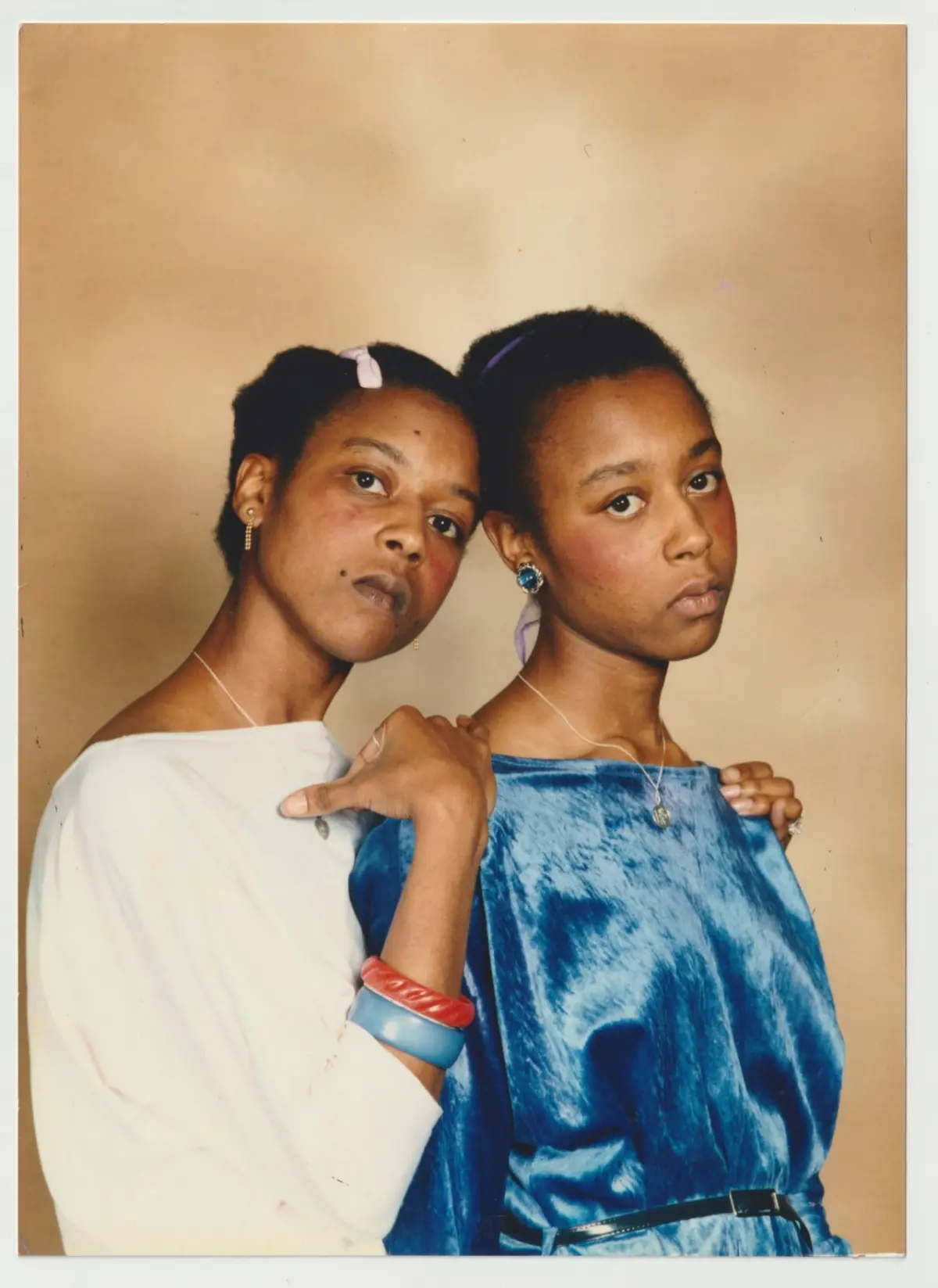
The republication of June-Alison Gibbons’s 1981 debut novel, The Pepsi-Cola Addict, alongside the posthumous release of her twin sister Jennifer’s novel Discomania, marks a critical turning point in the reassessment of twentieth-century outsider literature. Originally self-published via a British vanity press when the authors were teenagers—subsidized by pooling their welfare checks—these works have long been overshadowed by the sensationalized tragedy of the authors’ lives.
For decades, June-Alison and Jennifer Gibbons were pathologized by the British institutional apparatus. Widely known in the media as "The Silent Twins," they were committed indefinitely to Broadmoor Hospital at the age of eighteen following a spree of petty theft, vandalism, and arson. Their profound, mutually exclusive communicative pact—wherein they refused to speak to anyone outside their dyad—made them easy targets for medical reductionism, racialized stereotyping, and tabloid exploitation.
However, a recent collaborative archival effort involving rare book collector David Tibet and artist Ania Goszczyńska has brought the twins’ extensive literary output back into the cultural conversation. By preserving the original, unvarnished linguistic idiosyncrasies, malapropisms, and syntactic fervor of the manuscripts, this editorial project shifts the focus away from true-crime voyeurism. Instead, it repositions the Gibbons sisters as vanguard stylists of juvenile Americana, channeling the alienation of post-imperial British dislocation into a high-octane, campy, and ultimately tragic literary corpus.
Read Also
Detailed Chronology: From Pasts of Empire to the Halls of Broadmoor
1963–1975: Imperial Dislocation and the Genesis of Silence
The twins were born ten minutes apart in 1963 at a British army hospital in Yemen. Their parents, Aubrey and Gloria Gibbons, had emigrated from Barbados to the United Kingdom as part of a post-war generation seeking the economic and social opportunities promised by the British Empire. Aubrey served as a technician in the Royal Air Force.
Upon returning to the UK in late 1963, the family—including elder siblings Greta and David, and later a younger sister, Rosie—was stationed in various isolated, predominantly white towns across Britain. As toddlers, the twins exhibited typical development before withdrawing into a secretive, accelerated staccato speech pattern incomprehensible to outsiders. By age eight, after enduring unsuccessful speech therapy, dictation correctives, and invasive medical interventions, the sisters made a pact to abandon spoken communication with the outside world entirely.
At school, their silence was frequently misconstrued as intellectual deficit, catatonia, or malice, compounded by racial prejudice. Teachers noted them as showing "very little initiative or imagination," while medical professionals occasionally relied on dehumanizing tropes. In response, the twins retreated deeper into an elaborate internal world, staging synchronized movements, writing radio plays, and building an intricate fictional society modeled partly on American television and nearby military personnel.
1975–1981: The Solitary Years and the Birth of the Corpus
Dropping out of school at age sixteen, the twins sequestered themselves in their bedroom in Haverfordwest, Wales, communicating with their family almost exclusively through written notes. During this period of intense domestic isolation, they cultivated voracious reading habits, consuming classic literature by Jane Austen, Emily Brontë, and D. H. Lawrence, while enrolling in a correspondence creative-writing course under the unified student number 8201.
- January 1980: June-Alison writes The Pepsi-Cola Addict, centering on a despondent 14-year-old Malibu resident named Preston Elvis Wildey-King whose life is consumed by an obsession with Pepsi-Cola, unrequited love, and juvenile delinquency.
- 1980: Jennifer writes her first novel, The Pugilist, and the short story "Blessing in Disguise," followed by her second novel, Discomania, which is rejected by New Horizon press for being "too violent, too sexual and too futuristic."
- Late 1980 / Early 1981: The twins pool their welfare checks to self-publish The Pepsi-Cola Addict through New Horizon, utilizing self-taken photographic portraits for the dust jacket.
Summer 1981–1993: The Kennedy Encounters, Trial, and Incarceration
Seeking real-world experience to match their fictional narratives, the sisters pursued a trio of local youths dubbed "the Kennedys" by journalist Marjorie Wallace. Their journals from this period document an intense awakening, marked by shared drug use, petty crime, and emotional volatility.
Culminating a months-long crime wave that included vandalism, bike theft, and the arson of a tractor dealership, the twins were arrested in 1981 after taunting police with anonymous phone calls.
- Remand and Trial: Held at Pucklechurch remand center, their detailed diaries were introduced by prosecutor John Diehl to establish a pattern of dangerous psychopathology. Despite counsel advising remorse, the trial was largely overshadowed by the court’s failure to provide their requested attire.
- Broadmoor Detention (1982–1993): Committed indefinitely under the Mental Health Act to Broadmoor Hospital, the UK’s most notorious high-security psychiatric facility. Their time was marked by heavy antipsychotic regimens, isolation, suicide attempts, and creative suppression, interspersed with active participation in hospital social events that earned them the moniker "Queens of Broadmoor."
- 1986 Publication: Marjorie Wallace publishes The Silent Twins, bringing national attention to their case, though institutional release remained stalled for another seven years.
1993–Present: Transfer, Tragedy, and Literary Rehabilitation
- March 1993: Transferred to Caswell Clinic, a medium-security facility in Wales, to reintroduce them to society.
- The Death of Jennifer: On the day of the transfer, Jennifer Gibbons died suddenly of acute myocarditis at age twenty-nine.
- Post-2018 Rehabilitation: Rare book collector David Tibet befriends June-Alison in 2018, leading to the formation of an editorial collective alongside Ania Goszczyńska.
- Recent Reissues: The Pepsi-Cola Addict is republished, followed by the posthumous debut of Jennifer’s Discomania, igniting a contemporary re-evaluation of the twins’ literary merit outside the confines of clinical pathology.
Supporting Context & Metrics
The archival recovery project illuminates the sheer volume and stylistic divergence of the twins’ literary output. While true-crime media frequently frames the sisters through reductive lenses of trauma and mutism, the structural metrics of their writing reveal dedicated, highly prolific authors.
| Metric / Category | June-Alison Gibbons | Jennifer Gibbons |
|---|---|---|
| Primary Published Work | The Pepsi-Cola Addict (1981, rep. 2023) | Discomania (Posthumous release); The Pugilist (Unpublished) |
| Stylistic Hallmark | Kitsch, melodramatic pastiche, precise psychological yearning | Picaresque velocity, coarse idioms, heightened visceral violence |
| Recurrent Motifs | Californian geography, consumer products (Pepsi), illicit romance | Discotheques, cross-country transit ("flying the coop"), peer bloodlust |
| Noted Linguistic Quirks | Elevated vocabulary deployed with naive precision ("onyx mirror", "flounces") | Inventive malapropisms (read dairy for red diary; broken-off anatomy threats) |
| Institutional Duration | ~11 years at Broadmoor Hospital (1982–1993) | ~11 years at Broadmoor Hospital (1982–1993) |
The preservation strategy adopted by Goszczyńska and Tibet—retaining idiosyncratic spelling, punctuation anomalies, and grammatical fractures—allows modern readers to experience the texts not as polished commercial products, but as raw artifacts of autodidactic discovery. The stylistic contrast between the sisters is pronounced: June-Alison operates within a register of melodramatic interiority, whereas Jennifer’s prose is characterized by kinetic, picaresque violence and a relentless narrative drive.
Official Statements & Critical Reception
The cultural reassessment of the Gibbons sisters relies heavily on contemporary literary criticism, archival analysis, and retrospective commentary from cultural critics and journalists.
"Activists and theorists misappropriated the sisters’ story in order to pose questions about the nature of identity and the strange birthright that twins are forced to bear."
— Hilton Als, The New Yorker (2000)
Journalist Marjorie Wallace, whose 1986 bestselling account The Silent Twins brought international awareness to the case, reflected on the magnetic pull of their diaries:
"Every sentence was written in such a compelling way that it was impossible not to finish reading an entry once it was started. I was sucked into the minutiae of the twins’ daily routine, and absorbed by their thoughts, dreams, reflections, and often startling imagery."
In contrast to the psychiatric establishment’s mid-twentieth-century dismissal of their writing as "pornographic rubbish" or evidence of untreatable detachment, contemporary literary critics frame the texts as vital contributions to outsider art. The unyielding commitment to vernacular experimentation places their output alongside established modernist and avant-garde traditions, effectively dismantling the barrier between clinical pathologization and literary achievement.
Future Outlook
The rediscovery and ongoing republication of the Gibbons archive signal a permanent shift in how outsider literature and institutionalized authors are received by the literary establishment. No longer relegated solely to the morbid curiosities of true-crime podcasts and documentary exposés, June-Alison and Jennifer Gibbons are being evaluated strictly on the merits of their creative output.
June-Alison Gibbons, now living in Pembrokeshire in her sixties, has returned to writing with renewed vigor. Operating from a routine that begins at dawn, she is currently at work on a new novel set in Sacramento, California, maintaining the thematic focus on troubled youth and American landscapes that characterized her teenage debut.
With the complete recovery of Jennifer’s manuscript Discomania and the ongoing cataloging of uncollected short stories, poems, and correspondence at the Hastings archive, scholars have unprecedented access to a fully realized literary universe. The rehabilitation of the Gibbons sisters’ legacy ensures that their voices—once stifled by institutional confinement and societal prejudice—will continue to resonate within the canon of twentieth- and twenty-first-century literature.


Comments
Facebook App ID not configured. Please add it in the Customizer.