
Executive Overview
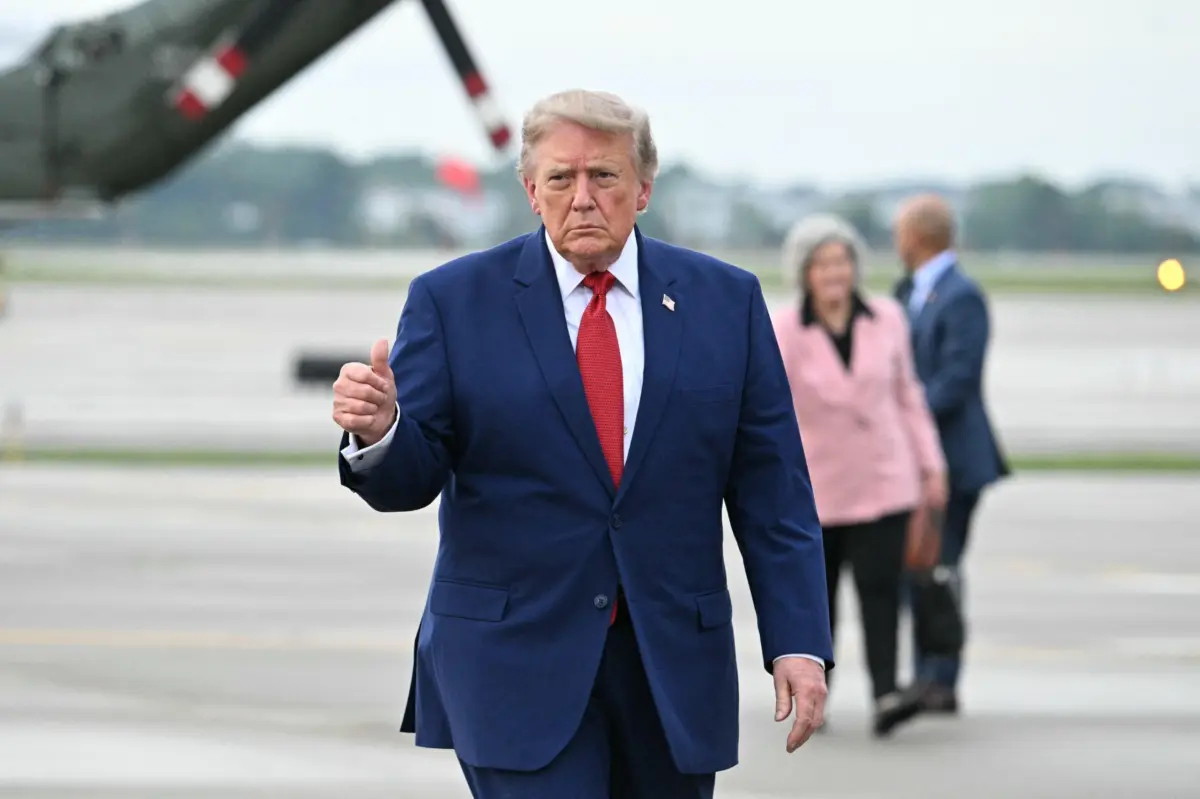
The architecture of post-World War II American foreign policy is undergoing a profound and accelerating stress test. In a development that bridges personal nostalgia with transactional geopolitics, President Donald Trump has signaled a major pivot in US posture toward the Korean Peninsula, announcing a substantial rollback of scheduled joint military exercises with South Korea. Citing his "very good relationship" with North Korean dictator Kim Jong Un—whose personal correspondence Trump famously retained after leaving office in 2021—the administration has once again disrupted decades-old alliance management strategies.
This latest move is far from an isolated diplomatic maneuver. It represents a broader, second-term trend in which traditional American defense commitments are increasingly tied to personal grievances, transactional trade disputes, and isolated foreign policy demands. From the Indo-Pacific to the heart of Europe, the calculus governing America’s overseas military footprint is shifting.
Trump’s decision to curtail military drills with Seoul—joint exercises that have formed the backbone of regional deterrence for over 70 years—coincides with escalating tensions over trade agreements, regional defense cost-sharing, and South Korea’s refusal to participate in US military operations targeting Iran. Simultaneously, the administration’s friction with traditional European allies over defense spending, geopolitical alignments in the Middle East, and territorial ambitions in the Arctic underscores a turbulent era for US security guarantees. This report examines the chronology, underlying metrics, strategic implications, and future outlook of a changing global defense paradigm.
Read Also
Detailed Chronology: From "Love Letters" to the Rollback of Pacific Drills
The resurgence of diplomatic and personal signaling between Donald Trump and Kim Jong Un marks a surreal return to the high-stakes diplomacy of Trump’s first term. To understand the gravity of the current military drawdown, one must trace the timeline of US-North Korean relations alongside the simultaneous friction points developing between Washington and Seoul.
The First-Term Foundation (2017–2021)
- Late 2017: Rhetoric reached a fever pitch when Kim Jong Un publicly labeled Trump a "mentally deranged US dotard," threatening to tame the American president with fire. Trump countered with threats of "fire and fury like the world has never seen."
- 2018–2019: The antagonism abruptly shifted into an unusual diplomatic courtship. High-profile summits in Singapore and Hanoi were accompanied by what Trump described as "love letters" from the North Korean leader. Trump’s fondness for this correspondence led him to retain these sensitive presidential records at Mar-a-Lago upon leaving office in 2021, drawing scrutiny from the National Archives.
- First-Term Drills: Even during his first term, Trump frequently questioned the financial utility of joint military exercises with South Korea, famously referring to them as "war games" that were prohibitively expensive and paid for primarily by the United States.
The Second-Term Friction and Tariff Clashes (2025–Present)
- Early 2025: Tensions over alliance burdens culminated in a new trade and security agreement framework. However, legislative delays in Seoul prevented the South Korean parliament from ratifying the deal promptly.
- Mid-2025 to Early 2026: Frustrated by what he viewed as non-compliance, Trump lashed out with aggressive tariffs against South Korea, accusing Seoul of failing to live up to its bilateral commitments.
- August 2026: As annual, decades-old US-South Korea military exercises approached, Pyongyang predictably issued strong warnings of a "strong response." Rather than standing firm alongside Seoul, Trump took to social media to announce a "substantial reduction" in the drills. He explicitly credited his personal relationship with Kim Jong Un, whom he described as having been "unthreatening and respectful" during his presidency—overlooking past hostilities.
- The Iran Factor: In the same announcement, Trump revealed an unorthodox diplomatic linkage. He noted that he had recently asked the President of South Korea to join the United States in the "Denuclearization of the Islamic Republic of Iran," a request that was met with a polite refusal. Trump acknowledged the connection was "somewhat unrelated (?)," yet it laid bare the transactional nature of contemporary American alliance expectations.
Supporting Context & Metrics: The Global Military Footprint Under Review
The US military posture relies on an extensive network of overseas bases and permanent troop deployments designed to project power, reassure allies, and deter adversaries. However, Trump’s second term has brought these foundational deployments under intense domestic and international scrutiny.
The South Korean Deployment in Context
The United States maintains its highest concentrations of permanent overseas military personnel in a select group of allied nations:
- Japan: Home to the largest contingent of forward-deployed US forces, anchoring the US security umbrella in East Asia.
- Germany: Historically the epicenter of European defense, though its numbers are actively shrinking.
- South Korea: Houses tens of thousands of active-duty US troops alongside cutting-edge military infrastructure, serving as a critical deterrent against North Korean aggression and regional hegemony.
While the exact numbers fluctuate, the US troop presence in South Korea has traditionally been viewed as inviolable. Today, however, that permanence is questioned by an administration that measures security guarantees through an immediate cost-benefit analysis.
The European Theater: Harassment, Withdrawals, and Geopolitical Rifts
While Asia feels the shockwaves of transactional diplomacy, Europe has borne the brunt of the administration’s second-term pressure campaign.
- The German Withdrawal: In May, the administration announced its intent to withdraw 5,000 US troops from Germany—where more than 38,000 service members are currently stationed—with Pentagon timelines projecting completion within 6 to 12 months. Trump warned that this reduction could go "a lot further."
- Wider European Threats: Similar threats have been directed toward Italy and Spain. Rumors and preliminary policy floated via internal Pentagon communications have even raised the prospect of drawing down or entirely removing US forces from NATO commitments in Europe.
- The Root Causes: While long-standing American complaints about European nations failing to meet NATO defense spending targets (the 2% GDP threshold) remain a primary driver, the nature of these threats has evolved. In the second term, they are explicitly weaponized to support administration foreign policy objectives. For instance:
- The Iran War Rift: Trump’s attempts to drag European allies into the conflict with Iran have met fierce resistance. German Chancellor Friedrich Merz clashed with Trump over the war, leading directly to the troop reduction announcements. Similarly, Spain drew the administration’s ire by vocally opposing US military operations in the region.
- Territorial Demands: In a stark departure from traditional diplomacy, the administration explicitly tied the ongoing US troop presence in Europe to its controversial demand that Denmark cede or allow the US to take over Greenland, a strategic Arctic territory.
Official Statements and Diplomatic Fallout
The divergence between traditional national security orthodoxy and executive decision-making has created visible friction within the foreign policy establishment.
- The White House Rationale: Administration defenders frame these adjustments as a long-overdue application of "America First" realism. By demanding that wealthy allies shoulder more of their own defense burdens and refusing to subsidize what the administration views as provocative military exercises, the White House argues it is saving taxpayer dollars while carving out space for breakthrough diplomacy with adversaries like North Korea.
- Allied Responses: In Seoul, policymakers are privately and publicly grappling with a shifting security guarantee. The reduction of joint drills, executed without prior multilateral consensus, undermines confidence in the American nuclear and conventional umbrella. In Europe, leaders from Berlin to Madrid have expressed deep concern over the weaponization of security architecture to enforce compliance with secondary foreign policy goals, such as the war in Iran or territorial ambitions in the Arctic.
- Defense Establishment Pushback: Current and retired military officials have repeatedly warned that drawing down joint readiness exercises in the Korean Peninsula degrades interoperability between US and South Korean forces, potentially inviting miscalculation from Pyongyang. Furthermore, critics argue that reducing troop levels in Europe sends a destabilizing signal to Moscow and other strategic competitors.
Future Outlook: Navigating an Unpredictable Security Landscape
As the administration continues to reshape American foreign policy through personal diplomacy and transactional ultimatums, the long-term viability of the post-WWII alliance system faces unprecedented uncertainty.
- The Future of the US-ROK Alliance: If the reduction of joint military exercises becomes permanent or expands into broader force posture reviews on the peninsula, South Korea may increasingly feel compelled to hedge its security bets. This could manifest as renewed domestic debates within Seoul over independent nuclear capabilities or closer economic alignment with regional powers, fracturing the united front against North Korean provocations.
- The Evolution of NATO: European capitals are accelerating discussions regarding "strategic autonomy"—the concept of defending the continent without absolute reliance on American military might. While European defense spending has risen in response to sustained pressure, the political will to bridge the capability gap left by a potential US withdrawal remains a formidable hurdle.
- Transactional Foreign Policy as the New Normal: The conflation of unrelated policy objectives—such as linking European troop levels to Iranian war participation or Greenland territorial claims, or tying military readiness in Asia to trade disputes—signals a fundamental shift. In this new era, alliances are no longer viewed as permanent value-based pacts, but rather as fluid, conditional arrangements subject to immediate renegotiation based on the executive’s shifting political and personal priorities.
Ultimately, the administration’s strategy risks trading long-term strategic stability for short-term diplomatic theater. Whether adversaries like North Korea will moderate their behavior in response to American concessions, or whether allies will quietly adapt to an unreliable American partner, will define the geopolitical landscape of the coming decade.




Comments
Facebook App ID not configured. Please add it in the Customizer.