
Executive Overview
For three decades, the Women’s National Basketball Association (WNBA) has operated as a crucible of athletic excellence, social activism, and organizational resilience. Today, the league finds itself at a historical crossroads. On the hardwood, the WNBA is experiencing an unprecedented golden era. Players are celebrating a landmark collective bargaining agreement that guarantees historic payouts, while a massive, multi-year television distribution deal is injecting unprecedented capital into the ecosystem, promising an expanded schedule, enhanced global reach, and a rapidly growing, highly engaged fan base.
Yet, this surge in mainstream visibility has introduced a complex set of challenges. As the WNBA captures the broader American consciousness, it has simultaneously been dragged into the turbulent waters of the nation’s deepest cultural and political divides. No longer insulated within traditional sports broadcasting circles, the league has become a prime canvas for broader ideological battles concerning race, gender identity, institutional leadership, and the shifting paradigms of modern womanhood.
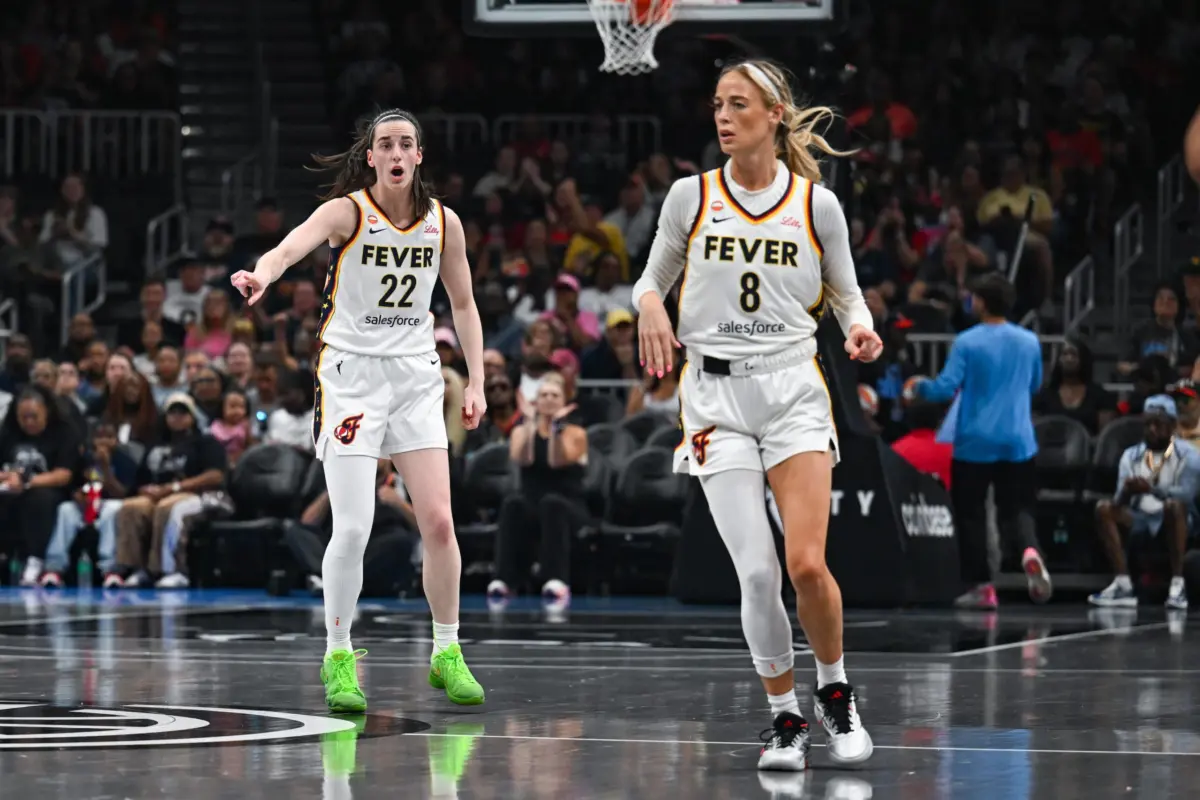
The flashpoint arrived via a confluence of staggering on-court growth, transcendent rookie phenoms like Caitlin Clark, and subsequent high-profile commentary from players such as Indiana Fever guard Sophie Cunningham. Although the WNBA has never featured a known transgender athlete, political pundits and cultural commentators have increasingly seized upon the league to debate gender policies in women’s sports. Coupled with historical identity struggles, racial polarization, and the aggressive co-optation of sports figures by political factions, the WNBA’s meteoric rise has made it the most culturally fraught sports league in America.
Read Also
To unpack this complex intersection of sports, politics, and culture, Today, Explained co-host Noel King sat down with The Ringer staff writer Seerat Sohi, an expert chronicler of the NBA, WNBA, and women’s collegiate basketball. This investigative analysis explores how a league built by marginalized trailblazers became an unavoidable proxy for the American culture wars.
Detailed Chronology: From Collegiate Spark to National Firestorm
The transformation of the WNBA from a specialized niche sports property into a national cultural battleground did not happen overnight. To understand how the league became a lightning rod for ideological discourse, one must trace a clear chronological arc defined by specific catalysts on the court and calculated amplification off it.
The 2023 NCAA Championship Game: The Inciting Incident
The foundational fault line of the modern WNBA culture war was actually cast before a single professional minute was played: the April 2023 NCAA Women’s Basketball National Championship game. Pitting Iowa superstar Caitlin Clark against LSU powerhouse Angel Reese, the high-stakes matchup shattered viewership records, drawing an average of 9.9 million viewers on ABC and ESPN.
In the game’s closing moments, as LSU secured victory, Reese famously directed John Cena’s "You can’t see me" taunt—a gesture Clark herself had used earlier in the tournament—toward Clark, alongside a point to her ring finger. What would typically be written off as routine athletic trash-talk quickly devolved into a national media spectacle.
The Outrage and Racialized Vitriol
In the immediate aftermath, Reese was subjected to intense criticism. While conservative commentators heavily targeted her behavior, mainstream figures—including former SportsCenter anchor Keith Olbermann—publicly labeled the young star "classless." WNBA fans and media observers quickly pointed out the racial double standard at play, noting that Clark’s identical gestures earlier in the tournament had been praised as competitive fire, while Reese’s expression of the exact same competitive spirit drew disproportionate condemnation and outright racist vitriol.
This single moment served as a baptism by fire for both players and permanently altered the landscape of women’s basketball coverage. It signaled to modern media figures, political pundits, and culture-war architects that women’s basketball—and specifically its intersecting demographics of race, class, and athletic expression—was a fertile ground for engaging a polarized American public.
The Arrival of Caitlin Clark and the Demographic Shift
When Caitlin Clark entered the WNBA as the first overall pick in the 2024 WNBA Draft, she acted as a powerful accelerant. Clark brought an unprecedented wave of new, predominantly mainstream, and politically diverse viewers to a league they had previously ignored.
However, her arrival immediately exposed underlying tensions. For years, the WNBA’s core audience and player base had been characterized by an overt, proud queer presence, a predominantly Black demographic, and a history of progressive political activism. Clark—white, straight, and mainstream—entered an environment where some veteran players and existing fans harbored quiet resentment over years of systemic underinvestment. The immediate implementation of league-wide charter flights upon Clark’s arrival, a luxury players had fought for decades to secure, highlighted what many viewed as institutional neglect: the league could afford basic operational standards all along, but only chose to enact them when a specific demographic profile catalyzed mainstream interest.
Sophie Cunningham and the Transgender Sports Debate
The culture war escalated from demographic friction into direct ideological combat in mid-2024 and 2025. Indiana Fever guard Sophie Cunningham, who has built a reputation as an on-court "enforcer" protecting Clark, stepped far beyond the lines of basketball analysis in a July interview with ESPN. Cunningham explicitly addressed the national debate surrounding gender identity in sports, stating:
"I think that I am here to extend love, but I also think that with love is truth, being honest. And I want to protect young girls in a locker room or young girls in sport who shouldn’t have to go against biological men."
The statement weaponized a talking point that has dominated conservative political messaging nationwide. The irony—and the stark reality of the culture war’s manufactured nature—was that no known transgender athlete has ever played in the WNBA. Yet, facts did little to stem the tide; pundits, cable news networks, and social media algorithms seized on Cunningham’s comments to position the WNBA as a primary proxy in the legislative and cultural battles over transgender rights and women’s sports categories.
Supporting Context & Metrics: Growth, Demographics, and Institutional Realities
To fully grasp why the WNBA is uniquely vulnerable to these cultural crosscurrents, one must examine the intersection of its commercial metrics, its unique player demographics, and its historical institutional missteps.
The Numbers Behind the Boom
The WNBA’s current cultural footprint is underpinned by staggering quantitative growth. Key indicators demonstrate why the league commands so much attention:
- Viewership Explosions: The 2024 WNBA regular season averaged 1.19 million viewers across ABC, CBS, ESPN, and ESPN2, representing a more than 170% increase over the 2023 season.
- Attendance Records: Total attendance surpassed 2.3 million fans in 2024, the highest in over two decades, with numerous franchises setting sellout records.
- Media Rights Windfall: The league’s upcoming media rights agreement—part of the broader NBA media package—secures approximately $2.2 billion over 11 years, averaging roughly $200 million annually, a massive jump from historic broadcast valuations.
- Economic Disparity vs. Growth: Despite generating record revenues, historical franchise undercapitalization has left players fighting for equitable profit-sharing, a reality that came to a head during negotiations for the tentative 2026 collective bargaining agreement.
Institutional Mismanagement and Identity Erasure
According to analysts like Seerat Sohi, the league’s modern struggles with its external narrative are deeply rooted in decades of institutional cowardice and miscalculated marketing strategies.
From its inception, the WNBA’s executive leadership operated understaffed and pursued an assimilationist marketing strategy. Rather than leaning into the authentic identity of its players, the league obsessively catered to an idealized, apocryphal "average American nuclear family." It sought to project a demure, girl-next-door aesthetic while the actual player ecosystem was composed of women operating on the social margins: predominantly Black, openly queer, and fiercely political.
Historical examples underscore this systemic self-censorship:
- When legendary point guard Sue Bird entered the league in 2002, she was explicitly encouraged by league stakeholders to conceal her sexual orientation.
- Early promotional materials deliberately avoided emphasizing the profound diversity, out-and-proud queer culture, and progressive advocacy that naturally defined the locker rooms.
By attempting to sand down its own edges to appease conservative sensibilities, the WNBA inadvertently created a vacuum. When cultural shifts finally forced the league to embrace its true identity—highlighting queer icons and socially conscious leaders—it found itself perpetually playing catch-up in a media environment that demands absolute authenticity.
The Right-Wing Co-Optation of Cultural Symbolism
Political movements frequently utilize athletics as a theater for ideological supremacy. The right wing’s sudden, hyper-fixated interest in the WNBA mirrors its engagement with cultural touchstones like corporate DEI policies, cinematic casting choices, and educational curricula.
The appeal lies in symbolic power. To conservative commentators and political operatives, seeing female athletes command national television audiences, sweat, compete aggressively, and act as primary agents of their own destinies—rather than existing as passive objects of male adoration—represents a direct challenge to traditional patriarchal hierarchies.
Furthermore, the WNBA has a documented history of leveraging its collective voice for structural political change. In 2020, WNBA players famously mobilized to support Raphael Warnock in his historic Georgia Senate run, effectively running then-Atlanta Dream co-owner and conservative U.S. Senator Kelly Loeffler out of ownership due to her opposition to the Black Lives Matter movement. This demonstrated that WNBA players possessed not only cultural visibility, but concrete political leverage—making the league an irresistible target for political opposition aiming to neutralize progressive momentum.
Official Statements & Industry Perspectives
The collision between professional basketball and the culture wars has forced players, league executives, and sports journalists to articulate their positions on the intersection of athletics and sociopolitical discourse.
- Sophie Cunningham (Indiana Fever Guard): Articulating the perspective of athletes aligned with traditionalist definitions of sex segregation in sports, Cunningham defended her commentary on biological fairness: "I think that I am here to extend love, but I also think that with love is truth, being honest. And I want to protect young girls in a locker room or young girls in sport who shouldn’t have to go against biological men."
- Seerat Sohi (Staff Writer, The Ringer): Analyzing the systemic roots of the current climate on Today, Explained, Sohi noted: "The WNBA is a league that invites, frankly, a lot of distraction, both because of its own institutional failures… The WNBA has become fertile ground for cult-like culture wars because the league has exploded in popularity at the same moment in the country where we are embroiled in this cultural, political, legal fight over what the role of women is in society."
- WNBA Leadership and Players Association (WNBPA): While executive leadership and the players’ union continue to champion the historic gains of the incoming 2026 collective bargaining agreement and media distribution deals, players frequently express exhaustion at having to navigate external political narratives. Most athletes and coaches maintain that their primary focus remains strictly on the tactical, competitive realities of basketball, viewing culture-war weaponization as an unwelcome distraction from the game’s athletic evolution.
Future Outlook: Navigating the Cultural Crosswinds
As the WNBA steps into its fourth decade, its trajectory is defined by a paradox: it has never been more financially secure, commercially viable, or culturally relevant, yet it has never been more vulnerable to external exploitation.
[WNBA Historic Growth]
       │
       ├──> Financial Prosperity (2026 CBA & $200M+ TV Deals)
       ├──> Mainstream Influx (Caitlin Clark & New Fan Demographics)
       └──> Cultural Polarization (Race, Gender, & Political Proxies)
1. The Commercial Dilemma
The influx of billions of dollars in media rights and corporate sponsorships guarantees that the WNBA will remain firmly in the national spotlight. However, increased visibility guarantees that culture-war architects will continue using the league as a testing ground for broader national debates. Franchise owners, league executives, and media partners must decide whether to proactively defend their players and foundational values or capitulate to manufactured outrage cycles.
2. Player Empowerment vs. External Narratives
WNBA players have consistently proven that they will not "stick to sports." From racial justice advocacy and electoral mobilization to LGBTQ+ visibility, the league’s athletes are modern civic leaders. As the player base grows wealthier and more influential under the new collective bargaining agreement, their institutional power will only expand. The friction between a traditionally progressive, outspoken locker room and a newly minted, ideologically diverse fan base will require sophisticated navigation from player leadership and public relations teams.
3. Reclaiming the Narrative
To successfully navigate the future, the WNBA must permanently abandon its historical habit of running away from its own identity. By owning its history as a league built by marginalized women, queer icons, and social justice pioneers—while welcoming millions of new fans drawn in by athletic brilliance—the WNBA can transform from a fragile proxy for America’s culture wars into a resilient blueprint for modern sports entertainment.
Ultimately, the games will continue to be played on the court, decided by jump shots, defensive stops, and tactical genius. But off the court, the WNBA has permanently graduated from a quiet athletic league to an undeniable mirror reflecting the soul of American society.




Comments
Facebook App ID not configured. Please add it in the Customizer.