
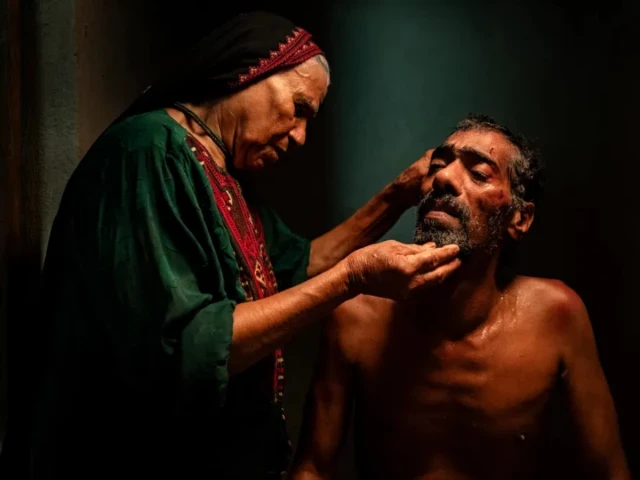
Executive Overview
The 31st edition of the Busan International Film Festival (BIFF)—widely regarded as Asia’s premier cinematic showcase—drew to a triumphant close on Thursday, punctuated by a landmark victory for acclaimed Iranian auteur Majid Majidi. Competing against a fierce, highly competitive field of 13 international contenders in the festival’s newly minted competition section, Majidi’s deeply moving drama Midday Meal captured the festival’s most prestigious accolade. Beyond the immediate prestige of the win, this triumph carries historic weight: under the Academy of Motion Picture Arts and Sciences’ newly revamped regulations, the top prize at Busan now guarantees automatic eligibility consideration for the Academy Award for Best International Feature Film.
For Majidi, whose cinematic career is defined by humanist storytelling and profound empathy, the victory represents both a professional pinnacle and an emotional homage. Set against the harsh backdrop of a struggling impoverished Iranian village, Midday Meal examines the moral disintegration and desperate choices of an educator pushed to the absolute brink.
Beyond the crowning achievement of the main competition, the 31st BIFF marked a monumental return to pre-pandemic form, deploying an expansive program of 315 films across multiple venues and welcoming upwards of 200,000 visitors. Anchored by a high-powered international jury led by legendary Chinese filmmaker Zhang Yimou, and punctuated by lifetime achievement accolades bestowed upon global icons such as Michelle Yeoh and Ann Hui, this year’s festival firmly solidified Busan’s evolving status as a cornerstone of global cinema governance and Oscar-qualifying power.
Read Also
Detailed Chronology: From Grand Opening to the Red Carpet Finale
Day Zero and the Opening Gala: Setting the Stage
The 31st Busan International Film Festival commenced under a banner of cautious optimism and artistic ambition, kicking off its multi-day celebration with the world premiere screening of South Korean director Kim Jong-kwan’s The Table: Day and Night. Eschewing bombast for quiet introspection, the intimate drama set a contemplative tone for the festival, emphasizing the nuanced interior lives of its characters and signaling BIFF’s continued commitment to highlighting sophisticated local talent alongside global heavyweights.
Throughout the opening weekend, the port city of Busan transformed into a bustling nexus of filmmakers, industry executives, critics, and cinephiles. The energy on the red carpet was palpable, buoyed by the reality that the festival had successfully assembled its largest official selection since 2019, comprising 246 officially selected titles out of 315 total screenings.
The Mid-Festival Crucible: Jury Deliberations and the 13 Contenders
At the heart of the festival’s official program was its dedicated competition section—a relatively recent addition, launched only last year to elevate BIFF from a premiere platform into an active, prize-awarding cinematic arbiter. This year’s slate featured a diverse, geographically varied cohort of 13 contenders, which notably included a strong trio of domestic South Korean titles.
Guiding this competitive fleet was an international jury presided over by towering Chinese cinematic figure Zhang Yimou, the visionary director behind masterworks like Raise the Red Lantern and Hero. Alongside his fellow jurors, Zhang spent days parsing through narratives that tackled socioeconomic despair, geopolitical friction, and the resilience of the human spirit. The deliberation process was reportedly rigorous, reflecting the high caliber of entries that spanned multiple continents and cultural touchstones.
The Closing Ceremony: Triumphs and Turning Points
As the festival drew to its culmination on Thursday, anticipation reached fever pitch surrounding the announcement of the main competition winner. When the jury ultimately selected Majid Majidi’s Midday Meal, the decision was met with widespread critical acclaim.
Majidi, accepting the award via an interpreter, delivered a speech that oscillated between deeply personal grief and fierce socio-political commentary. He dedicated the victory to his late mother, whose passing just months before principal photography cast a poignant shadow over the production. Simultaneously, the veteran director used the global platform to spotlight the resilience of the Iranian populace. He praised ordinary citizens for refusing to succumb to despair despite decades of crippling international legal sanctions, severely restricted access to essential medical supplies, and relentless geopolitical pressure stemming from the ongoing conflict with the United States.
Supporting Context & Metrics: The Shifting Landscape of Oscar Eligibility
To fully grasp the historic gravity of Midday Meal’s victory at Busan, one must examine the profound structural changes enacted by the Academy of Motion Picture Arts and Sciences in May. For decades, the category formerly known as the Best Foreign Language Film operated under a rigid, highly centralized framework: each sovereign nation was permitted to submit strictly one film, vetted and chosen by an Academy-approved domestic selection committee. While this system guaranteed broad global representation, it frequently left critically acclaimed masterpieces sidelined due to bureaucratic politics or lack of local institutional backing.
In a sweeping modernization effort, the Academy overhauled these longstanding rules, introducing a radically decentralized pathway to eligibility. Winning the top prize at one of an elite, curated group of six internationally recognized film festivals—Busan, Cannes, Berlin, Venice, Locarno, and San Sebastián—now grants a film immediate, automatic eligibility for the international feature category.
By achieving this milestone at Busan, Midday Meal bypasses the traditional, labyrinthine domestic submission gauntlet, securing a direct lane into the consideration pool. Once the broad list of international contenders is compiled through these festival pathways and traditional submissions, the Academy winnows the massive field down to an elite shortlist, eventually culminating in the final five official nominees. This paradigm shift instantly elevates the strategic importance of the Busan International Film Festival, transforming it from a regional tastemaker into an official gateway to Hollywood’s highest honor.
Festival By the Numbers: BIFF 2026 Metrics
- Total Films Screened: 315 productions, reflecting an expansive global scope.
- Official Selections: 246 titles, marking the festival’s largest lineup since 2019.
- Competition Lineup: 13 international contenders, including 3 prominent South Korean entries.
- Total Attendance: Over 200,000 visitors, signaling a complete post-pandemic recovery and surging public enthusiasm.
- Edition: 31st Annual Busan International Film Festival.
Official Statements and Industry Accolades
The resonance of the 31st BIFF extended far beyond the competition ring, punctuated by lifetime achievement awards and official statements that underscored the evolving identity of Asian cinema on the global stage.
Honoring Titans: Michelle Yeoh and Ann Hui
In a masterstroke of programming, the festival committee bestowed two of its highest honorary awards upon women who have fundamentally reshaped the grammar and reach of global cinema:
- Asian Filmmaker of the Year: Oscar-winning Malaysian actress Michelle Yeoh was awarded this year’s premier honor. Fresh off her historic Academy Award win for Everything Everywhere All at Once, Yeoh’s presence in Busan served as a masterclass in longevity, resilience, and transnational stardom. Her acceptance speech resonated with younger generations of Asian performers fighting for representation across Western and Eastern markets alike.
- The Camellia Award: Celebrated Hong Kong filmmaker Ann Hui was honored with the prestigious Camellia Award, recognizing her decades-long commitment to social realism, complex character studies, and the empowerment of women both in front of and behind the camera. Hui, a leading figure of the Hong Kong New Wave, used her platform to advocate for independent film financing structures across the region.
Majid Majidi on Resilience and Artistry
Reflecting on the grueling production process of Midday Meal—a film that requires viewers to confront the stark realities of rural poverty and moral compromise—Majidi emphasized the emotional undercurrents that propelled the project forward:
"I think it’s thanks to the love and energy my mother gave me before she passed away a few months before filming began," Majidi stated during his acceptance speech.
Addressing the broader sociopolitical context of his homeland, the director refused to separate his artistic output from the daily struggles of ordinary Iranians:
"The Iranian people have never given up, despite ongoing conflicts, years of legal sanctions, and the lack of access to basic medicine. This art is a reflection of that unyielding spirit."
Future Outlook: The Ascendancy of Asian Cinema and BIFF’s Global Footprint
The conclusion of the 31st Busan International Film Festival portends a transformative era for Asian cinema and its interplay with Western award structures. By embedding an elite competition section into its foundational framework and successfully lobbying for—or adapting to—the Academy’s modernized eligibility criteria, BIFF has effectively institutionalized its kingmaking capabilities.
In the coming years, industry analysts anticipate that international sales agents, boutique distributors, and major studios will increasingly view Busan not merely as a vibrant market for Asian acquisitions, but as a critical launchpad for Oscar campaigns. The guaranteed eligibility status introduces high-stakes competition reminiscent of the European festival circuit, driving higher-budget productions and auteur-driven projects to vie for slots in Busan’s coveted competition lineup.
Furthermore, the robust attendance figures—surpassing 200,000 visitors—demonstrate that local and international audiences are hungrier than ever for rigorous, culturally specific cinematic storytelling. As geopolitical tensions continue to complicate cultural exchange, festivals like BIFF serve as vital, independent conduits for human empathy and cross-border dialogue.
With Midday Meal now positioned as a serious contender on the global awards circuit, and with foundational talents like Michelle Yeoh and Ann Hui holding the torch for the next generation, the Busan International Film Festival exits its 31st year not just as Asia’s largest cinematic gathering, but as an indispensable architect of the future of world cinema.





Comments
Facebook App ID not configured. Please add it in the Customizer.