
Published: September 12, 2026
Author: Art in America Editorial Desk
Category: Cultural Theory / Contemporary Art / Publishing
Executive Overview
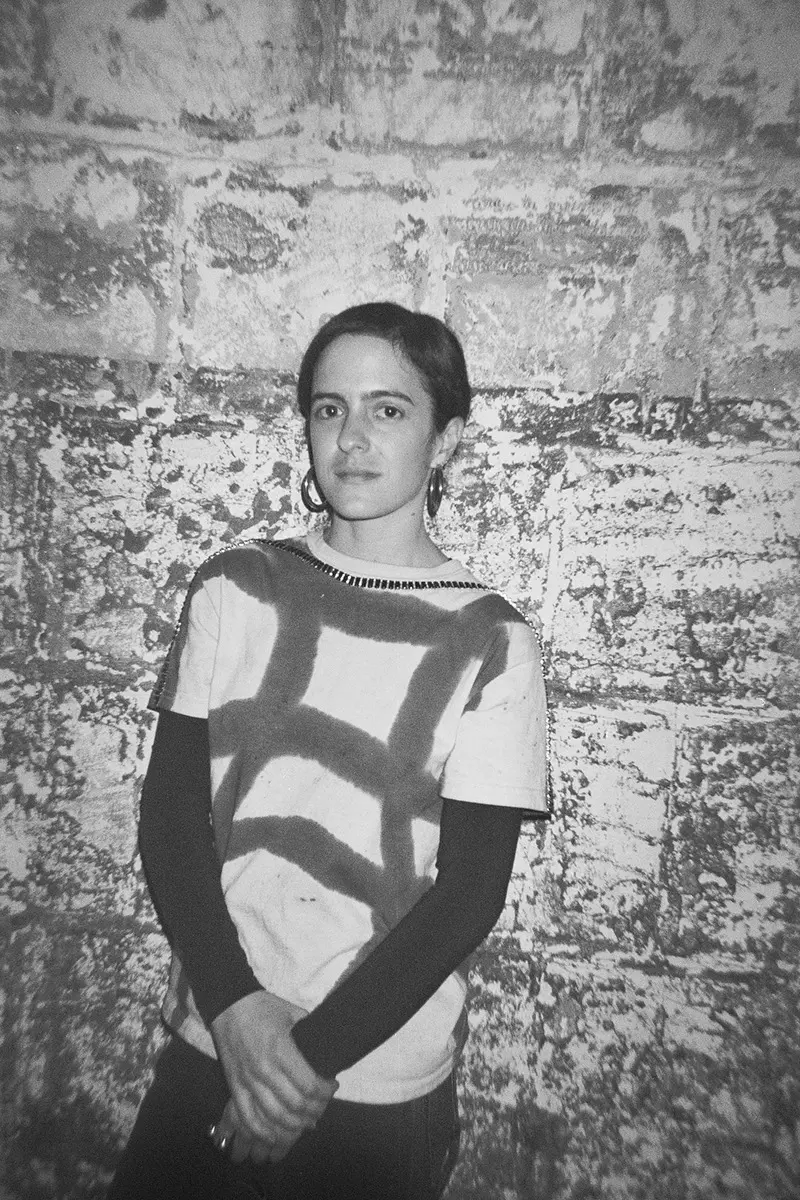
For over a decade, artist, writer, and theorist Dena Yago has occupied a unique vantage point at the intersection of contemporary fine art, corporate trend forecasting, and cultural critique. Operating across diverse mediums—including painting, sculpture, conceptual writing, and her foundational role in the influential "trend forecasting" art collective K-HOLE—Yago has built a practice dedicated to diagnosing the overlooked architecture of everyday life. She specializes in the aesthetics of the banal, the pernicious, and the hyper-normal: those ambient consumer habits, linguistic shifts, and corporate vernaculars that blend so seamlessly into the background of modern existence that they threaten to go entirely unnoticed.
To label Yago merely as an artist or a writer is to misunderstand the expansive scope of her methodology. She is an armchair theorist of late capitalism’s invisible infrastructure. Whether she is charting the migratory patterns of discarded Amazon delivery bags across dense urban landscapes—transforming cardboard debris into the modern equivalent of an urban tumbleweed—or parsing the weaponized therapeutic lexicon of contemporary corporate jargon, Yago reveals the ideological weight hidden in plain sight. Once she applies her precise, analytical language to a cultural phenomenon, the illusion of its neutrality shatters, and it suddenly becomes visible everywhere.
Read Also
This month, the intellectual and artistic contributions of her writing career are brought into sharp focus with the release of That Figures: Selected Writings, published by After 8 Books. Spanning years of incisive commentary on the aesthetics of irony, the performative cringe of digital life, and the slippery nature of vernacular language, the collection cements Yago’s status as one of her generation’s most astute cultural observers. To mark the launch of That Figures, Art in America sat down with Yago to explore the foundational texts that inform her worldview, asking her to curate a list of five essential books from her personal shelf that trace the contours of her intellectual universe.

Detailed Chronology: From K-HOLE to the Canvas
To understand Yago’s current output and the theoretical weight of That Figures, one must trace the trajectory of her career from the early 2010s conceptual art boom to the present day.
The K-HOLE Era and the Invention of Normcore (2010–2015)
Long before the term became a ubiquitous, co-opted buzzword stripped of its original irony, "normcore" was born in a series of conceptual PDF trend reports published by K-HOLE, a group co-founded by Yago alongside Sean Monahan, Chris Sherron, Ryan Fitzwater, and Emily Segal. Founded in New York City in 2011, K-HOLE operated as a hybrid entity: part pseudo-corporate marketing agency, part conceptual art collective, and part critical think tank.
At a time when consumer culture was obsessed with hyper-differentiation, hipster subcultures, and bespoke authenticity, K-HOLE diagnosed a fatigue with trying to stand out. They coined "normcore" not as a fashion trend prescribing fleece vests and plain white sneakers, but as a sociological attitude—an embrace of strategic sameness, an adaptation to a world where individuality had been commodified into a series of predictable purchasing options.
Yago’s contributions to K-HOLE were instrumental in injecting a rigorous art-historical and sociological framework into the collective’s output. While mainstream media quickly reduced normcore to a 1990s Jerry Seinfeld-inspired fashion aesthetic, Yago and her collaborators viewed it as a coping mechanism for late capitalism: a way to find liberation in belonging to the indistinguishable mass.

The Shift to Fine Art and Pop Art’s Late-Capitalist Update (2015–2023)
As K-HOLE dissolved and its members pursued divergent paths, Yago pivoted deeper into the traditional realms of visual art, specifically painting and sculpture, while maintaining a prolific critical writing practice. Her visual work serves as a logical extension of her theoretical investigations. Updating the critical lexicon and visual strategies of historic Pop Art, Yago’s paintings examine the visual culture of late capitalism not with nostalgic irony, but with a cool, deadpan precision.
Her canvases frequently incorporate motifs drawn from corporate work culture, wellness industries, gig-economy logistics, and the digitized spaces of modern labor. By rendering these motifs in sleek, highly mediated visual styles, Yago exposes the emotional toll and alienation embedded in contemporary productivity culture. Her subjects are rarely grand or historic; instead, they are the quiet indignities of modern existence—the glowing notification bubble, the ergonomic office chair, the ubiquitous canvas tote bag bearing a vague cultural institution’s logo.
The Curation of the Banal: That Figures (2023–Present)
Throughout her career as a visual artist, Yago has continued to write sharp, provocative essays, exhibition reviews, and theoretical texts for various international art journals and publications. That Figures: Selected Writings (After 8 Books, 2026) represents the first comprehensive gathering of these scattered texts.
The book traces Yago’s evolution as a critical thinker, capturing her fascination with the subtle mutations of language. In her essays, she has famously interrogated words that have undergone semantic drift under the pressures of corporate human resources and wellness culture—words like "capacity," "bandwidth," "wellness," and "resilience." By tracking how these terms migrate from clinical or specialized domains into everyday speech, Yago maps the subtle colonizing effects of corporate vocabulary on personal interiority.

Supporting Context & Metrics: The Architecture of the Banal
To fully appreciate Dena Yago’s project, it is helpful to examine the socio-economic and media conditions that have made her work so vital to contemporary art criticism.
The Semiotics of Urban Debris
Yago’s observation regarding Amazon delivery bags acting as "urban tumbleweeds" is more than a poetic metaphor; it is a precise critique of material culture. In the mid-2020s, the physical footprint of e-commerce logistics has fundamentally altered the visual texture of global cities. The blue-and-white or brown paper packaging of late-stage delivery giants has replaced natural detritus as the primary signifier of urban space.
By drawing attention to these objects, Yago forces a confrontation with the supply chain capitalism that underpins daily life. These objects are designed to be discarded instantly, yet they persist as physical ghosts of convenience culture. Her writing isolates these micro-phenomena, proving that our emotional relationship to the built environment is largely mediated by corporate packaging and disposable logistics.
The Evolution of Critical Theory in the Digital Age
The publication of That Figures arrives at a time when traditional art criticism is undergoing a profound identity crisis. As digital platforms prioritize fast-paced, algorithmically driven content and superficial listicles, Yago’s writing represents a return to slow, rigorous, deeply contextualized observation.

Her essays bridge the gap between high theory and everyday reality. While traditional theorists often deal in abstractions far removed from daily experience, Yago begins with the hyper-specific—a piece of clothing, an annoying corporate email, a ubiquitous plastic bag—and uses it as a portal to unpack massive global systems of power, labor, and capital.
Perspectives and Analysis
While Yago’s work has garnered a dedicated following within contemporary art circles, her methodologies invite broader reflections on the state of culture in the mid-2020s. Critics have frequently noted that Yago’s practice sits on a knife-edge between complicity and critique. By engaging directly with the aesthetics of marketing, corporate speak, and trend forecasting, she runs the risk of mirroring the very systems she deconstructs.
However, art historians and theorists argue that this friction is precisely the point. In an interview surrounding the release of That Figures, Yago noted that true critique in the 21st century cannot afford to stand outside of capitalism, because there is no outside left to occupy. Instead, critique must operate from within the machinery of production and consumption, turning its own tools against itself.
By examining irony not as a disaffected shield, but as a structural condition of modern survival, Yago provides a vocabulary for an era exhausted by endless optimization. Her work suggests that if we want to understand how we are shaped by our environments, we must stop looking at the monumental and start paying attention to the boring, the repetitive, and the discarded.

Future Outlook
With the release of That Figures: Selected Writings, Dena Yago’s theoretical contributions are now permanently anchored in print, ensuring that her influence will extend well beyond the ephemeral art magazines and PDF manifestos where much of her work first appeared.
As contemporary culture navigates an increasingly automated, algorithmic landscape defined by artificial intelligence and hyper-accelerated micro-trends, Yago’s methodology offers a vital anchor. Her insistence on slowing down to examine the linguistic and visual clichés of our moment serves as a masterclass in critical literacy.
Looking ahead, Yago’s dual practice as a painter and a theorist shows no signs of slowing down. As corporate vernaculars continue to evolve and the physical environment becomes increasingly saturated with the debris of digital capitalism, artists like Yago will remain indispensable guides—translators who help us see the invisible cages we inhabit, and perhaps, find a way to laugh at them before they lock shut.




Comments
Facebook App ID not configured. Please add it in the Customizer.