
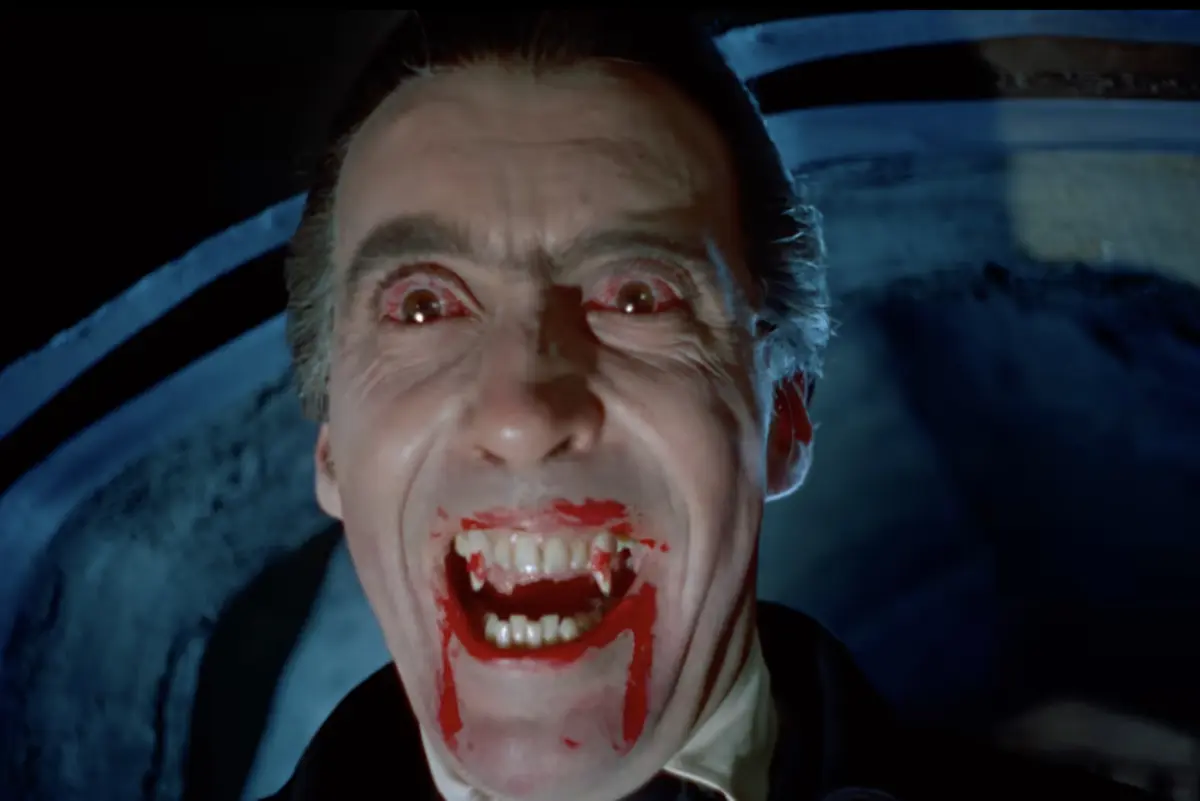
In the annals of cinematic horror, few entities loom as large or exert as profound an influence as Hammer Film Productions. Best known for pioneering a vibrant, blood-soaked, and fiercely atmospheric reinvention of classic monster lore throughout the 1950s and 1960s, the British studio fundamentally altered the DNA of the genre. Now, more than six decades after it first terrified audiences and redefined the cinematic vampire, Hammer’s crown jewel—1958’s Horror of Dracula, directed by Terence Fisher and starring the legendary duo of Christopher Lee and Peter Cushing—is undergoing a monumental archival rescue.
Scheduled for release this October, courtesy of a stunning new 4K Ultra HD restoration, this definitive edition promises to deliver far more than a standard audiovisual polish. Most thrillingly for cinephiles and horror historians, the release reincorporates approximately three minutes of explicit, atmospheric footage that was systematically excised by censors and distributors upon the film’s initial theatrical deployment in the United States and the United Kingdom.
For over sixty years, these lost frames—deemed too risqué, violent, or subversive for mid-century Western audiences—existed only in fragmented memories, murky bootlegs, and international cuts like the original Japanese theatrical release. However, the discovery of pristine archival reels tucked away within a Warner Bros. warehouse has finally allowed Hammer’s preservation team to reconstruct Fisher’s original vision in its glorious, uncompromised entirety. Featuring color grading meticulously matched to Jack Asher’s original cinematography on The Curse of Frankenstein (1957) and audio mastered directly from surviving primary elements, this upcoming release is poised to be the definitive presentation of a foundational horror classic.
Read Also
Detailed Chronology: From 1958 Censure to the Warner Bros. Warehouse Discovery
To fully appreciate the significance of this upcoming 4K release, one must journey back to the turbulent cinematic landscape of the late 1950s. When Hammer Film Productions acquired the rights to Bram Stoker’s timeless 1897 epistolary novel, Universal Pictures’ iconic 1931 Dracula, starring Bela Lugosi, cast a long and formidable shadow. Universal’s iteration had leaned heavily into moody, atmospheric shadows, Gothic theatricality, and a sanitized, gentlemanly portrayal of the Count. Hammer, operating under the shrewd stewardship of executive producer Anthony Hinds, chose a radically different path: they injected visceral terror, technicolor blood reds, overt sexuality, and relentless pacing into the formula.
The Original Vision and the Scissors of Censorship
When director Terence Fisher called "action" on Horror of Dracula, he and cinematographer Jack Asher crafted a picture that pushed the boundaries of contemporary cinema. The film famously opens with Jonathan Harker (played with doomed earnestness by John Van Eyssen) infiltrating Castle Dracula under the guise of a librarian, only to discover the horrific truth before meeting a gruesome end. Shortly thereafter, Dr. Van Helsing (portrayed with razor-sharp intellect and fierce determination by Peter Cushing) arrives to hunt down the titular monster, embodied by Christopher Lee in a towering, feral, and deeply magnetic performance.
Upon completion, Fisher’s cut ran at a specific duration that seamlessly balanced character-driven suspense with shocking, boundary-pushing outbursts of violence and sensual vampirism. However, when the film was submitted to the British Board of Film Censors (BBFC) and various American distribution boards, it met immediate resistance.
In an era governed by rigid moral codes—such as the American Motion Picture Production Code (Hays Code) and conservative post-war British oversight—content depicting overt female sexuality, graphic stakes driven through hearts, and explicit decomposition was heavily scrutinized. Censors demanded sweeping alterations. Approximately three minutes of pivotal character beats, lingering close-ups of visceral violence, and sexually charged encounters between the undead Count and his female victims were sliced away.
While British and American audiences received this heavily truncated version, international markets experienced varying cuts. Most notably, Japanese distributors received a print that closely mirrored the original director’s cut, preserving the excised sequences. For decades, those lost three minutes became a cinematic Holy Grail—discussed in hushed tones among film historians, referenced in rare trade publications, and mourned by purists who knew the masterpiece they loved had been amputated.
The Miraculous Warehouse Discovery
The turning point for Horror of Dracula arrived not through a sweeping digital manhunt, but through the serendipitous, dusty depths of corporate film archives. While conducting a routine audit and archival sweep of classic inventory stored within a major Warner Bros. warehouse, vault preservationists stumbled upon a set of unmarked cans.
Upon inspection, these cans revealed something extraordinary: pristine, high-generation film elements containing the long-lost Japanese theatrical cut sequences—complete with the exact three minutes that had vanished from Western screens over sixty years prior. These elements were not merely surviving fragments; they were remarkably well-preserved master prints that retained the delicate emulsion integrity required for modern high-resolution scanning.
This unexpected windfall immediately triggered a massive logistical and creative effort. Hammer’s archival team, working in close collaboration with premier restoration houses, seized the opportunity to merge these newly found sequences back into the master narrative. The result is a seamless, fully reconstituted director’s cut that restores Terence Fisher’s original pacing, dramatic beats, and thematic intensity for the very first time in Western history.
Supporting Context & Metrics: The Technical Triumph of the 4K Restoration
Restoring a film shot on 35mm Eastmancolor stock from 1958 presents a formidable array of technical challenges. Over decades, color dyes naturally fade, negative stocks warp, and physical prints accumulate scratches, dust, and tear damage. Previous home video iterations of Horror of Dracula—spanning VHS, standard-definition DVD, and early Blu-ray releases—often suffered from erratic color timing, crushed blacks, and noticeable artifacting.
To understand the magnitude of the upcoming 4K release, one must examine the specific technological and artistic metrics involved in the restoration process:
- Resolution and Source Material: Utilizing the newly discovered "pristine reels" from the Warner Bros. warehouse, technicians scanned the surviving camera negatives and archival duplicate prints at true 4K resolution. This process captures microscopic details within Jack Asher’s lighting schemes that were completely obscured in standard-definition transfers.
- Color Grading and Palette Realignment: A critical breakthrough in this restoration was the meticulous color timing overseen by Hammer’s archival custodians. Technicians analyzed the exact color science Asher deployed on his previous masterwork, The Curse of Frankenstein. By referencing surviving primary color timing notes and vintage dye-transfer prints, the restoration team corrected historical color drift, ensuring that the signature crimson of the blood, the rich velvet of Dracula’s cloak, and the eerie, fog-drenched blues of the studio sets pop with authentic, period-accurate vibrancy.
- Audio Reconstruction: Alongside visual restoration, audio archivists meticulously cleaned the original mono optical soundtracks. Utilizing advanced algorithmic click-and-pop removal tools while strictly preserving the dynamic range, the team eliminated decades of hiss and distortion, allowing James Bernard’s iconic, brass-heavy, and percussion-driven musical score to thunder through modern sound systems with pristine clarity.
- Seamless Integration of Lost Footage: One of the most technically demanding aspects of the project was matching the newly recovered three minutes of footage—sourced from different physical elements—to the primary 4K master. Frame-by-frame digital stabilization, grain management, and contrast balancing were employed to ensure that the transition between the previously released footage and the rediscovered scenes is completely invisible to the viewer.
Official Statements: Insights from the Archives
The preservation of cinema history is a delicate craft requiring equal parts technical prowess and profound reverence for the original artists. Steve Rogers, the dedicated overseer of Hammer’s extensive film archives, provided deep insight into the restoration process in a recent comprehensive Q&A published by the studio.
Reflecting on the discovery of the pristine reels at Warner Bros., Rogers emphasized the unprecedented nature of the find:
"Jack Asher’s cinematography has been graded to the same color palette that he used in The Curse of Frankenstein and it runs to the full and complete length that Terence Fisher created in 1958. It’s an order of magnitude better-looking than previous releases, and the definitive version of this groundbreaking classic."
Rogers’ comments underscore a vital artistic philosophy: this release is not merely an exercise in digital pixel-pushing, but a dedicated act of historical restitution. By returning the film to its exact theatrical length and visual specifications as envisioned by Fisher and Asher, Hammer is correcting a historical injustice imposed by mid-century censors. The official teaser trailer, featuring the iconic moment Christopher Lee’s Dracula steps out of the shadows with blood-red eyes and fangs bared, has already generated millions of views online, proving that the appetite for classic, beautifully restored Gothic horror remains voracious among modern audiences.
Future Outlook: Legacy, Availability, and the Evolution of Hammer Films
As the home entertainment market increasingly shifts toward premium physical media collector’s editions, Hammer’s strategic rollout of Horror of Dracula serves as a masterclass in catalog management. For cinephiles, collectors, and academic film historians, this release represents a watershed moment that bridges the gap between mid-century exploitation art and modern archival preservation.
Pre-Order and Release Timeline
For dedicated fans eager to secure this landmark edition, the operational window opens imminently. The limited-edition 4K Ultra HD package will be available for public pre-orders starting September 4, with the official physical shipping and retail release slated for October—just in time for the Halloween season. Given the intense global interest sparked by the trailer and the inclusion of the 60-year-unseen footage, initial print runs are expected to sell out rapidly.
The Broader Impact on Genre Preservation
Beyond a single home video release, this milestone project highlights the ongoing cultural relevance of Hammer Film Productions. In an era dominated by hyper-processed digital blockbusters and CGI-heavy franchises, returning to the tactile, handcrafted artistry of 1950s British horror offers a refreshing reminder of the power of practical effects, atmospheric set design, and powerhouse lead performances.
By rescuing Horror of Dracula from the cutting-room floor of history, Hammer has not only honored the enduring legacies of Terence Fisher, Christopher Lee, and Peter Cushing, but has also established a gold standard for archival restoration. As fans queue up their pre-orders and prepare to experience three long-lost minutes of cinematic terror, one thing is abundantly clear: true monsters never truly die—they are simply restored in 4K.



Comments
Facebook App ID not configured. Please add it in the Customizer.