
Executive Overview
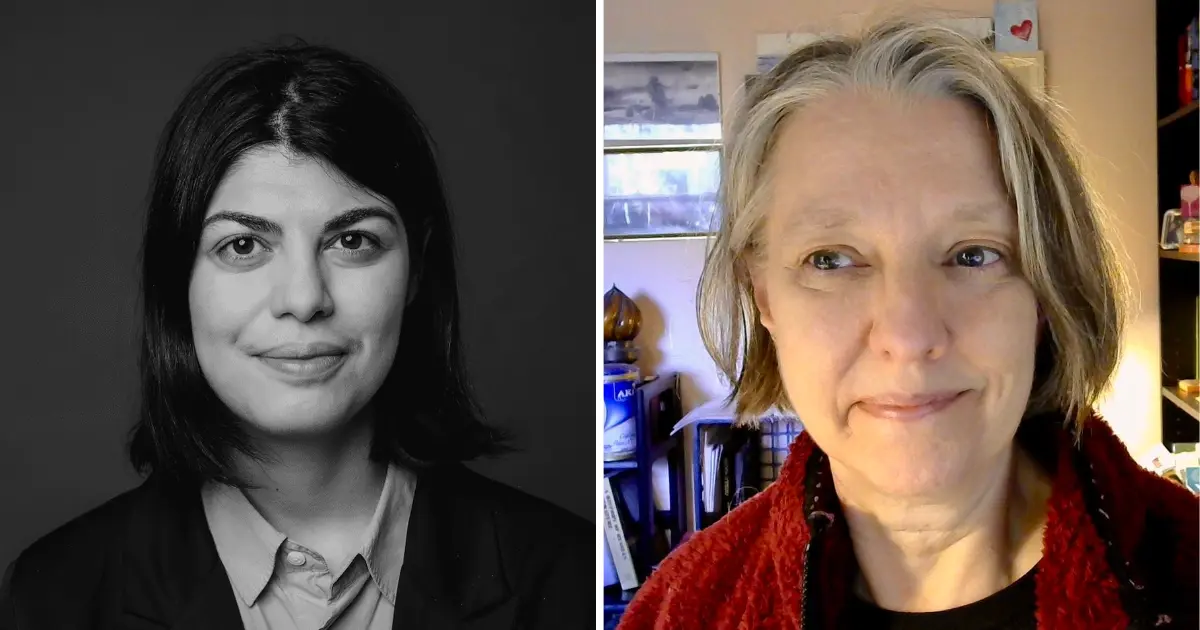
In the contemporary landscape of global literature, few works bridge the fraught chasms of geopolitical displacement, somatic vulnerability, and linguistic hybridity quite as acutely as My Dreadful Body. Written by Azerbaijani-Russian poet, essayist, and scholar Egana Djabbarova and translated into English by acclaimed literary translator Lisa C. Hayden, the novel stands as a monumental achievement in translingual storytelling. Published by New Vessel Press, the book emerges from a crucible of historical urgency, crafted while its author navigated exile, temporal distance, and the physical manifestations of systemic trauma.
The genesis of My Dreadful Body is as much an exercise in geographical defiance as it is a masterclass in literary creation. Conceived over decades of grappling with intersectional marginalization—ranging from entrenched xenophobia and patriarchal constraints within Russia to the acute bodily awakenings brought on by severe illness—the novel treats the physical form not merely as a vessel, but as a primary site of testimony and resistance. For Djabbarova, who was forced to flee Russia in 2024 due to her fierce opposition to the war in Ukraine and her tireless LGBTQ+ activism, the act of writing became a method of reclaiming narrative sovereignty.
Bringing this densely layered, highly poetic text into English presented a staggering array of structural, cultural, and political obstacles. Guided by publisher and editor Michael Wise, the collaborative translation process between Djabbarova and Hayden transformed into an intimate, cross-continental dialogue. Together, author and translator navigated the intricate multilingual fabric of the novel—which weaves Azerbaijani, Turkish, and Russian—while untangling the volatile politics of translated language. Most notably, they confronted the semantic gulf separating post-Soviet xenophobic slurs from Western discourses on race and colorism.
Read Also
This comprehensive report examines the multifaceted journey of My Dreadful Body, exploring its conceptual roots during Djabbarova’s time of exile in Taiwan, the rigorous translation mechanics executed alongside Hayden, the theoretical frameworks of the "coloniality of being" that inform the text, and the enduring resonance of a novel that redefines how contemporary literature articulates pain, identity, and survival.
Detailed Chronology: From Internal Crisis to Transnational Publication
To understand the architecture of My Dreadful Body, one must trace a timeline defined by both personal reckoning and seismic geopolitical shifts. The conceptual roots of the novel stretch far back into Djabbarova’s formative years, while its physical manifestation belongs to a turbulent two-year window of global dislocation.
1. The Formative Years and the Crisis of Belonging
Long before pen touched paper for this specific manuscript, the thematic machinery of the book was set into motion. Growing up in Yekaterinburg as part of an Azerbaijani family, Djabbarova encountered early and persistent encounters with racism, xenophobia, and systemic exclusion. Throughout her adolescence and early adulthood, she wrestled with an internal crisis of identity and belonging. Questions regarding cultural allegiance—specifically, why she never felt entirely at home in any single cultural paradigm—formed the bedrock of her artistic consciousness.
These early wounds were subsequently compounded by patriarchal expectations and, crucially, a profound medical diagnosis. At a specific juncture in her life, illness served as a radical catalyst. It forced an acute sense of embodiment upon her consciousness, revealing the undeniable interconnectedness between human subjecthood and the vulnerable, physical body.
2. The Taipei Residency (2022–2023): Writing in Exile
The actual composition of My Dreadful Body took place between 2022 and 2023, while Djabbarova was living in Taipei, Taiwan, working as a teacher of Russian as a foreign language. This period was characterized by a profound, dual distance—both temporal and geographical.
This physical and emotional dislocation proved vital to the creative process. Stationed in East Asia while her home region plunged into war and authoritarian entrenchment, Djabbarova utilized this distance to survey her life not as a series of disjointed traumas, but as a cohesive, navigable narrative. It was in Taipei that the fragments of her identity, the impacts of illness, and the memories of marginalization were forged into a singular work of fiction.
3. Editorial Intervention and the Partnership with Lisa Hayden
Following the completion of the Russian manuscript, the project entered its international phase when Michael Wise, publisher and editor at New Vessel Press, acquired the rights. Recognizing the raw power and stylistic brilliance of the text, Wise approached veteran literary translator Lisa Hayden with the manuscript.
Hayden, holding an MA in Russian Literature from the University of Pennsylvania and possessing extensive experience translating complex Russian prose, accepted the commission. What began as a standard professional assignment swiftly evolved into a transformative intellectual and creative partnership. Working in constant electronic communication with Djabbarova, Hayden embarked on a rigorous translation process that tested the boundaries of both Russian and English lexicons.
4. Geopolitical Realities and Contemporary Safety (2024)
As the translation moved toward completion, the external realities of Djabbarova’s life shifted dramatically. In 2024, escalating political persecution—specifically targeting her unyielding LGBTQ+ activism and vocal opposition to the Russian invasion of Ukraine—forced Djabbarova to flee Russia entirely. Today, she resides and writes in Hamburg, Germany, continuing her scholarly and literary pursuits from a new locus of exile. The publication of My Dreadful Body in English arrives as a timely, defiant testament to this ongoing cycle of displacement and creative resilience.
Supporting Context & Theoretical Frameworks
To fully appreciate the literary weight of My Dreadful Body, one must examine the philosophical and socio-political frameworks that underpin Djabbarova’s narrative strategy. The book is not merely a confessional novel; it is a sophisticated theoretical intervention into how marginalized bodies are perceived, governed, and silenced.
The "Coloniality of Being" and the Marginalized Subject
In her analysis of the novel’s core themes, Djabbarova explicitly invokes the work of decolonial thinker Nelson Maldonado-Torres and his foundational concept of the "coloniality of being." Maldonado-Torres explores how the agency, subjecthood, and basic humanity of colonized and marginalized individuals are perpetually subjected to doubt and erasure by dominant power structures.
Within the geopolitical and cultural architecture of Russia, this dynamic replicates itself upon ethnic minorities, diaspora communities, and internal "others." The humanity of those hailing from the Caucasus, Muslim-majority regions of the former Soviet Union, or communities with non-white phenotypes is routinely denied or undermined.
Djabbarova’s masterstroke in My Dreadful Body is her refusal to let this erasure succeed. By anchoring the narrative entirely within the physical body, she renders marginalization visible, inescapable, and undeniably real. The body becomes an unassailable archive of trauma and an undeniable testament to her own enduring agency.
The Politics of Language and Transnational Translation Challenges
Translating a work rooted in such specific post-Soviet socio-political realities required extraordinary sensitivity. One of the most monumental hurdles encountered by Djabbarova and Hayden centered on Chapter VII, titled "TONGUE."
In this chapter, the protagonist recounts a barrage of xenophobic slurs hurled against her:
"I’m black, blackie, black-ass, alien, monster, foreigner, foreign-born . . ."
In the original Russian, the abusive lexicon relies on terms such as chernaya or chernozhopaya. Within the post-Soviet sphere, these are weaponized as virulent ethnic slurs targeting people from the Caucasus and Central Asia, serving as markers of xenophobia and colorism. However, when translated literally into an American cultural context, these exact terms are historically and primarily intertwined with anti-Black racism.
This linguistic mismatch created a profound translation dilemma. Hayden and Djabbarova had to exercise immense care to convey the specific weight and cruelty of post-Soviet ethnic discrimination without inadvertently collapsing it into American racial paradigms. They needed to ensure that Western readers understood the precise nature of the protagonist’s marginalization without historical misattribution.
Furthermore, formal linguistic constraints posed additional difficulties. The original Russian passage featured a rhythmic string of derogatory terms all beginning with the Cyrillic equivalent of the "ch-" sound—a stylistic cohesion that English cannot structurally replicate. Coupled with the novel’s multilingual elements (incorporating Azerbaijani and Turkish alongside Russian) and specific cultural markers—such as the wild rue plant uzerlik and various traditional foods—the translation required the strategic deployment of a robust glossary and carefully weighed footnotes to avoid dragging down the narrative pace.
Official Statements & Collaborative Insights
The collaborative dynamic between author Egana Djabbarova and translator Lisa Hayden offers a rare, illuminating window into the alchemy of literary translation. Below are key reflections drawn from their ongoing dialogue regarding the creation and translingual rebirth of My Dreadful Body.
Egana Djabbarova on Writing from Exile and Poetic Prose
Reflecting on the unusual circumstances of the book’s creation, Djabbarova emphasizes the psychological utility of distance:
"This book was written under very unusual circumstances… It is very likely that this dual distance—both temporal and geographical—helped me look at my own life as a cohesive narrative and reshape it into a work of fiction."
Addressing the stylistic DNA of the novel, Djabbarova highlights her deliberate choice to infuse prose with the density of verse:
"A central challenge of this process was the fact that the novel is written in a deeply poetic register. It was a conscious aesthetic choice on my part to approach prose through the lens of poetry, utilizing its inherent metaphoric weight, emotional intensity, and linguistic density. Translating a text where every sentence is tightly wound and packed with imagery required a constant dialogue to ensure that this poetic compression wasn’t lost in translation."
Lisa Hayden on the Intimacy of the Translation Process
Lisa Hayden speaks to the transformative impact the project had on her own professional and personal life, noting how deep engagement with a text alters the reader:
"I love first readings, but it’s subsequent readings (and drafts of translations, if I’m translating) that open up a book’s depths and dimensions, turning them into permanent parts of my life. My Dreadful Body is an extraordinarily wise book, a book that taught me a lot about all the topics Egana lists above… What she writes feels unexpectedly personal in many ways since I identify so very closely with how she writes about feminism, cultures, and women’s bodies."
Describing her intuitive method of channeling the author’s voice across linguistic divides, Hayden explains the invisible presence of the writer during the solitary act of translation:
"Since the translator’s job involves both reading and somehow hearing the voice(s) in a text, I’ve always felt that the author is involved in my entire translation process. Even if I’ve never met them, they’ve always been with me as I’ve typed, looked up words, and, yes, stared out the window. I’ve always worked very intuitively… That’s part of how Egana was with me at every moment: I constantly reacted to the dynamics of her writing."
Metaphors of the Text: Carpets, Roots, and Coiled Springs
When invited to encapsulate the essence of My Dreadful Body through metaphor, both author and translator offered vivid imagery that underscores the intricate, organic nature of the work.
- Egana Djabbarova’s Metaphor:
"I would suggest the metaphor of a woven carpet or the tangled roots in a garden. In a way, a traditional carpet is a garden in its own right…"
- Lisa Hayden’s Metaphor:
"I love Egana’s carpet and root metaphors here because they generate such vivid images of weaving, tangling, and blending! Translated texts are blends and tangles, too, of course, because they interlace the words, cultures, views, and perspectives on life that the author and translator bring to them… For my part, I might add a spring, the kind that’s coiled. Like a spring, Egana’s text is very compact, but it stores lots of power, tremendous energy… Like Egana’s text, that spring is fluid, sparkly, and tremendously fresh, rising out of a deep source."
Future Outlook
As My Dreadful Body makes its way into the hands of English-language readers via New Vessel Press, its release marks a significant milestone in contemporary translated fiction. In an era marked by rising authoritarianism, mass displacement, and the silencing of dissident voices across Eastern Europe and Central Asia, Djabbarova’s work serves as an essential counter-narrative.
The novel’s successful translingual journey demonstrates the vital importance of collaborative literary translation—one where translators are not merely conduits of vocabulary, but active, empathetic co-creators of cultural understanding. By refusing to flatten the linguistic and political complexities of post-Soviet identity, Djabbarova and Hayden have provided a masterclass in how literature can honor localized trauma while resonating on a universal scale.
Looking ahead, Djabbarova continues her literary and academic work from Hamburg, Germany, carrying forward the urgent discourse on bodily autonomy, diaspora existence, and decolonial critique. Meanwhile, My Dreadful Body stands poised to provoke vital conversations among literary critics, feminist scholars, and readers worldwide, cementing Egana Djabbarova’s status as a formidable voice in contemporary global letters and securing Lisa Hayden’s legacy as a master translator of intricate Russian prose.





Comments
Facebook App ID not configured. Please add it in the Customizer.