
Executive Overview
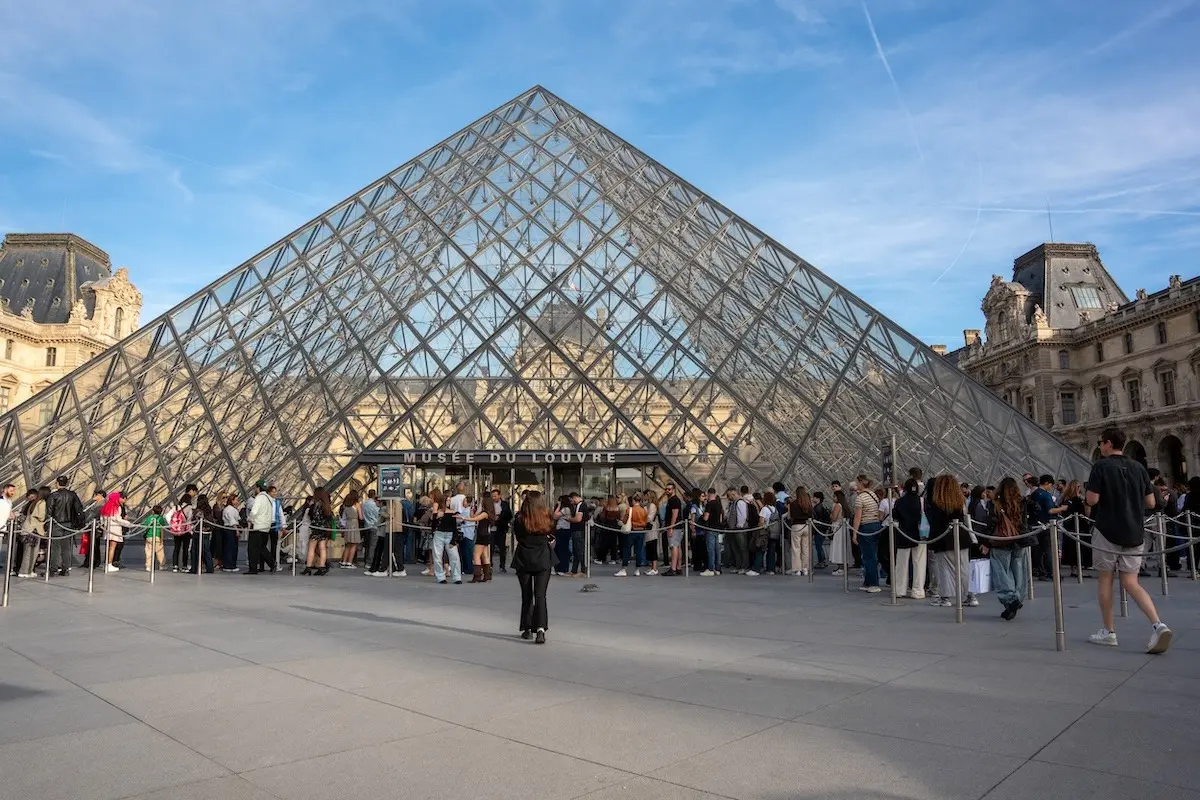
The intersection of contemporary socio-political unrest and the global art market has rarely been as pronounced as it is this season. As Europe grapples with escalating tensions surrounding economic inequality, inflation, and public sector funding, cultural institutions have increasingly found themselves on the front lines of public demonstrations. Most notably, the legendary Louvre Museum in Paris recently found its iconic glass pyramid blocked by protesters, underscoring the deep-seated grievances harbored by students and art workers amid a turbulent backdrop of national unrest.
Concurrently, the commercial architecture of the art world is undergoing a profound reassessment. Across the Atlantic, Art Basel has secured its footprint in Miami Beach through 2031, albeit under radically altered financial terms that reflect a broader, sobering reality: the global art market is enduring a cyclical downturn unprecedented since the early 2000s. From high-stakes real estate disputes in Manhattan involving blue-chip masterpieces to monumental archaeological revelations in China and institutional accountability in Seoul, the cultural sector is navigating a period of profound operational and ideological friction. This report provides a comprehensive examination of the headlines shaping the international art landscape, offering deep context into the structural shifts, protests, and institutional reckonings defining the contemporary cultural economy.
Detailed Chronology: Civil Unrest Collides with Paris Art Week
The cultural calendar in Paris—traditionally a celebration of commerce, creativity, and international prestige—faced immediate operational threats as civil unrest spilled into the heart of the city’s premier museum and gallery districts.
Read Also
The Louvre Blockade and the One-Year Anniversary of the Museum Heist
On a tense Monday morning, approximately 50 arts and culture students converged on the Louvre, effectively blocking access to its landmark glass pyramid entrance. According to reports from Le Figaro, the demonstration coincided precisely with the one-year anniversary of a brazen jewelry heist at the very same institution—a symbolic alignment that heightened security sensitivities across the French capital.
The museum blockade was not an isolated event; rather, it was an extension of widespread, nationwide protests that erupted across France on Saturday. Sparked by simmering anger over widening social inequality and decaying conditions within public secondary schools, the demonstrations rapidly escalated into sporadic looting and rioting over the weekend. While the Agence France-Presse (AFP) confirmed that no structural damage was inflicted upon the Louvre and that protesters failed to breach the main pyramid structure, the symbolic weight of the action was profound.
Demonstrators—including students hailing from elite and associated institutions such as the École du Louvre—voiced intense frustration over what they characterized as the increasingly heavy-handed and violent police response to public demonstrations in recent weeks. Furthermore, the student groups aimed to draw national attention to the soaring cost of living and the severe underfunding of public education.
Cascading Precautions Across the Parisian Cultural Sector
The timing of the civil unrest could hardly have been more delicate for arts administrators. The protests unfolded on the immediate eve of Art Basel Paris, sending waves of anxiety through an international contingent of collectors, dealers, and curators preparing for a packed week of blue-chip exhibitions and vernissages.
In response to the volatile security climate, arts organizations implemented swift preventative measures:
- Art Basel Paris: Organizers issued formal assurances to the public on Sunday, confirming that the fair would proceed entirely as planned. However, the commercial enterprise significantly upgraded its security protocols, deploying additional personnel to maintain 24-hour perimeter patrols around the venue.
- Jeu de Paume: Citing an abundance of caution, the museum abruptly canceled the Sunday opening of Stan Douglas’s highly anticipated exhibition, Parallax. The adjacent Tuileries Gardens were simultaneously closed to the public under advisement from local security authorities.
- Commercial Galleries: Major international galleries also took proactive steps to safeguard their assets and personnel. Hauser & Wirth elected to shut down its exhibition space located in Paris’s affluent 8th arrondissement on Saturday, with a representative noting via email that the closure was enacted strictly "as a precaution to protect the team, visitors and staff."
Supporting Context & Metrics: Art Basel’s "Cyclical Downturn" and Financial Realities
While Parisian galleries contended with immediate physical security, the macroeconomic foundations of the international art market faced rigorous interrogation thousands of miles away in Florida, where Art Basel successfully negotiated its future in Miami Beach through 2031.
The Miami Beach Agreement: Subsidy and Concession
Following months of intense, behind-the-scenes negotiations, Art Basel reached a long-term agreement with municipal officials to maintain its flagship American fair in Miami Beach. However, the finalized contract reveals deep financial concessions: the annual rent paid by the fair to the city has been slashed by half, dropping from nearly $1 million to $500,000. Additionally, the package includes substantial city credits offsetting the costs of essential municipal services, including police, fire, and emergency medical technician (EMT) deployment.
According to investigative reporting by the New York Times, securing these favorable terms required Art Basel Chief Executive Noah Horowitz to present a remarkably candid—and starkly unvarnished—assessment of the company’s corporate balance sheets and the broader health of the art market.
Evaluating MCH Group’s Financial Precipice
To justify the necessity of a rent reduction to city officials, Horowitz detailed a turbulent financial history for Art Basel’s parent company, MCH Group. He revealed that the years preceding the agreement were marked by "extraordinary losses" that brought MCH dangerously close to formal insolvency.
The corporate entity was ultimately pulled back from the brink through a massive capital injection spearheaded by media scion James Murdoch’s family office, Lupa Systems, which stepped in to stabilize the struggling enterprise.
Macroeconomic Strains on the Global Gallery Ecosystem
Horowitz’s disclosures extended beyond corporate ledgers, touching upon systemic contractions affecting the entire commercial art apparatus. All Art Basel fairs are, according to Horowitz, "currently facing a cyclical downturn, the likes of which we haven’t seen since the launch of Art Basel Miami Beach in the early 2000s."
The downstream effects of this contraction are manifesting clearly in gallery participation metrics. Facing sluggish sales, rising operational overhead, and shifting collector demographics, commercial galleries are increasingly voting with their feet—either scaling back their fair footprints, exhibiting at fewer international events, or shuttering operations entirely. Consequently, the upcoming edition of Art Basel Miami Beach this December will host a reduced roster of 250 galleries, down from 283 in the previous year.
Official Statements and Institutional Reckonings
Beyond the commercial and civil disruptions, recent days have underscored the ethical, historical, and structural pressures facing museums and academic institutions worldwide.
Ethical Imperatives and Labor Struggles
- Goldsmiths University Strike: In London, the crisis within higher education reached a historic milestone as fine arts students at Goldsmiths University marked 130 days of continuous sit-ins and strikes. This labor and student action now stands as the longest-running protest at a British higher education institution in modern history, reflecting deep anger over institutional management, funding cuts, and working conditions.
- National Museum of Korea Apology: Accountability took center stage in Seoul, where You Hong-june, director of the National Museum of Korea, issued a formal and public apology. The institutional mea culpa followed the revelation that a featured calligraphy work—previously attributed to revered Korean activist Park Won-geun—was actually authored by a known pro-Japanese collaborator during the era of Japanese imperial rule over Korea. The misattribution sparked fierce domestic criticism, prompting immediate curatorial reviews and public penance from museum leadership.
Heritage and Provenance Debates
- The Terracotta Army Workforce: Archaeological paradigms continue to shift beneath our feet. A groundbreaking new study analyzing 79 distinct fingerprints preserved on China’s monumental Terracotta Army has revealed that the ceramic sculptures were not merely the product of adult male artisans. Instead, biometric evidence strongly suggests that women and children labored alongside adult men in the massive imperial workshops, offering a more nuanced sociological picture of ancient production methods.
- High-End Debt and Fine Art Liquidation: The intersection of private wealth, luxury real estate, and blue-chip art came under public scrutiny in New York City. Landlords of The Park Mansion on Manhattan’s Upper East Side filed legal demands requiring socialite Libbie Mugrabi to liquidate a multi-million-dollar Jean-Michel Basquiat painting. The forced sale is being sought to satisfy an alleged $2.3 million accumulation in unpaid residential rent—a stark illustration of how physical art assets remain deeply intertwined with personal liquidity crises.
Future Outlook: Ibrahim Mahama’s The Harvest Season at Fondation Cartier
As the international art community looks past the immediate disruptions in Paris and recalibrates its financial expectations for the upcoming winter fair season, attention is increasingly pivoting toward monumental artistic statements that engage directly with history, labor, and repatriation.
On Thursday, Ghanaian artist Ibrahim Mahama will unveil his most ambitious institutional exhibition to date, The Harvest Season, at the Fondation Cartier in Paris. In an exclusive interview with ARTnews, Mahama reflected on his collaborative, community-centric artistic methodology, stating: "The artist is just a vessel, and I see myself as that vessel in order to put all these different things together to do the work that we do."
Confronting Colonial Histories Through Installation
The exhibition features expansive, politically charged installations that interrogate the legacies of infrastructure, labor, and colonial extraction. Among them is a major iteration of Parliament of Ghosts, an ongoing project initiated in 2019 that repurposes discarded train seats, railway sleepers, salvaged school furniture, and archival government documents.
For the Paris presentation, Mahama has integrated approximately 200 royal stools originating from the Asante Empire. In contextualizing these historical objects, Mahama noted that such cultural artifacts were frequently looted during the colonial era before finding their way into Western museum collections, where they are routinely sanitized and trapped behind protective glass.
Permanent Infrastructure in Kumasi
Looking toward the future, Mahama’s practice extends far beyond temporary museum exhibitions. Another major project debuting within The Harvest Season, titled Things Fall Apart, involves the meticulous reconstruction of an abandoned glass bottle manufacturing factory in Ghana. Following its exhibition run, the project is slated for permanent relocation to Kumasi, Ghana, where Mahama and his collaborators are actively laying the groundwork for a new, permanent cultural institution designed to return artistic agency and infrastructure directly to the local community.
Conclusion
As the art world navigates a complex matrix of civil disobedience, shifting economic models, and deep-seated ethical reckonings regarding provenance and representation, the events of this week signal a definitive turning point. The industry can no longer operate in a bubble isolated from geopolitical and macroeconomic pressures. Instead, the future of cultural institutions, mega-fairs, and individual creators alike will depend entirely on their ability to adapt transparently, ethically, and resiliently to a rapidly transforming global landscape.

Comments
Facebook App ID not configured. Please add it in the Customizer.