
Executive Overview
Horse racing stands as one of the world’s most exhilarating yet perilous athletic pursuits. Navigating a half-ton thoroughbred at speeds approaching 40 miles per hour requires an extraordinary synchronization of two distinct athletes—human and equine. In this high-stakes environment, the margin for error is razor-thin. A momentary lapse in concentration, a slight imbalance, or an undetected physical ailment can precipitate catastrophic consequences for both horse and rider. Historically, the sport has struggled to balance its thrilling spectacle with the grim reality of injury risks.
However, a quiet revolution is currently underway on America’s iconic racetracks. Driven by converging advancements in wearable sensor technology and rigorous sports medicine, the industry is entering a new era of proactive safety. Rather than reacting to injuries after they occur, trainers, veterinarians, and researchers are now leveraging real-time data to identify vulnerabilities, monitor physiological loads, and prevent accidents before they happen.
To explore this paradigm shift firsthand, a recent investigative visit to Belmont Park provided an up-close look at elite equine training protocols and the cutting-edge science protecting those who work in the saddle. By sitting down with leading equine veterinarians, biomechanics researchers, and veteran jockeys, it becomes clear that technology is not replacing the traditional horsemanship that defines the sport; rather, it is amplifying it, offering unprecedented insight into the physical demands placed on racing’s elite athletes.
Read Also
Detailed Chronology: A Day at Belmont Park
Morning Shadows and the Rhythm of the Track
The morning mist still clings to the legendary turf of Belmont Park as the first set of thoroughbreds steps onto the training track. At 5:30 AM, the atmosphere is electric yet serene—a stark contrast to the roaring crowds of a stakes race afternoon. Here, away from the grandstands, the foundational work of the racing industry takes place. Exercise riders and jockeys guide their mounts through routine gallops, their breath pluming in the cool air.
To the untrained eye, every stride looks identical: a powerful, rhythmic propulsion of muscle and bone. But to the modern observer equipped with sports science tools, this morning gallop is a rich stream of biometric data. Every footfall, heart rate spike, and asymmetry in gait is being captured, analyzed, and interpreted to safeguard the well-being of the animal.
The Equine Perspective: Veterinary Insights
Walking the backstretch at Belmont offers a masterclass in modern veterinary care. It is here that Dr. Sara Langsam, a respected equine veterinarian and chair of the American Association of Equine Practitioners (AAEP) Racing Committee, conducts her daily evaluations. Pausing near the rail, Dr. Langsam watches a powerful bay gelding pull up after a breeze.
"People often forget that horse racing is a team sport in the truest sense," Dr. Langsam explains, her eyes tracking the horse’s respiration. "You have a human athlete and an equine athlete operating as a single unit. If the human lacks the physical fitness to maintain proper technique, or if the horse is harboring micro-damage in its skeletal structure, the entire system becomes compromised."
Dr. Langsam elaborates on how historical methods of injury prevention relied almost entirely on visual observation and manual palpation. While experienced trainers and veterinarians remain invaluable, modern wearable technology adds an objective layer of insurance. "Sensors attached to the girth or integrated into saddle pads can now measure stride length, frequency, and impact shockwaves," she notes. "If a horse’s gait changes by even a few milliseconds, the technology flags it long before it manifests as an overt limp."
The Human Equation: The Jockey’s Rigorous Demands
Shifting focus from the equine side to the human pilot reveals an equally intense physiological landscape. To understand the challenges faced by jockeys, one must look beyond the glamour of the winner’s circle and examine the grueling physical conditioning required to ride.
Michaela Keener, a jockey health researcher at the University of Kentucky, has dedicated her career to studying the physical tolls exacted on riders. "Jockeys are elite athletes, pound-for-pound matching the conditioning levels of gymnasts or Formula One drivers," Keener states. "They are subjected to immense G-forces, sustained isometric contractions, and extreme weight-management protocols."
Keener’s research highlights a critical vulnerability: fatigue. When a jockey becomes physically exhausted, their micro-reflexes slow down. In a sport where split-second decisions dictate whether a horse safely navigates a turn or avoids trouble in a crowded pack, fatigue can be fatal. "A tired jockey cannot maintain the precise balance and weight distribution required," Keener warns. "This shifts unequal pressure onto the horse’s back and legs, inadvertently increasing the risk of injury to the animal."
To gain perspective from the saddle, ReyLu Gutiérrez—a seasoned professional jockey who has piloted mounts in over 6,000 races—offers a firsthand account of these demands. Standing trackside, Gutiérrez reflects on how the sport has evolved since he began his career.
"When I started, you rode on feel and instinct," Gutiérrez shares, adjusting his helmet. "Instinct is still everything out there, but today we understand our bodies so much better. We know how to train off the horse to protect our backs, knees, and core strength. When you’re riding five, six, or seven races a day, your body takes a pounding equivalent to multiple car crashes a week. Having sports science behind us helps us stay sharp, recover faster, and ultimately keep our mounts safer."
Supporting Context & Metrics: The Science of Safety
The Biomechanics of Speed
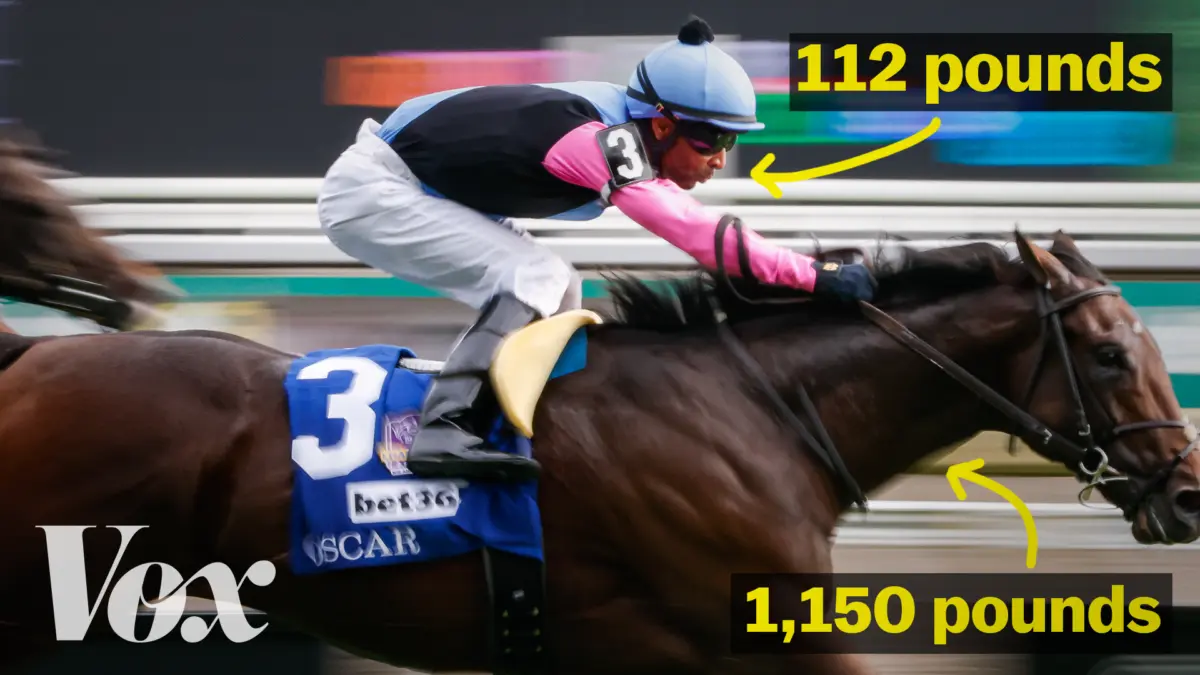
To fully appreciate the intersection of technology and horse racing, one must examine the raw physics involved. A thoroughbred horse typically weighs between 1,000 and 1,200 pounds. When sprinting down the stretch at speeds reaching 40 miles per hour, the kinetic energy generated is immense.
At the gallop, a horse cycles through distinct phases: the impact phase, the support phase, and the propulsion phase. During the impact phase, the entire weight of the animal—amplified by acceleration—descends onto a single lower limb. The forces exerted on the lower leg bones, tendons, and ligaments can exceed several thousand pounds per square inch.
This is where the physical fitness and technique of the jockey become paramount. A balanced rider acts as an extension of the horse’s center of gravity. An unbalanced or fatigued rider, however, creates dead weight shifts that disrupt the horse’s biomechanical efficiency, leading to localized stress concentrations that can trigger catastrophic structural failure.
Wearable Technology: Bridging the Gap
In response to these punishing physical realities, the racing industry has rapidly adopted advanced wearable tech, mirroring trends seen in human stick-and-ball sports like soccer and American football.
-
Equine Heart Rate and GPS Monitors: Modern sensors strapped securely to the horse during workouts track real-time cardiovascular recovery rates, stride cadence, and speed profiles. By establishing a baseline for each individual animal, software algorithms can instantly alert trainers to physiological anomalies that suggest impending illness or fatigue.
-
Inertial Measurement Units (IMUs): Placed on the horse’s limbs or integrated into tack, IMUs capture high-frequency acceleration data. These devices measure the exact deceleration of the hoof upon striking the track surface, helping veterinarians assess track conditions and identify microscopic changes in skeletal shock absorption.
-
Rider Biometric Vests: Wearable vests worn by jockeys track core body temperatures, heart rate variability, and impact forces during falls or rough racing conditions. These metrics help medical personnel manage heat stress—a major hazard given the extreme weight-cutting measures jockeys often endure—and provide critical data for concussion management.
Official Statements & Industry Perspectives
The integration of sports science and wearable technology into horse racing is not merely a localized trend; it represents a coordinated industry-wide movement toward enhanced welfare and transparency.
Dr. Sara Langsam emphasizes the cultural shift occurring within veterinary medicine and training stables:
"We are moving away from an era of guesswork and intuition alone. Intuition built this sport, but data is going to preserve it. When veterinarians, trainers, and jockeys speak the same language—backed by objective metrics—we create a foolproof safety net for both athletes."
From the academic and research vantage point, Michaela Keener underscores the holistic nature of the initiative:
"You cannot separate the health of the jockey from the health of the horse. They are a coupled dynamic system. By studying the biomechanical feedback loop between rider fatigue and equine gait alterations, we are uncovering preventative insights that were completely invisible a decade ago."
Reflecting on the practical realities of race-riding, veteran jockey ReyLu Gutiérrez speaks to the daily impact of these innovations:
"At 40 miles per hour, trust is everything. We trust our horses, our training, and our equipment. Knowing that science and technology are working behind the scenes to monitor our physical limits and the health of our mounts gives us incredible peace of mind every time we step into the starting gate."
Future Outlook: The Next Horizon in Equine and Human Athletics
As the horse racing industry looks toward the future, the horizon is defined by even deeper technological integration and preventative protocols. The roadmap for the upcoming decade points toward several transformative developments:
- Artificial Intelligence Predictive Modeling: Future iterations of wearable tech will feed real-time biometric data directly into machine learning models. These AI systems will be capable of predicting soft-tissue injuries weeks before clinical symptoms appear, allowing for preventive rest and rehabilitation.
- Standardized Regulatory Data Sharing: Regulatory bodies across major racing jurisdictions are moving toward standardized data platforms. This will ensure that biometric histories follow horses and jockeys across state lines, creating a unified health passport system.
- Advanced Helmet and Protective Gear: Building on current rider safety studies, next-generation helmets and body protectors embedded with smart-impact sensors will provide instant concussion diagnostics trackside, ensuring that concussed riders are immediately removed from competition before further harm occurs.
- Personalized Equine Rehabilitation: Just as human athletes utilize hyperbaric chambers, cryotherapy, and targeted physical therapy, equine sports medicine is embracing personalized rehab regimens powered by continuous sensor feedback, ensuring optimal recovery cycles.
Ultimately, the future of horse racing relies on honoring the deep traditions of horsemanship while aggressively embracing modern science. By treating both the horse and the jockey as elite athletes requiring sophisticated care, monitoring, and respect, the sport is paving the way for a safer, more sustainable, and deeply respected future.
This journalistic feature is presented in partnership with Colgate. Colgate exercises no editorial oversight or influence over the investigative direction, reporting, or publication of content produced by this editorial team, but helps make in-depth features like this one possible.





Comments
Facebook App ID not configured. Please add it in the Customizer.