
Executive Overview
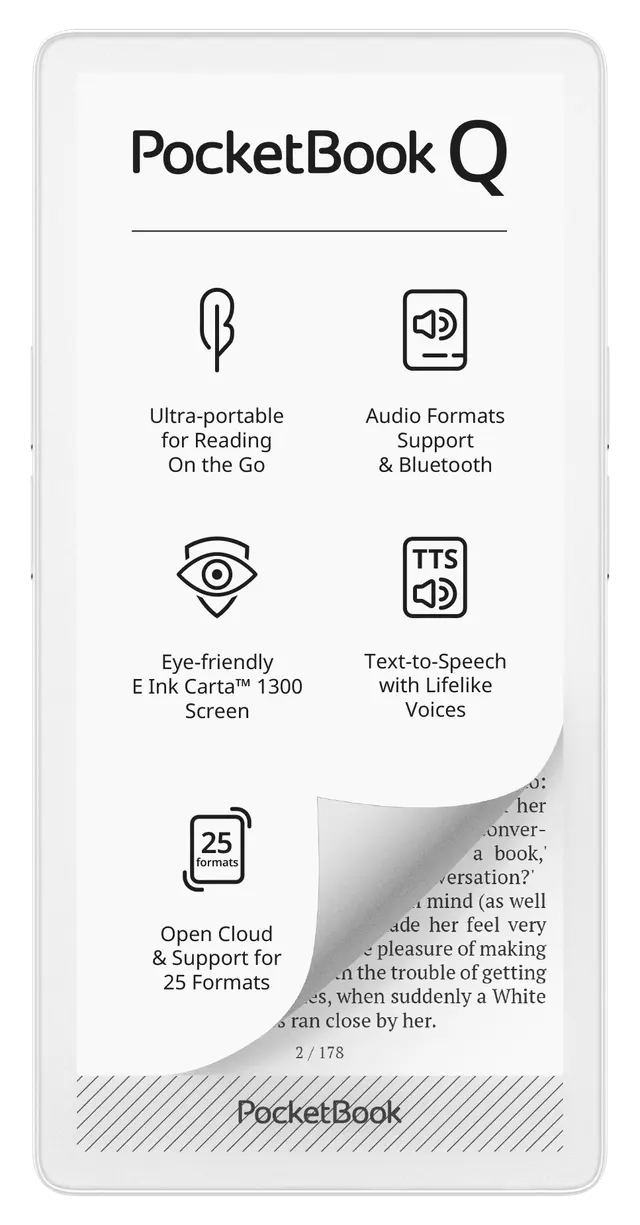
In an era dominated by hyper-connected smartphones, constant notifications, and relentless digital noise, the demand for dedicated, distraction-free reading devices has reached an all-time high. Enter the PocketBook Q, a compact, smartphone-sized e-reader engineered specifically for seamless one-handed reading and the ultimate "digital detox." First unveiled to the public at the IFA 2026 trade show in Berlin, this innovative device is slated for a widespread global retail rollout in late November.
Positioned as a direct competitor to pocket-sized alternatives like the BOOX Picco, the PocketBook Q bridges the gap between ultra-portability and high-performance e-reading technology. Built upon a streamlined, non-Android operating system, it deliberately strips away the ambient anxiety of modern computing—such as emails, social media feeds, and pinging alerts—leaving behind a pure, unadulterated sanctuary for books. Equipped with an advanced E Ink Carta 1300 display, ergonomic physical page-turn buttons, robust audio capabilities, and expansive file format support, the PocketBook Q is not merely a downscaled e-reader; it is a meticulously crafted tool for the modern, mobile bibliophile.
Detailed Chronology: From Berlin Debut to Global Retail Launch
The journey of the PocketBook Q reflects a deliberate strategy by manufacturers to capture the rapidly expanding micro-form-factor e-reader segment.
Read Also
The IFA 2026 Unveiling
In early September 2026, the technology world converged on Berlin for the annual IFA trade show. Amidst a sea of folding smartphones, AI-driven home appliances, and high-refresh-rate monitors, PocketBook quietly stole the show for literary enthusiasts by introducing the PocketBook Q. Industry analysts and attendees immediately recognized the device’s potential, drawing favorable comparisons to other pocket-friendly e-paper innovations. Unlike traditional 6-inch or 7-inch e-readers that typically require two hands or a bag to carry, the PocketBook Q’s smartphone dimensions—designed to slip effortlessly into a jeans pocket or a small clutch—drew immediate praise from commuters and minimalists alike.
Pre-Launch and Late-November Retail Rollout
Following its successful prototype and press debut in Berlin, PocketBook fast-tracked the device for production. Throughout October and early November 2026, supply chain preparations were finalized, positioning the device for an aggressive late-November commercial launch across major international retail markets. This timing strategically targets the lucrative year-end holiday shopping season, appealing to gift-buyers seeking unique, wellness-oriented technology designed to help users disconnect from screens and reconnect with literature.
Supporting Context & Metrics: Hardware, Software, and Ergonomics
To truly understand where the PocketBook Q fits into the contemporary e-reader ecosystem, one must examine its technical specifications and design philosophy under a microscope.
Display Technology: E Ink Carta 1300
At the core of the PocketBook Q is a striking 5.84-inch touchscreen display utilizing the cutting-edge E Ink Carta 1300 e-paper panel. Offering a crisp resolution of 788 × 1576 pixels at an impressive 300 PPI (Pixels Per Inch), the black-and-white monochrome screen delivers deep, inked blacks and sharp typography that mimics traditional print media.
Illumination is handled by PocketBook’s proprietary SMARTlight adaptive front-lighting system. This technology allows users to adjust not only the overall brightness level but also the color temperature of the LEDs. During daylight hours, readers can dial in crisp, cool tones to match ambient light; as evening approaches, the system shifts smoothly into warmer amber hues, minimizing blue light exposure and protecting the user’s circadian rhythm. Because the LEDs project light across the surface of the screen rather than shining directly into the user’s eyes, reading sessions remain comfortable even in absolute darkness. Furthermore, a dedicated Dark Mode inverts the interface, offering heightened visual comfort in low-light environments.
Under the Hood: Processing Power and Battery Longevity
While e-readers do not require the raw horsepower of a modern tablet, performance remains crucial for smooth page turns, library management, and audiobook playback. The PocketBook Q houses a capable Rockchip RK3566 1.8GHz quad-core processor, paired with 1 GB of RAM and a generous 32GB of internal storage. This hardware configuration ensures snappy navigation across menus and swift handling of large, complex PDF and EPUB files.
To support its ultra-portable mission, the device is powered by a 1550 mAh battery. While modest in comparison to smartphone batteries, the ultra-low power consumption of the E Ink Carta 1300 panel means that a single charge can effortlessly sustain three to four weeks of light, daily reading.
Audio Integration and Connectivity
The PocketBook Q transcends traditional text-based reading by incorporating robust audio features. Equipped with Wi-Fi connectivity, users can browse and purchase titles directly from the PocketBook Bookstore or surf the web when necessary.

For audiophiles and multitaskers, the inclusion of Bluetooth 5.0 enables seamless pairing with wireless headphones or earbuds. Readers can effortlessly transition from reading a physical text to listening to audiobooks, podcasts, or music on the go. An IPX4-rated water resistance certification provides vital peace of mind, protecting the device against unexpected rain showers, splashes by the pool, or accidental spills.
The Open Ecosystem Advantage
One of the most defining characteristics of PocketBook hardware is its commitment to open-platform accessibility. Unlike closed ecosystems that attempt to lock consumers into a single storefront, the PocketBook Q natively supports 25 popular ebook formats straight out of the box without requiring cumbersome file conversions. Whether a user favors EPUB, MOBI, PDF, CBR, or CBZ comic formats, the device handles them natively.
Moreover, built-in compatibility with Adobe DRM and LCP DRM unlocks seamless access to public library catalogs. The pre-installed PocketBook x Libby app allows users to borrow library books directly from their device with minimal friction. To ensure continuity, PocketBook Cloud and the companion PocketBook Reader mobile app synchronize books, bookmarks, and reading progress across multiple devices, ensuring a user’s library is always accessible.
Official Statements and Industry Insights
Industry experts and company executives have framed the launch of the PocketBook Q as a direct response to cultural fatigue surrounding hyper-connected consumer electronics.
In statements released following the IFA 2026 unveiling, product development leads emphasized that the modern consumer is suffering from "notification exhaustion." Smartphones, while undeniably versatile, have transformed into engines of distraction where reading an e-book is frequently interrupted by text messages, email alerts, and social media prompts.
By deliberately eschewing an Android operating system in favor of a streamlined, custom Linux environment, PocketBook has created a sanctuary of focus. Industry analysts note that by removing the temptation of web browsers, social media apps, and background processes, the PocketBook Q successfully reclaims the core philosophy of the dedicated reading device.
Furthermore, ergonomics have been a focal point of official communications. The inclusion of physical side page-turn buttons alongside the touchscreen interface has been lauded by design critics. While many compact devices rely entirely on swipe gestures—which can be awkward on narrow, one-handed screens—the tactile feedback of physical buttons offers a superior, fatigue-free reading experience during crowded commutes or extended evening reading sessions.
Future Outlook: The Rise of Micro-E-Readers and Digital Wellness
The commercial trajectory of the PocketBook Q points toward a broader, structural shift within the consumer electronics and publishing industries. As smartphones continue to grow larger, heavier, and more demanding of our attention, a distinct counter-movement is taking shape. Consumers are increasingly seeking specialized, single-purpose gadgets that promote digital wellness and mental reclamation.
The success of the PocketBook Q—and its sibling devices in the micro-form-factor category—will likely dictate how manufacturers approach e-reader design over the remainder of the decade. If late-November sales figures match the enthusiastic reception witnessed at IFA 2026, we can anticipate a renaissance in ultra-portable reading technology. Competitors will undoubtedly take notice, potentially accelerating the development of sub-6-inch E Ink displays equipped with advanced color-temperature lighting and open-ecosystem software.
Ultimately, the PocketBook Q represents more than a clever piece of hardware; it is a philosophical statement. It asks readers to consider what they truly want from their technology: more noise, or more space to think? For those who choose the latter, the PocketBook Q stands ready to fit neatly into a pocket—and vanish into the background of a good story.



Comments
Facebook App ID not configured. Please add it in the Customizer.