
By the Global Publishing Desk
Published: October 2026
Executive Overview
In a sweeping strategic maneuver that underscores the unstoppable ascent of spoken-word audio, Audible has announced a major international expansion. Next year, the platform will launch localized listener experiences in five new countries: Indonesia, South Korea, Denmark, Norway, and Finland. This move builds aggressively upon the momentum of 11 international markets introduced earlier this year at the London Book Fair.
Simultaneously, Audible has released a comprehensive global research study titled The Future of Listening, conducted in partnership with NielsenIQ. Surveying 18,000 listeners across 11 countries, the data paints a vivid picture of a cultural shift away from pixel-heavy screens toward mindful, auditory consumption. Far from cannibalizing traditional reading, the audio boom is actively revitalizing the broader publishing ecosystem, driving cross-format discovery, and fostering multi-format consumer habits on an unprecedented global scale.
Read Also
Detailed Chronology: Audible’s Global Scaling Strategy
Audible’s recent announcements mark a pivotal chapter in the company’s history, pivoting from a primarily Anglo-centric digital bookstore into a borderless, localized audio powerhouse.
The London Book Fair Foundation
Earlier this year at the London Book Fair, Audible executives laid out a roadmap to scale listening worldwide. At the time, the blueprint called for entering 11 new international territories, establishing localized storefronts, and ensuring that consumers could seamlessly engage with audiobooks in their native currencies and through region-specific recommendation engines.
Expanding the Horizons: The 2027 Expansion Wave
Demonstrating that the company’s aggressive growth trajectory shows no signs of slowing down, Audible has officially confirmed that Indonesia, South Korea, Denmark, Norway, and Finland will be added to the rollout schedule for next year. By tailoring the user interface, expanding local-language content libraries, and integrating native payment gateways, Audible aims to capture burgeoning audio markets in Southeast Asia and the Nordic regions, where digital infrastructure and smartphone penetration are exceptionally high.
Bridging Formats: The "Read & Listen" Rollout
In tandem with geographical expansion, Audible is rolling out its innovative Read & Listen feature to seven critical global markets: Canada, France, Spain, Italy, Brazil, Japan, and India. Initially supporting titles in English and German, the feature is scheduled to roll out native-language versions by 2027.
By unifying a user’s audiobook and eBook into a singular ecosystem, Read & Listen allows readers to effortlessly alternate between reading visually and listening audibly without ever losing their place. Furthermore, it offers users a companion audiobook at a substantially reduced price, cementing a frictionless transition between traditional text and spoken word.
Supporting Context & Metrics: Unpacking The Future of Listening
To understand why Audible is expanding so aggressively, one only needs to examine the empirical data compiled in The Future of Listening study, conducted alongside NielsenIQ. Surveying an expansive sample of 18,000 active listeners across 11 diverse countries, the findings reveal profound shifts in modern media consumption habits.
The Rise of Spoken-Word Audio
- Growth in Consumption: Thirty-four percent (34%) of surveyed listeners reported consuming more spoken-word audio over the past 12 months compared to the year prior.
- The Antidote to Screen Fatigue: More than half of all respondents stated they intentionally replace screen-time entertainment with audio content.
- Curbing Social Media: Forty-seven percent (47%) of participants directly credit audio listening with a measurable reduction in their daily social media usage.
- Top Listening Occasion: Across nearly every surveyed nation, "relaxing at home" ranked as the primary occasion for engaging with audiobooks and podcasts.
The Parenting Perspective
Parents are among the most enthusiastic proponents of the audio format. Recognizing the psychological and developmental toll of excessive screen time, parents frequently cite "screen-free entertainment" as their primary motivation for encouraging children to listen. The study highlights that 52 percent of parents who are active listeners note that their children actively listen to audio content as well, establishing a generational pipeline for the medium.
A Rising Tide Lifts All Formats: The Publishing Synergy
Perhaps the most reassuring data for traditional publishers and authors is that audio does not replace print or digital books—it supercharges them.

- Cross-Format Purchasing: Sixty-three percent (63%) of participants reported that after listening to an audiobook by a specific author, they subsequently purchased that author’s work in print or eBook format.
- Dual-Format Engagement: Sixty-one percent (61%) of audio listeners have physically or digitally read a book after experiencing it in audio, while 69 percent engage with audiobooks of titles they had already read in another format.
- Discovery Engine: Audio serves as a powerful funnel for literary exploration. Listeners credit audiobooks with helping them discover new authors (29%) and entirely new genres (29%), which in turn drives higher consumption of eBooks (26%) and physical books (22%).
This data aligns seamlessly with internal metrics regarding Audible’s multi-format users. Consumers who leverage integrated tools like Read & Listen consume almost double the amount of content each month compared to users who limit themselves strictly to standalone audiobooks.
Official Statements and Industry Perspectives
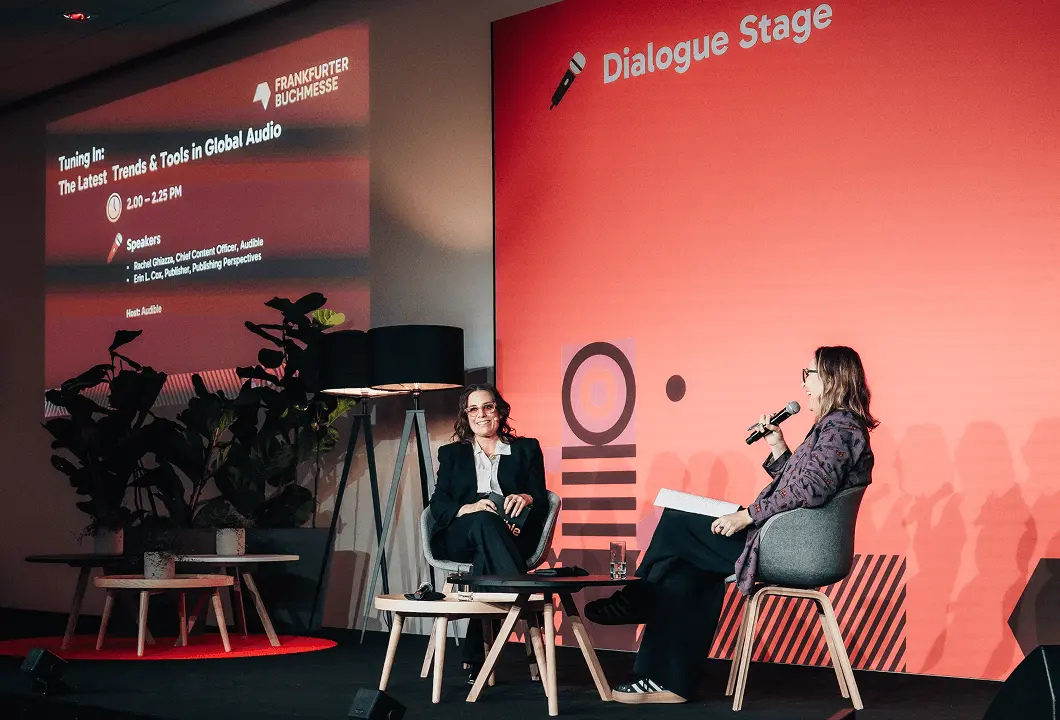
The rapid evolution of consumer habits has not gone unnoticed by publishing executives. Rachel Ghiazza, Chief Content Officer at Audible, offered deep insights into the psychological drivers behind the audio boom during her keynote announcements.
"What’s particularly striking about this research is the scale and momentum of audio’s growth," Ghiazza noted. "Audio is continuing to play a growing, evolving role in people’s lives. We’re seeing audiences listen more, explore different ways to experience stories, and increasingly turn to audio as a means of switching off and recharging."
Ghiazza emphasized that contemporary consumers are actively seeking refuge from the relentless bombardment of notifications, feeds, and blue-light screens.
"In today’s world, consumers are craving more fulfilling ways to spend their time, and they’re finding that more and more through audio content, particularly as an alternative to screens," she added.
Publishing analysts point out that by removing linguistic, economic, and technological barriers through localized currencies and cross-format syncing, Audible is positioning itself not merely as an audiobook retailer, but as the central hub for the modern reading lifestyle.
Future Outlook: The Horizon of Auditory Media
As Audible looks toward 2027 and beyond, the roadmap is clear: hyper-localization, technological integration, and frictionless multi-format consumption.
The inclusion of Indonesia, South Korea, Denmark, Norway, and Finland highlights a growing recognition that non-English speaking markets represent the next frontier of explosive growth for spoken-word audio. By investing in regional content creation, localized curation, and native payment ecosystems, Audible is laying the groundwork for sustainable, long-term international adoption.
Simultaneously, the global rollout of the Read & Listen feature signifies the final blurring of lines between the publishing and audio industries. As software bridges the gap between the printed page and the spoken word, consumers are no longer forced to choose between reading and listening—they can do both, interchangeably and simultaneously.
For authors, publishers, and consumers alike, this signals a golden era. As screen fatigue deepens and audiences hungrily seek out mindful, enriching ways to reclaim their leisure time, the global audio renaissance is only just beginning.



Comments
Facebook App ID not configured. Please add it in the Customizer.